
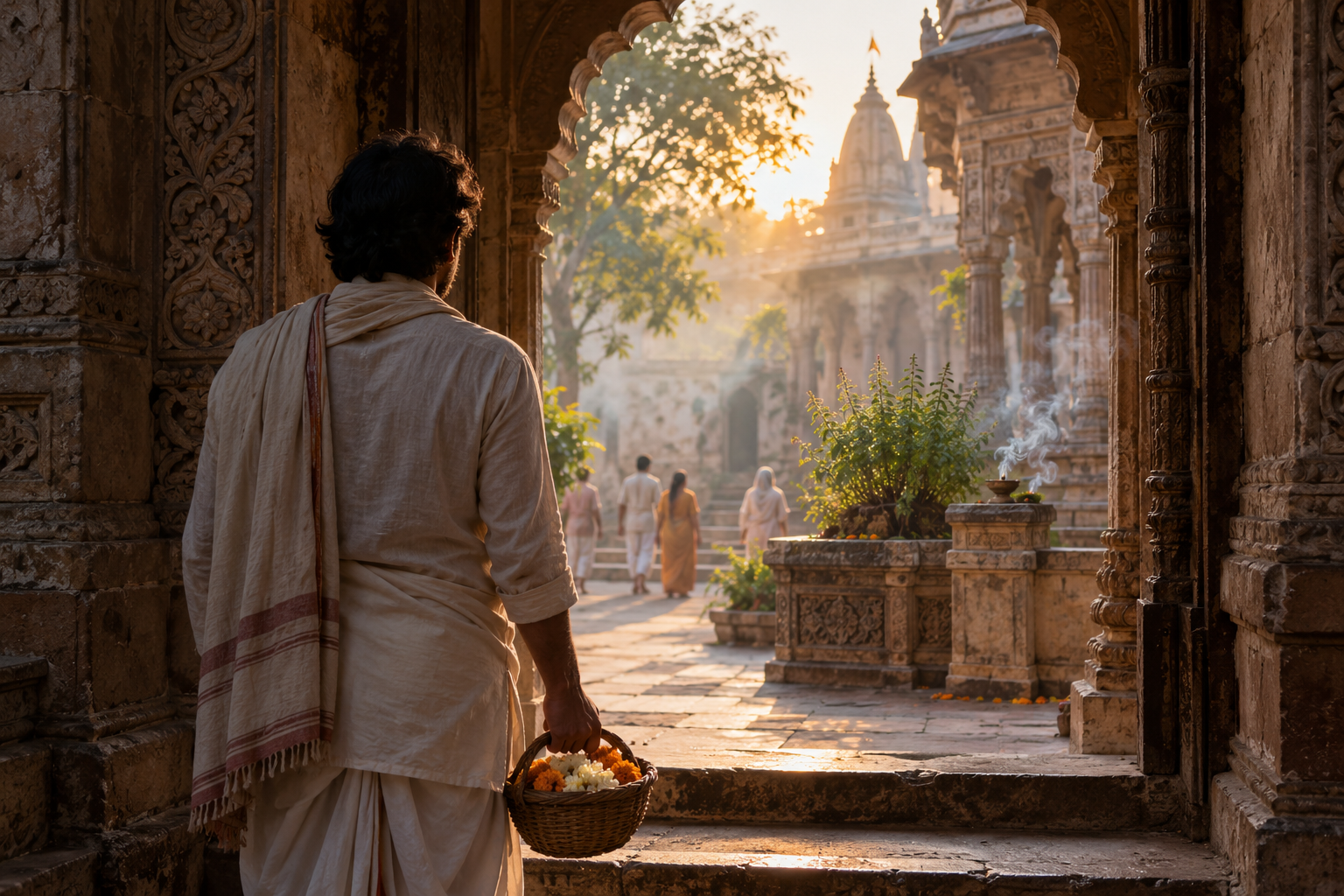
You may arrive in Vrindavan with temple names, routes, and sacred activities carefully planned, yet carry a quieter concern: what if you see the holy places but miss the Dham itself?
A spiritual experience cannot be scheduled, but your attention can be prepared. A deeper pilgrimage begins when you stop treating Vrindavan as merely a destination and learn to approach its spiritual mood with the heart. That shift changes how you enter a temple, meet another pilgrim, respond to inconvenience, and remember the visit after returning home.
Enter Vrindavan as a participant, not a collector
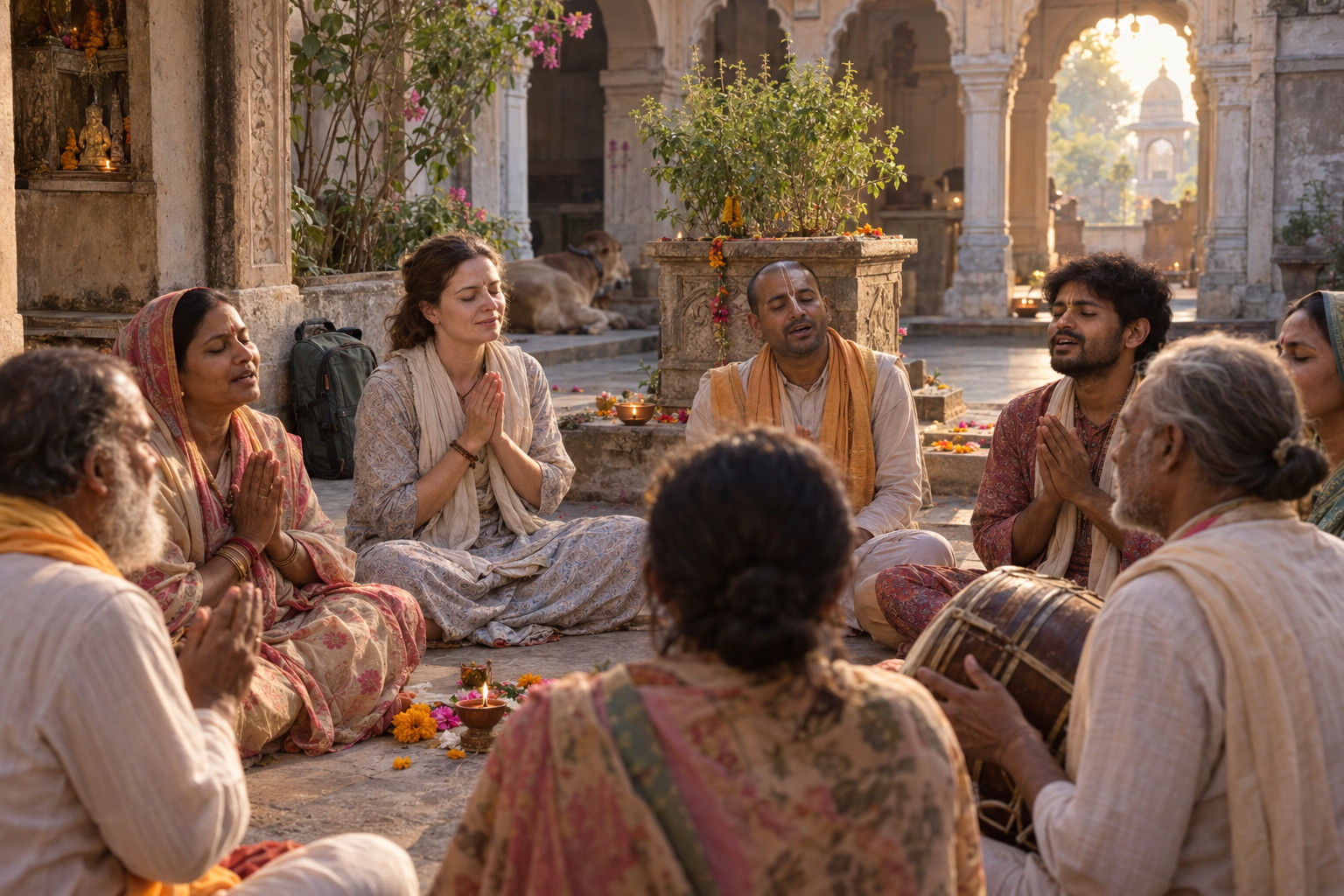
A tourist naturally asks, “What can I see?” A pilgrim must also ask, “How should I be?” The first question produces an itinerary. The second prepares consciousness.
Seeing Vrindavan as Dham does not make its physical streets, buildings, residents, or daily difficulties unreal. It means the place is approached as a field of remembrance, devotion, and service. You are not there merely to consume a sacred atmosphere. You are entering a relationship that asks something of you.
Before filling your schedule, form a simple sankalpa, or intention. It need not be elaborate: “May I become more attentive, more grateful, and more willing to serve.” This is not a demand for a mystical event. It is a decision about the disposition you will bring.
- Choose an anchor practice. Decide whether chanting, japa, attentive darshan, hearing hari-katha, or quiet remembrance will hold the visit together.
- Name the habit that usually scatters you. It may be constant photography, hurried movement, social comparison, argument, or the urge to complete every possible stop.
- Decide how you will serve. Service can begin with keeping a sacred space clean, making room for others, speaking respectfully, supporting appropriate temple work, or quietly helping without drawing attention to yourself.
This preparation prevents a common disappointment. If you arrive expecting Vrindavan to overpower an unprepared mind, ordinary distraction can feel like spiritual failure. If you arrive ready to practise attention, even a modest moment of remembrance has somewhere to take root.
Build a devotional rhythm that protects attention
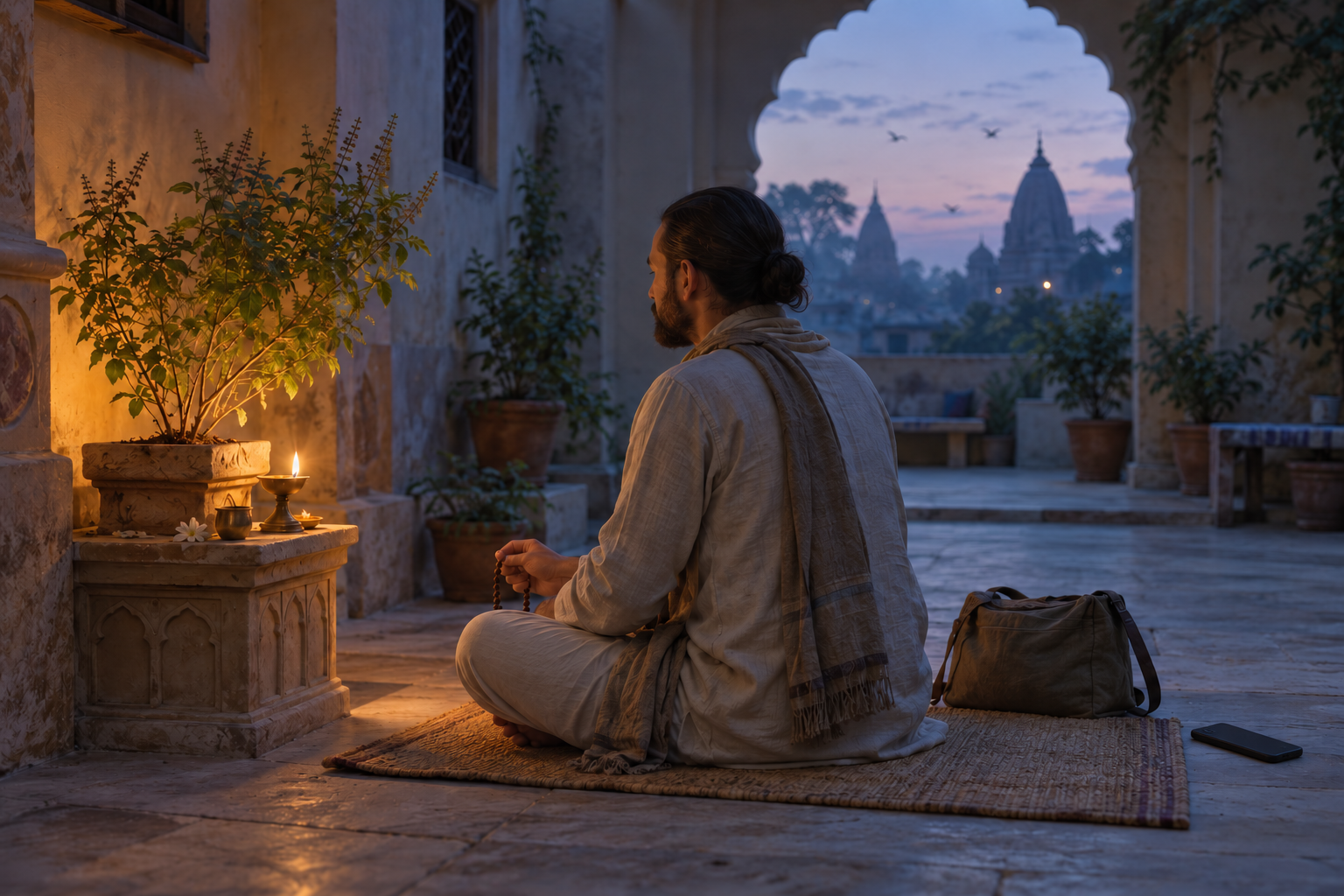
A crowded itinerary can produce many memories while leaving little room for absorption. The remedy is not necessarily to abandon planning. It is to give every sacred activity an inward counterpart.
- Pause before entering. Let your body stop before asking the mind to become still. Silence notifications, settle your breathing, and remember why you came.
- Offer attention before taking a photograph. Receive the place directly before viewing it through a screen. Keep the phone away for a complete act of darshan, chanting, or prayer.
- Stay with the practice in front of you. During kirtan, listen and chant instead of evaluating the performance. During japa, return to the Holy Name whenever the mind runs elsewhere. During aarti, attend to the offering rather than treating it only as a spectacle.
- Translate reverence into conduct. Keep passages clear, dispose of waste responsibly, avoid interrupting another person’s worship, and ask permission before photographing people. Respect for the Dham must become respect for those within it.
- Close the day with remembrance. Make brief notes about what you encountered, how you reacted, and what the day is asking you to change. Record inner movement, not merely places visited.
It is often better to leave a destination off the itinerary than to carry haste into every destination that remains. Sacred attention needs margins. If every pause feels like an obstacle to the next stop, the schedule has started governing the pilgrimage.
Alternating darshan, hearing, chanting, silence, and practical service also keeps the visit from becoming purely visual. Vrindavan is not something you grasp by looking harder. The heart becomes receptive through repeated, embodied acts of devotion.
Let inconvenience reveal what devotion still needs to soften
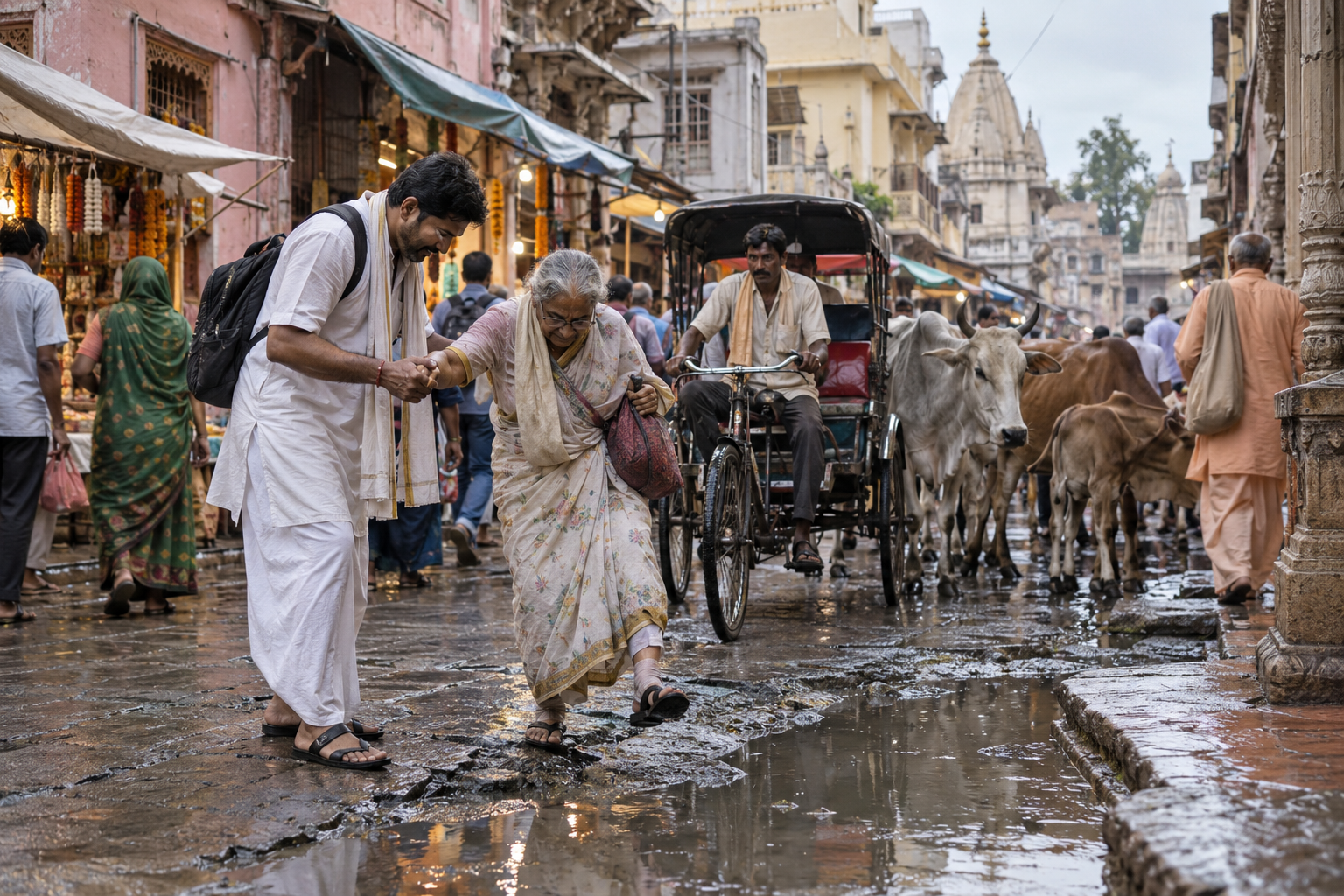
Many pilgrims imagine that a holy place will remove distraction. A Dham can instead reveal how quickly the mind becomes demanding. Crowds, delays, tiredness, noise, and unmet expectations may expose impatience that remained hidden while the journey was still an idea.
That friction need not ruin the pilgrimage. It can become part of the practice when you respond deliberately:
- When a crowd breaks your concentration, notice the wish to control everyone around you. Make room where possible, protect necessary boundaries calmly, and return to your prayer.
- When commerce distracts you, do not turn one uncomfortable interaction into a verdict on the Dham or its residents. Complete necessary transactions clearly, then bring the mind back to remembrance.
- When you feel nothing unusual, stop repeatedly checking whether the experience is spiritual enough. Continue the practice without manufacturing emotion.
- When strong emotion arises, receive it without performing it for others or treating it as proof of spiritual advancement.
- When another person’s conduct disappoints you, use discernment without feeding contempt. You may step away from poor conduct without allowing resentment to occupy the rest of the visit.
Reverence does not require naivety. You do not have to call every event perfect or suspend practical judgement. The more useful discipline is to distinguish between the sacredness you came to honour and the imperfect human behaviour you may encounter around it.
This distinction protects you from opposite errors. Cynicism notices only disorder and misses the Dham. Sentimentality refuses to see any disorder and mistakes denial for faith. Mature pilgrimage keeps the heart open and the judgement clear.
Judge the experience by its fruit, not its intensity
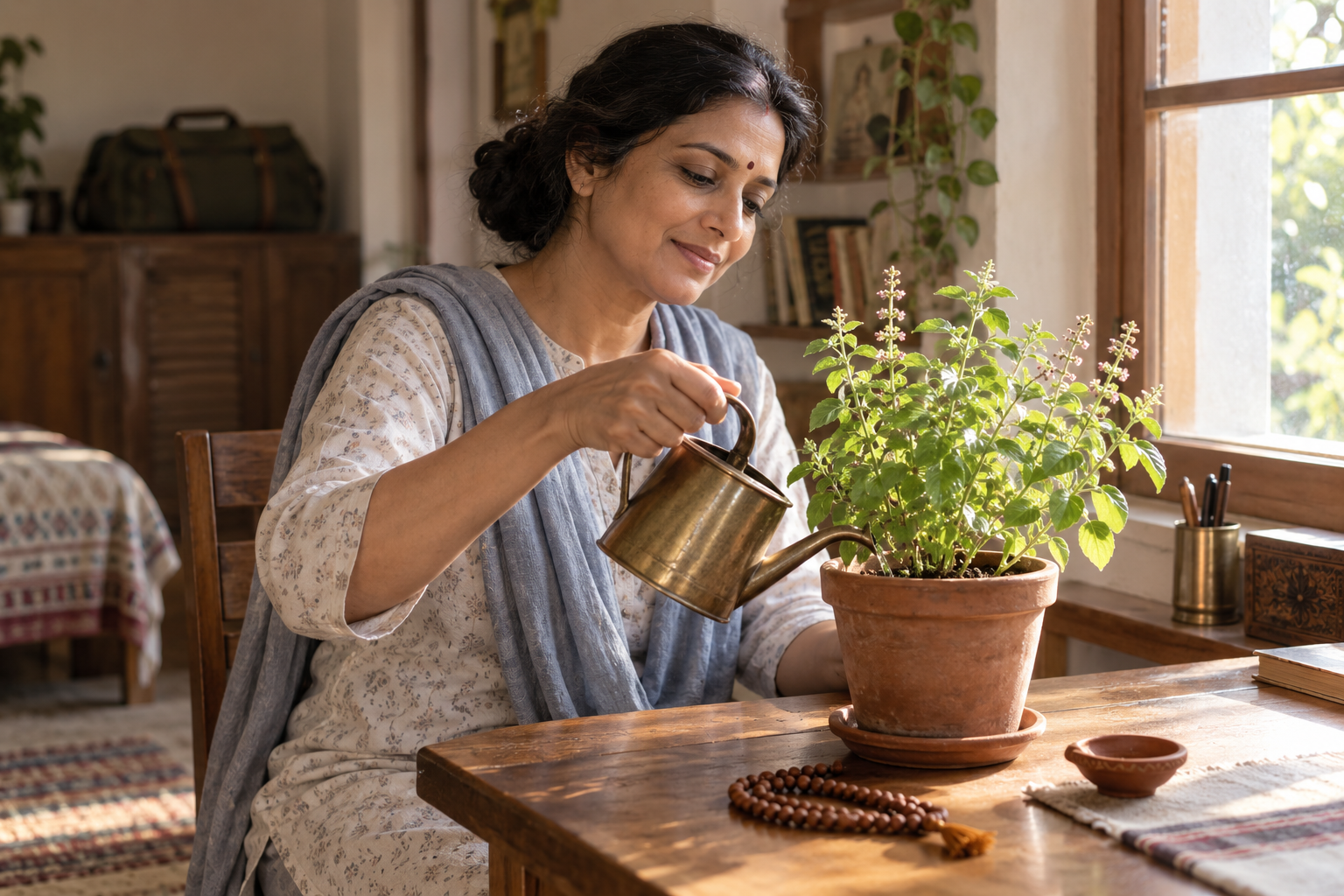
A powerful spiritual experience is not always dramatic. You may weep during kirtan, feel deep peace before darshan, or experience no striking emotion at all. None of these states, by itself, tells you what the pilgrimage has accomplished.
A more reliable test begins after the moment has passed. Ask whether the visit is changing the direction of your attention and conduct:
- Does remembrance return during ordinary parts of the day?
- Has the urge to appear spiritual become weaker?
- Are you more patient with people who cannot offer you anything?
- Do chanting, hearing, worship, or service feel less like obligations and more like ways of sustaining a relationship?
- Has reverence for sacred geography made you more careful about speech, cleanliness, hospitality, and responsibility at home?
These questions move the focus from spiritual consumption to transformation. The point is not to acquire a story about what happened to you in Vrindavan. It is to allow Vrindavan to revise the way you live.
If the visit felt quiet, do not dismiss it. Continue the practice that made you attentive there. If the visit felt overwhelming, do not spend your energy trying to recreate the emotion. Preserve its meaning through disciplined remembrance and service. In either case, the experience becomes trustworthy when it produces humility rather than status.
Choose a small practice to carry home: regular japa without the phone nearby, a consistent period of sacred hearing, simple hospitality toward devotees, care for a local temple, or a deliberate effort to speak without needless harshness. Keep it modest enough to sustain. A vow that survives ordinary life connects the pilgrimage to the person you are becoming.
Key takeaways for your visit and return
- Enter with an intention for how you will be, not only a list of what you will see.
- Choose a devotional practice that will anchor the visit when novelty and distraction compete for attention.
- Receive darshan, kirtan, japa, or aarti directly before reaching for the camera.
- Treat residents, fellow pilgrims, sacred spaces, and the physical environment with the courtesy your reverence requires.
- Use inconvenience as a mirror for the mind, while keeping clear judgement about inappropriate conduct.
- Do not measure grace by emotional intensity; look for humility, remembrance, patience, and willingness to serve.
- Carry the Dham home through a sustainable practice rather than an attempt to preserve a passing mood.
Before your next visit, choose your anchor practice and write your intention in plain words. When you return, keep the smallest commitment that expresses what Vrindavan awakened in you. The journey deepens when remembrance continues after the road home.
References

Leave a Reply
You must be logged in to post a comment.