
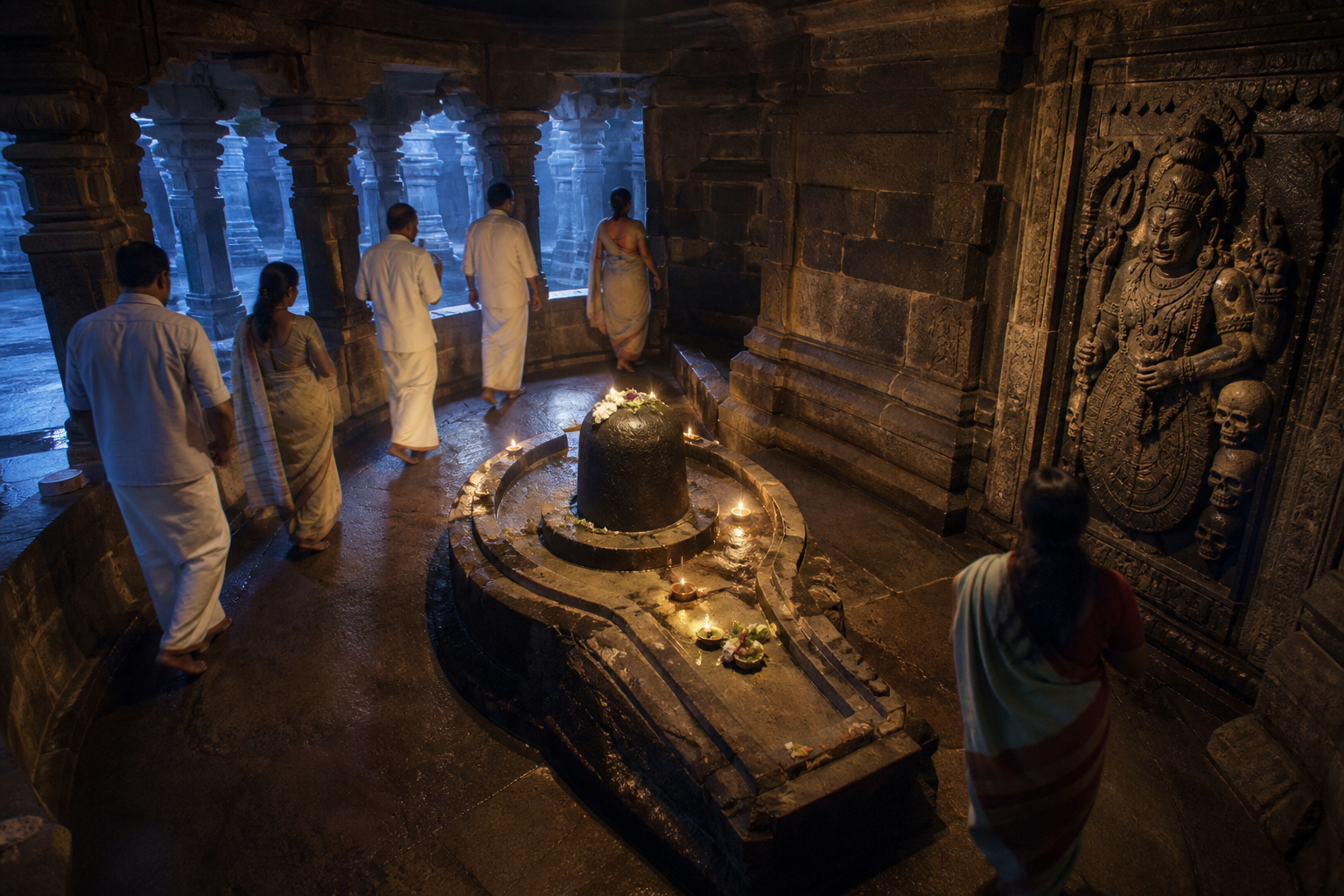
If you have stood before a fierce image of Bhairava, encountered a skull motif, or joined a clockwise temple circuit, the important question is not merely, “What does this represent?” It is, “What should this change in me?” Without that second question, a sacred symbol can become decoration and a sacred walk can become little more than counting laps.
Shaiva traditions answer through the body as well as the intellect. Fierce imagery confronts your attachment to appearance, permanence, and status. Pradakshina then gives that confrontation a direction: you move around Shiva as the center instead of asking the sacred to orbit your preferences. The transformation lies in joining clear interpretation, disciplined attention, and ethical conduct.
Key takeaways
- Read the Kapalin’s darkened face and kapala as disciplines of mortality, humility, and accountability, not as a macabre aesthetic.
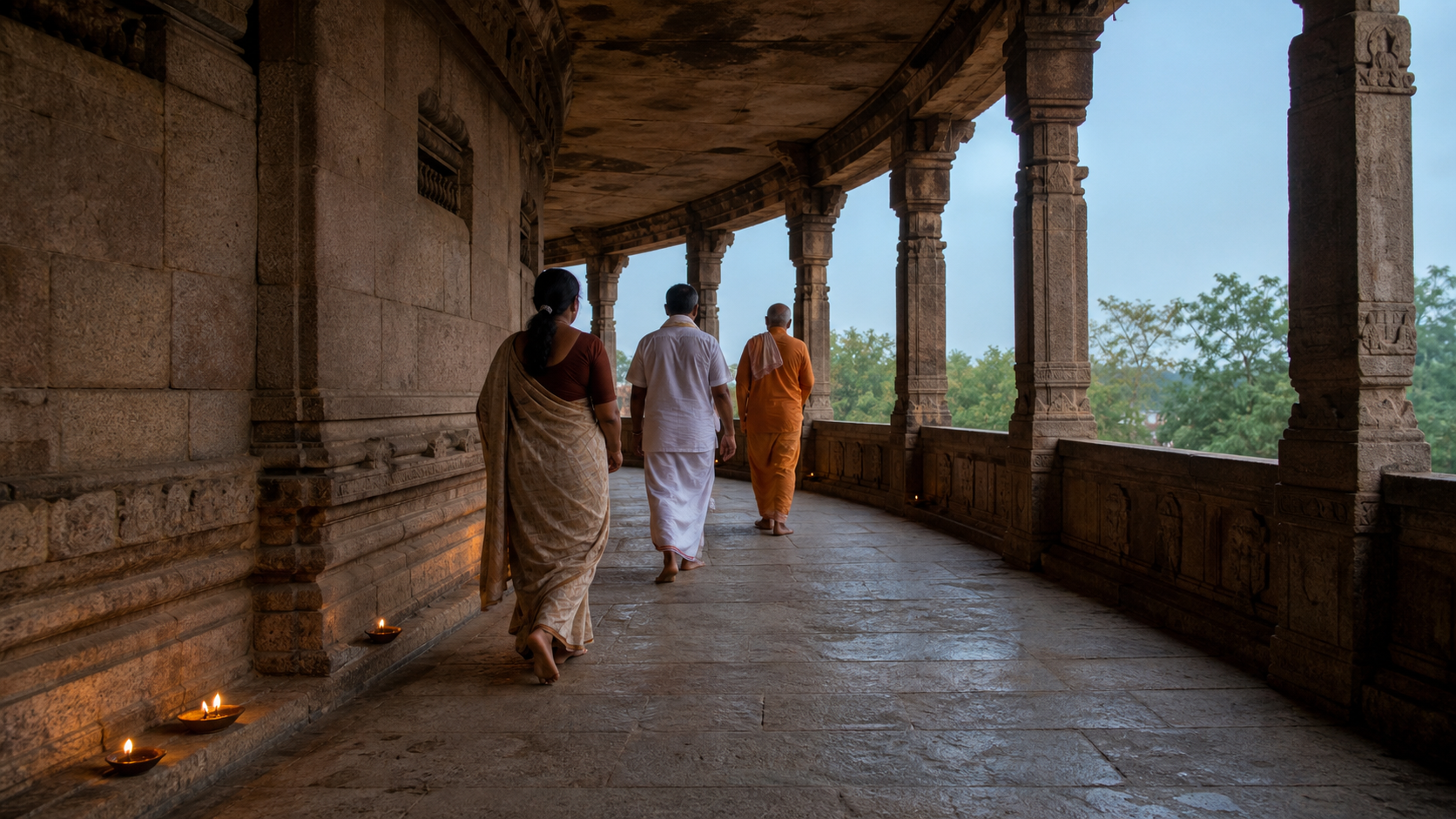
- Use pradakshina as embodied centering: walk clockwise at a measured pace with one mantra, japa practice, or breath rhythm.
- Choose 1, 3, 5, 7, or 11 temple rounds according to your health, time, and sankalpa. The number is a container for attention, not a spiritual score.
- Treat Arunachala Girivalam as both pilgrimage and physical undertaking: the clockwise route is about 14 kilometres, so water, seasonal conditions, and permitted footwear matter.
- Let the practice produce a visible ethical result. Less vanity, more patience, greater non-attachment, and one concrete act of seva are better measures than dramatic appearance.
Fierce symbols are instructions, not ornaments
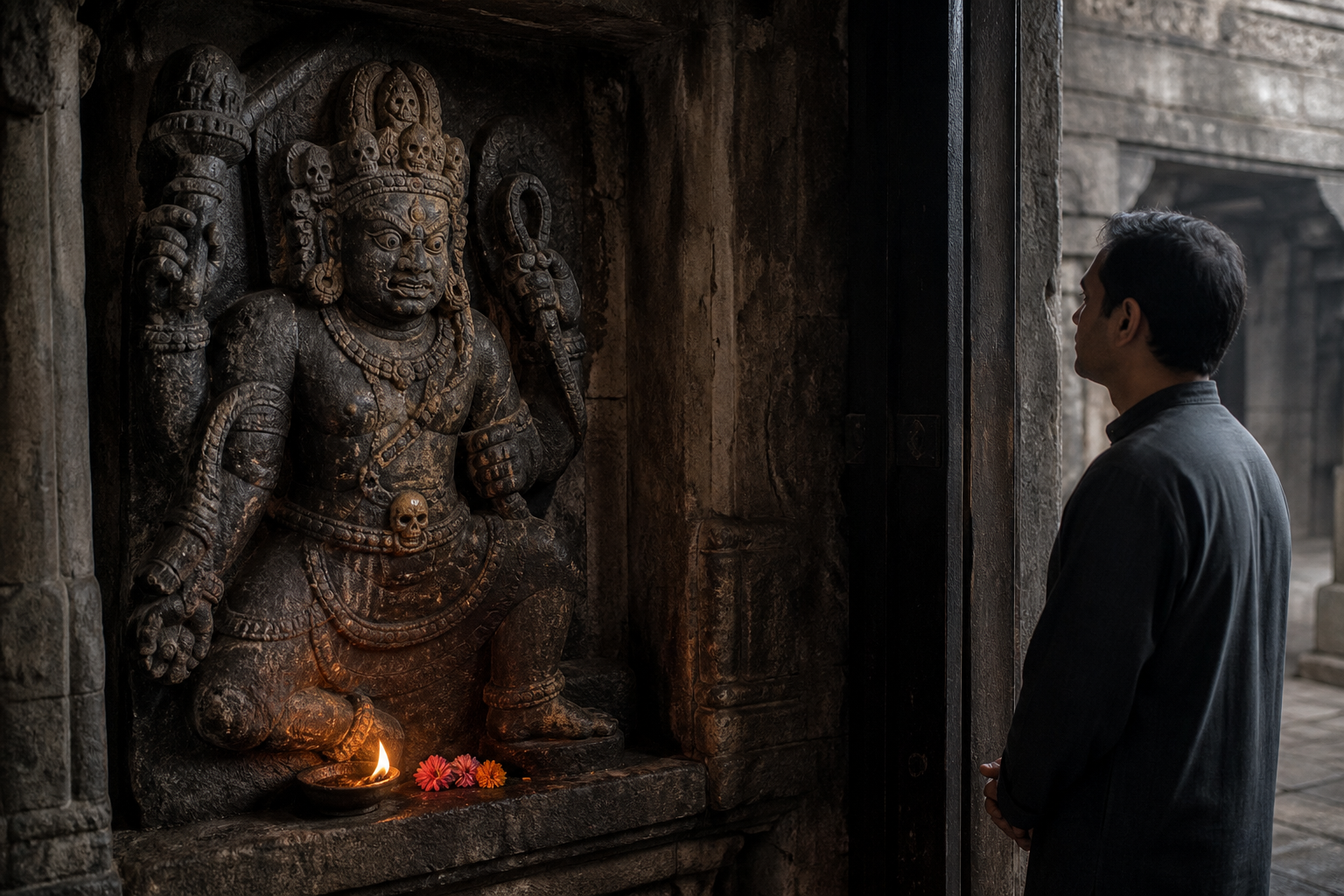
The Kapalin’s darkened visage and skull symbolism belong to the fierce, penitential dimension of Shiva associated with Bhairava. They are deliberately unsettling because ordinary social signals are comforting. Clothing, beauty, profession, family standing, and public approval help construct the identity you present to the world. Cremation-ground imagery interrupts the assumption that any of those things can provide a permanent foundation.
A face darkened with ash, soot, or ritual unguents points toward the place where outer distinctions finally lose their force. Blackness here should not be reduced to a code for evil. The imagery enters the domains of tamas and raudra, darkness and fierceness, so that fear and aversion can be faced rather than hidden. The intended movement is transformative: from disturbance to clarity, from pride to humility, and from fear to compassion.
The kapala, or skull-cup, makes the same lesson impossible to sentimentalise. It says that the body changes, possession ends, and the ego cannot keep what it calls its own. Accounts in Puranic and Tantric settings also present the skull as an austere begging bowl. That changes its meaning decisively. It is not a trophy announcing domination over another person; it places the ascetic in dependence, restraint, and subsistence.
The Bhairava frame adds moral accountability. Classical narratives describe Shiva as Bhairava carrying a skull while undertaking penance until release. Fierceness is therefore not permission to act without consequences. Divine power accepts responsibility and passes through purification. If your interpretation of Bhairava makes you feel exempt from restraint, answerable to no one, or entitled to frighten others, you have reversed the symbol’s ethical direction.
When you encounter a fierce Shaiva image, test your interpretation with three questions:
<!– wp:list {