
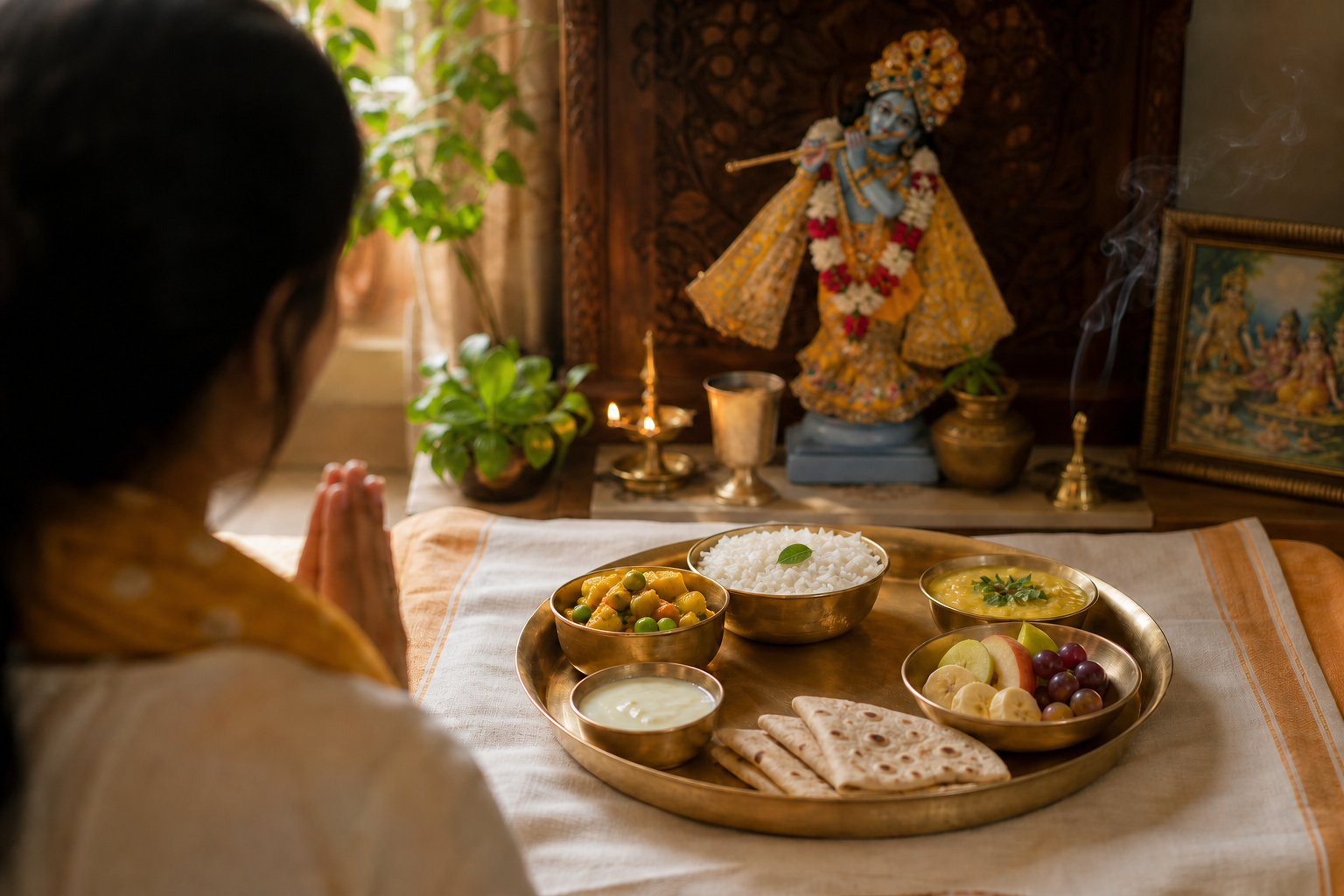
Devotional cooking is not simply a cuisine or a set of kitchen techniques. In the Vaishnava account presented by the sources, its purpose is to prepare food for an act of offering; prasadam is the mercy received when that offering is accepted by Krishna.
This distinction clarifies why love, intention, guidance, and acceptance matter alongside the food itself. It also prevents a visible ritual from being mistaken for the whole process.
The decisive step comes after the cooking
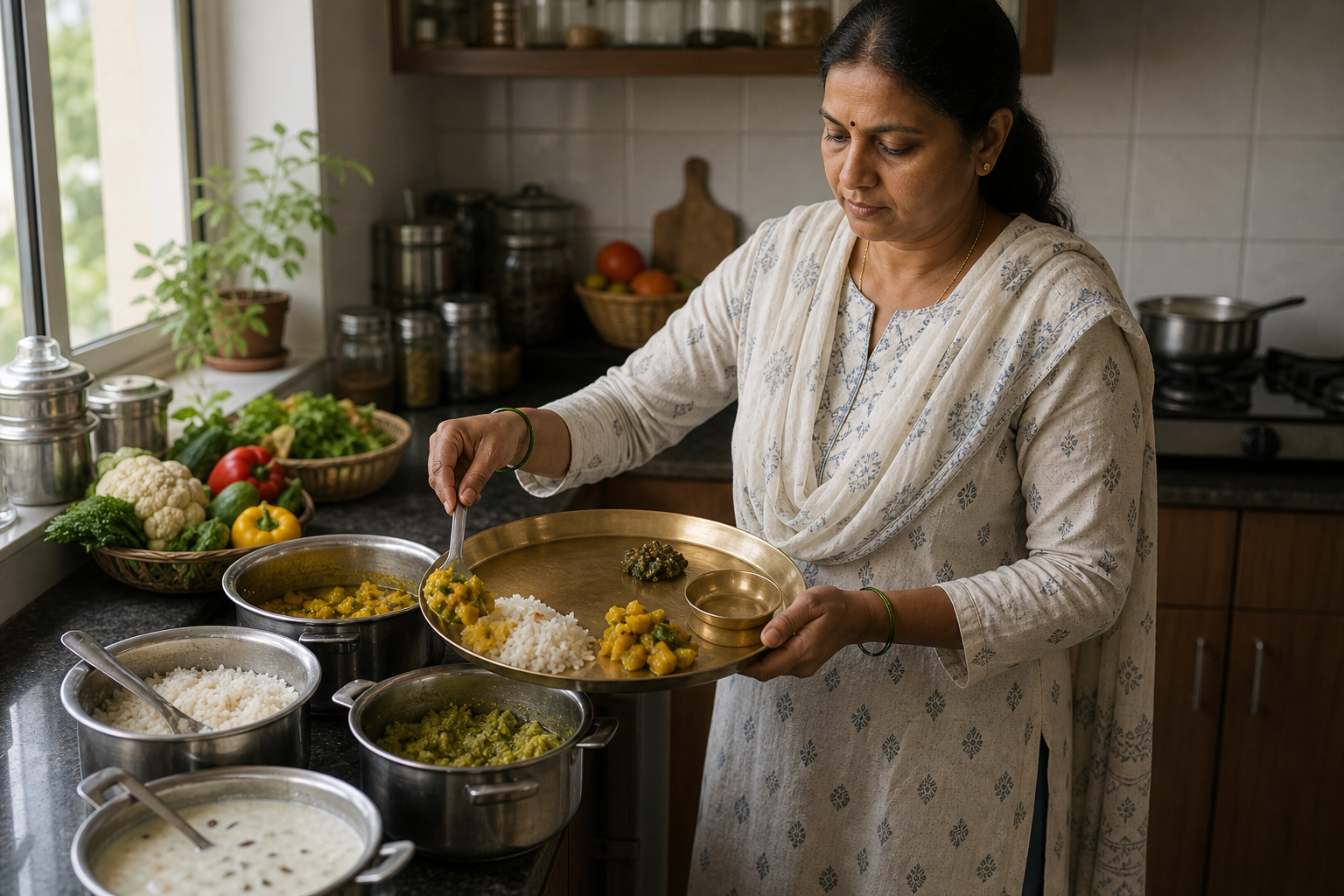
The source record approaches the subject from two complementary but unevenly documented angles. The supplied material for Cooking with love 1998 consists only of its title, so it supports a thematic emphasis on love but provides no responsible basis for additional historical or procedural claims. When Does Food Become Prasadam?, attributed to Sivarama Swami, provides the fuller theological explanation.
That explanation separates preparation from sanctification. Cooking may produce an attractive meal, but the article argues that food becomes prasadam when it is offered with devotion and accepted by Krishna. Its reading of Bhagavad-gita 9.26 places the emphasis on bhakti: leaf, flower, fruit, water, milk, or ghee-cooked preparations may be presented, but devotion is what Krishna accepts through them.
Love, therefore, is not described as a culinary ingredient or an emotional flourish added to a recipe. It is the devotional orientation that changes the purpose of cooking from personal consumption to service. The kitchen work prepares the offering; acceptance gives the food its status as prasadam.
Why acceptance cannot be reduced to a visible ceremony
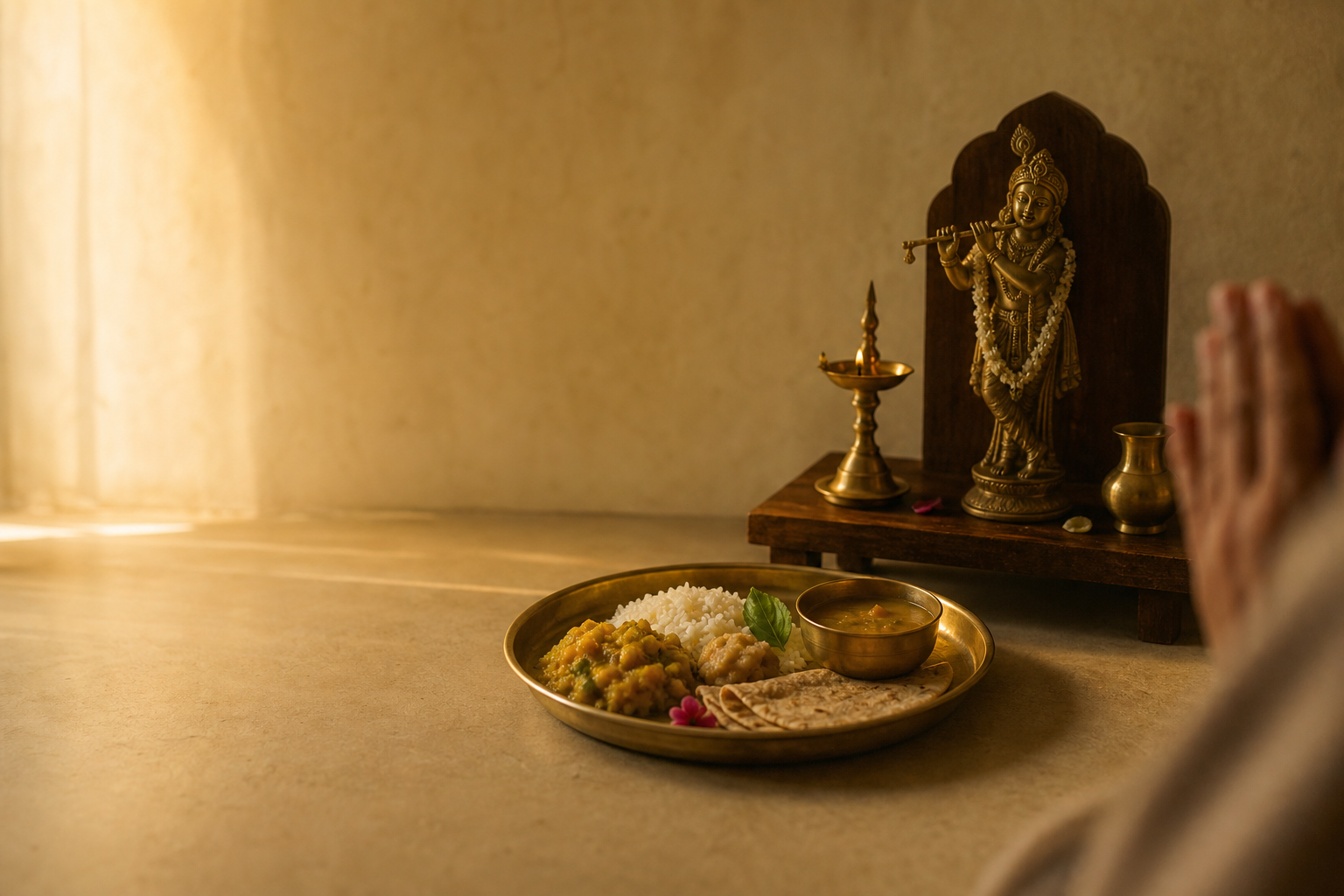
Sivarama Swami recounts a program at McGill University during his early devotional life in Montreal. According to the article, a plate of food was placed before an image of Panca-tattva, a devotee bowed, rang a bell, and recited mantras. The presenter then announced that ordinary food had become spiritual substance and invited the students to experience its effect by eating it.
The anecdote illustrates the tradition’s experiential understanding of prasadam, but it should not be mistaken for a laboratory demonstration or a complete universal ritual manual. The observable actions are placing the plate, bowing, ringing a bell, and speaking mantras. The conclusion that Krishna has accepted the offering is a theological claim understood through devotion and experience.
This is also why the article says prasadam is to be honored rather than merely eaten. It connects the word with mercy and cites Bhagavad-gita passages to explain the spiritual benefit devotees associate with receiving it. Taste may be part of the experience, but the meaning of prasadam rests on a relationship among the giver, the offering, and the divine recipient.
Intention and guidance shape the offering
The detailed source distinguishes motivated, pure, and love-saturated offerings. These are not grades of cooking ability. They describe the consciousness with which food is presented.
A motivated offering seeks a personal result, such as relief from suffering, improved health, prosperity, or another material benefit. Sivarama Swami maintains that even such an offering may be accepted when it is made through the guru-parampara, because the purity and mercy of the disciplic succession support the developing practitioner. By contrast, he says a merely whimsical offering made with ulterior motives does not acquire the same status, although thinking of Krishna can still contribute to gradual purification.
A pure offering is made to please Krishna rather than obtain a reward. The article subdivides this into regulated service, performed faithfully according to instruction, and spontaneous service arising from genuine affection. Both remain connected to guru and scripture; spontaneity does not mean inventing a private standard.
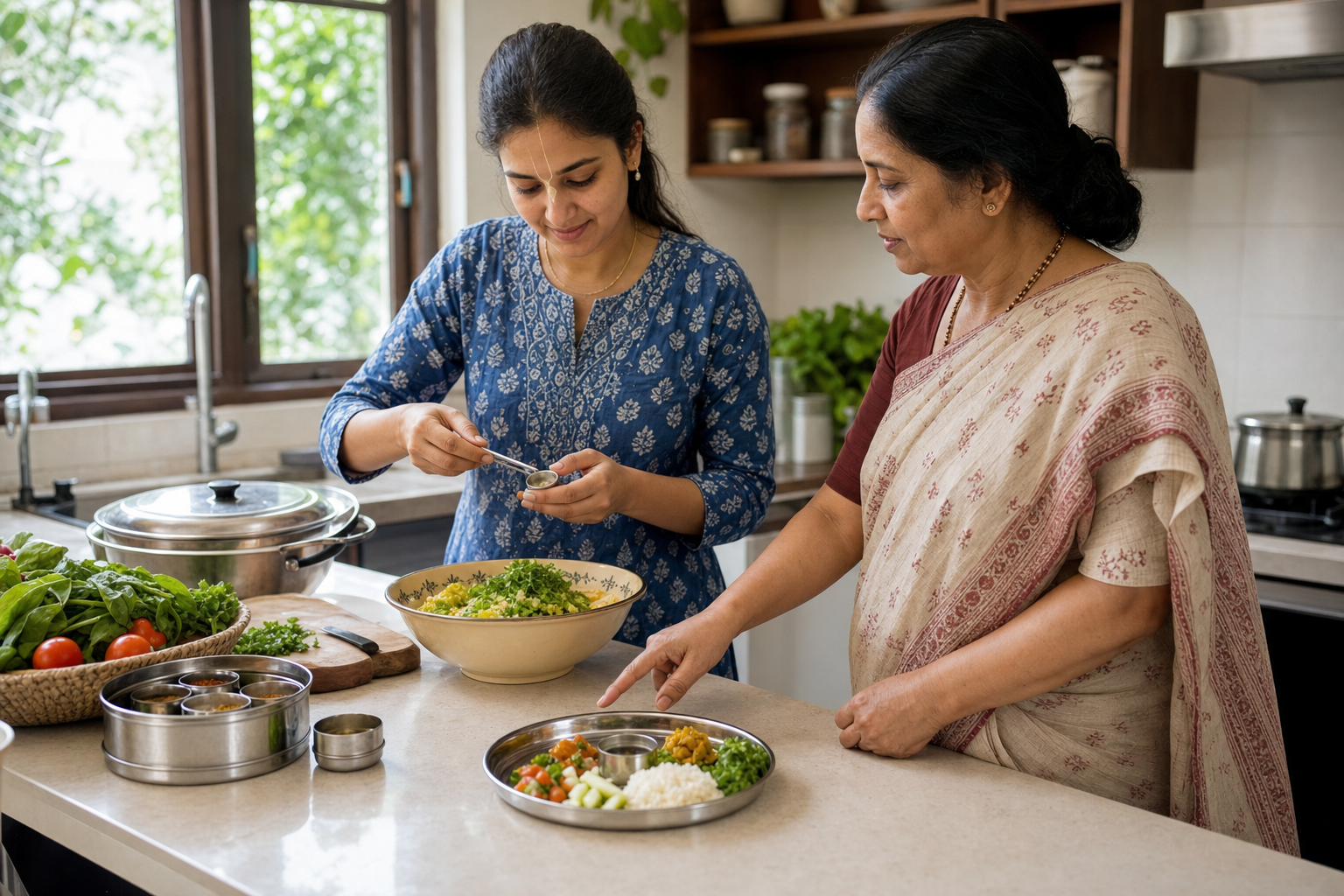
The discussion also addresses people who have not received formal initiation. Its position is that an uninitiated person acting sincerely on the instruction of an authorized Vaishnava is already approaching through the disciplic succession. Formal status is therefore not presented as the only consideration; received guidance and sincere adherence to it are central.
Key takeaways
- Devotional cooking prepares food for service, while offering and divine acceptance distinguish prasadam from an ordinary meal.
- In the source’s Vaishnava framework, bhakti is more decisive than culinary complexity or display.
- Motivation matters: seeking a reward, serving from duty, and serving from affection represent different devotional orientations.
- Authorized guidance connects household practice to a living tradition, including for sincere practitioners who are not formally initiated.
Bringing devotion into the kitchen responsibly
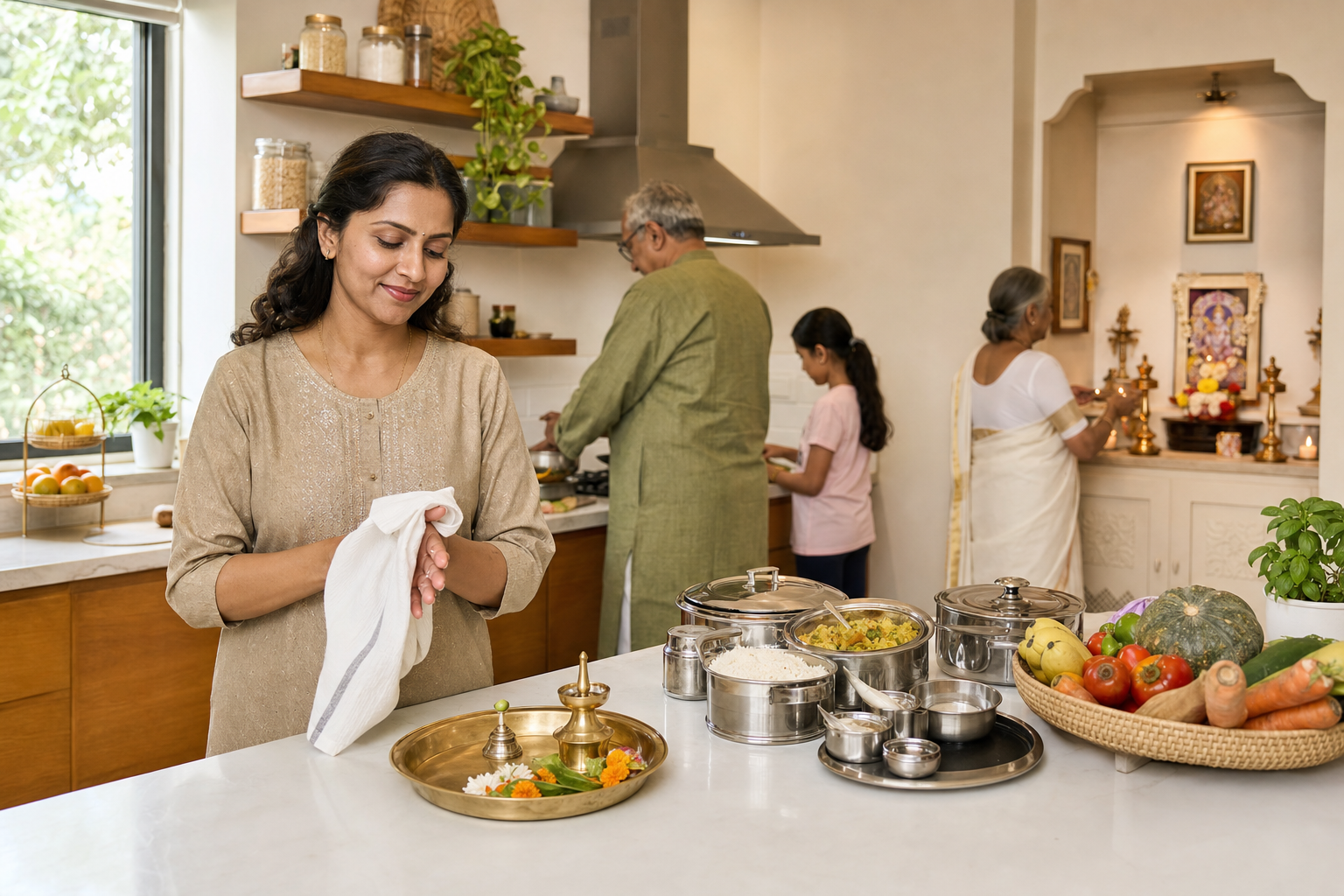
The sources support principles rather than a complete step-by-step procedure. Readers should therefore avoid treating the actions in the McGill account as a self-sufficient formula. The detailed article itself makes proper guidance indispensable, especially when deciding what may be offered, how an offering is made, and which prayers or practices belong to a particular lineage.
At the same time, the material gives household cooking a clear devotional direction. Ingredients and technique matter because they serve an offering, but outward correctness is not a substitute for intention. Duty can cultivate affection, and affection can deepen service without discarding discipline.
As devotional cooking enters new homes and communities, its integrity will depend on preserving that union of attentive preparation, sincere bhakti, and informed guidance.