
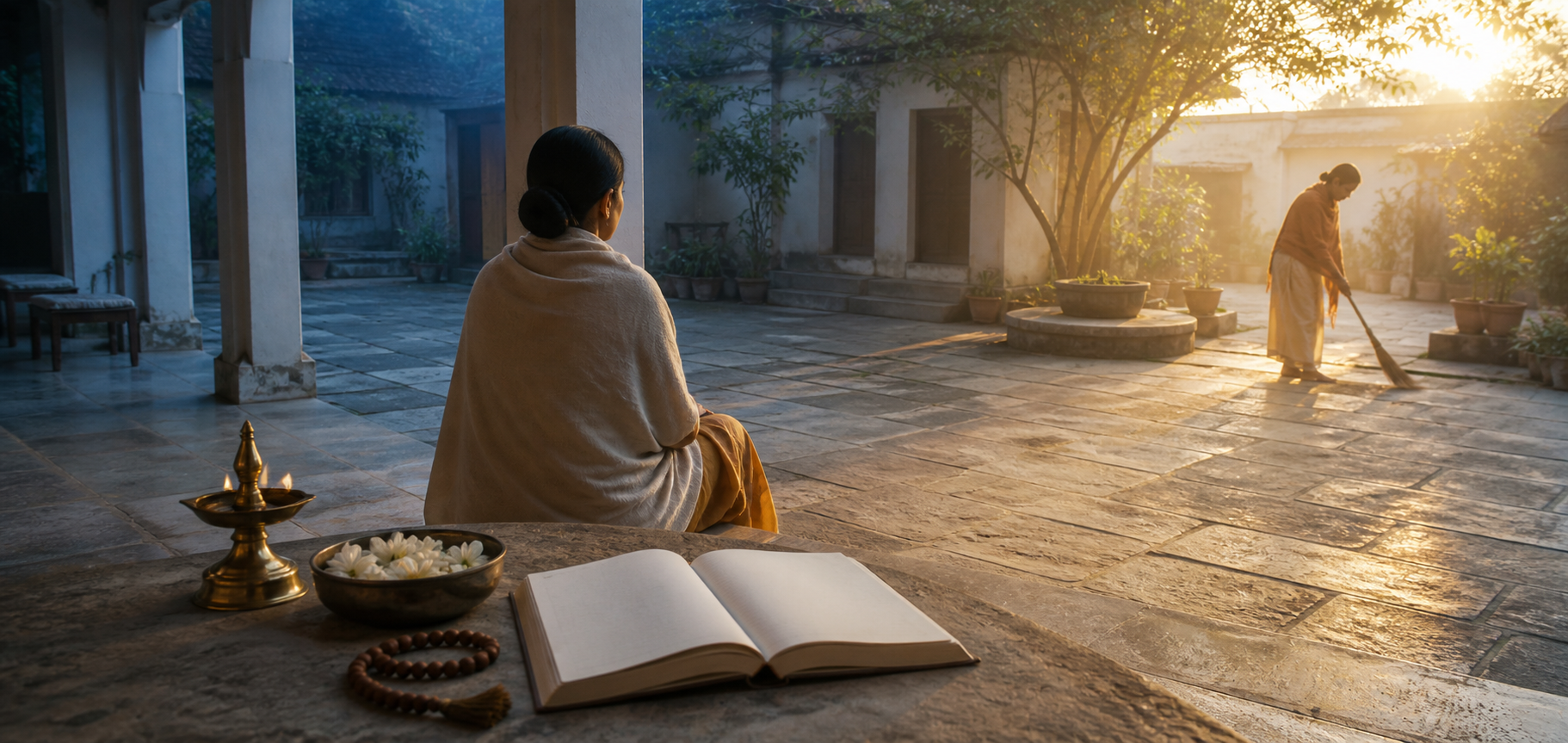
If you are looking at Sunday, December 21, 2025 and wondering whether the morning or the later part of the day better suits your plans, divide the day at 8:21 AM. The day’s central transition is Shukla Paksha Pratipada until 8:21 AM, followed by Shukla Paksha Dwitiya.
This gives you a practical spiritual rhythm. Use the opening part of the morning to clarify an intention, and use the remainder of the day to carry it into steady action. Do not, however, mistake the tithi transition for a universal shubh muhurat. A formal ceremony or consequential commitment still needs a location-specific Panchang check.
Read the morning as a transition between two tithis
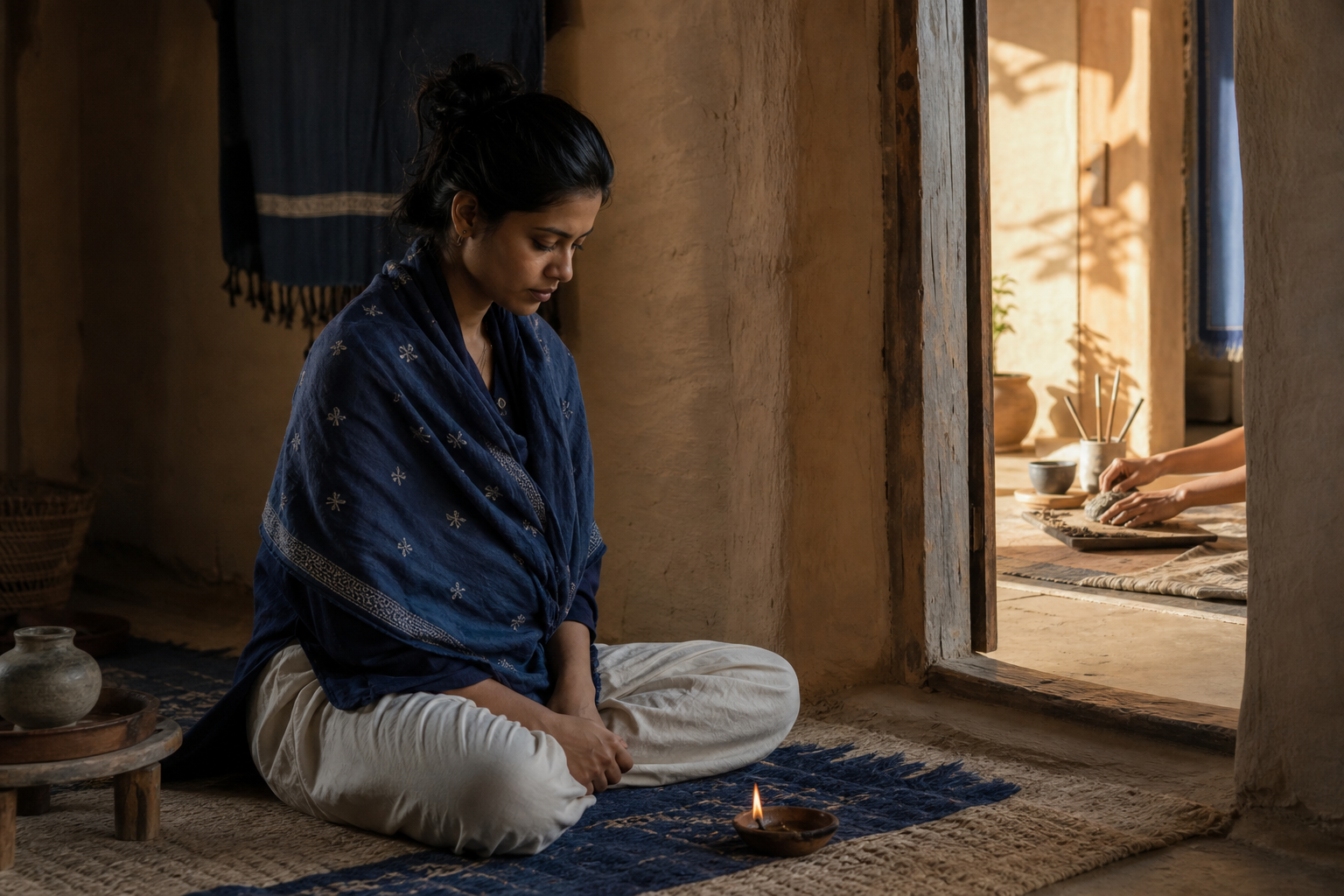
Shukla Paksha is the bright or waxing half of the lunar month. Pratipada is its first tithi, while Dwitiya is the second. On this date, Pratipada occupies only the early morning before Dwitiya takes over for the rest of the day.
That distinction matters because a tithi does not have to remain unchanged throughout a civil date. If you label the whole of December 21 simply as Pratipada, you miss the morning transition. If you call the whole day Dwitiya, you lose the significance of its opening hours.
For personal practice, treat 8:21 AM as a handover point rather than a countdown that creates anxiety. The period before it carries the traditional mood of emergence and renewal. The time after it favors continuity, balance and gentle momentum. This is an aid to attention, not a claim that every action before the transition must be new or that every action afterward must be routine.
Give each part of the day a clear purpose

You do not need an elaborate observance to make the tithi sequence useful. A modest plan that changes your conduct is better than repeatedly checking the clock without changing anything else.
- Before 8:21 AM, name one dharmic intention. Connect it to something you can actually do: resume neglected svadhyaya, renew a daily remembrance practice, acknowledge a specific cause for gratitude, or correct a lapse in your routine.
- Turn the intention into a visible next action. Decide which text you will open, which responsibility you will complete, or which habit you will restore. An intention without a next action is easy to admire and equally easy to abandon.
- After the shift to Dwitiya, emphasize follow-through. Complete the first action before adding more resolutions. Dwitiya’s practical value lies in steadiness: it invites you to support a beginning rather than constantly replace it with another beginning.
- Review the day by conduct, not mood. Ask whether the intention affected your study, speech, duties or relationships. The useful test is not whether the day felt auspicious, but whether you acted with greater clarity and composure.
If you begin your devotional routine after 8:21 AM, the morning has not been spiritually lost. Use Dwitiya’s emphasis on continuity and fulfill the practice available to you. The Panchang should help order life; it should not turn an unavoidable schedule change into guilt.
Do not confuse general tithi guidance with an exact muhurat
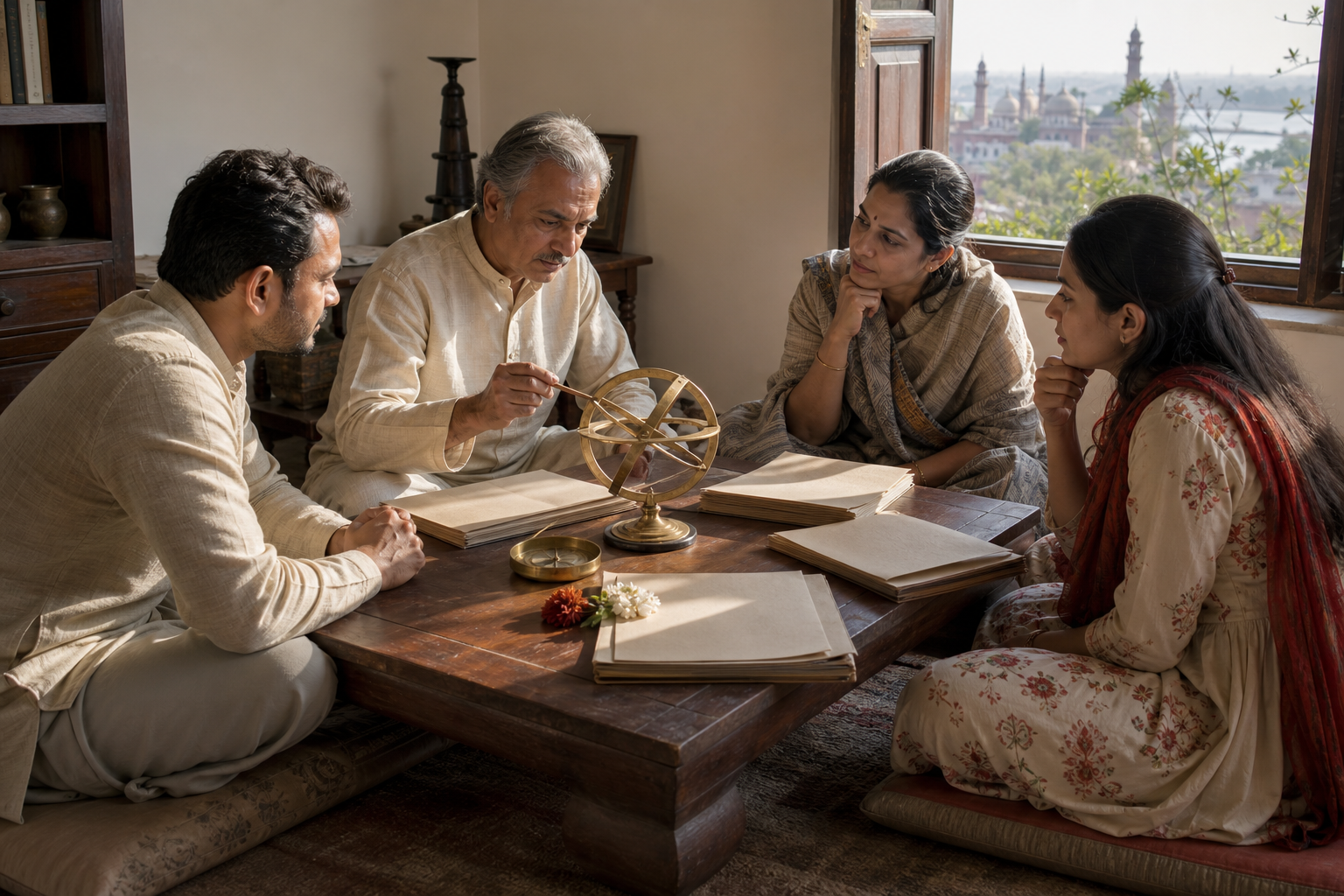
Shukla Paksha is broadly associated with constructive activity, but that broad association is not enough to declare a precise auspicious window. An exact muhurat depends on more than the name of the tithi. Location, local sunrise, Nakshatra, Rashi and the calculation method used by a regional tradition can all affect the answer.
This is especially important if you are arranging a formal ceremony, making a significant commitment, or coordinating an observance with a temple. Before fixing the time:
- Check a Panchang calculated for the city or region where the event will occur.
- Confirm the locally applicable sunrise and the day’s Nakshatra and Rashi details.
- Use the convention followed by your family, sampradaya or temple when regional calculations differ.
- Consult the relevant temple noticeboard or a trusted local priest when the rite has requirements beyond the tithi.
- Avoid combining the 8:21 AM transition from one location with other Panchang factors calculated for another. The result may look precise while resting on incompatible inputs.
Minor variations between local almanacs do not necessarily mean that one is careless. Geography and calculation conventions can produce differences. Consistency with the calendar and tradition governing your actual observance is more useful than searching several almanacs for the most convenient time.
Let the calendar strengthen dharma, not just scheduling
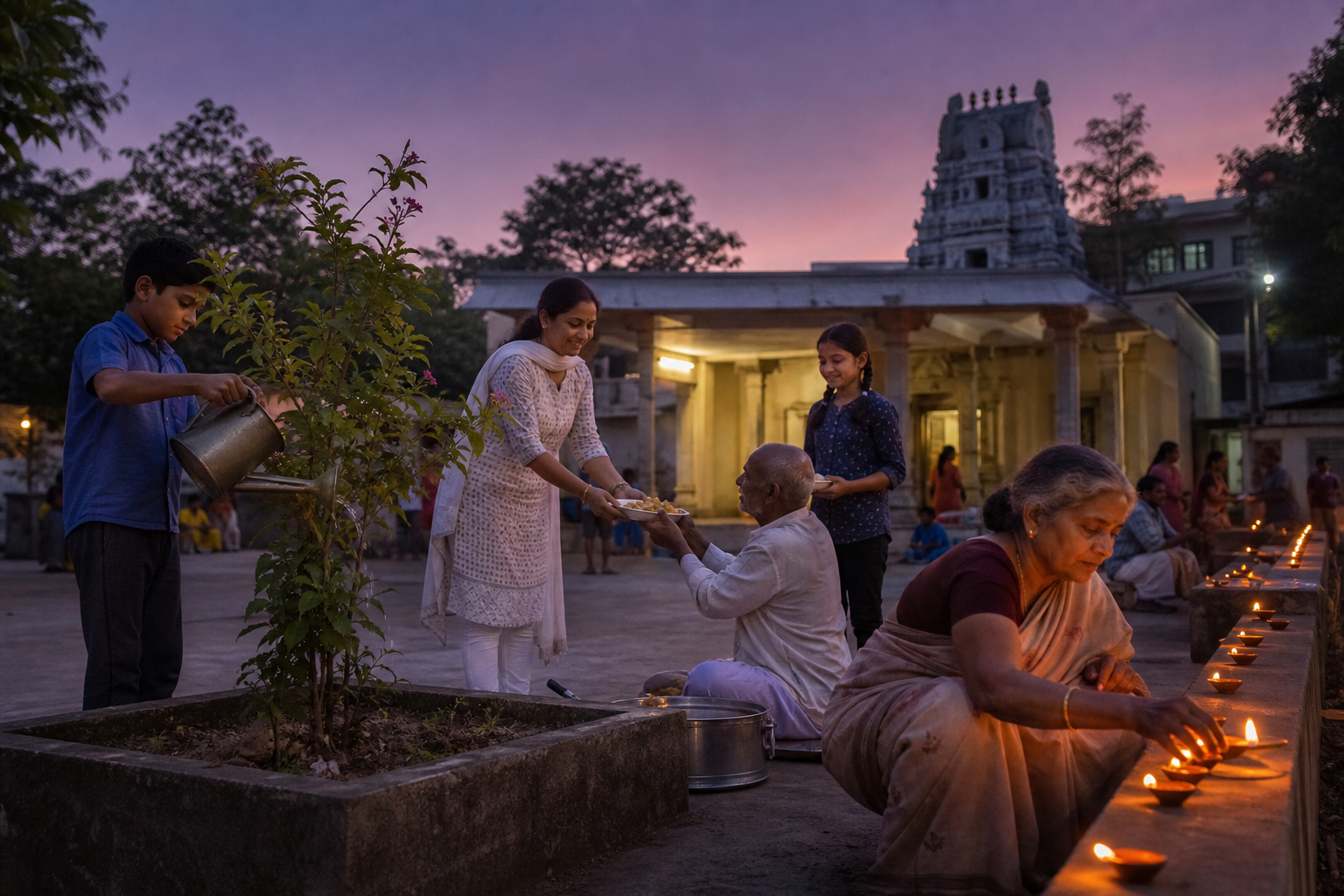
The movement from Pratipada to Dwitiya offers a simple pattern: begin inwardly, then proceed steadily. For a Hindu practitioner, that may take the form of svadhyaya, remembrance and gratitude followed by responsible action. The deeper purpose is to align time with dharma rather than treat auspiciousness as a shortcut around effort or ethics.
Hindu, Buddhist, Jain and Sikh practices are not interchangeable, and a Panchang instruction should not be presented as a universal ritual for every Dharmic path. What can be shared across a family or community is the ethical direction: greater mindfulness, disciplined action and concern for harmony. You can honor that common ground without erasing distinct teachings or observances.
This distinction is worth keeping. A calendar can tell you when a tithi changes, but it cannot make a careless act dharmic. If the day’s guidance changes how you study, keep a promise, speak to another person or discharge a duty, then the Panchang has moved from information into practice.
Key takeaways for December 21
- Sunday, December 21, 2025 begins with Shukla Paksha Pratipada and changes to Shukla Paksha Dwitiya at 8:21 AM in the general sequence used here.
- Use the earlier period for reflection, renewal, svadhyaya, remembrance and a clearly defined intention.
- Use the later period for continuity: take the first practical step and sustain it through your ordinary responsibilities.
- Do not treat 8:21 AM as a universal shubh muhurat for ceremonies or major commitments.
- For exact timing, verify location, sunrise, Nakshatra, Rashi and the convention followed by your temple or regional Panchang.
Choose one intention before the day begins and one action that will prove you kept it. Let Pratipada supply the beginning and Dwitiya supply the steadiness to continue.
References
