
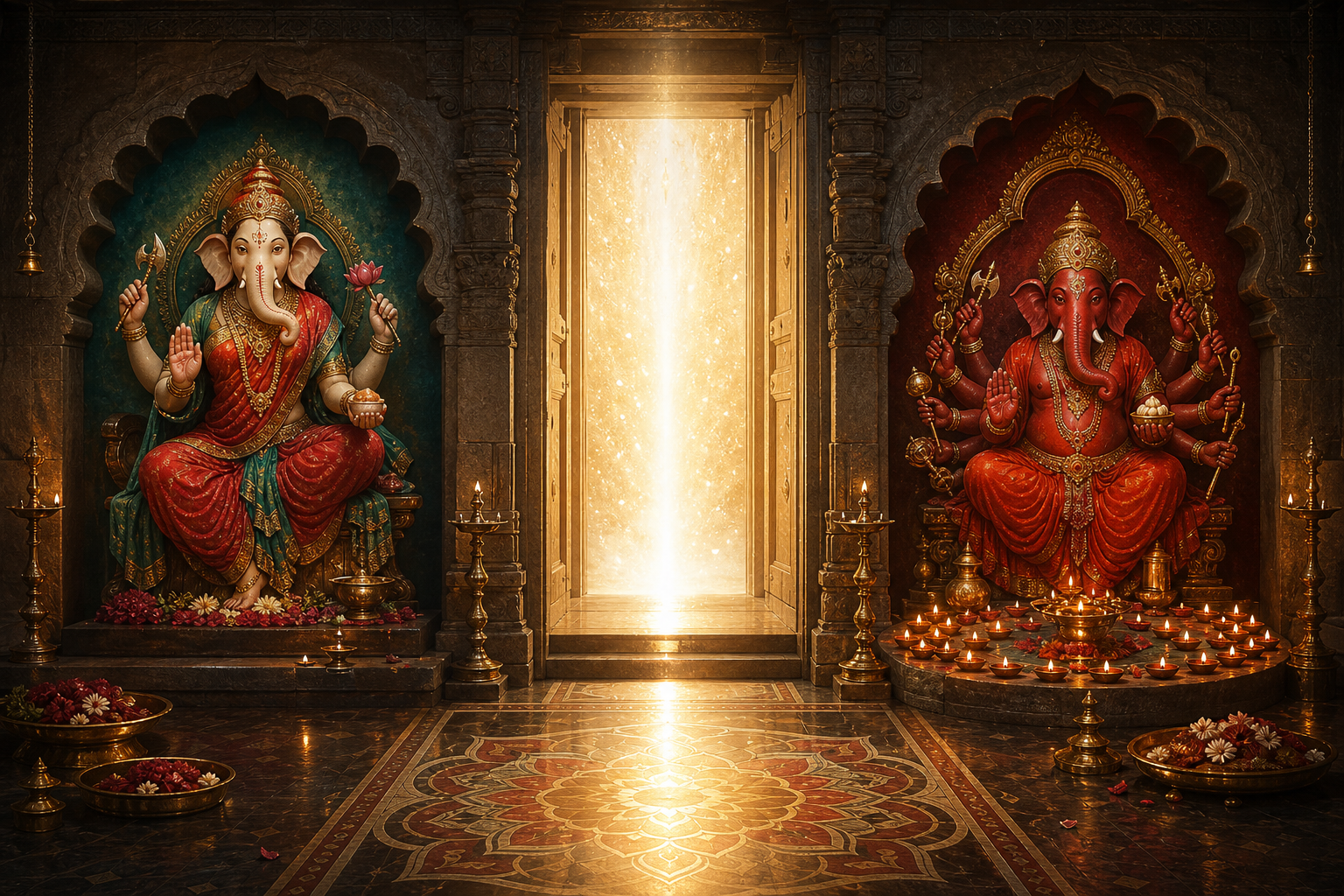
You may be comfortable before Shiva, Devi, or Ganesha and still hesitate when you encounter Vinayaki, a feminine elephant-headed deity, or Ucchista Ganapati, whose name points toward what remains. Is the first merely an artistic variation? Does the second discard purity? And if divine power exceeds these categories, do gendered forms and ritual rules still matter?
The useful distinction is this: a sacred form can reveal a real divine power without exhausting it, and a purity rule can discipline a particular practice without defining the limit of the sacred. Keep form, function, ritual method, and ultimate reality distinct, and unfamiliar manifestations become legible without being stripped of their particular meanings.
A divine form reveals power without imprisoning it
In ordinary classification, a category tells you where something belongs. In dharmic iconography, a category can instead become a doorway. A masculine or feminine form makes a quality available to relationship, devotion, meditation, and ritual. It does not necessarily claim that the divine possesses only that form or that the power represented belongs exclusively to human males or females.
The Shiva-Shakti vision makes this especially clear. Shiva signifies silent, unchanging consciousness, while Shakti signifies the dynamic capacity through which reality moves, creates, and sustains. Their interdependence is a union rather than a hierarchy: awareness without power remains unexpressed, while power without orienting awareness lacks coherence.
This does not mean that every Shaiva or Shakta school explains Shiva and Shakti in identical terms. It does mean that, within this vision, stillness and movement are not rival realities. Manifest power is intelligible because consciousness and energy belong together.
That distinction protects you from a common mistake: turning sacred symbolism into a set of social stereotypes. Shiva is not evidence that every man naturally embodies perfect awareness. Shakti is not a theological instruction that every woman must be active, maternal, emotional, or accommodating. Divine iconography discloses possibilities of being; it is not a diagram assigning fixed occupations or temperaments to human beings.
When you meet an unfamiliar form, therefore, do not begin by asking whether the deity is really male or female. Begin with three more precise questions: What power is being made visible? Which familiar features remain? What new relationship becomes possible through this form? Those questions preserve both reverence and intellectual seriousness.
Vinayaki shows that divine gender is expressive, not restrictive
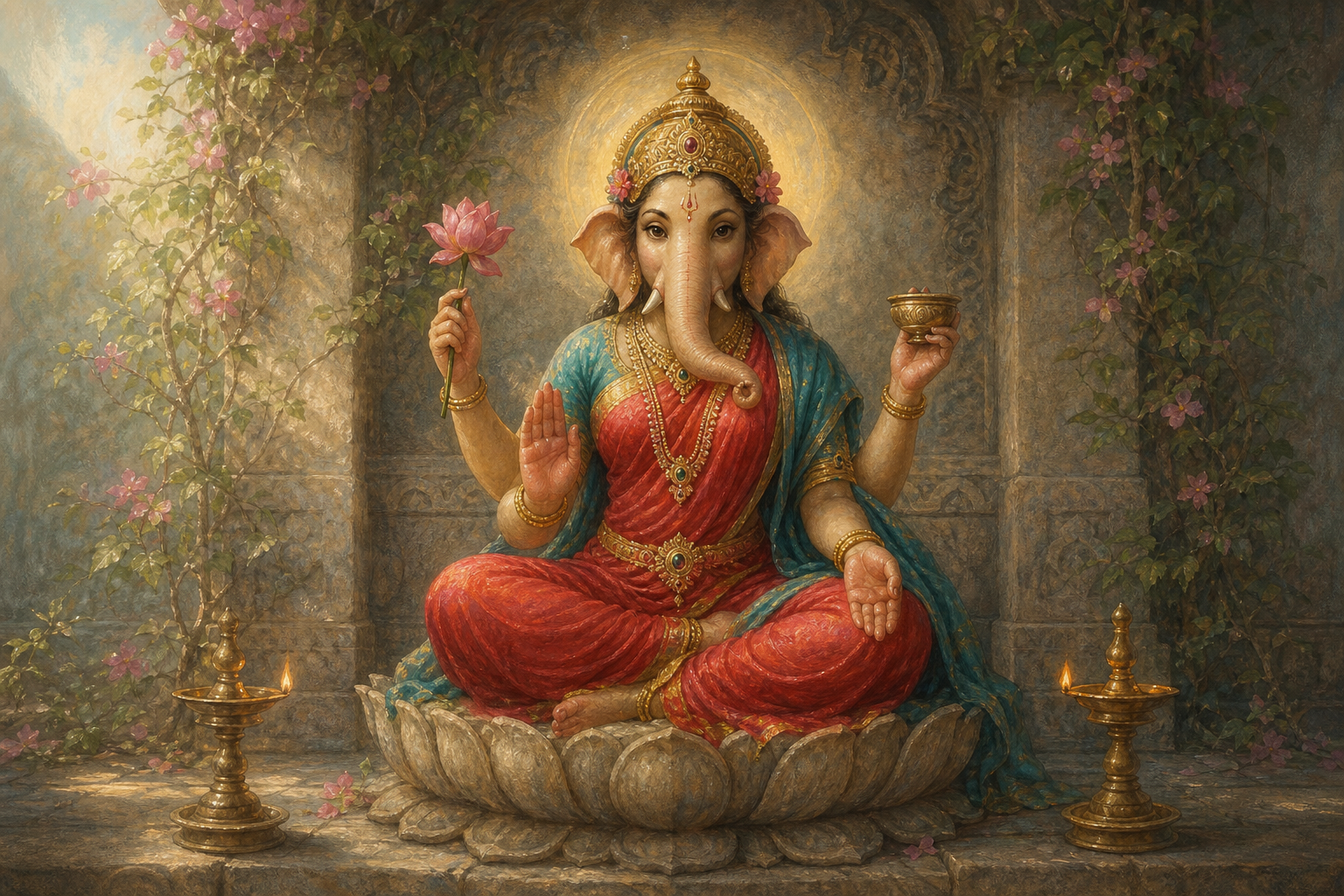
Vinayaki, also called Ganeshani, Gajanani, Ganeshari, and Vigneshwari, brings this principle into a single striking murti. She is the feminine expression of Ganesha’s power, associated in Puranic and Tantric settings with Shakti and the Yogini tradition. Her worship in parts of Tamil Nadu and other South Indian temple settings also places her within living devotional practice, not merely abstract speculation.
Her elephant head preserves immediate continuity with Ganesha. Depending on the depiction, her hands may carry the pasha, ankusha, modaka, or lotus, and she may offer abhaya or varada mudra. The mouse commonly remains her vahana. These features retain the recognizable grammar of obstacle removal, guidance, auspicious beginnings, and blessing, while the feminine body and Yogini context disclose another mode of the same sacred capacity.
Two careless conclusions should be avoided. Vinayaki is not evidence that the masculine form of Ganesha is dispensable, because a particular form has its own devotional integrity. Nor does her existence make gender spiritually meaningless. Her significance lies in showing that divine wisdom and obstacle-removing power are not confined to one gendered presentation.
You can apply this way of seeing during darshan. First notice continuity: the elephant head, vahana, implements, gestures, and recognizable divine function. Then notice transformation: the feminine embodiment, Shakti context, and resulting devotional mood. Finally, ask what response the form requests from you. With Vinayaki, that response may involve clarity before a decision, courage when practice becomes difficult, or compassionate strength in family and community life. The point is not merely to identify an unusual deity correctly. It is to let the iconographic difference refine your understanding of power.
Ucchista Ganapati transcends impurity through discipline
Purity becomes confusing when several different questions are collapsed into one. Physical cleanliness concerns the condition of bodies, spaces, food, or objects. Ritual purity concerns fitness for a specified sacred act under a tradition’s rules. Moral integrity concerns intention and conduct. Ultimate sacredness concerns what divine reality can encompass and transform. An answer at one level does not automatically settle the others.
| Category | What it helps determine | What it cannot determine by itself |
|---|---|---|
| Physical cleanliness | Whether a body, place, or object is practically clean | A person’s moral or spiritual worth |
| Ritual purity | Whether conditions suit a particular rite | The outer limit of divine presence |
| Moral integrity | Whether intention and conduct accord with dharma | Whether every ritual condition has been met |
| Ultimate sacredness | What divine power can embrace and transform | The proper procedure for every form of worship |
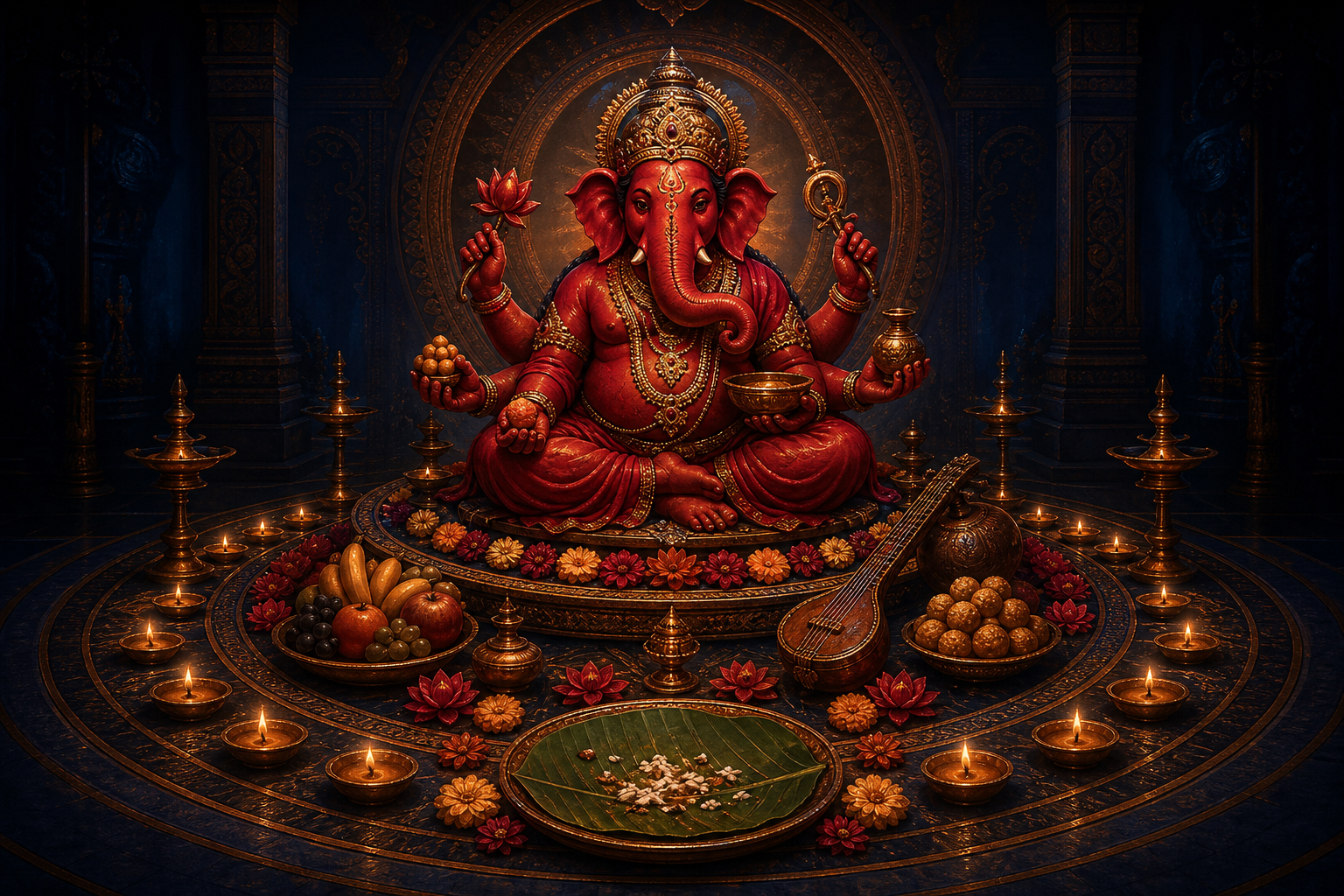
Ucchista Ganapati, traditionally counted as the eighth among Ganesha’s thirty-two forms, makes the distinction unavoidable. Ucchista denotes that which remains. Read the name only as a label for something unclean, and the form can appear to celebrate impurity for its own sake. Read it as a theology of the remainder, and another meaning opens: even what has been left unresolved can be brought within disciplined transformation.
The discipline is essential. Ucchista Ganapati worship is associated with structured mantra, nyasa, dhyana, and ritual procedure. Here, Tantric does not simply mean transgressive. It indicates a method that works through precise practice, visualization, recitation, and directed intention. The deity’s power to transform a remainder is not permission for a practitioner to become careless.
This corrects three errors at once. Impurity does not make the deity spiritually inferior. Divine transcendence does not abolish ritual boundaries. And intellectual interest in a Tantric form does not by itself qualify someone to improvise its formal upasana. If you intend to undertake such worship, use an inherited procedure and appropriate guidance rather than assembling a rite from fragments encountered out of context.
You can still contemplate the principle without pretending that a private reflection is an esoteric ritual. Notice one remainder in your own conduct: an unfinished duty, defensive reply, recurring resentment, or mistake you would rather hide. Name it without dramatizing it. Decide whether it requires an apology, a completed responsibility, restraint, or a change in habit. Then perform that repair. This is not Ucchista Ganapati puja; it is an ethical application of the insight that what remains neglected need not remain outside transformation.
Key takeaways: five questions for unfamiliar sacred forms
- Which level am I interpreting? Separate claims about ultimate reality from iconography, ritual procedure, physical cleanliness, and social identity.
- What does the form preserve? Look for the deity’s familiar attributes, vahana, gestures, function, and relationship to established forms.
- What does the form transform? Identify the category being crossed or expanded, such as masculine and feminine expression, stillness and activity, or purity and remainder.
- What discipline accompanies the teaching? A deity’s power to transcend a boundary does not necessarily authorize a worshipper to ignore the method governing a rite.
- What ethical fruit follows? A sound interpretation should move you toward clearer awareness, courageous repair, compassion, seva, or better-aligned action rather than superiority or sensation-seeking.
This test also helps when someone uses divine transcendence to make an argument about human worth. A ritual category may organize a specific sacred act, but it does not automatically rank the total value of a person. Conversely, affirming equal spiritual dignity does not require pretending that every rite has no conditions. Keeping those statements separate prevents both exclusion and vagueness.
Carry the insight into practice without flattening traditions

The same interpretive care matters across the wider dharmic family. Buddhist language about prajñā and upāya places wisdom beside the effective means that express it. Sikh reflection on nirgun and sargun holds formlessness and manifest attributes in relation. Jain accounts of dravya, guṇa, and paryāya distinguish enduring reality, its qualities, and its changing modes. These are genuine civilizational resonances, but they are not interchangeable formulas.
Use such parallels to improve dialogue, not to erase difference. You do not honor Buddhism by renaming prajñā as Shakti, honor Sikh thought by treating nirgun and sargun as aliases for Shiva and Shakti, or honor Jain metaphysics by forcing it into a Hindu theological system. The more useful recognition is structural: dharmic traditions repeatedly refuse to reduce reality to only the static or the dynamic, only the formless or the formed, only the category or what exceeds it.
In your own sadhana, pair every inward movement with an outward one. If meditation gives you clarity, identify the action that clarity requires. If seva keeps you constantly active, recover the stillness that can examine your motive. If an unfamiliar murti unsettles you, study its attributes and ritual setting before accepting either a sensational explanation or an easy dismissal. If something in your conduct remains unresolved, repair it rather than hiding it behind a claim that everything is sacred.
The next time a divine name or form crosses a category you thought was fixed, let the discomfort slow your judgment. Ask what the form preserves, what it transforms, and what discipline accompanies it. That inquiry keeps your reverence wider than habit without making it vague, and it turns unfamiliarity into a more attentive darshan.
References
- DharmaRenaissance Blog — Shiva Needs Shakti: Devi Upanishad’s Powerful Lesson on Consciousness and Energy
- DharmaRenaissance Blog — Ucchista Ganapati Revisited: Beyond Stereotypes, the Inclusive Tantric Wisdom of Ganesha
- DharmaRenaissance Blog — Goddess Vinayaki (Ganeshani): Unveiling the Sacred Feminine Power of Ganesha
