

Your japa can be regular and your decision can still feel muddy. Family duty pulls one way, personal ambition another, and fear quietly argues for whichever choice feels safest. When every inner voice sounds persuasive, the loudest desire can easily masquerade as spiritual guidance.
The way forward is not to force a mystical answer out of your chanting. It is to become teachable. Chanting steadies the mind; surrender loosens your attachment to a predetermined outcome; scripture and trustworthy counsel test what remains. Together, they help you take the next dharmic step without pretending that uncertainty has disappeared.
Surrender begins when self-certainty ends

In Bhagavad Gita 2.7, Arjuna does something more demanding than admitting that he feels upset. He acknowledges that confusion has compromised his judgment, asks what is truly good, and accepts the need for instruction. His surrender begins with an honest diagnosis: he can no longer trust preference alone to reveal his duty.
This is not passivity. Arjuna does not abandon responsibility, stop thinking, or ask someone else to absorb the consequences of his choice. He gives up the assumption that his first interpretation must be correct. That distinction matters whenever you seek spiritual guidance.
Before asking for an answer, examine the question you are bringing:
- Can you state the conflict plainly, without building a case for the result you already want?
- Are you asking what is dharmic, or merely asking for spiritual permission to choose what is pleasant?
- Which duties already bind you to family, community, work, vows, or those who depend on you?
- What fear, pride, resentment, or attachment might be narrowing your view?
- Are you genuinely willing to receive correction from scripture and sound counsel?
If you cannot yet answer these questions calmly, that does not make chanting pointless. It tells you what the chanting must work on first. The immediate need may not be a decision. It may be enough inner quiet to see the decision without distortion.
Surrender therefore means relinquishing your demand to control the answer. It does not mean surrendering conscience, evidence, or moral agency. You remain responsible for understanding the guidance you receive and for refusing any instruction that violates dharma.
Build a chanting routine that clarifies rather than dramatizes
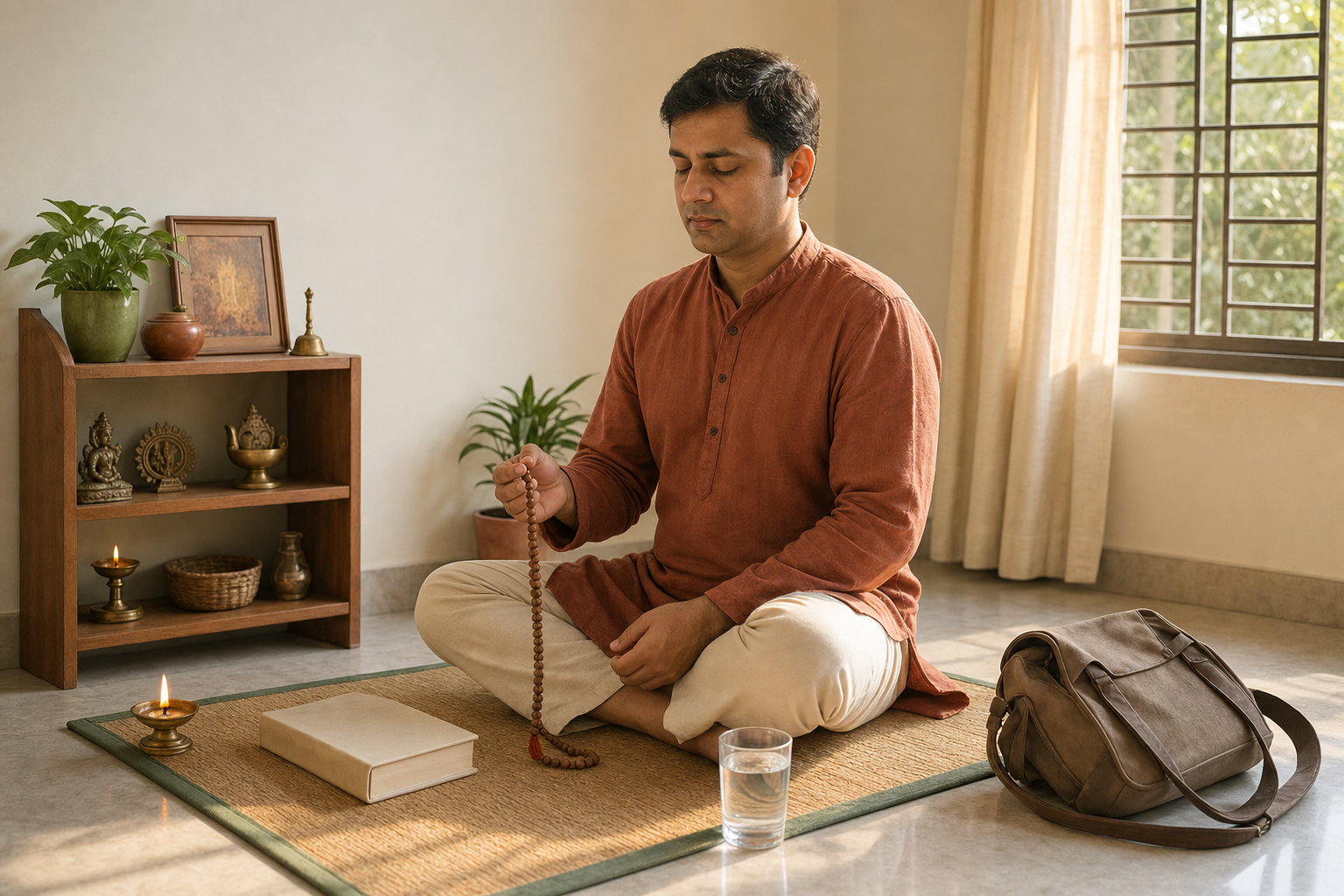
Chanting is remembrance, not divination. Do not demand a sudden emotion, coincidence, dream, or inner sentence as proof that the Divine has approved your preferred course. A quieter result is often more useful: less agitation, more honesty about your motives, and greater willingness to perform an inconvenient duty.
A practical decision-oriented routine can remain simple:
<!– wp:list {