
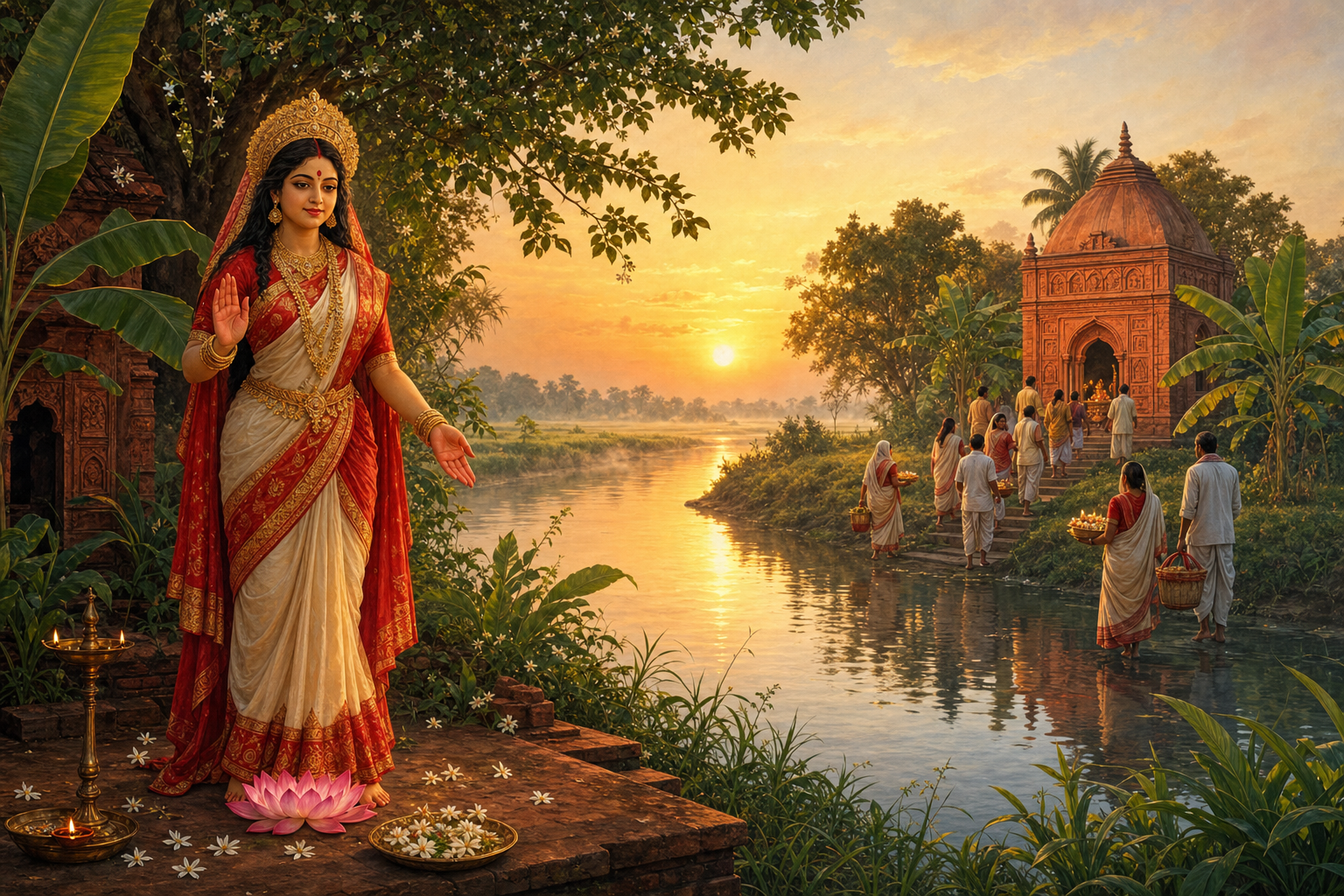
If Bengal’s many forms of the Divine Mother leave you unsure where to begin, do not start by trying to memorize every name, image, and festival. Start with a more useful question: what kind of renewal is this form of the Mother asking you to undertake?
Kamala Kamini Durga and Maa Jogadya offer two distinct answers. One meets fear with reassurance and generosity. The other awakens with a new solar cycle, placing personal intention inside seasonal and communal time. Read together without confusing their separate traditions, they show you that sacred renewal is not a vague promise to feel better. It is a disciplined movement from fear to steadiness, from blessing to responsibility, and from a calendar beginning to changed conduct.
Begin with the Mother’s gesture, not a generic image of power
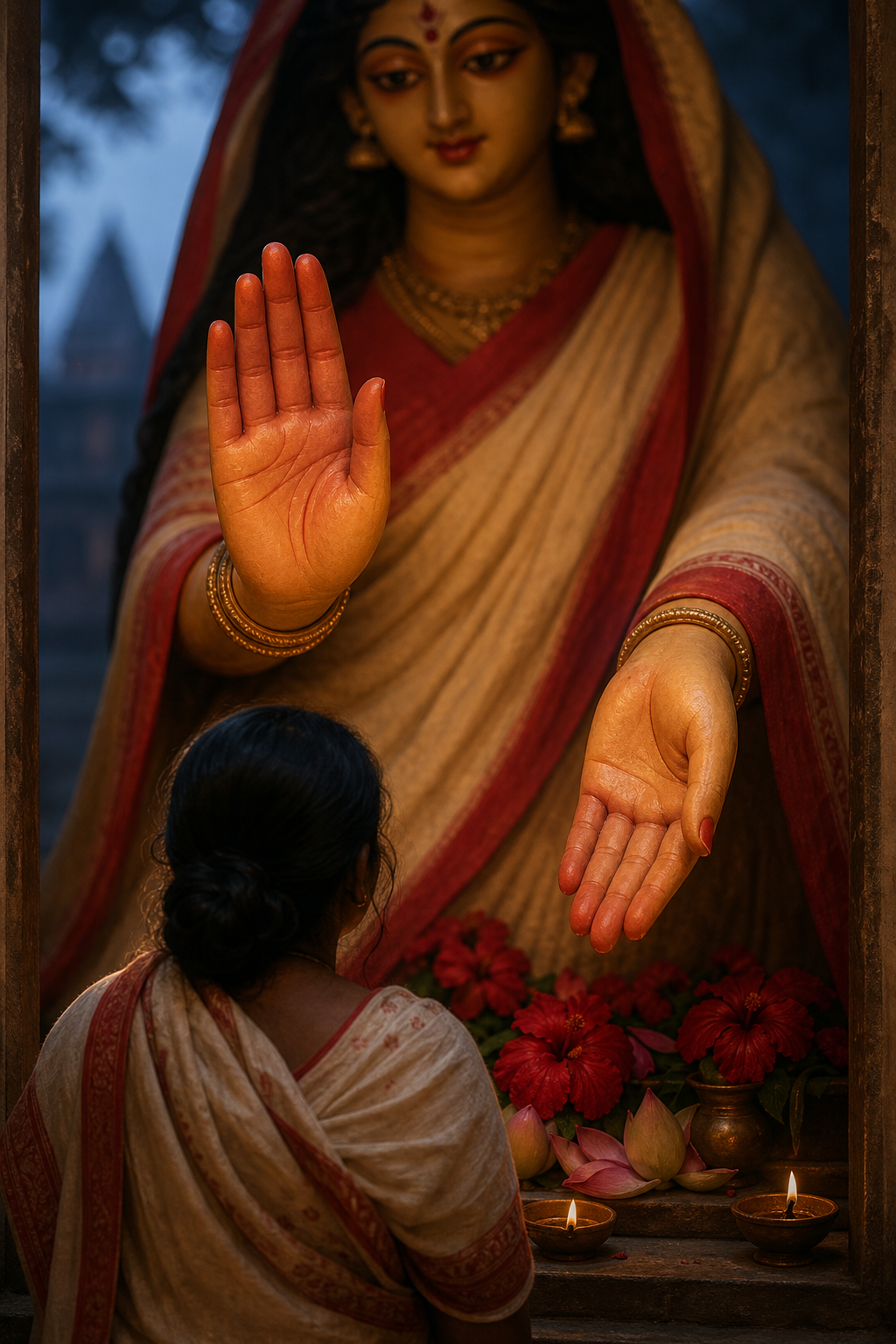
A murti is not merely an illustration of a theological idea. Its posture, hands, objects, expression, and setting tell you how to approach the divine presence. If you overlook those details, every Goddess form can collapse into the same general notion of feminine power. You then miss the particular instruction carried by the image in front of you.
The familiar Mahishasuramardini form of Durga directs attention toward the defense of dharma. Her many arms and weapons make coordinated righteous action visible. Kamala Kamini Durga presents another dimension of the same Shakti. She is typically approached as a compassionate, two-armed Mother whose hands extend protection and blessing. The visual emphasis shifts from defeating an aggressor to rescuing, reassuring, and restoring the person who has passed through danger.
This distinction does not make one form spiritual and the other merely martial. Nor does it make tenderness a lesser power. A community may need courage to confront adharma, but victory alone does not heal fear, rebuild trust, or restore a sense of sufficiency. Maternal Shakti includes the strength that stops harm and the care that makes life whole afterward.
The name Kamala turns your attention to the lotus. Its purity does not depend on escaping the troubled conditions from which it grows. That makes the lotus a demanding symbol rather than a decorative one: you are not being asked to deny conflict, anger, or uncertainty, but to prevent them from determining the quality of your conduct. Kamini adds the sense of an attractive, loving presence. Together, the names hold dignity and tenderness in the same form.
The two hands make this teaching practical. Abhaya mudra addresses fear; varada mudra conveys blessing and benevolent giving. When you encounter such an image, pause before making a request. Ask what fear is governing your next decision, what help or capacity is already available to you, and who should benefit if you receive what you seek. Those questions turn iconography into sadhana.
Maternal power renews life after the moment of danger
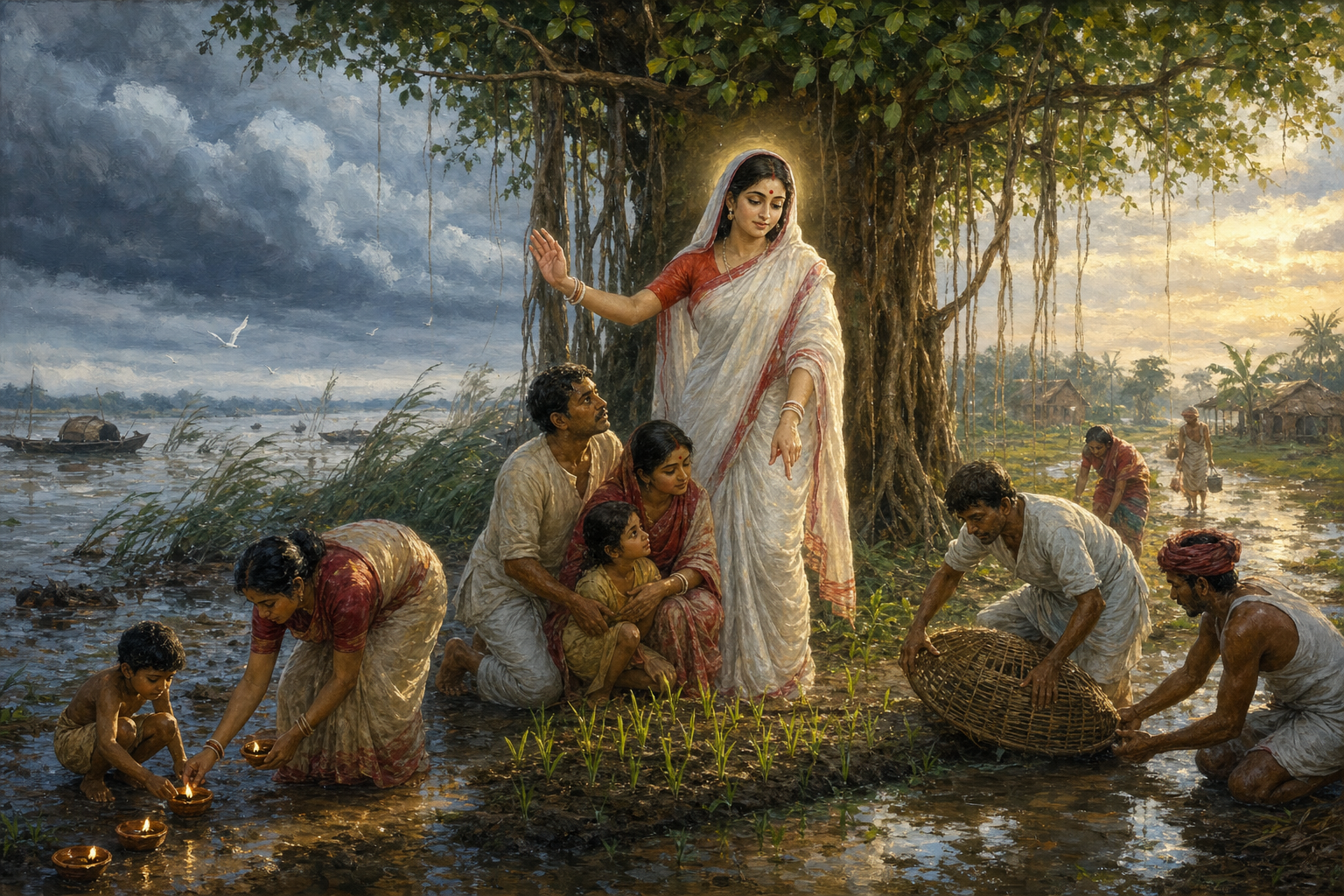
It is tempting to interpret divine protection as a promise that difficulty will disappear. Bengal’s maternal imagery supports a more mature reading. Protection can mean being pulled away from a destructive course, recovering clarity inside a crisis, or gaining enough fearlessness to do what dharma requires. Blessing then becomes the capacity to use that freedom responsibly.
Household narratives about Kamala Kamini Durga sometimes describe the Mother lifting a devotee from floodwaters or redirecting a traveler before danger. These kathas can be heard on two levels without forcing a choice between them. They tell of rescue, and they dramatize the inward passage from panic to discernment. Their power lies in making an otherwise abstract theology of refuge available to family memory and ordinary moral life.
This is also why compassion should not be confused with passivity. Abhaya does not tell you that no threat exists. It tells you not to let fear become your master. Varada does not promise limitless acquisition. It asks you to recognize blessing as something that can flow through you. When scarcity-consciousness is the inner adversary, the corrective is not careless spending or denial of material need. It is the refusal to let a sense of lack excuse grasping, resentment, or indifference.
The same moral pattern has recognizable counterparts across the dharmic family. Hindu daya and karuna, Buddhist karuna, Jain ahimsa, and Sikh seva are not interchangeable doctrines, and they should not be flattened into a generic spirituality. They do, however, place a common test before the practitioner: inner discipline must become non-harm, compassion, or service in relation to other beings. The maternal form makes that union of strength and care especially visible.
You can therefore test a claim of renewal by its effects. If devotion makes you calmer but less willing to defend another person’s dignity, something is missing. If righteous struggle leaves you unable to show mercy once danger has passed, something is also missing. Sacred renewal asks for courage with restraint and care with moral clarity.
Kshirgram places renewal inside cosmic and community time
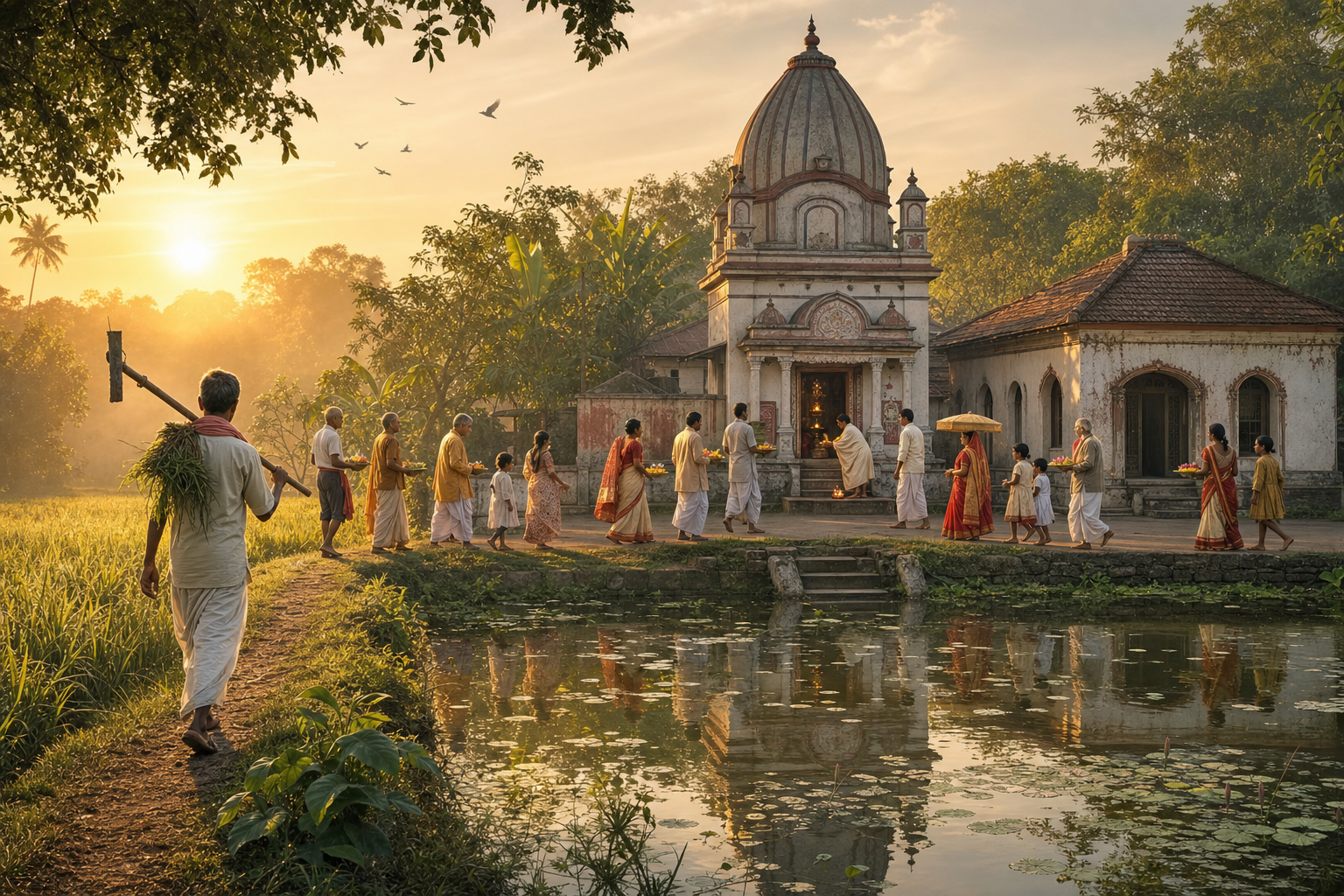
Personal resolutions usually begin with preference: you choose a date and decide what you want to change. Baishakhi Sankranti at the Maa Jogadya Temple in Kshirgram begins from a different premise. Time itself is received as sacred order. The observance occurs in mid-April with the Sun’s transition into Mesha, inaugurating the Bengali solar year and closely aligning with Poila Boishakh. The new beginning is therefore cosmological, seasonal, agrarian, social, and personal at once.
At Kshirgram, this threshold is understood through the sacred awakening of Maa Jogadya. Conch sounds, kindled lamps, dhak, kirtan, alpona, fresh produce, and milk-based prasad do more than create a festive atmosphere. Each element locates devotion in a shared world of sound, light, food, labor, memory, and place.
- Cosmic time: the solar passage tells you that renewal is participation in an order larger than personal mood.
- Seasonal nourishment: fresh produce and milk-based offerings connect gratitude to the land and to the work that sustains a community.
- Collective memory: elders, families, and younger participants carry ritual knowledge across generations rather than treating the festival as a private experience.
- Ethical intention: prayer for a favorable beginning is joined to restraint, gratitude, mutual care, and the safeguarding of right conduct.
These layers tell you what to notice if you attend a regional Goddess festival. Do not look only at the central murti or wait for an intense private feeling. Notice who prepares the space, which seasonal materials appear, how sound changes the atmosphere, what elders explain to children, how prasad circulates, and which responsibilities the observance renews. The social life around the sanctum is not incidental to the sacred event. It is one of the ways the tradition remains alive.
If Kshirgram is not your inherited temple tradition, approach it as a guest rather than treating its rites as interchangeable material for a home ritual. Follow the temple’s local customs and current instructions. At home, work with the underlying disciplines of awakening, gratitude, and service without claiming to reproduce a temple ceremony. Respect for sacred plurality requires both participation and boundaries.
Keep scripture, local katha, temple custom, and reflection distinct
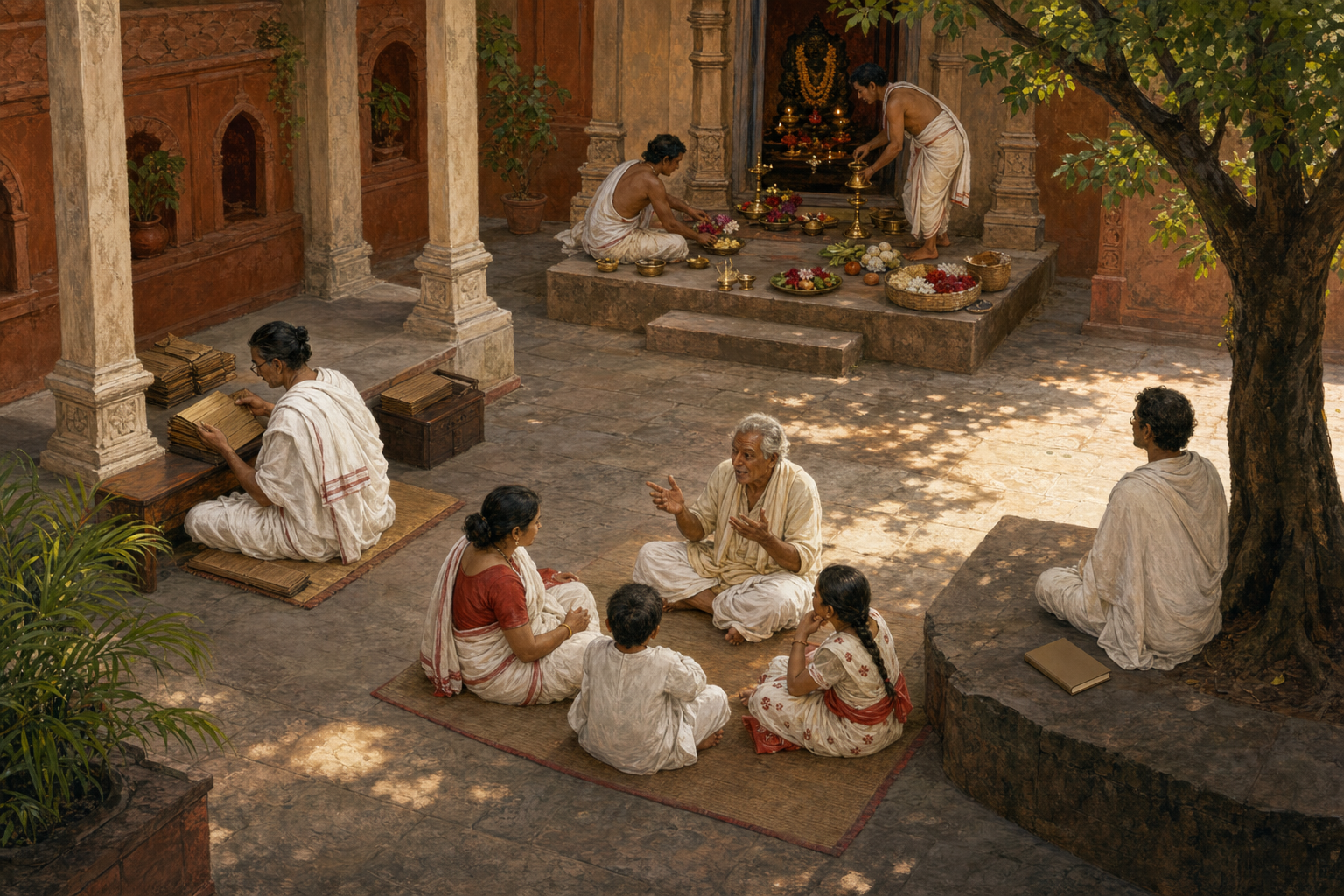
Living traditions often transmit meaning through several kinds of authority at once. Confusion begins when a moving household story is advertised as a universally attested scriptural episode, or when anything not found in a Purana is dismissed as spiritually worthless. You can avoid both errors by asking what kind of claim you are hearing.
<!– wp:list {