

If you are drawn to a deity and grateful to a spiritual teacher, initiation can begin to feel like the obvious next step. It may be. It may also be a wish for certainty, belonging, recognition, or rescue wearing sacred language. You need to know the difference before you make a vow.
Personal devotion, guidance from a teacher, and formal initiation can strengthen one another, but they are not the same relationship. Separating them for careful examination does not weaken shraddha. It gives your faith a sound foundation.
Begin with the relationship you are actually seeking
Start with a question that is easy to overlook: what do you want from spiritual life right now? You may want to worship Bhagavan more steadily, understand a teaching, correct your conduct, find a community, or commit yourself to a lineage. Those desires can coexist, but none automatically proves that you are ready to accept a particular person as your initiating guru.
Write down your answers to these prompts without using ceremonial language:
- My devotion is directed toward…
- I want a teacher to help me with…
- I expect initiation to change…
- If initiation were postponed, I would continue…
- The part of this decision that makes me uneasy is…
The last two prompts are especially revealing. If your practice would collapse without a ceremony, attention from the teacher, or recognition from the community, strengthen the practice before formalising the relationship. If you cannot name what troubles you, do not silence the hesitation merely because other devotees appear certain.
A need for comfort does not make your devotion false. It does mean that you should not quietly turn a guru into a substitute parent, therapist, infallible decision-maker, or guarantor of worldly success. A spiritual teacher may offer compassion and wise counsel, but the relationship becomes distorted when you expect one human being to remove every uncertainty from your life.
The Dharmic traditions also do not use words such as guru, refuge, transmission, vows, and initiation in identical ways. A Hindu sampradaya, Buddhist lineage, Jain sangha, and Sikh discipline may describe authority and commitment differently. Learn the vocabulary and obligations of the path you are actually entering. Do not assemble a private version of initiation from unrelated teachings found online.
Judge a teacher before granting the teacher authority
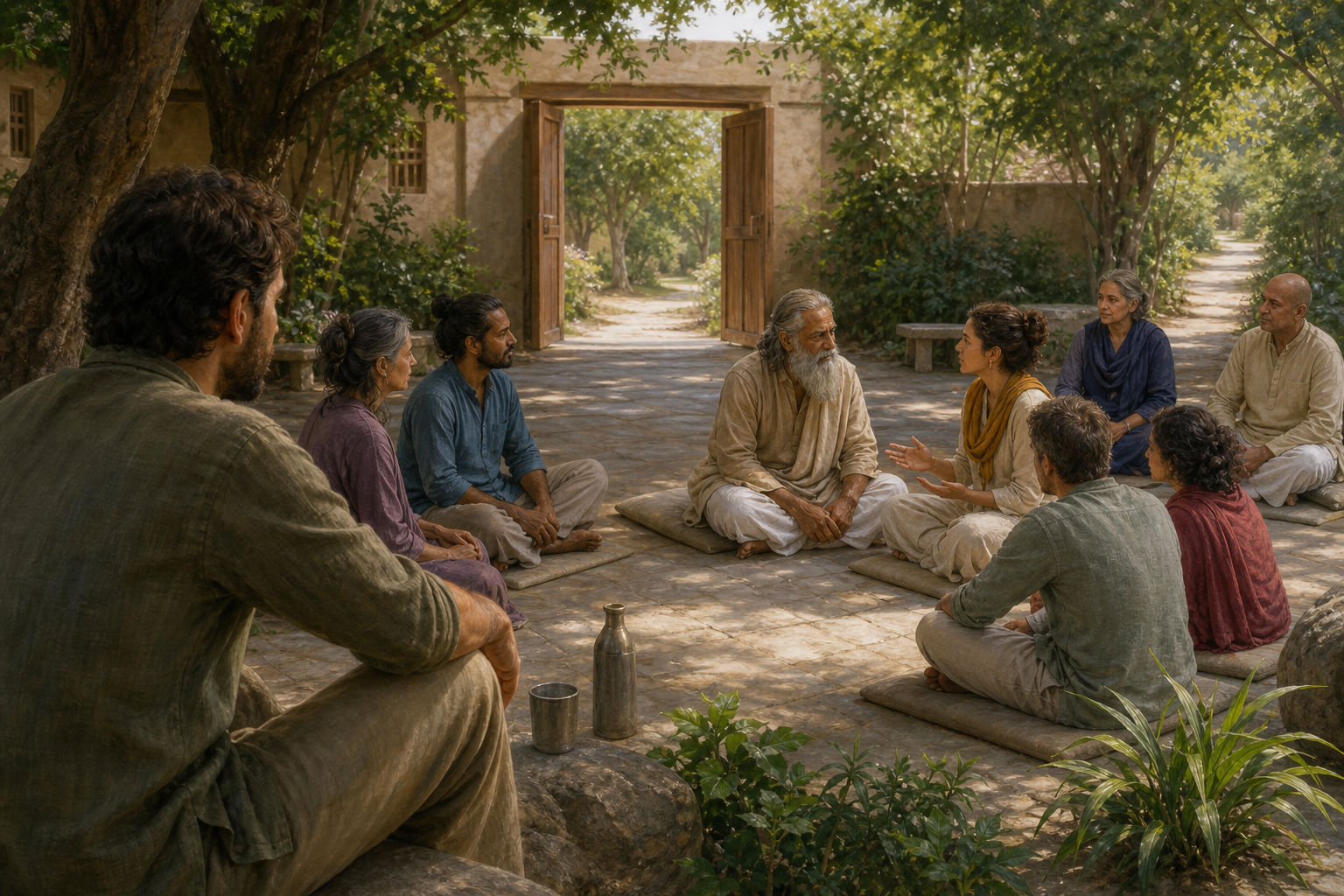
A compelling discourse can show learning. Warmth can make spiritual instruction approachable. The remembered wit of an acharya can reveal a vivid human personality. None of these qualities, by itself, establishes that you should place your conscience, practice, or personal decisions under that person’s authority.
Look at several dimensions separately. Can the teacher explain the tradition accurately? Does the teacher direct attention toward the Divine, Dharma, scripture, and disciplined practice rather than constantly back toward personal importance? Are questions answered without ridicule? Is correction proportionate, or does it become humiliation? Do the teacher and institution maintain understandable boundaries around money, privacy, touch, sexuality, and confidential information?
Observe ordinary settings, not only festivals and emotionally charged gatherings. Notice how the teacher responds when a volunteer makes a mistake, when someone disagrees respectfully, or when no influential donor is present. Also examine the surrounding institution. A sincere teacher can still be served by a poorly governed organisation, and an impressive organisation cannot compensate for an unsafe teacher.
Ask practical questions before discussing initiation:
- Who can question or correct the teacher if a serious problem arises?
- Where can a disciple report misconduct without going through the person involved?
- Are financial requests recorded and explained?
- What personal information is kept confidential, and who can access it?
- Can disciples maintain relationships with family members and responsible people outside the community?
- How does the community respond when a respected person is credibly accused of harm?
Do not demand theatrical perfection. Teachers are human, institutions make mistakes, and a clipped remark is not the same as a pattern of abuse. Demand accountability instead. A healthy response to error includes acknowledgement, correction, appropriate restitution, and safeguards against repetition. Spiritual rank should not be used to make ordinary ethical scrutiny seem impious.
Secrecy about abuse, sexual pressure, threats of divine punishment for refusing personal demands, coercive control of money, or attempts to isolate you from everyone who might challenge the teacher are not advanced spirituality. Leave an immediately unsafe situation, tell someone trustworthy, preserve relevant evidence, and use the appropriate civil or professional channels when harm may have occurred. A sacred title does not place anyone beyond the law or beyond Dharma.
Treat initiation as a covenant, not a spiritual upgrade

Initiation often marks formal entry into a disciplined relationship. Depending on the lineage, it may involve a mantra, vows, a spiritual name, rules of conduct, a method of worship, service, or recognition within a community. The precise theology differs, so the meaning must come from the lineage itself rather than from a generic definition.
Teaching can lead toward initiation without becoming identical to it. A Srimad-Bhagavatam class followed by an initiation ceremony places instruction and commitment beside each other while still showing that they are distinct acts. You may learn from a teacher long before becoming that teacher’s initiated disciple. You may also respect an instructor deeply without concluding that initiation is the right relationship.
Before consenting, ask for a plain-language account of what the ceremony will mean after the flowers, guests, and heightened emotion are gone. Sacred elements may properly remain private within a lineage; obligations imposed on you should not be a surprise.
- What exactly am I promising, and to whom is the promise made?
- Which daily practices, ethical rules, dietary disciplines, forms of service, or community duties follow from it?
- Which practices require initiation, and which are already open to an uninitiated seeker?
- What should I do when illness, family duty, work, or weakness prevents full observance?
- Are donations expected? If so, are they voluntary, fixed, or connected to particular services?
- What responsibilities does the teacher accept toward the disciple?
- Who provides guidance if the teacher becomes unavailable?
- How does the lineage regard learning from other teachers or participating in family traditions?
- What process exists if conscience, safety, or serious doctrinal disagreement later makes the relationship untenable?
Discuss the answers with an initiated practitioner who lives the discipline in ordinary circumstances. If possible, also speak with a responsible elder who is not arranging your ceremony and has nothing to gain from your decision. You are not looking for permission to distrust everyone. You are checking whether the public promise and the lived expectation match.
If you are pressed to decide during an emotionally intense event, ask for time. If questions are treated as betrayal, pause. If the commitments remain vague, do not assume that their sacredness excuses the vagueness. Consent to a spiritual discipline should be informed and free.
Initiation is generally a beginning of responsibility, not a certificate of attainment. It does not prove that you are spiritually superior, guarantee extraordinary experiences, or remove the need for discernment. Its value appears in the discipline you actually live.
Let regular worship make devotion personal before you promise more
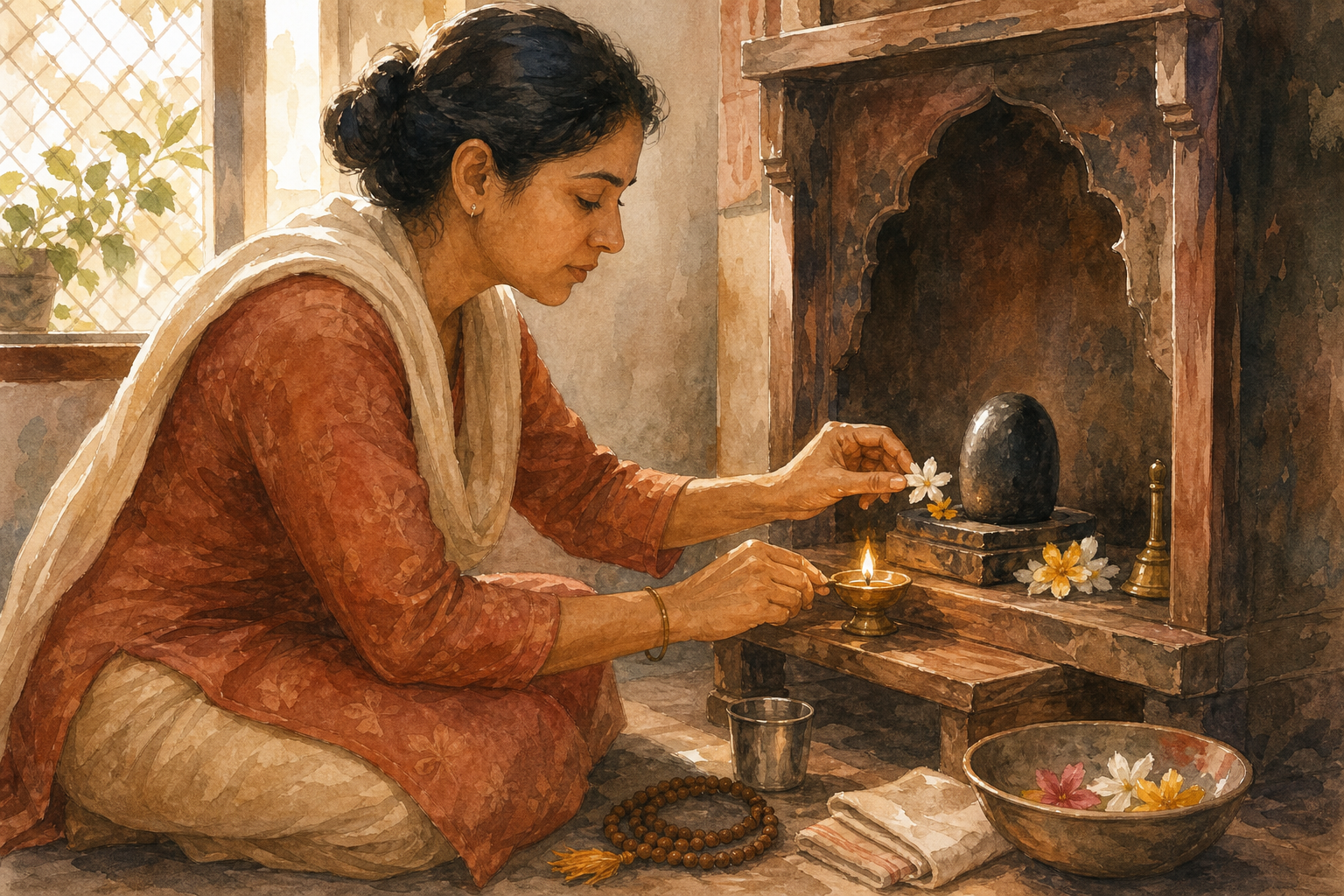
You do not need to manufacture dramatic experiences to discover whether devotion is real. Puja makes the relationship concrete through attention, offering, remembrance, and repeated presence. In that sense, the Divine moves from an abstract concept toward a personal companion.
Personal does not mean casual, and companion does not mean a projection that approves every impulse. The discipline of puja asks you to arrive, prepare, offer, attend, and close respectfully. Repetition exposes the difference between attraction to a spiritual mood and willingness to sustain a relationship through practice.
If you are not initiated, ask a knowledgeable person in the relevant tradition which forms of worship are public and appropriate for you. A simple routine can include a clean place, a recognised murti or sacred symbol, a permitted offering, and a public prayer or Divine Name. Do not take a mantra from the internet when the lineage reserves it for initiation. Restraint here is not spiritual inferiority; it is respect for context.
Keep a brief practice record with four headings:
- Practice: what you actually did.
- Instruction: what the teacher or tradition explicitly asked you to do.
- Interpretation: what you think an experience meant.
- Question: what still needs clarification.
This separation matters. A strong feeling during worship is an experience; it is not automatically a command from the deity or guru. A private interpretation may be meaningful; it is not automatically a doctrine for everyone else. Recording the distinction lets a teacher correct you without requiring you to deny what you felt.
Judge the fruit of practice in ordinary conduct. Are you becoming more truthful, punctual, restrained, attentive, and willing to repair harm? Can you serve without needing to be noticed? Can you accept correction without collapsing or retaliating? Visions and intense moods are difficult to evaluate, but conduct gives you something observable.
A sound teacher helps devotion become more precise. Sound devotion, in turn, makes your attachment to the teacher less possessive. The goal is not to become indispensable to a religious personality. It is to become steadier in Dharma and less governed by ego.
Choose the next faithful step, not the most dramatic one

Your next step depends on what is already clear:
- If devotion is steady but you have not tested a teacher, continue an appropriate public practice, attend ordinary community activities, and observe before making vows.
- If you trust the teacher but do not understand the commitments, request clear answers and speak with people already living them.
- If a ceremony is approaching while pressure or fear remains, postpone it. Delay is less damaging than a promise made without free consent.
- If the lineage, obligations, safeguards, and teacher’s role are clear, and the desire remains without social pressure or promised status, proceed according to that tradition with sober joy.
Key takeaways
- Devotion to the Divine, gratitude toward a teacher, membership in a community, and initiation are related but distinct commitments.
- Evaluate learning, character, boundaries, and institutional accountability separately; charisma cannot substitute for any of them.
- Ask what initiation requires on an ordinary day, including practice, conduct, service, money, and the handling of difficulty.
- Use regular, tradition-appropriate worship to test whether devotion survives without ceremony, attention, or status.
- Pause when consent depends on urgency, secrecy, fear, or unanswered questions.
Before your next conversation with a teacher, bring your written account of what you seek and the commitments you need explained. Ask what initiation will require when enthusiasm is low and life is inconvenient. Listen for clarity, proportion, accountability, and freedom. Then take the next faithful step, even if it is quieter than the one you first imagined.
References
- Dandavats — The Acharya’s Wit on Display
- Dandavats — New Mayapur SB class by Nrisimha Kavaca Prabhu
- Hindu Blog — Why Hindu Pujas Make God More Personal
