
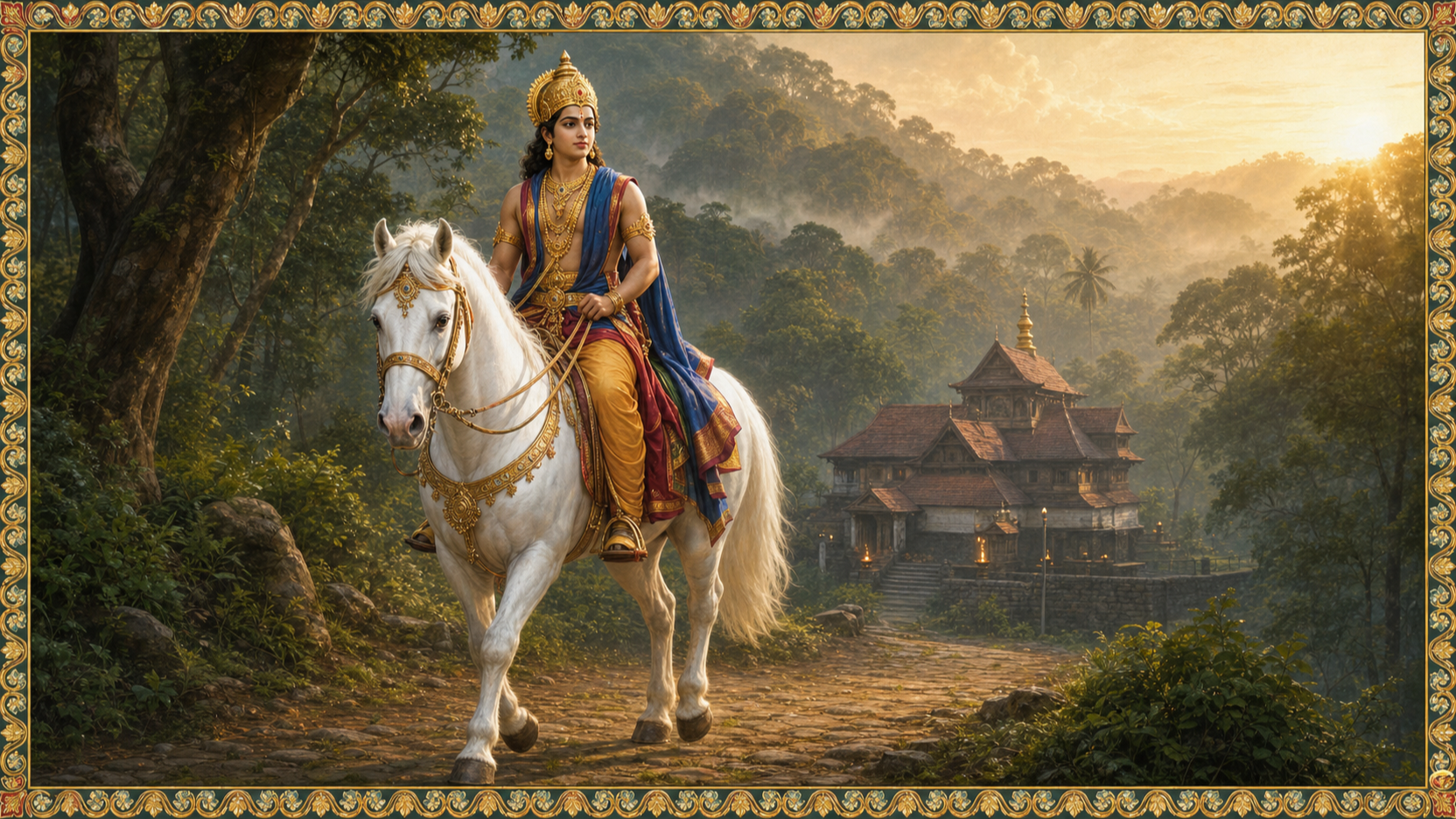
If you have encountered an image of Ayyappa riding a white horse, or heard the name Aswarooda Sastha without an explanation, the essential identification is straightforward: Aswarooda Sastha, also written Ashwarooda Shasta, is the mounted warrior-guardian form of Sastha or Ayyappa.
That identification matters because the image is not simply a decorative variation. It brings protection, readiness and valor to the foreground. Once you understand those qualities, you can approach the form without confusing courage with aggression or inventing practices that may not belong to your temple tradition.
How to recognize Aswarooda Sastha
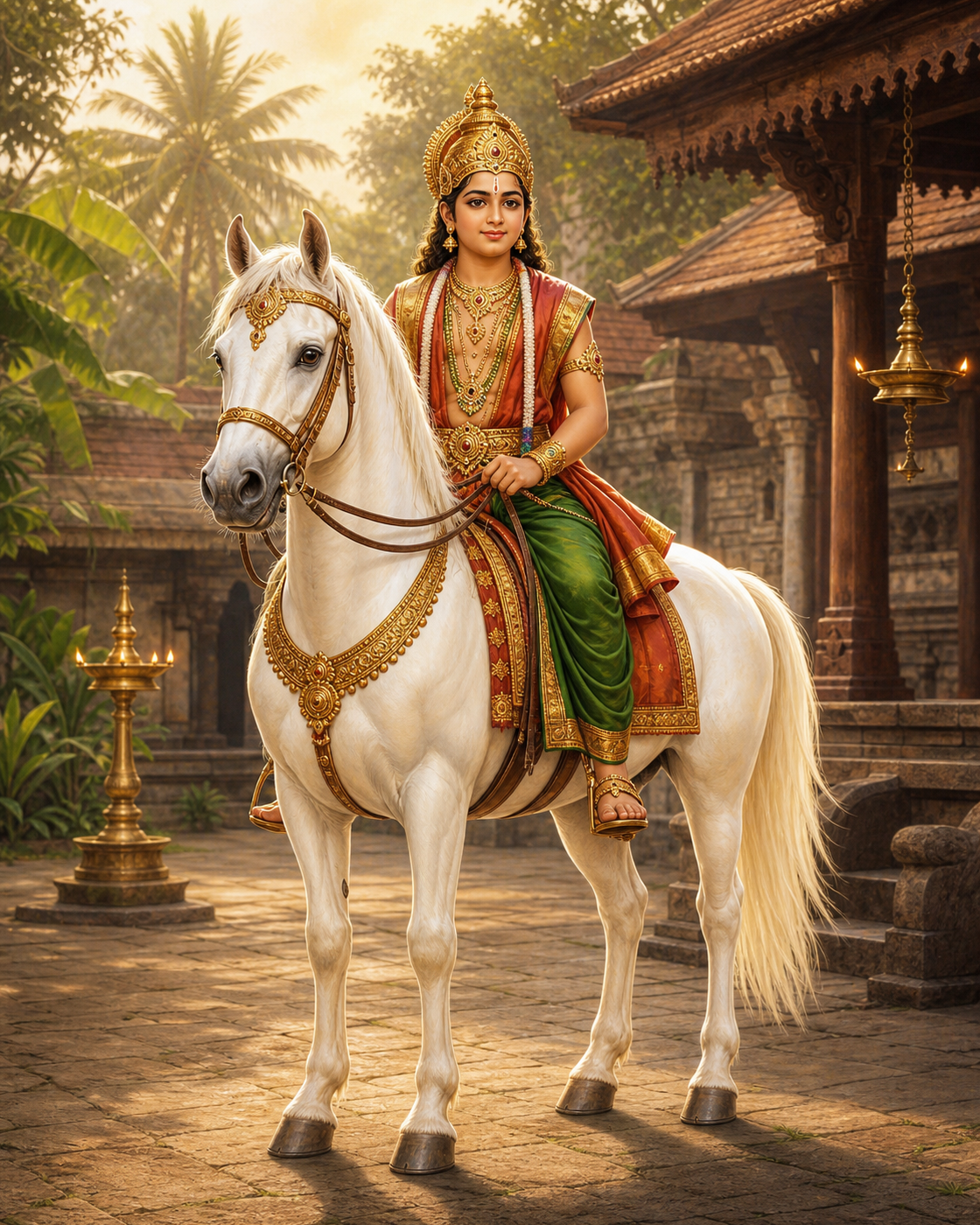
The white horse is the clearest visual marker, but it should not be used in isolation. Hindu temples contain many guardian figures, regional deities and mounted warriors. A horse-mounted image should not automatically be labelled Aswarooda Sastha merely because it resembles one.
- Confirm the name: Look for a shrine inscription, temple notice, festival announcement or identification supplied by the temple community.
- Notice the mounted form: Aswarooda Sastha appears on a white horse rather than being represented only through a stationary posture.
- Read the overall character: The presentation is martial and heroic, with the emphasis falling on guardianship, protection and valor.
- Recognize both spellings: Aswarooda Sastha and Ashwarooda Shasta refer to the same form in English-language usage.
If a label and your visual impression disagree, follow the temple’s identification. Iconography helps you notice a form; the living tradition tells you whom the shrine actually honors.
The warrior image is about protection, not uncontrolled aggression
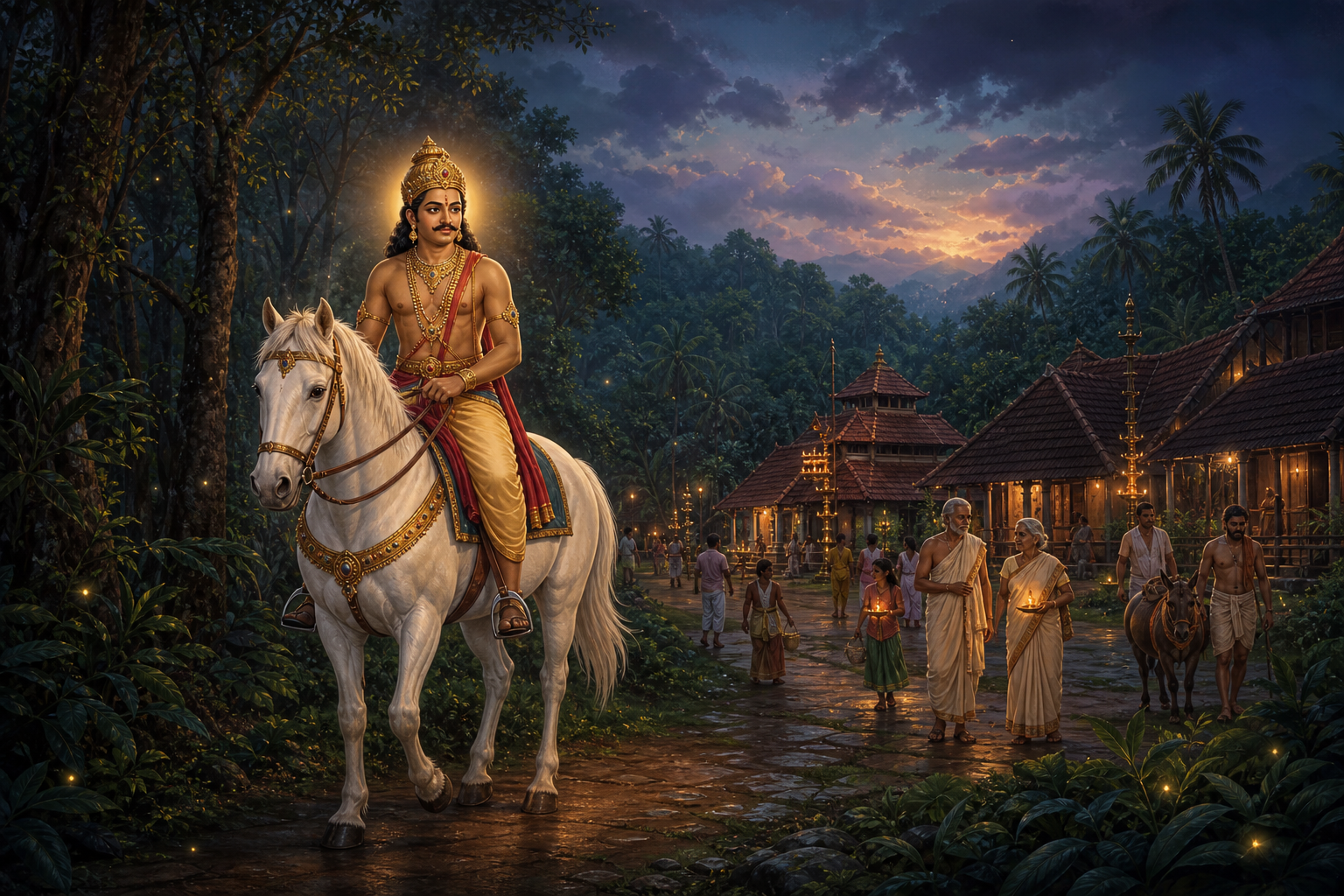
A mounted warrior can be misread as an emblem of conquest or anger. The more useful emphasis in Aswarooda Sastha is the relationship between valor and guardianship. Power is not displayed for its own sake. It is ordered toward protection.
The horse gives the image a sense of movement and readiness. This allows you to contemplate a kind of courage that does not remain passive when dharma requires action. That is a devotional reading of the icon, not a claim that every lineage assigns an identical symbolic meaning to each feature.
When you stand before this form, three questions are more fruitful than a vague request for strength:
- What responsibility am I avoiding because it requires courage?
- What person, principle or boundary genuinely needs protection?
- Where am I mistaking anger, pride or retaliation for valor?
These questions turn the warrior image inward before directing it outward. Courage becomes disciplined conduct: acting when necessary, remaining restrained when provoked and accepting the burden that comes with protecting what is right. That is a far more demanding response than treating the deity as a divine endorsement of one’s existing anger.
How this form fits within the wider understanding of Ayyappa
Aswarooda Sastha is presented as one of eight sacred manifestations of Sastha, who is understood as embodying the combined divine energies of Shiva and Vishnu. The mounted guardian is therefore not a separate rival to Ayyappa. It is a focused manifestation that makes particular divine qualities easier to contemplate.
This distinction is useful if your primary understanding of Ayyappa emphasizes stillness, restraint or inward discipline. The heroic mounted form need not contradict those qualities. Readiness without self-mastery becomes recklessness; restraint without the willingness to act can become avoidance. Aswarooda Sastha brings disciplined action into view while remaining within the larger identity of Sastha or Ayyappa.
The Shiva-Vishnu synthesis also guards against a narrow reading of martial strength. The form represents power held within integration, not power produced by division. For a devotee, that can become a practical standard: before calling an action dharmic, ask whether it preserves clarity, proportion and responsibility.
How to approach Aswarooda Sastha in worship
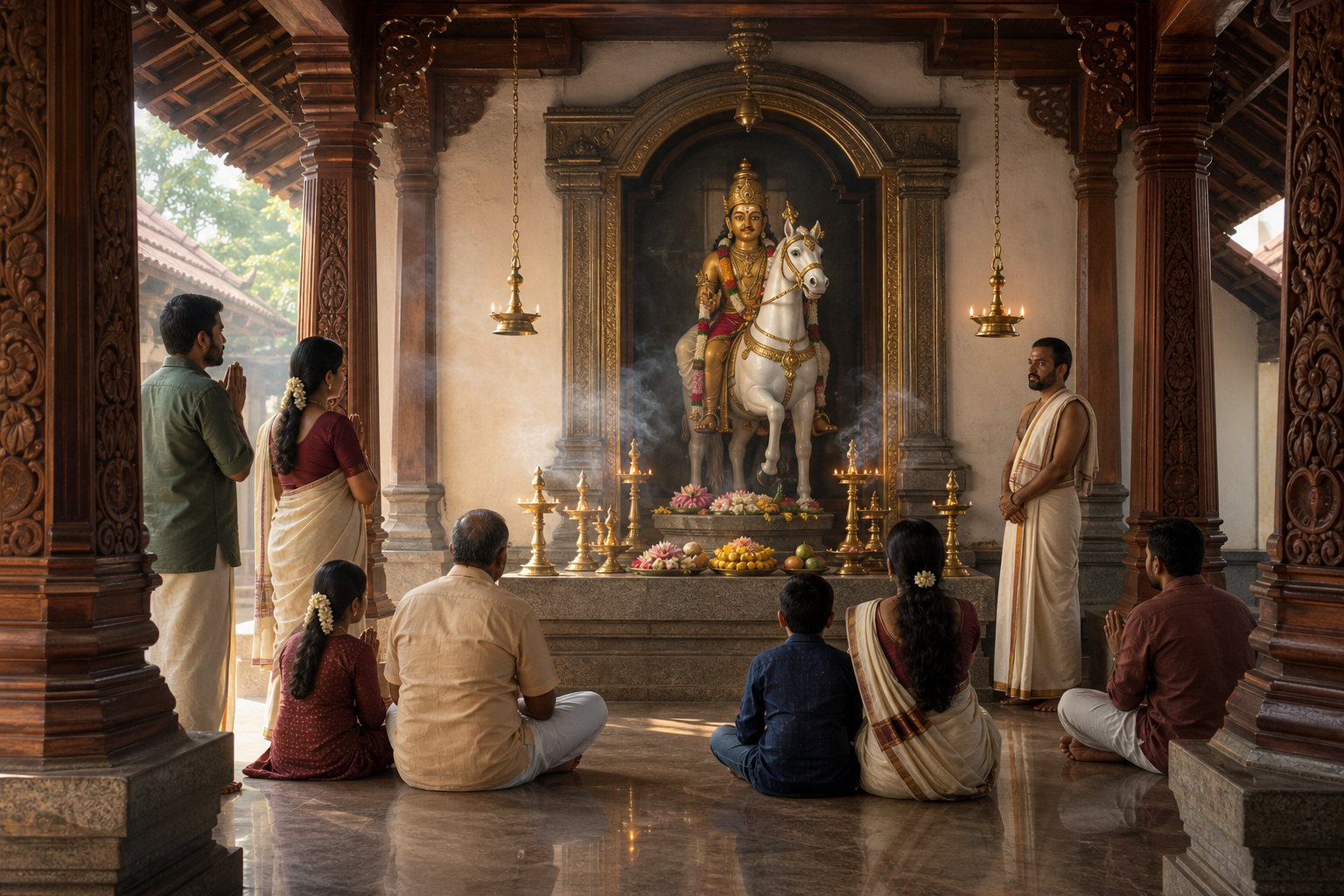
The name and central meaning can be understood broadly, but ritual details may belong to a particular shrine, lineage or community. Do not assume that a mantra, offering or vow associated with one form of Ayyappa automatically applies to every other form.
- Verify the form. Ask the temple priest, caretaker or knowledgeable member of the local community whether the deity is specifically worshipped as Aswarooda Sastha.
- Learn the local maryada. If the shrine has established procedures, follow its guidance on prayers, offerings, observances and conduct. A confident-looking instruction copied from elsewhere is not a substitute for the tradition of the shrine before you.
- Keep an uninstructed visit simple. Offer a respectful namaskara and place your concern before the deity without pretending to know a specialized rite. You do not need to manufacture an esoteric practice to make the encounter meaningful.
- Name what requires protection. Make the prayer concrete. It may concern your integrity, a family duty, a vulnerable person, a community responsibility or the courage to address an unresolved wrong.
- Pair prayer with one dharmic action. Decide what you will do after leaving: speak truthfully, keep a boundary, fulfill a neglected obligation, seek reconciliation where possible or protect someone without humiliating another person.
This approach keeps devotion from becoming transactional. The aim is not to demand a guaranteed outcome from the deity. It is to place fear, responsibility and action within a sacred frame, then conduct yourself in a way that is worthy of the protection you seek.
A guardian form must also never be used to sanctify hostility toward an entire community or to justify unlawful conduct. Protection is directed toward dharma. Personal rage does not become righteous merely because it is expressed in religious language.
Key takeaways
- Aswarooda Sastha, or Ashwarooda Shasta, is the white-horse-mounted warrior-guardian form of Sastha or Ayyappa.
- The defining emphasis is valor in the service of protection, not aggression for its own sake.
- This form belongs within a wider understanding of Sastha and is presented as one of eight sacred manifestations.
- The mounted form can help you examine readiness, responsibility, disciplined courage and the proper use of strength.
- Confirm a shrine’s identification and follow its local tradition before adopting specialized mantras, offerings or vows.
- Let your prayer produce one concrete dharmic action rather than ending with a request for divine intervention.
The next time you encounter Aswarooda Sastha, pause before reducing the image to a generic warrior deity. Confirm the name, notice how movement is joined to guardianship, and identify the responsibility that now requires your disciplined action. The most fitting response to a protector on horseback is not admiration from a distance, but courage placed in the service of dharma.