
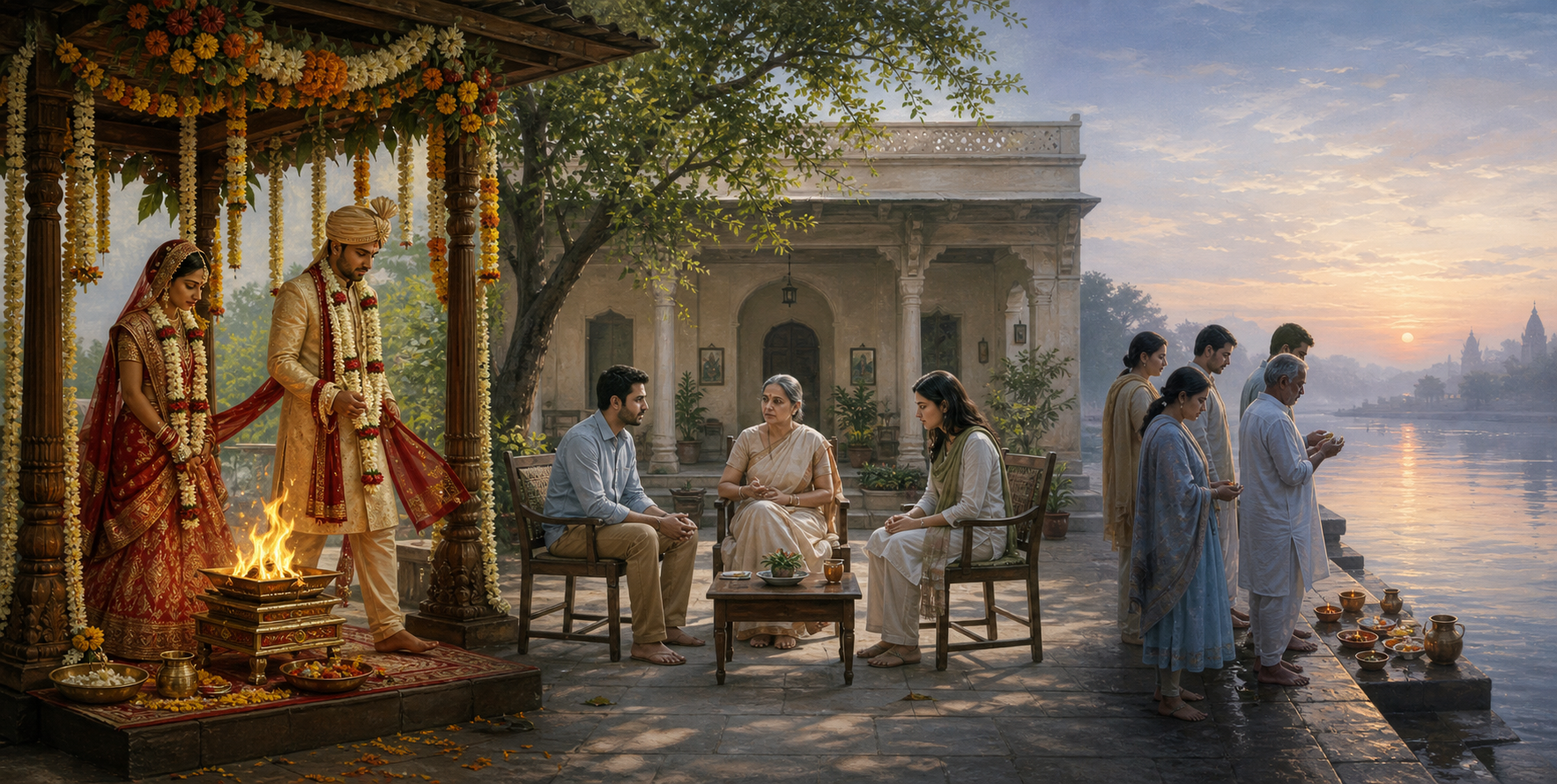
You may be asking a deceptively hard question: if Hindu tradition has a samskara for death, why does it have none for divorce? The answer matters when a marriage is ending and you want to act within dharma rather than simply copy a civil procedure or invent a ritual of destruction.
The essential distinction is between consecrating a transition and dissolving a relationship. Antyeshti marks the final transition of embodied life. Divorce addresses the breakdown of obligations between two living people. That difference tells you what ritual can do, what it cannot do, and how to seek closure without misrepresenting Hindu tradition.
Key takeaways
- A samskara sanctifies entry into, maturation within, or passage from a dharmic state; it is not a ceremony for every major life event.
- Vivaha consecrates a marriage, but its breakdown is addressed through ethics, responsibility, applicable law, pastoral care, and sometimes prayaschitta rather than another samskara.
- Antyeshti belongs among the samskaras because death is an irreversible transition from embodied life, not a negotiated cancellation of an earlier rite.
- Sannyasa is not a religious form of divorce. It is an initiation into disciplined renunciation, with its own vows and responsibilities.
- A family may arrange a voluntary, non-canonical prayer for reconciliation or closure, but it should not be called a samskara or imitate funeral rites.
One principle separates vivaha, divorce, and antyeshti
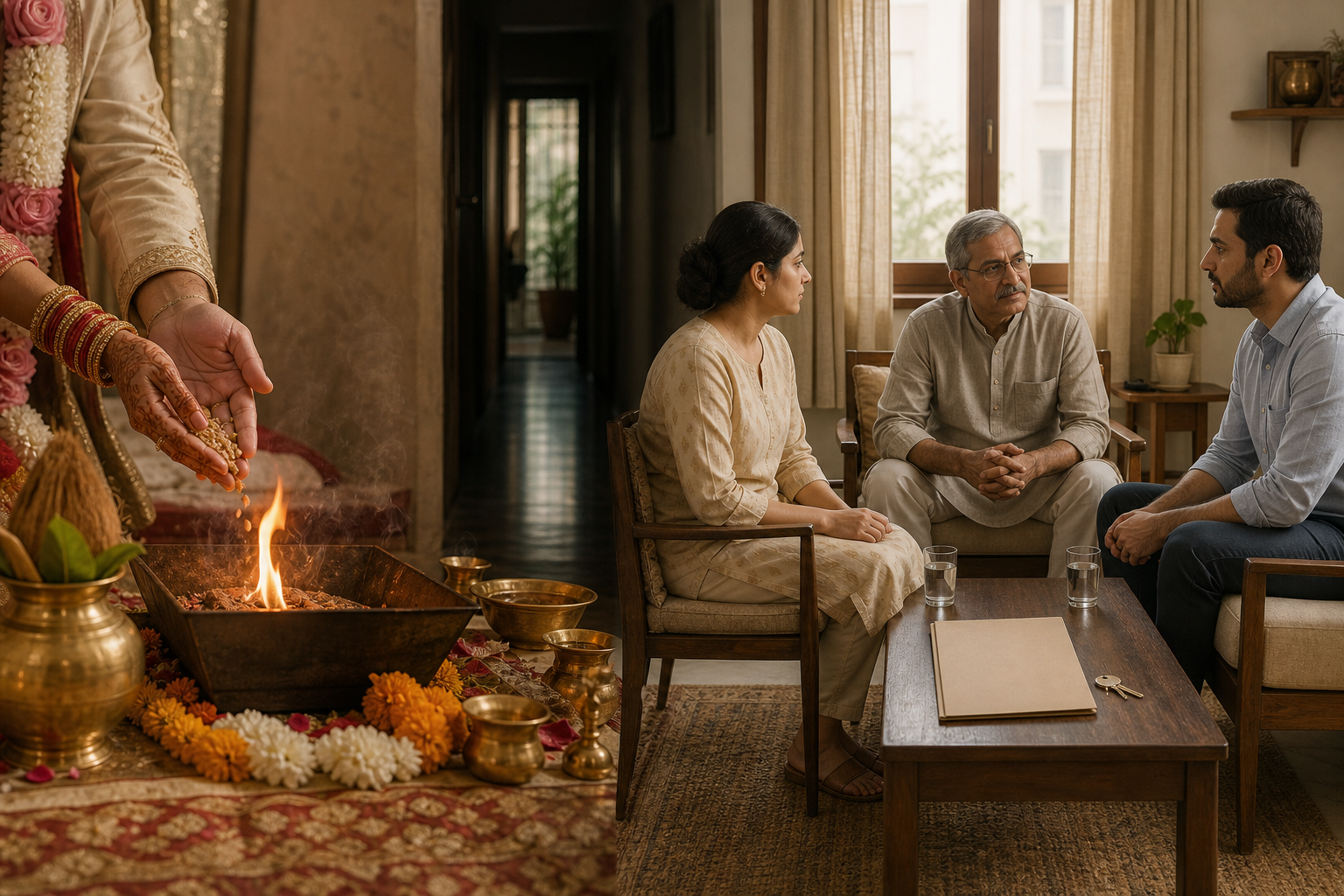
The sixteen samskaras do not form a catalogue of everything important that can happen to you. They are consecratory rites. They orient conception, birth, education, marriage, and death toward dharma and spiritual purpose. In practical terms, a samskara places a transition inside a sacred discipline and affirms the responsibilities that come with it.
Vivaha fits that pattern. It is an entrance into a shared way of life ordered toward dharma, artha, kama, and ultimately moksha. Its sacred character is more than contractual, even though marriage also has social and legal consequences.
Divorce moves in the opposite procedural direction. It does not initiate the couple into a new shared dharmic office. It unwinds a relationship and requires decisions about duties that may remain after the household has divided. That is why marital separation belongs primarily to ethical, legal, and personal conduct rather than the consecratory structure of the samskaras.
This classification prevents two common mistakes. The first is assuming that the absence of a divorce samskara makes every separation spiritually unreal or forbids a person from leaving danger. It does not. The second is assuming that, because no rite exists, the sacred promises of marriage can simply be treated as though they never happened. That does not follow either. The tradition gives the bond gravity while directing its breakdown into a different field of responsibility.
When you encounter a proposed ceremony for separation, apply a simple test: does it consecrate a genuine dharmic vocation, or does it merely dramatize the cancellation of a relationship? If it is meant to acknowledge grief, seek forgiveness, encourage restitution, or establish personal resolve, it may serve as a pastoral observance. It does not thereby become a seventeenth samskara.
Why antyeshti is not a precedent for ritualizing divorce
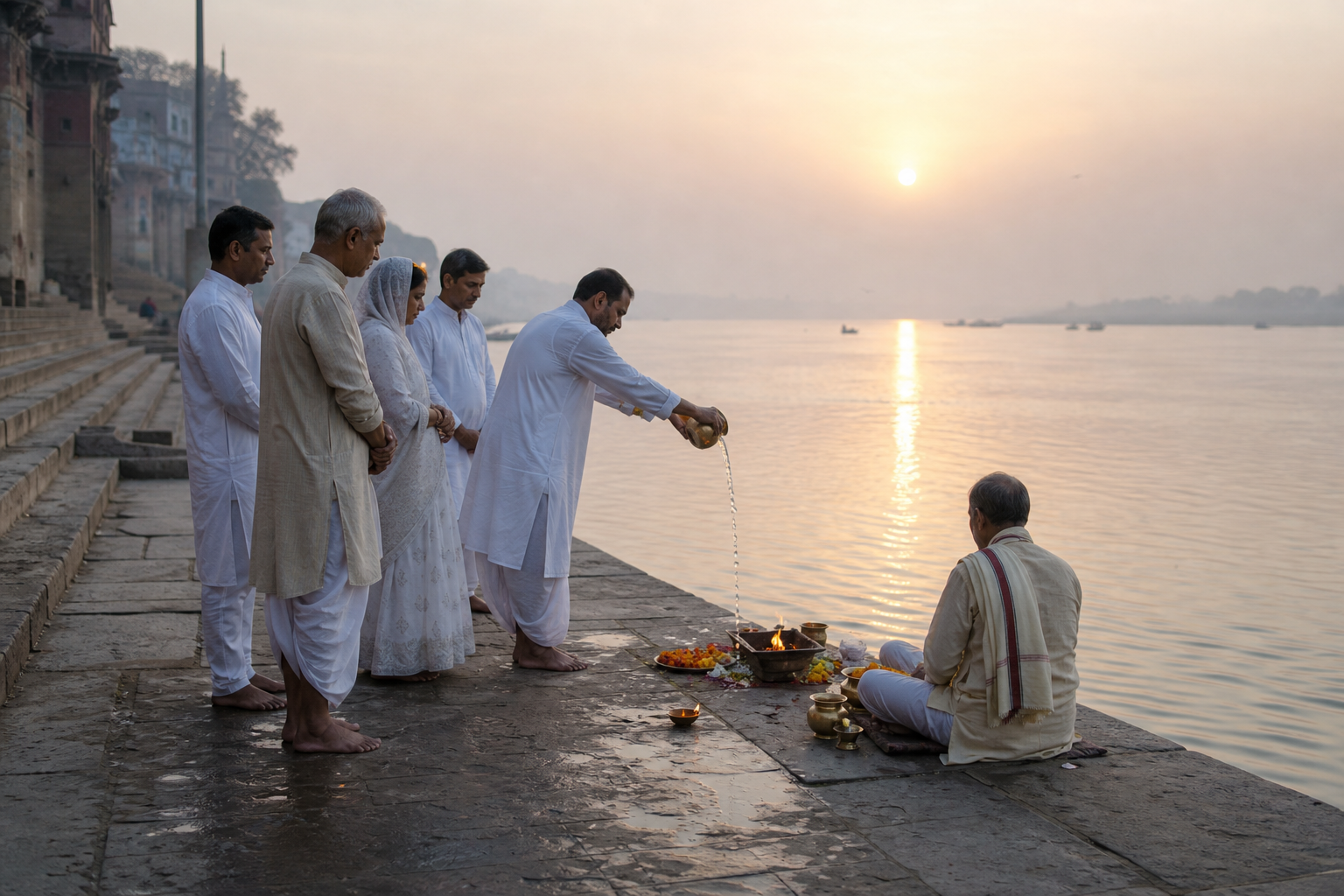
Antyeshti addresses a transition that no negotiation can reverse. The deceased no longer occupies an embodied place in the household. The rite honors the departed, assists the family in relinquishing physical attachment, and gives mourners a disciplined way to face loss.
The broken earthen pot makes that purpose especially visible. In many communities, the chief mourner circles the funeral pyre with a water-filled clay vessel. Water escapes through a small opening, and the vessel is finally shattered near the pyre. Within the rite’s symbolism, the dwindling water evokes the departure of vital life, while the broken vessel marks the separation of the embodied person from the physical form.
The elements reinforce the lesson. Clay returns to earth, water is released, agni transforms the body, and the sound of shattering gives an outward form to an otherwise inward rupture. The gesture teaches impermanence and release while allowing grief to be expressed inside a shared ritual order.
That meaning is precisely why the symbol should not be casually transferred to divorce. A separated spouse is alive. Two moral agents remain, and unresolved duties may remain with them. Treating one person as ritually dead can turn grief into humiliation, obscure continuing obligations, or intensify family hostility. A symbolic funeral, a mock pyre, or the breaking of a funeral pot is therefore a poor model for marital closure.
Practice also varies by region, lineage, and community. Kumbha-vidhi or matka-phod may be observed in one setting and handled differently in another. Pot-breaking should not be confused with kapala kriya, which has a distinct place in the completion of cremation. Later observances such as pinda-dana and shraddha continue remembrance beyond the cremation itself.
If you are responsible for arranging a funeral, do not reconstruct the sequence from a short description. Before the cremation, ask the family’s priest or knowledgeable elder who performs each act, whether the pot rite belongs to your custom, what the crematorium permits, and which observances follow afterward. Preserving the rite’s meaning matters more than forcing one regional form into every setting.
Sannyasa is an initiation, not a religious escape hatch
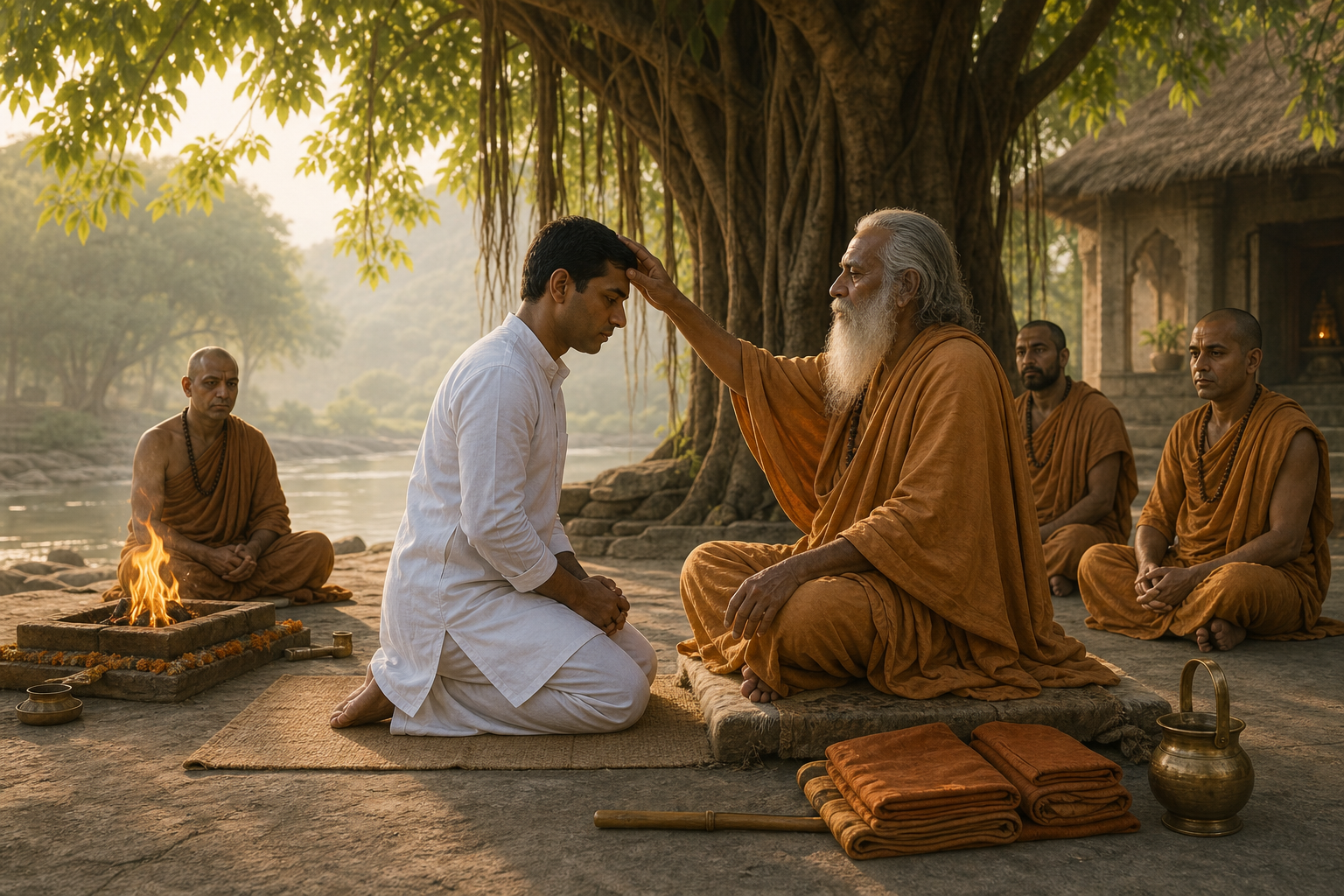
Sannyasa can look like dissolution because the renunciant relinquishes possessions, status, and ordinary social identity. But its structure is constructive. It is entry into a demanding vocation shaped by vows, tapas, discipline, and an identity directed toward inner freedom. It does not function as a ceremonial delete button for vivaha.
This distinction is crucial if marital pain has made renunciation attractive. Wanting distance from conflict is not automatically a vocation to sannyasa. Nor does adopting the language or appearance of renunciation settle questions of maintenance, property, stridhan, restitution, or other responsibilities created by the marriage.
If you are contemplating a renunciate path after separation, examine the order of events. First establish physical safety and clarify your outstanding obligations. Then seek sustained guidance within a living tradition rather than treating sannyasa as self-declared closure. Ask whether the aspiration remains when the immediate crisis subsides, whether you accept the discipline as well as the release, and whether a qualified teacher recognizes the vocation. Renunciation should deepen responsibility to truth, not provide religious language for evading it.
You can still simplify your life, deepen prayer, study, and practise non-attachment without claiming formal sannyasa. That quieter path may give you room to distinguish a durable spiritual calling from the understandable desire to escape pain.
A practical dharmic response when separation is unavoidable
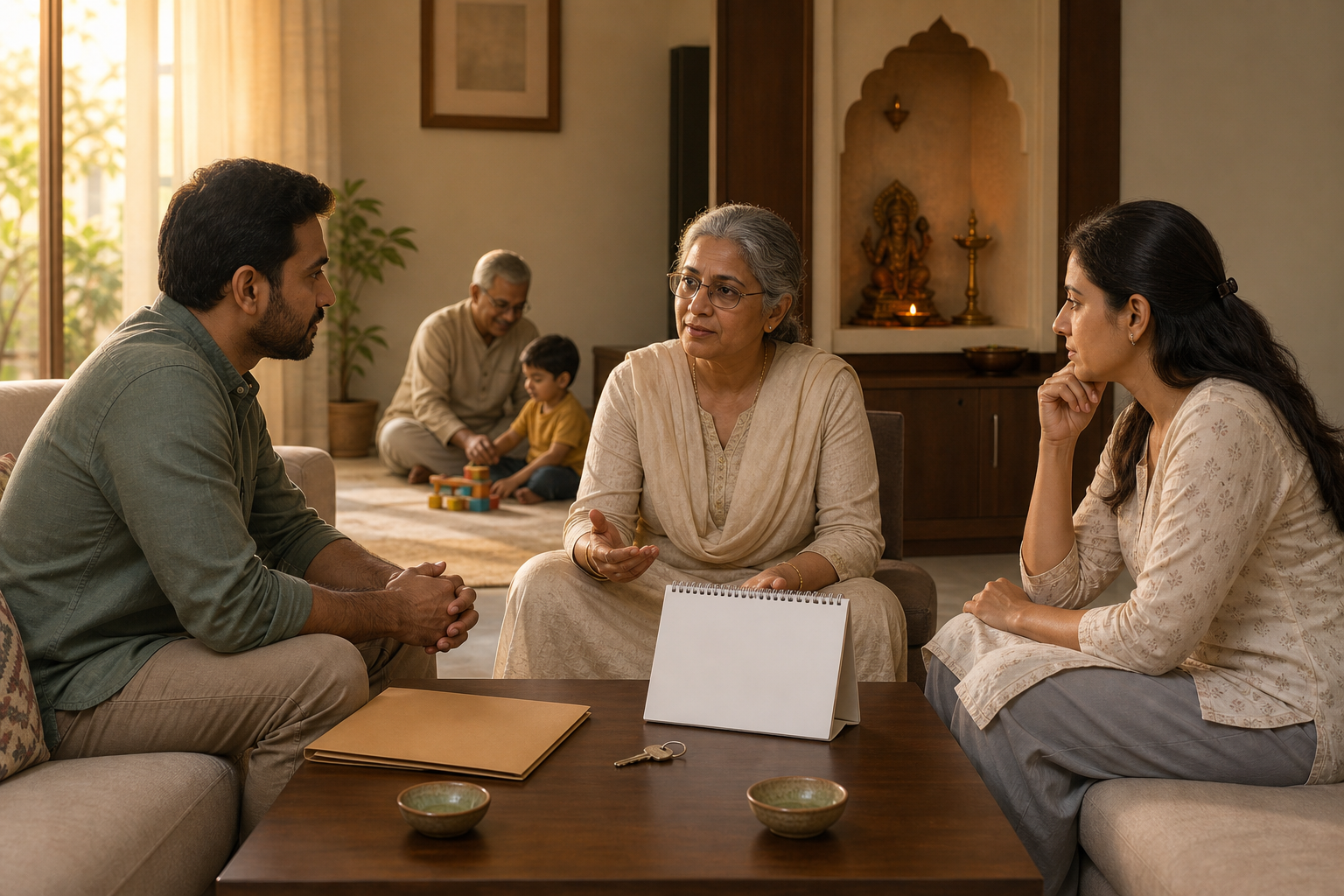
The absence of a canonical rite does not leave you without a framework. It means the work must be done in the right order. A ceremony cannot make an unsafe situation safe, determine legal status, distribute property, or repair harm by itself.
1. Put safety and truthful naming first
If there is violence, coercion, stalking, or an immediate threat, move first toward physical safety and qualified local help. Do not delay protection so that relatives can arrange reconciliation, obtain ritual approval, or preserve appearances. Prayer and family mediation are not substitutes for emergency assistance, legal protection, or professional care.
Where there is no immediate danger, name the actual situation without euphemism. A temporary separation, an attempt at reconciliation, and a final legal dissolution require different decisions. Calling all three the same thing creates expectations that no ceremony can resolve.
2. Settle duties before staging closure
Clarify maintenance, property, stridhan, and any other enforceable obligations through competent advice in the jurisdiction that governs the marriage. Dharmic discussion can shape the honesty, restraint, and compassion with which you proceed, but it cannot replace applicable civil law. Do not sign away rights or transfer valuable property merely to make a ritual feel complete.
Where either person has caused identifiable harm, restitution is more meaningful than theatrical purification. Prayaschitta may be discussed with a trustworthy acharya when wrongdoing genuinely calls for it, but it should concern one’s own conduct. It must not become a way to assign all impurity or blame to the other spouse.
3. Decide whether you seek reconciliation or closure
Do not design one gathering that ambiguously promises both. If reconciliation is the aim, the work belongs in honest conversation, counseling, prayer, and agreed changes in conduct. It should happen only when participation is voluntary and safe. If the decision to separate is final, a closure observance should not be used to pressure either person back into the marriage.
Satsanga, reflective study, and counseling can support either path. Their value lies in creating steadiness and accountability, not in manufacturing a religious verdict about who won the separation.
4. Keep any closure observance modest and accurately named
A family or individual may choose a non-canonical prayer for clarity, forgiveness, reconciliation, or closure. The safest form is simple enough that nobody mistakes it for a newly invented samskara:
- State the purpose plainly and do not call the gathering a divorce samskara.
- Include only people whose presence is welcome and safe. Joint participation requires the free consent of both spouses.
- Use prayer, silence, reflective reading, or counsel appropriate to the family’s sampradaya.
- Let each person speak only for their own conduct and commitments. Nobody should pronounce the other spiritually dead, impure, or permanently condemned.
- Name any concrete responsibility that still remains after the gathering. Symbolic closure must not erase practical duty.
- Avoid funeral imagery, including a mock cremation or broken funeral pot. Antyeshti symbols belong to the transition they were formed to serve.
If only one spouse wants an observance, it can remain a private practice of prayer and reflection. It should not claim to dissolve the other person’s vows, secure their forgiveness, or speak on their behalf. That boundary allows spiritual recovery without turning ritual into coercion.
5. Ask the community to support people, not gossip about them
Relatives and religious communities often want a clear moral narrative, but separation rarely becomes more dharmic through public accusation. The useful questions are concrete: Is anyone unsafe? Are outstanding duties being handled honestly? Does either person need confidential counsel? Can practical help be offered without demanding intimate details?
Ahimsa, truthfulness, compassion, and mutual dignity provide a sound discipline here. Buddhism’s language of impermanence, Jainism’s emphasis on aparigraha, and Sikh reflection on hukam offer resonant insights into loss and non-attachment, but those affinities should not be used to flatten distinct rites into one generic ceremony.
If you must make one decision now, make it the next truthful and responsible one: secure safety, clarify obligations, or seek qualified pastoral counsel. Ritual becomes helpful after those realities are faced. It cannot replace them.
References
- DharmaRenaissance Blog – Why the 16 Samskaras Exclude Divorce: Sacred Purpose, Dharma, and the Role of Sannyasa
- DharmaRenaissance Blog – Broken Pot in Hindu Death Rituals: Powerful Symbolism of Impermanence, Grief, and Liberation
