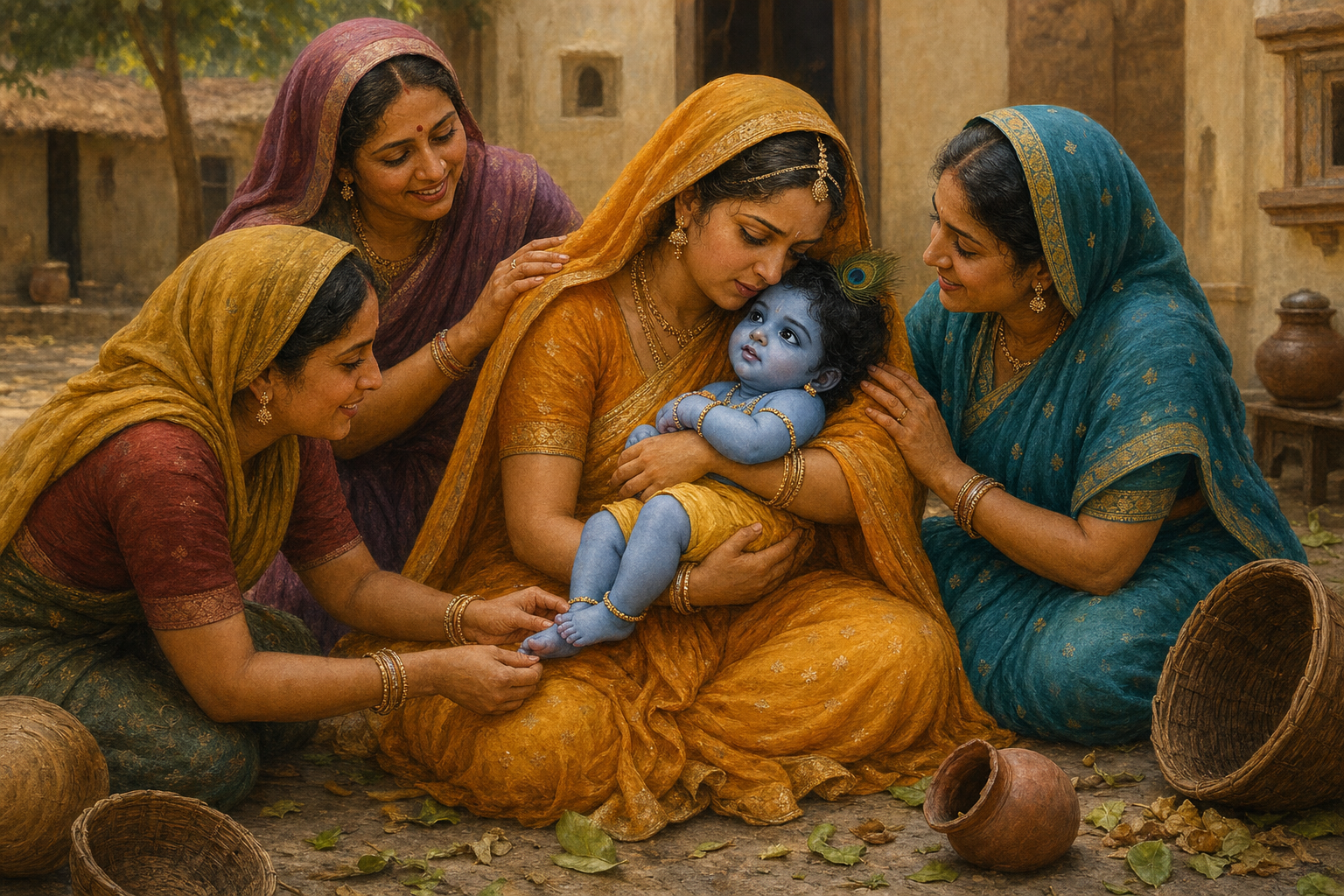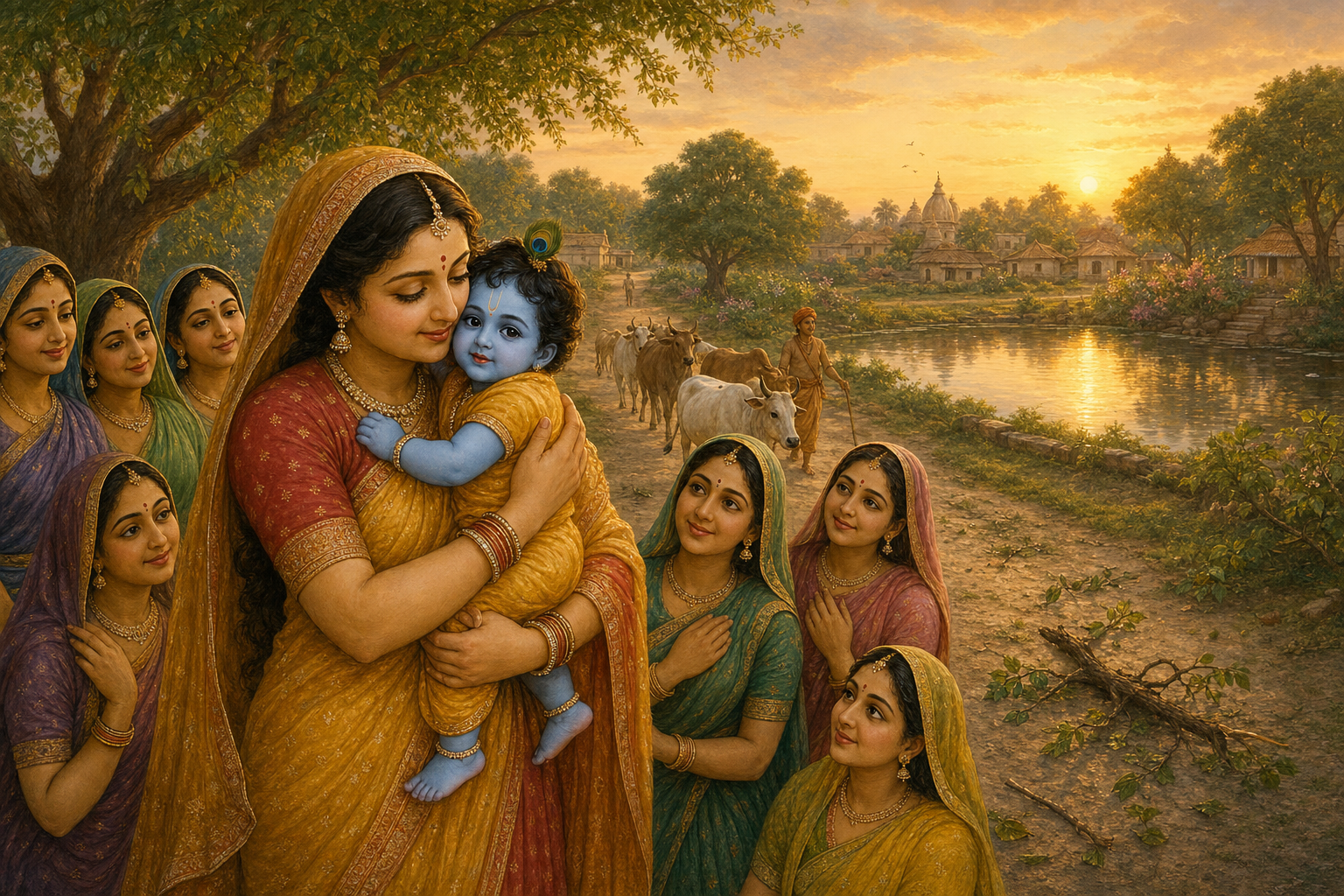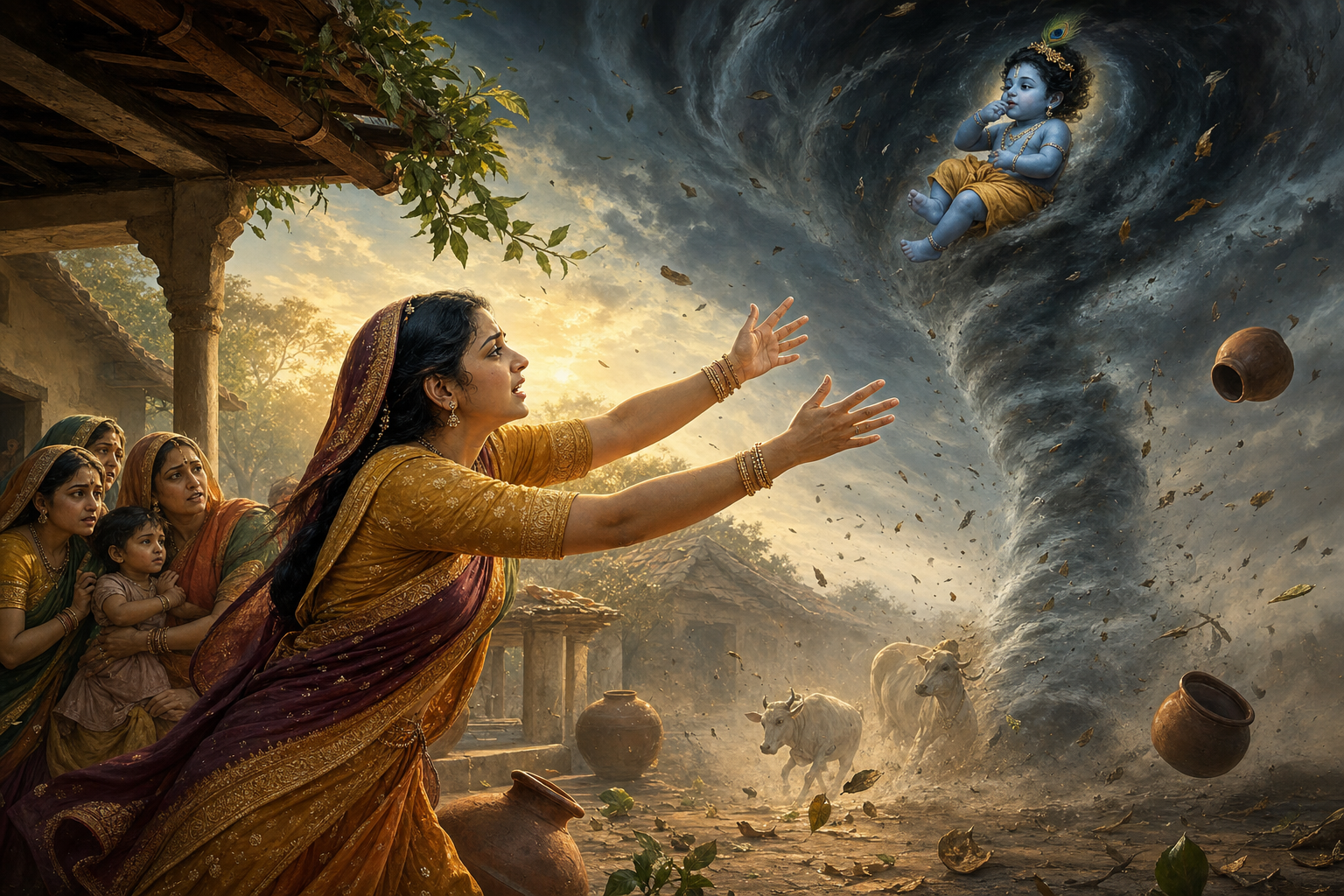
The Trnavarta pastime can be approached as a display of Kṛṣṇa’s power, but its emotional centre lies elsewhere: in the parental love that experiences the Supreme not as a distant ruler, but as a child who must be protected. The danger matters because it reveals the distinctive logic of vātsalya-rasa.
A DharmaRenaissance report on a 23 June 2026 class by HG Prabha Vishnu Prabhu presents Śrīmad-Bhāgavatam 10.7.21 through several connected lenses: rasa, yogamāyā, divine majesty, the symbolism of weight and wind, and the discipline of devotional remembrance. Read together, these perspectives explain how an encounter with a whirlwind demon ultimately deepens the intimacy of Gokula rather than interrupting it.
Why the miracle remains a story of parental love
Vātsalya-rasa is the devotional relationship in which affection takes a parental form. In the Vraja narratives, Mother Yaśodā and Nanda Mahārāja relate to Kṛṣṇa through care, concern and protective tenderness. His apparent vulnerability is therefore not an incidental feature of the story. It creates the conditions in which parental love can act with complete sincerity.
The source article identifies vātsalya as the episode’s governing rasa and contrasts it with aiśvarya, the apprehension of divine majesty. Kṛṣṇa’s power becomes unmistakable when the adversary’s violent movement is defeated, yet that revelation does not permanently transform the residents of Vraja into distant worshippers. Majesty enters the narrative, accomplishes protection and is absorbed again into mādhurya, the sweetness of familiar intimacy.
This movement is crucial. If the episode ended only in recognition of omnipotence, parental affection would give way to reverential awe. Instead, divine power serves the loving relationship. The miracle safeguards the world in which Kṛṣṇa can continue to be cherished as the child of Gokula.
The child whose weight overcomes the whirlwind
The DharmaRenaissance account treats Śrīmad-Bhāgavatam 10.7.21 as a narrative hinge between peril and deliverance. Trnavarta represents violent motion associated with wind, while Kṛṣṇa responds by manifesting immeasurable heaviness. The contrast produces more than a dramatic reversal: what appears small and vulnerable becomes the one reality that instability cannot carry away.
The article draws attention to the semantic opposition among the child, the wind and heaviness. Wind suggests movement, dispersal and loss of control; weight suggests presence, constancy and an inescapable centre. Kṛṣṇa’s heaviness therefore operates on two levels. Within the pastime, it renders the demon powerless. Within devotional interpretation, it expresses the gravity of divine protection.
The paradox should not be flattened into a simple lesson that Kṛṣṇa only appeared to be a child. Gaudiya theology holds both aspects together: He is genuinely approached in the intimacy of childhood while remaining the Absolute who sustains the very wind deployed against Him. The source connects this simultaneity with acintya-bhedābheda-tattva, the teaching that oneness and difference coexist in a manner beyond ordinary calculation.
Yogamaya preserves intimacy without denying divinity
Yogamāyā provides the relational setting in which the pastime’s apparent opposites can remain together. As presented in the source, yogamāyā shapes perception so that awareness of Kṛṣṇa’s sovereignty does not overwhelm the loving familiarity of Vraja. This is not merely the concealment of information. It is the divine arrangement through which a particular relationship can reach its fullest expression.
The report places this reading within the Gaudiya commentarial tradition, naming Śrīdhara Svāmī, Sanātana Gosvāmī, Jīva Gosvāmī and Viśvanātha Cakravartī Ṭhākura. Its synthesis of that tradition emphasizes a recurring feature of Kṛṣṇa-līlā: extraordinary power appears inside ordinary acts of caregiving without abolishing their emotional reality.
Vātsalya-rasa consequently offers a distinctive theological reversal. The devotee does not approach God only as one who needs protection; parental love impels the devotee to offer protection to Him. Kṛṣṇa freely accepts that posture of care. His omnipotence and His willingness to become the object of concern are not rival claims but complementary disclosures of reciprocal love.
From Vraja’s household care to devotional steadiness
The source extends the pastime from theology into domestic and communal ethics. The pastoral setting highlights caregiving, vigilance and the participation of a community in protecting its children. Ordinary routines can become spiritually significant when they are shaped by remembrance, shared worship and attentive responsibility.
Its symbolic reading interprets Trnavarta as an image of pride, restless argument and mental agitation. Kṛṣṇa’s weight then becomes a metaphor for the stabilising force of smaraṇa, or remembrance. The comparison is useful so long as it does not replace the narrative’s devotional centre. The lesson is not simply that any calming technique will defeat distraction; it is that attention acquires steadiness through loving orientation toward Kṛṣṇa.
The practices identified in the report include nāma-japa, kīrtana, śravaṇa and smaraṇa, ideally supported by humble devotional association. Their regularity mirrors the pastime’s movement from turbulence toward stability. The Hare Kṛṣṇa mahā-mantra is presented in this interpretive frame as a dependable centre for breath, attention and remembrance when the mind becomes scattered.
This application also clarifies what parental rasa contributes to practice. Steadiness is not cultivated only through control or intellectual certainty. It can grow through the patient qualities of care: returning attention, maintaining nourishing routines, noticing vulnerability and accepting responsibility for another’s welfare.
Key takeaways
- Vātsalya-rasa governs the episode because Kṛṣṇa’s power is experienced within the parental affection of Yaśodā, Nanda and Vraja.
- The contrast between wind and divine weight joins narrative action to theology: instability encounters a centre it cannot displace.
- Yogamāyā allows majesty to protect intimate love without replacing it with sustained awe.
- Devotional practices embody the same movement from distraction to steadiness when they are grounded in remembrance, humility and care.
Continued contemplation of the pastime can therefore move beyond asking how Kṛṣṇa defeated Trnavarta. Its more searching question is how divine strength makes room for tender dependence, inviting devotion to become at once steadier, more attentive and more personal.