
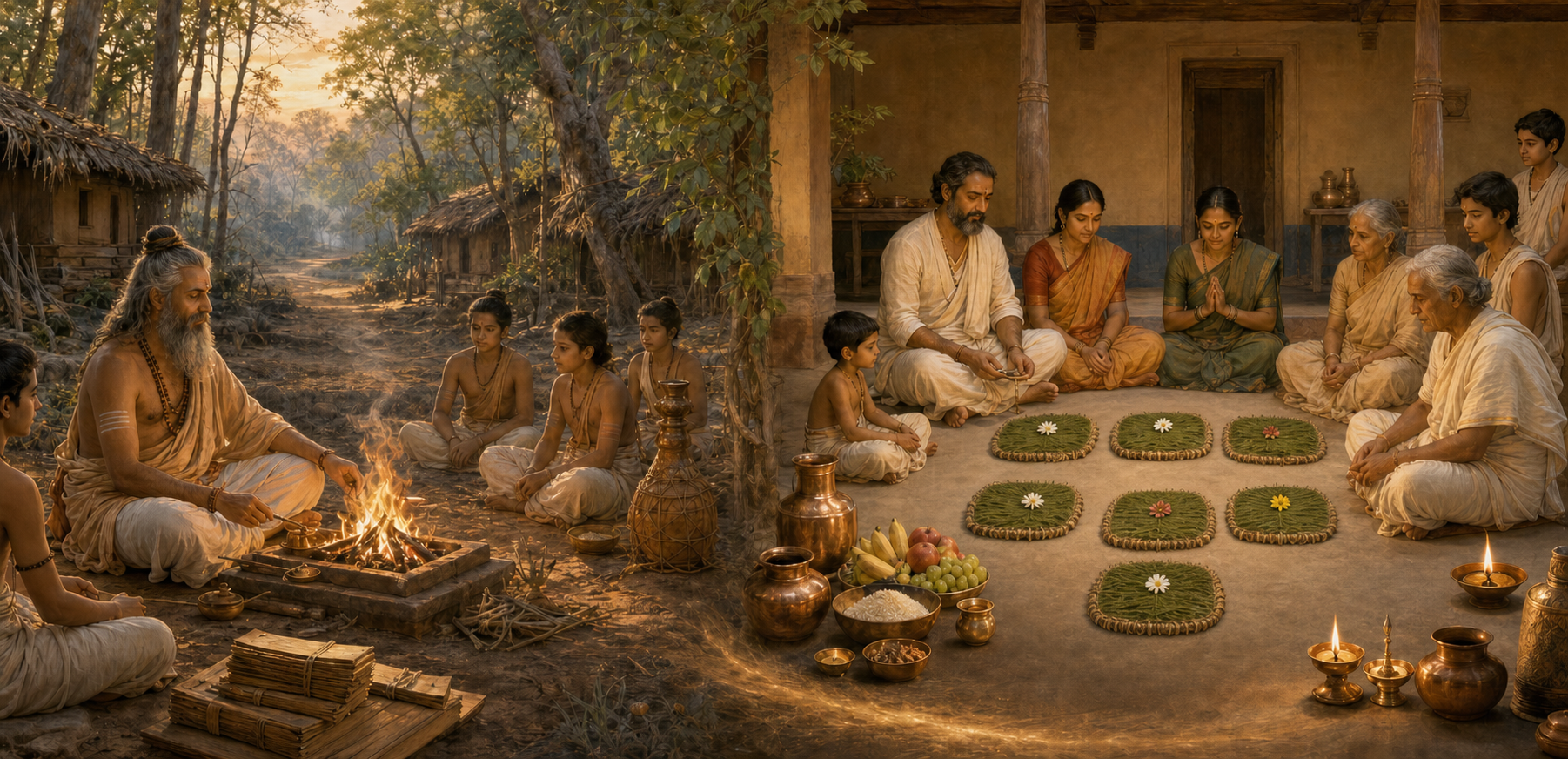
You may meet a rishi twice: first in a sacred story, facing hunger, conflict or divine power; then in a vrata, where that same category of sage is invoked and worshipped. If you read both encounters in the same way, one becomes a moral puzzle and the other can look like a transaction for merit.
A better approach is to recognise two connected modes. Sacred narrative shows dharma under pressure. Ritual turns remembrance into disciplined participation. Once you know which mode you are in, you can ask better questions, avoid shallow conclusions and approach rishi-centred practice with greater care.
Do not reduce a rishi to one modern role
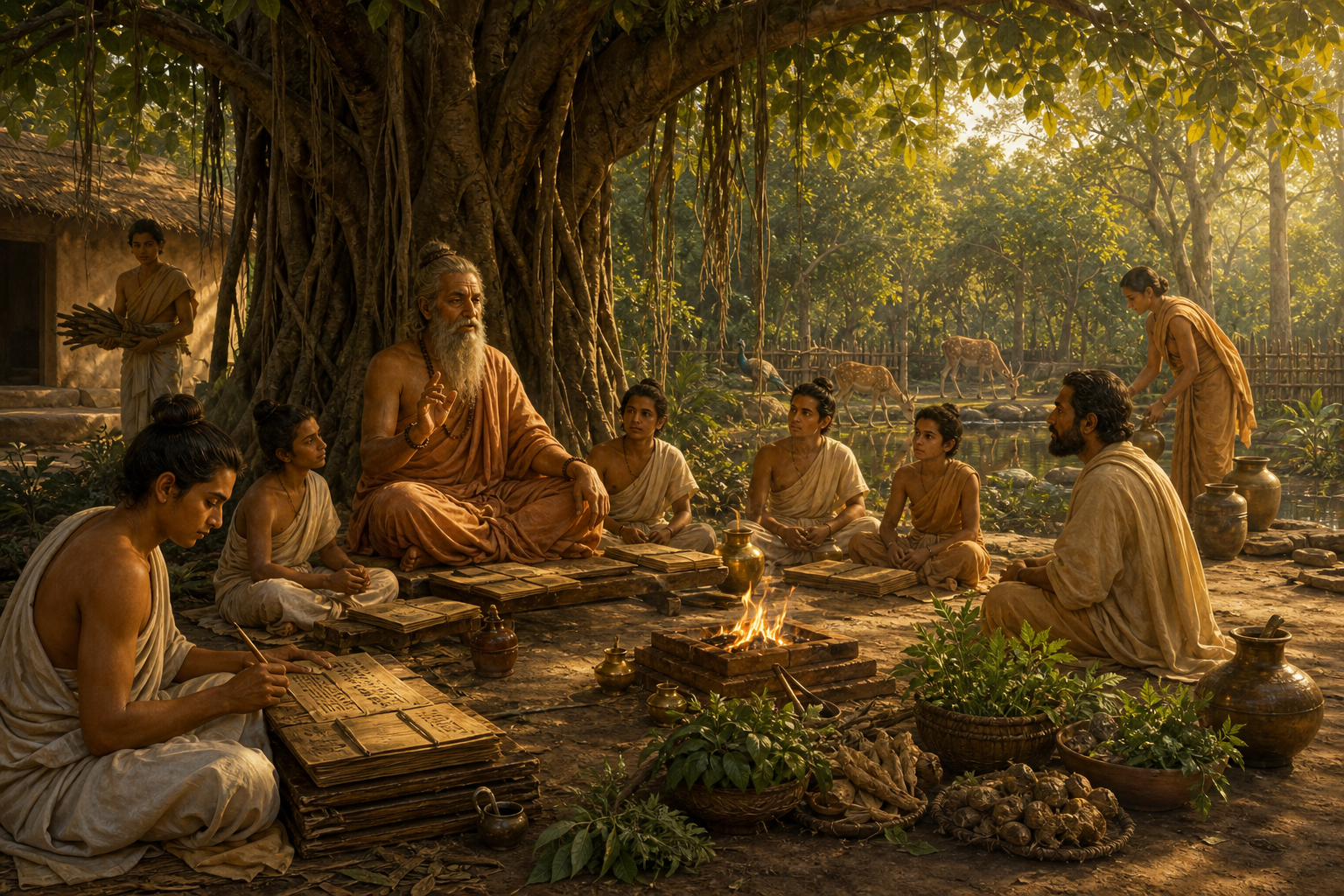
Calling a rishi a “sage” is convenient, but the English word can make the figure seem like a solitary philosopher who has withdrawn from ordinary obligations. Dharmic sacred narrative presents a wider range. A rishi may be a seer, teacher, ritual authority, head of a community, participant in a dispute or person responsible for dependants.
Vishvamitra, for example, is not depicted only as an isolated ascetic. During a severe drought beside the Goutami Ganga, his wife, children and disciples are all hungry. His sagehood does not erase those relationships. It makes his response to their suffering part of the narrative’s moral weight.
That changes how you should read. Do not begin with the question, “What supernatural power does this rishi possess?” Begin with the rishi’s web of responsibility:
- Who depends on the rishi in this episode?
- What material or moral pressure has disturbed normal life?
- Which duties pull in different directions?
- What does the rishi protect, risk or refuse to abandon?
- Is the episode describing conduct in an emergency, or establishing a pattern for ordinary life?
This method prevents two common mistakes. The first is treating every rishi as a flawless statue rather than a figure acting within a demanding situation. The second is treating a difficult act in a story as a rule that you may copy without its circumstances. Sacred narrative often teaches through tension. If you remove the tension, you remove much of the teaching.
In a sacred story, read the crisis before the miracle
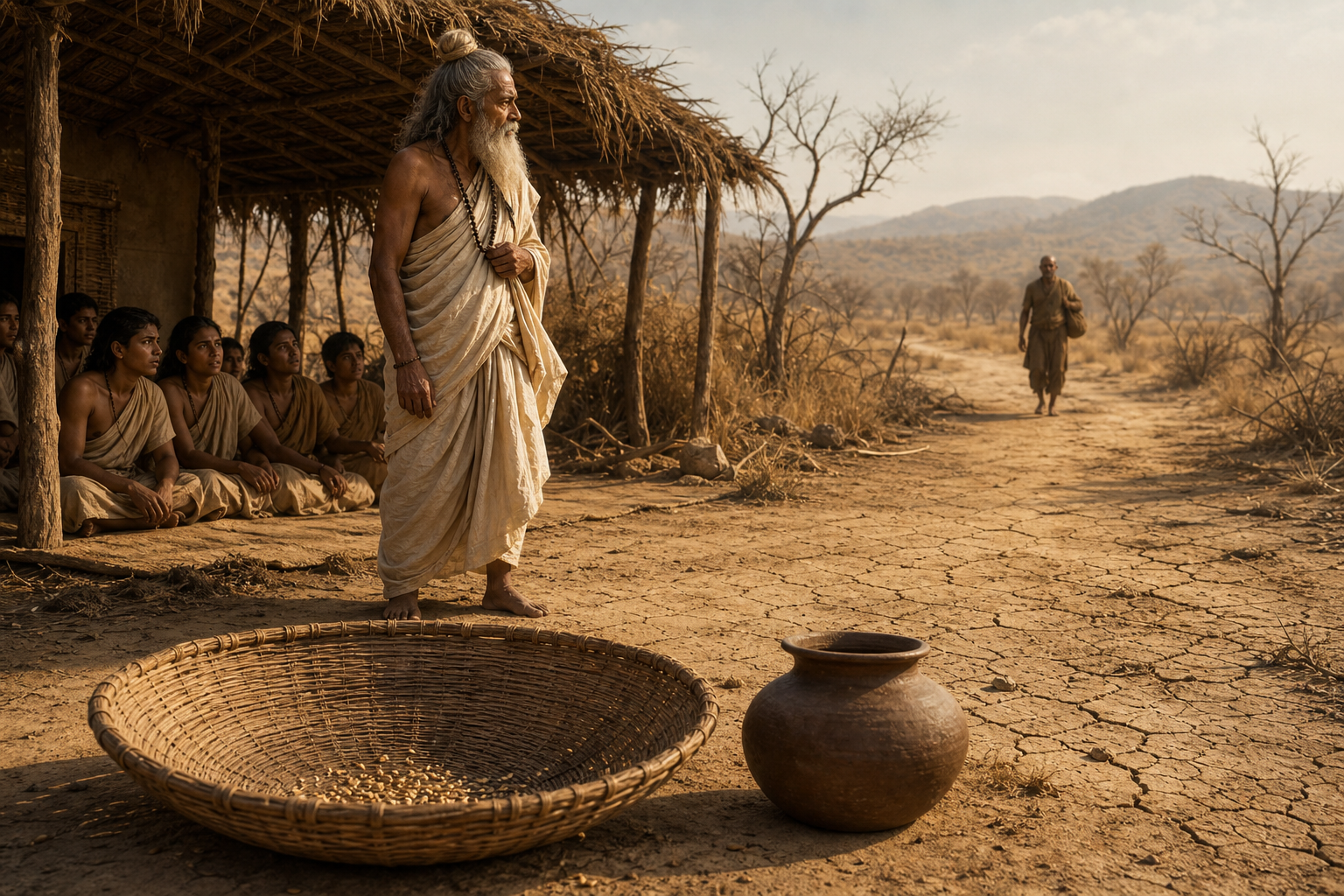
A narrative joining Sage Vishvamitra and Lord Indra begins with a painfully earthly condition: drought and lack of food. Vishvamitra sends his disciples to search for something the hungry community can eat. That opening is not disposable scenery. It tells you what is at stake before the divine dimension of the story is considered.
Read such an episode in three passes.
- Name the material crisis. Here it is not vague misfortune but drought, hunger and an unsuccessful search for food. Keep those conditions visible when judging later choices.
- Map the relationships. Vishvamitra acts amid a wife, children and disciples. Ask how the crisis changes what leadership, protection and discipline require.
- Locate the dharmic tension. Determine which values remain possible, which have become difficult and whether the story is testing attachment, authority, compassion, endurance or responsibility.
Only after those passes should you interpret the encounter with divine authority. Otherwise, Indra can become merely a powerful character and Vishvamitra merely a wonder-working sage. The human pressure explains why the encounter matters.
This also gives you a practical rule for discussing contested episodes. When someone extracts one deed and asks whether it proves that Hindu tradition permits or condemns something in every circumstance, restore the narrative frame. State the ordinary expectation, the exceptional pressure, the relationships at risk and the consequence of the act. Context does not make every action correct. It makes responsible judgment possible.
You can use four notes in the margin of any rishi narrative: condition, duty, decision and cost. If you cannot fill all four, postpone your conclusion. You may have remembered the spectacle while missing the dharma problem that gives it meaning.
In ritual, the rishi is an honoured presence, not just a character
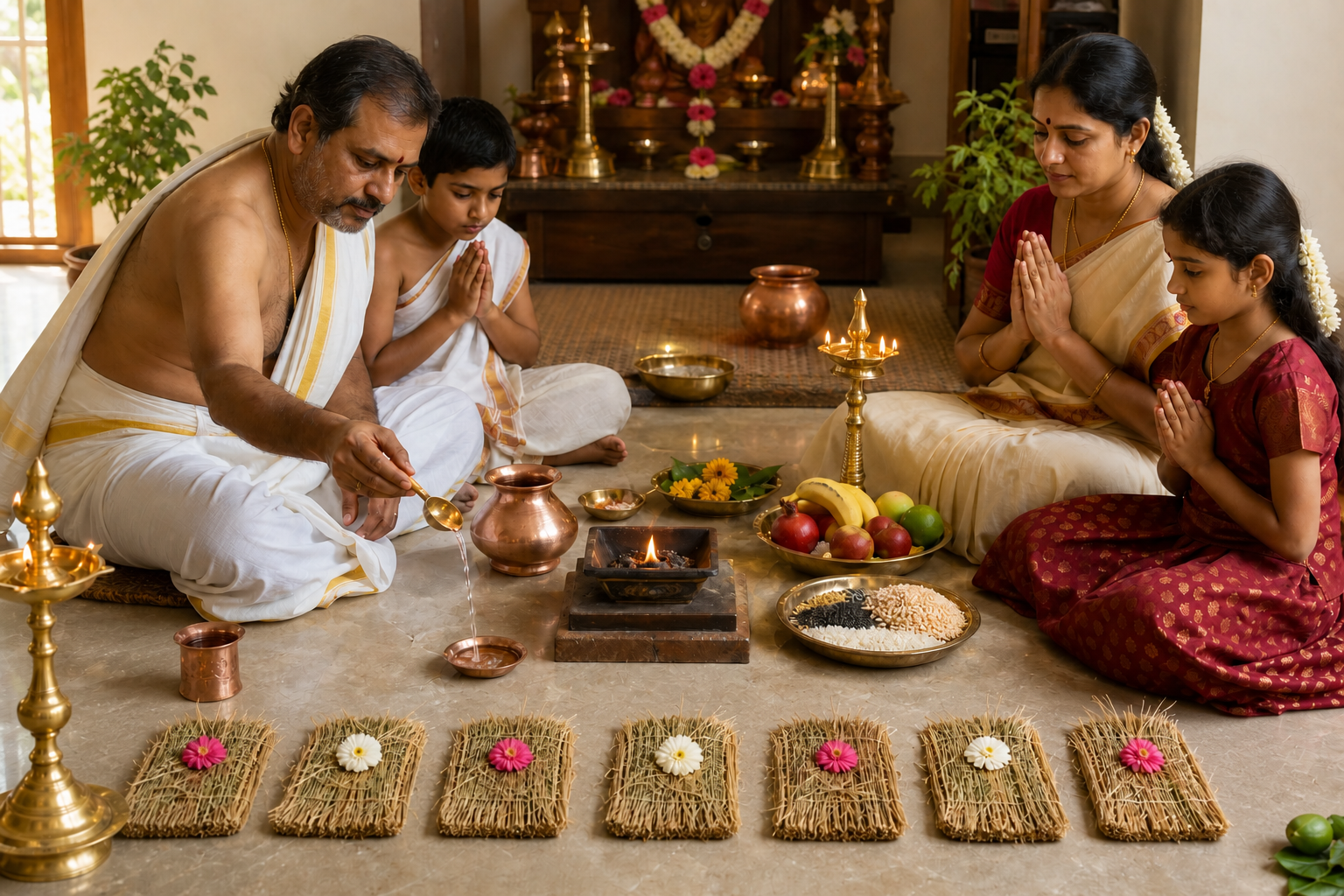
Ritual changes your relationship to the rishi. You are no longer only observing a figure within a plot. Through remembrance, offering and vrata, you acknowledge a lineage of sacred vision and the human transmission that makes inherited practice available to you.
Rishi Panchami makes this shift especially clear. The Saptarishis are understood as seven divine rishis with a broad presence in Hindu scripture, and the vrata centres their worship. The ritual act therefore does more than recall seven memorable personalities. It places the devotee in a posture of gratitude toward realised insight, teaching and continuity.
This is also where the language of ritual fruit, or phala, needs careful reading. Rishi Panchami worship is associated with the merit of ten thousand yajnas. Women devotees are also promised the merit associated with visiting all tirthas. These are intentionally expansive comparisons.
Do not turn them into a price list in which one observance mechanically purchases a numerical quantity of merit. The comparison communicates sacred weight: a focused vrata makes participation in an immense field of worship and pilgrimage accessible within a particular devotional act. It tells you how highly the observance is valued. It does not make intention, conduct, discipline or reverence irrelevant.
The reference to women devotees should be handled with the same precision. It tells you whom this presentation of the vrata expressly addresses. By itself, it does not settle every regional, familial or sectarian question about who may participate, who performs the puja or how the observance is transmitted. Do not stretch a specific devotional promise into a universal rule of eligibility or exclusion.
If you intend to observe Rishi Panchami, establish the living ritual details before you begin:
- Ask which calendar and customary method your family, temple or sampradaya follows.
- Confirm who undertakes the vrata and how other household members participate.
- Use the names, mantras and sequence supplied by that tradition rather than assembling a ceremony from unrelated fragments.
- Ask what the sankalpa is meant to express, so that the purpose is not lost beneath the procedure.
- Clarify how the observance is completed, including any customary prayer, offering or act of giving.
This is not pedantry. A vrata is a received discipline, not a blank ritual shell. Online instructions can help you identify what to ask, but your inherited or chosen tradition should supply the actual form when one is available.
Connect sacred narrative and ritual without collapsing them
The narrative and ritual modes belong together, but they do different work. A story lets you watch dharmic discernment unfold in conditions you did not choose. A ritual asks you to choose a disciplined response: remembrance, gratitude, restraint, worship or renewed responsibility.
You can connect the two with a simple five-step practice whenever you encounter a rishi:
- Identify the mode. Decide whether you are reading a narrative, receiving a teaching, reciting a mantra, performing a vrata or hearing praise of ritual fruit.
- Record the relationships. Note disciples, family, divine beings and the wider community. A rishi’s meaning often appears through these relationships rather than through a title alone.
- Find the pressure point. In a story, name the crisis. In a ritual, name the human condition being disciplined: forgetfulness, ingratitude, impurity of intention or distance from sacred inheritance.
- Read large promises devotionally. When the phala is compared with many yajnas or pilgrimages, recognise the claim of sacred magnitude without reducing worship to arithmetic.
- Convert admiration into one obligation. After reading or worshipping, choose a concrete expression of rishi-remembrance: study a teaching attentively, honour the teacher-student relationship, support the transmission of knowledge or meet a responsibility you have been avoiding.
Applied to Vishvamitra’s drought, this method keeps hunger, dependants and leadership in view. Applied to Rishi Panchami, it keeps gratitude, transmission and disciplined observance in view. The bridge between them is not the vague claim that sages are important. It is the recognition that received wisdom creates responsibility in both crisis and worship.
Several attractive shortcuts weaken that recognition. Do not assume that sagehood means freedom from family or social duty. Do not treat an emergency decision as a timeless rule. Do not read phala as a guaranteed exchange rate. Do not assume that one short ritual description overrides the practice of every lineage. Each shortcut removes the relationship that gives the rishi meaning.
Key takeaways
- A rishi in sacred narrative may be a seer and teacher while also carrying responsibility for family, disciples and community.
- Read a crisis narrative by identifying its condition, duties, decision and cost before judging an isolated action.
- Rishi Panchami turns remembrance of the seven divine rishis into ritual participation and gratitude.
- The merit of ten thousand yajnas or all tirtha pilgrimages expresses the vrata’s sacred magnitude; it should not be treated as mechanical spiritual arithmetic.
- Use your family, temple or sampradaya to confirm the actual ritual method, especially questions of participation, names, mantras and sequence.
The next time you meet a rishi, pause before asking whether the figure is historical, symbolic, miraculous or exemplary. First ask what relationship the passage or ritual is asking you to recognise. Then give that relationship a concrete form in study, worship or responsibility. That is where the rishi moves from a revered name into a living Dharmic presence.
References
