

If Kunti did not dominate the battlefield, in what sense was she a leader? The answer matters because most of the leadership that holds a family, institution or community together happens before the decisive moment and outside public view.
Kunti’s achievement was continuity under pressure. Widowed, pushed to the margins and responsible for five children, she kept the Pandavas together through decades of exile. Her authority did not depend on spectacle. It rested on preserving the people, purpose and relationships without which eventual victory would have been impossible.
The battlefield hides the leadership that made it possible
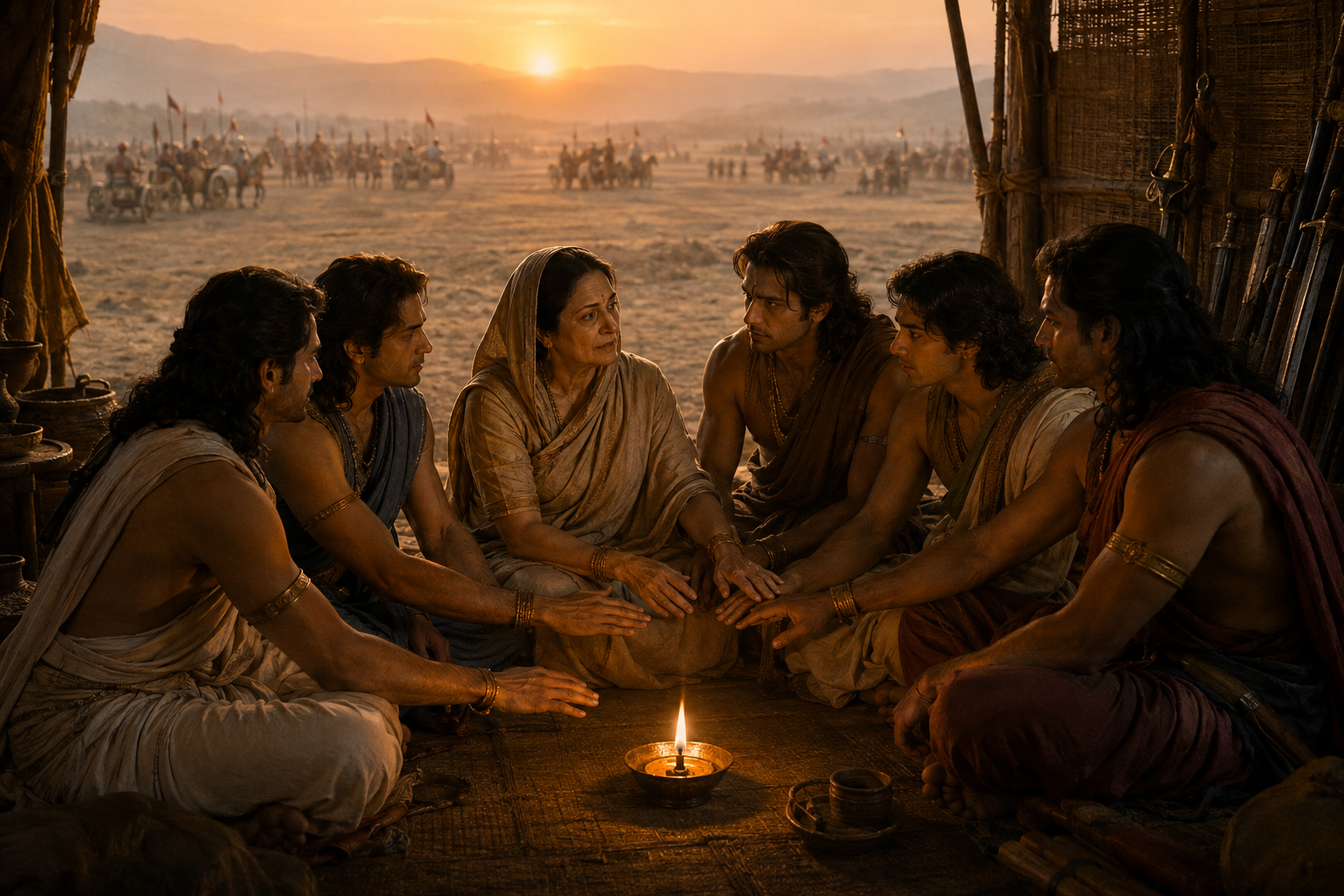
Our memory gravitates toward Krishna’s counsel, Arjuna’s bow and Bhima’s strength. These are visible forms of power. They are attached to unmistakable moments of decision and action. Kunti’s leadership is harder to see because its result was not one brilliant performance. Its result was that the Pandavas remained capable of acting together at all.
A battlefield outcome comes at the end of a longer chain. People must first survive adversity. They must continue to recognize one another as members of the same moral unit. They must retain a purpose larger than immediate pain. Finally, their different strengths must become coordinated action rather than rivalry or fragmentation.
- People: Who is protecting the members of the group when its formal structure becomes unreliable?
- Purpose: Who keeps temporary loss from becoming permanent confusion about what the group stands for?
- Coordination: Who helps different personalities carry one shared duty without demanding that they become identical?
Use those questions when you assess leadership in your own family, temple, cultural organization or professional team. If your answer names only the person who speaks in public or makes the final decision, your assessment is incomplete. Look for the person whose work preserves the conditions in which a good decision can still be made.
Five disciplines behind Kunti’s durable authority
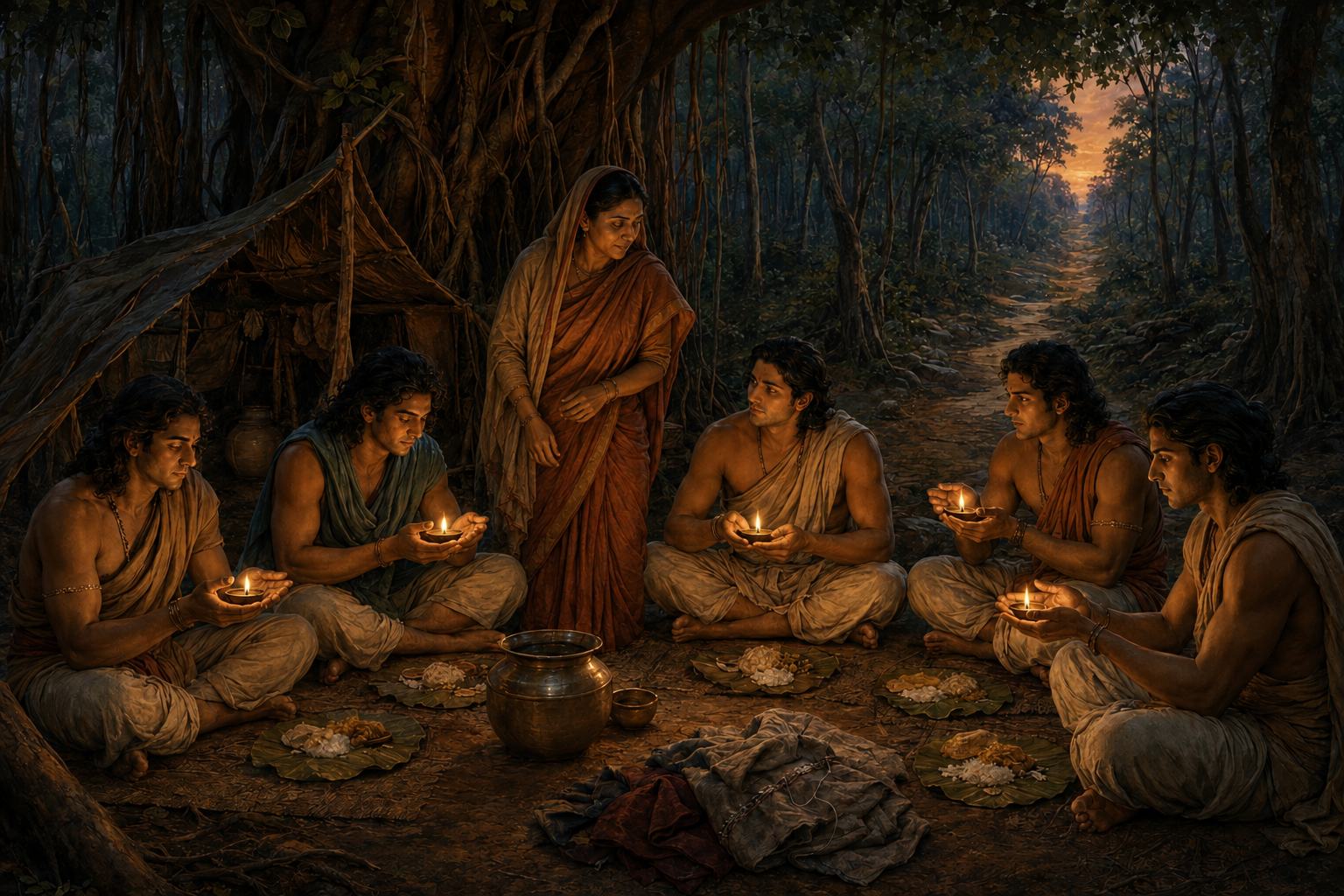
Kunti offers a practical model of leadership under constraint. It is especially relevant when you carry responsibility without secure status, abundant resources or the power to command everyone involved.
- Define the unit through shared duty. Unity is not uniformity. Even popular memory distinguishes Arjuna’s skill from Bhima’s strength. Different gifts need not threaten a group when everyone understands what those gifts are meant to serve. Write one sentence naming the duty that binds your people together. If members cannot recognize themselves in it, the sentence is either too vague or too narrow.
- Protect continuity before prestige. A group under pressure often wastes strength trying to restore appearances. Kunti’s long years of adversity point toward a better order of work: preserve the people, preserve their relationship, preserve their ability to decide and only then worry about recovering status. In a crisis, ask what must remain functional even if recognition, comfort or position disappears for a time.
- Separate formal role from moral authority. A title can be granted or withdrawn. Earned trust travels differently. So does the authority of the person who remembers the purpose, tells the truth about the danger and accepts responsibility for keeping others aligned. Map these forms of authority separately. The officeholder, technical expert, trusted elder and person holding the group together may not be the same individual.
- Work on more than one horizon. Decades of exile cannot be endured through a single burst of motivation. Prolonged adversity demands one plan for keeping the group functional now and another for preventing present hardship from becoming its permanent identity. Meet immediate needs, but keep naming the larger purpose for which survival matters.
- Build capacity beyond yourself. Quiet leadership should not make everyone permanently dependent on one hidden caretaker. Its deeper task is to help other people become capable of carrying duty. If every relationship, decision and handoff collapses when one person steps away, the group has not achieved resilience. It has merely centralized its fragility.
These disciplines explain why Kunti belongs in any serious discussion of Mahabharata leadership. She shows that the decisive contribution may be the preservation of agency: keeping people able to choose, cooperate and act according to duty when circumstances are trying to reduce them to fear or resentment.
Quiet leadership must not become a demand for silent suffering

Kunti’s example can be used badly. Praising her endurance must not become an excuse to tell mothers, widows or senior women that they should absorb every cost without voice, relief or recognition. Calling hidden labour noble does not make an unfair distribution of that labour just.
The important distinction is not between loud and quiet people. It is between purposeful restraint and imposed invisibility.
- Quiet leadership may choose low visibility because the shared purpose matters more than personal credit. Silencing denies someone a meaningful voice while continuing to depend on that person’s labour.
- Sacrifice accepts a real cost for a worthy duty and a proportionate reason. Consumption repeatedly loads the cost onto the same person because everyone else finds that arrangement convenient.
- Cohesion keeps people in a relationship capable of honest action. Forced harmony suppresses disagreement until resentment becomes the group’s hidden organizing principle.
- Patience protects the right purpose across a long horizon. Passivity avoids a necessary decision and calls the delay virtue.
This distinction gives you a straightforward burden audit. For every recurring form of invisible work, name the person doing it, the authority that person has, the backup who can share it and the process for handing it onward. If responsibility is visible but authority is absent, correct the mismatch. If no backup exists, train one. If the group celebrates sacrifice while refusing to distribute duty, the praise is concealing a structural weakness.
Do not invoke Kunti to persuade an already-burdened person to accept still more. Her leadership is valuable because it reveals the strength required to preserve a moral community under constraint. That recognition should make us more attentive to hidden work, not more entitled to it.
Use the Kunti test when your own group enters a crisis
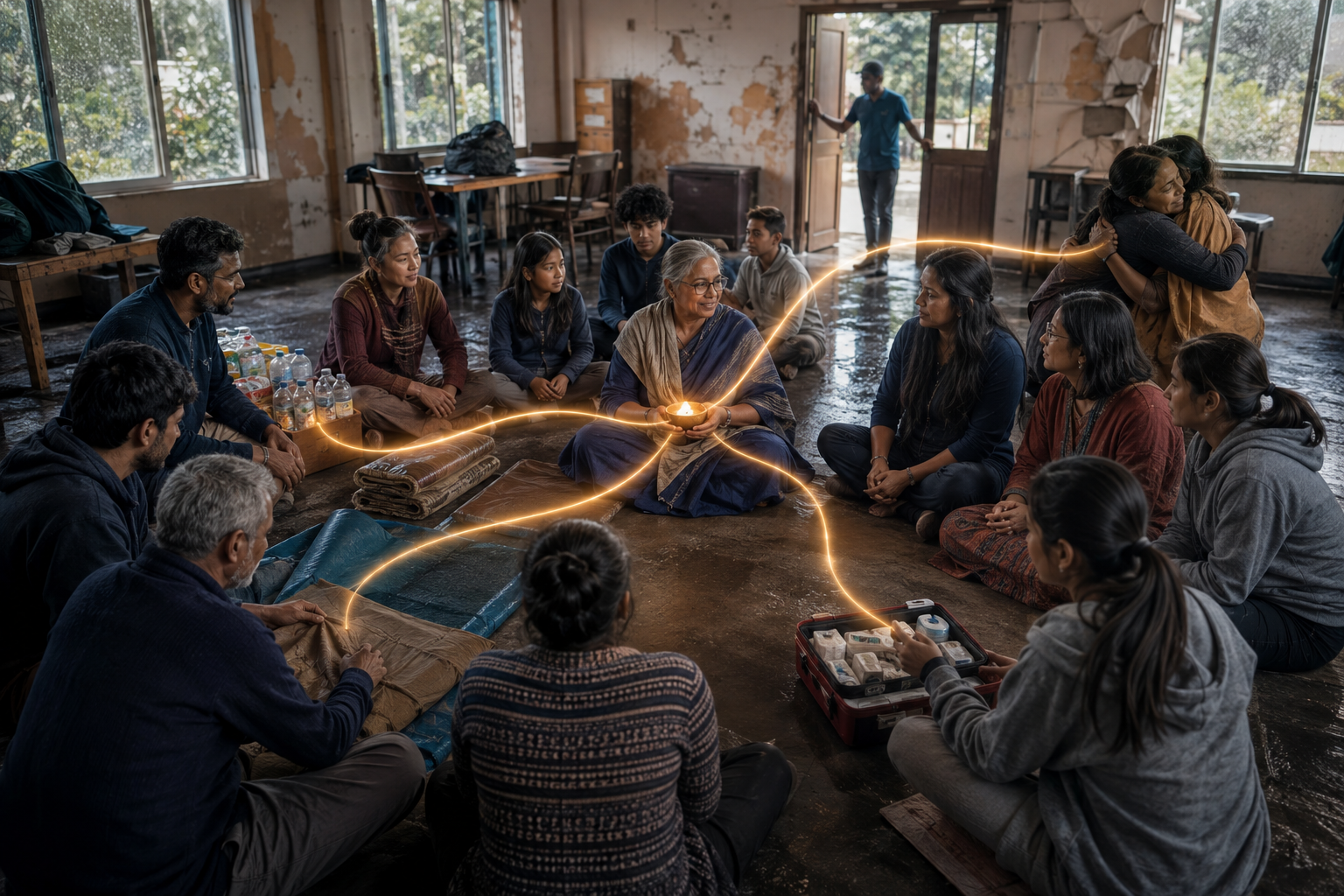
A Dharmic reading of leadership asks more than who prevailed. It asks which duties kept rightful action possible. When your group faces conflict, loss of status or prolonged uncertainty, work through the following sequence.
- Name what must survive. Be precise. Is it the family relationship, a practice of worship, a promise of service, a body of knowledge, the safety of particular people or the group’s ability to make legitimate decisions? Trying to preserve everything prevents you from identifying what is sacred and what is merely familiar.
- Name what may change. Methods, roles, schedules and public standing are not always identical to purpose. Say which of them can be altered without betraying the underlying duty. This protects the group from confusing adaptability with surrender.
- Make room for different strengths. Do not demand sameness as the price of belonging. State the common responsibility, then ask each person what contribution he or she can actually carry. A strong unit coordinates differences; a brittle one denies them until they erupt.
- Expose invisible work. List the emotional, logistical and relational tasks that keep the group functioning. Give each task a named owner, adequate authority and a backup. What remains unnamed will usually fall to the most conscientious person.
- Identify the next legitimate decision. Specify who must decide, what information is needed and how the decision will be communicated. This turns cohesion into action. Unity without a decision process eventually becomes waiting.
- Create a handoff. Ask who could carry each essential duty if the present custodian became unavailable. Share the knowledge and relationships before an emergency forces the transfer. Continuity is strongest when it has been prepared rather than improvised.
The language you use during this process matters. These sentences can help a tense group separate purpose from pride:
- Our method can change; our responsibility does not.
- We do not need agreement on every question to act together on this duty.
- This burden has remained invisible. It now needs a named owner and a backup.
- Surviving this stage is not our final purpose; it is what keeps that purpose possible.
- We will preserve the relationship without pretending that the disagreement has disappeared.
The application will differ by setting. A family may preserve relationship without forcing false agreement. A temple or cultural organization may protect worship, service and community trust while committee roles change. A professional team may preserve its mission by clarifying responsibility and handoffs after formal authority becomes uncertain. The common task is to distinguish the enduring duty from the arrangement that currently carries it.
Key takeaways
- Kunti’s leadership lies in preserving continuity under loss, not in competing with the epic’s most visible warriors.
- A group’s first strategic asset is its capacity to remain a moral and functional unit.
- Unity means shared duty among different people, not the elimination of difference.
- Survival, retreat or reduced status need not equal defeat when they preserve the capacity for future rightful action.
- Invisible responsibility should come with visible authority, shared labour and a prepared successor.
- Quiet leadership is not self-erasure. It should strengthen the agency of the group rather than make everyone dependent on one exhausted person.
Before the next crisis chooses your priorities for you, write down three things: what must survive, what can change and who must learn to carry each essential duty. That small exercise begins where Kunti’s example begins, with the patient protection of the people and purpose that will make decisive action possible later.
References
