
You can often recognize a bad decision before you can stop it. A leader has fused personal prestige with the interest of the realm, and advisers are being asked how to escalate rather than whether the original act was wrong. If you speak, you may be called disloyal. If you stay silent, everyone may inherit the cost.
Kumbhakarna’s counsel to Ravana gives you a precise way through this bind. Name the adharma, separate desire from duty, repair the initiating wrong, and attempt reconciliation before force. This is restraint as rajadharma: not timidity, but the discipline that prevents private appetite from commandeering public power.
Kumbhakarna diagnoses the danger inside the throne
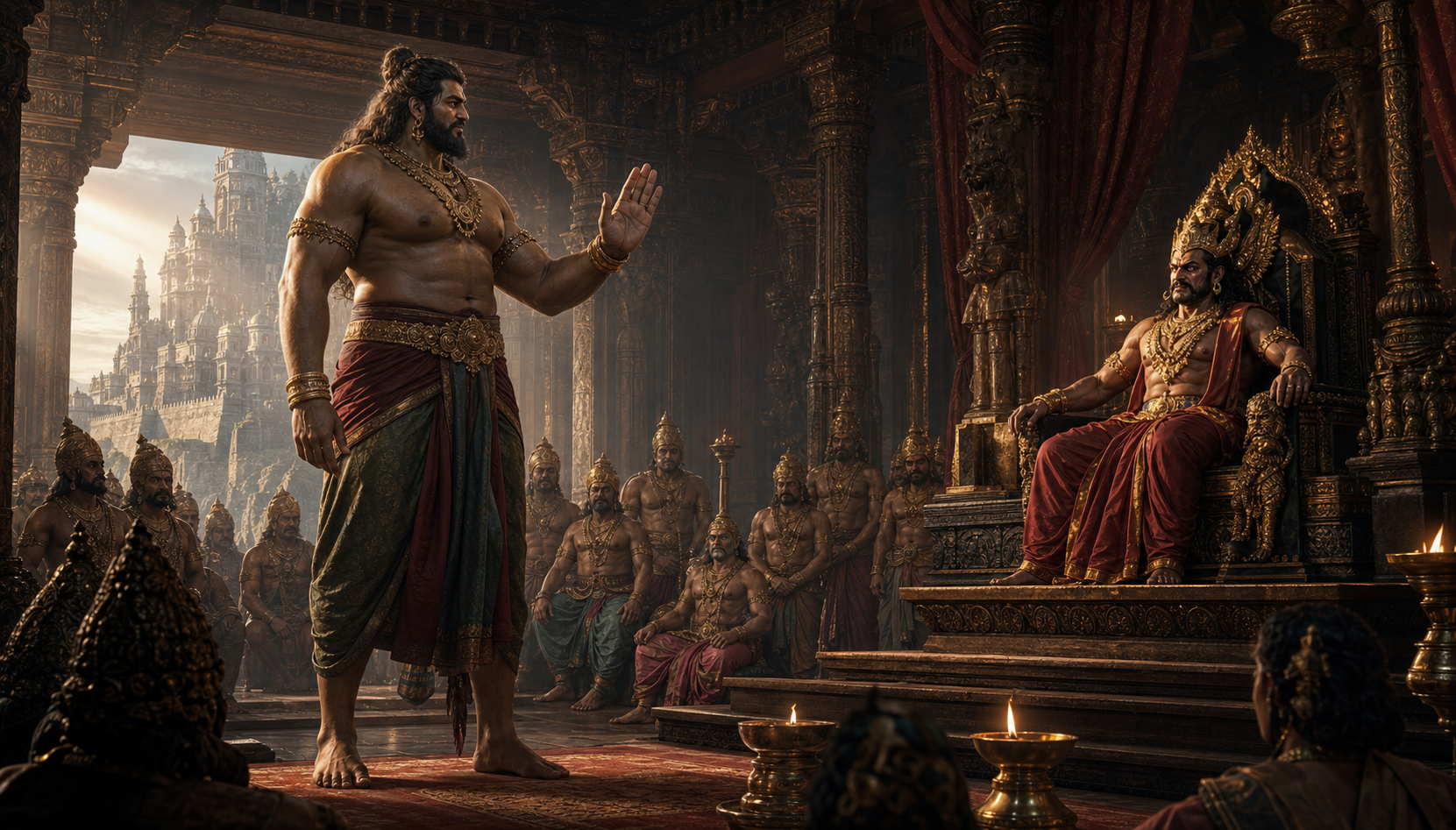
Awakened during Lanka’s emergency, Kumbhakarna hears that Ravana has abducted Sita and that Rama and Lakshmana have already defeated Khara, Dushana, and a succession of commanders. He does not begin by proposing a more aggressive battlefield plan. He identifies the seizure of Sita as adharma and advises Ravana to return her.
That order of diagnosis matters. Lanka’s military emergency is downstream of a moral failure. If the court treats the battlefield as the entire problem, it will prescribe more force without removing the act that produced the conflict. Kumbhakarna therefore asks the question that Ravana’s pride cannot tolerate: what if victory begins with correcting the king rather than defeating the enemy?
The cognitive failure is kama: not every ordinary wish or preference, but passion allowed to overrule viveka, discriminating judgment. Once that happens, facts acquire new labels. A setback becomes an insult that must be avenged. Caution becomes cowardice. An adviser who reports danger becomes a traitor. Restitution becomes humiliation. The ruler is no longer deciding how to protect the realm; he is using the realm to protect his self-image.
You can test for this distortion by removing prestige from the decision. Would you still support the policy if someone else received the credit for success? Would you reverse it if correction could occur without public embarrassment? If your answer changes when reputation is removed, personal appetite may be carrying more weight than public duty.
Then examine the order of operations. Was honest counsel sought before the act, or only after its consequences appeared? Was the original decision evaluated against dharma, or were advisers summoned later to make it succeed? Consultation after a ruler has emotionally committed to an outcome is easily reduced to a search for validation. Rajadharma requires counsel early enough to change the decision.
Rama’s demonstrated strength also matters. Kumbhakarna does not rely on moral language while ignoring strategic reality. Lanka has evidence that the balance has changed. A ruler who rejects both ethical correction and new evidence is not displaying resolve. He is sacrificing the realm to preserve the appearance of infallibility.
Restraint orders power instead of abandoning it

Restraint is often misread as refusal to act. Kumbhakarna recommends a definite course: return Sita and seek sandhi, a settlement that can interrupt the march toward destruction. His counsel follows a sound order of statecraft: sama, conciliatory engagement, should be attempted before danda, coercive force.
The sequence does not make force inherently illegitimate. It prevents force from becoming the ruler’s first emotional reflex. A state must possess the capacity to defend order, but capacity and compulsion are different things. Rajadharma asks whether power is governed by duty, evidence, and proportion before it is released.
In Ravana’s case, conciliatory words alone would not be enough. The wrongful seizure created the conflict, so holding on to its object while offering dialogue would merely preserve the wrong under a more diplomatic vocabulary. Peace becomes credible only when the act sustaining the dispute is reversed.
This is why restraint can demand more courage than aggression. Fear says to avoid action because conflict is uncomfortable. Dharmic restraint says to perform the necessary corrective act now, even when pride experiences that act as defeat. It refuses both passive evasion and reckless escalation.
The vocabulary changes across Dharmic traditions, but the warning remains recognizable. Buddhist reflection treats raga, grasping attachment, as a force that clouds perception and sustains suffering. Jain aparigraha restrains possessiveness, while ahimsa disciplines conduct away from injury. Sikh teachings identify kam, krodh, lobh, moh, and ahankar – lust, anger, greed, attachment, and ego – as thieves that displace right alignment. None of these traditions treats self-restraint as helplessness. Each makes freedom from inner compulsion a condition for responsible action.
When you face an escalating dispute, use the same order. Identify the impulse creating urgency. State the duty that actually authorizes action. Remove any continuing wrong on your side. Attempt a credible conciliatory path. Only then judge whether coercion remains necessary. Changing that sequence can expose how often an apparently strategic demand is merely anger seeking an instrument.
Restitution is policy repair, not royal humiliation

Ravana does not need a more persuasive justification for abducting Sita. He needs to reverse the act. This distinction is the practical center of Kumbhakarna’s advice.
An error remains embedded in policy as long as the person who committed it keeps its benefit or continues its harm. An apology without restoration may improve the speaker’s image, but it does not repair the underlying relationship. In Lanka’s crisis, returning Sita is therefore both an ethical requirement and a strategic act of de-escalation.
Restitution does not guarantee that every consequence will disappear. Nor does it entitle the wrongdoer to immediate trust or immunity. Rajadharma is not a bargain in which a ruler behaves rightly only after receiving assurance that correction will be painless. The first duty is to stop maintaining the wrong. Negotiation about the remaining conflict comes afterward.
- Name the act plainly. Do not hide an unlawful seizure, breach of trust, or abuse of authority inside a flattering description.
- Stop the continuing wrong. If the harm is still occurring, promises about future restraint are premature.
- Restore what can be restored. Return what was taken, surrender the improper advantage, or repair the condition that your decision created.
- Negotiate the remaining claims. Once restitution is real, the parties can address security, responsibility, and future conduct without pretending that the initiating wrong never happened.
Each step blocks a familiar evasion. Euphemism prevents accountability. Delay allows the benefit of wrongdoing to continue. A symbolic apology substitutes performance for repair. Premature negotiation asks the injured party to accept the fruits of the original wrong as the price of peace.
Leaders often resist reversal by pointing to sacrifices already made. Yet previous losses cannot transform adharma into duty. If the principal defense of a policy is that too much prestige, money, effort, or blood has already been invested to turn back, those costs are no longer informing judgment; they are holding judgment captive.
Use a hard test when someone presents a proposed settlement: does it require the injured party to accept the continuing benefit of the original wrong? If it does, restitution has not yet occurred. The proposal may reduce immediate pressure, but it has not restored a dharmic basis for order.
A public reversal may cost a ruler prestige. Refusal may cost the realm its stability, people, and future. Rajadharma settles the priority: authority exists to preserve righteous order, not to insulate the ruler’s image from correction.
Build loyal dissent before the decision hardens
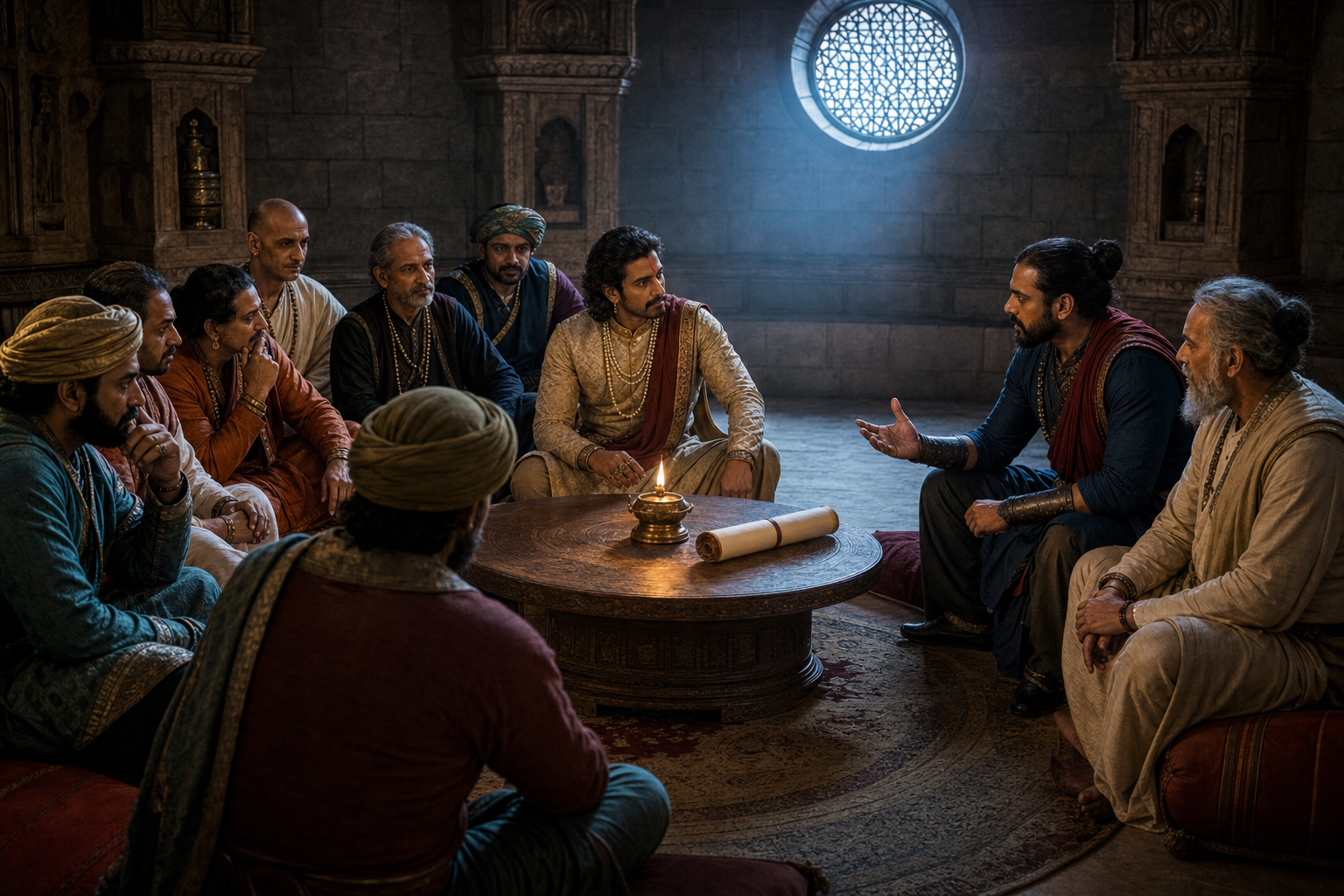
Kumbhakarna’s moral importance lies partly in what he does when flattery would be safer. He identifies Ravana’s breach, assesses Rama’s strength without bravado, and supplies an executable alternative. These are three distinct duties of a serious adviser: state the normative failure, report strategic reality, and propose a corrective course.
His later decision to fight for Lanka and stand by his brother gives the episode its tragic tension. It does not retroactively make Ravana’s policy righteous. Kumbhakarna’s courage in battle cannot erase the warning he gave before battle, and fraternal loyalty cannot transfer responsibility away from the ruler who rejected correction.
This distinction protects you from two failures. The first is loyalty without truth: preserving your position by telling authority what it wants to hear. The second is dissent without responsibility: condemning a decision while refusing to offer any feasible repair. Loyal counsel must be honest enough to interrupt wrongdoing and practical enough to show another path.
An institution should not depend on the appearance of one exceptionally brave adviser. It should create a decision gate before an action becomes difficult to reverse. Put the following questions into the written record before escalating a political, organizational, community, or family conflict:
- What duty are we actually bound to protect? State it without referring to the leader’s prestige, anger, or desire to win.
- What appetite is creating urgency? Look specifically for possession, revenge, fear of embarrassment, attachment to status, and refusal to admit error.
- What initiating wrong produced the conflict? Determine whether that wrong is still continuing or still benefiting your side.
- What must be returned or repaired? Identify the concrete act that would make reconciliation credible rather than merely rhetorical.
- What conciliatory path remains? Explain what has been attempted in good faith and why it would be inadequate before moving to coercion.
- Who has argued against the preferred decision? Record the contrary evidence and specify what new fact would cause the leader to change course.
The answers create clear stopping points. If public duty cannot be stated without invoking personal prestige, pause the decision. If the initiating wrong continues, repair it before demanding concessions from others. If no one has been authorized to challenge the preferred course, obtain a dissenting assessment before treating agreement as evidence.
Use the questions when a policy is proposed and again after a material setback. Changed circumstances require renewed discrimination. Otherwise, earlier losses can intensify attachment to the very decision that caused them.
Red-team review, structured deliberation, written dissent, and an external check on ethical consequences are modern ways to institutionalize the function Kumbhakarna performs. Their value depends on whether they can actually alter the outcome. A dissent process that begins after the leader has declared reversal impossible is ceremony, not counsel.
The supporting culture matters as much as the procedure. Treat principled disagreement as service rather than betrayal. Credit course correction as competent governance rather than weakness. Judge advisers by the clarity and accuracy of their counsel, not by how closely their words resemble the ruler’s wishes. These norms make it possible to correct a mistake before courage is required on a battlefield created by pride.
Key takeaways
- Rajadharma requires a ruler to correct wrongful action, not maintain an image of infallibility.
- Kama becomes a public danger when passion is allowed to overrule viveka, evidence, and the welfare of the realm.
- Restraint is ordered action: correct the wrong, attempt conciliation, and keep force from becoming the first reflex.
- Restitution must remove the continuing benefit or harm of the original act; apology alone is not policy repair.
- Loyal dissent combines moral clarity, an honest assessment of risk, and a feasible alternative.
- A dissent mechanism matters only when it operates early enough to change the decision.
The next time a room moves too quickly from injury or desire to punishment, interrupt the sequence. Ask what must be put right before power is used. If the answer demands restitution, make that the first act. That is how restraint moves from private virtue to public dharma.