

You may have encountered the name Jayadratha Yamala beside claims about secret rites, Kali worship, or a definitive Tantric teaching. Before you accept those claims or try to act on them, you need to know what kind of text the name identifies and what a bare reference to it cannot prove.
The shortest reliable orientation is this: Jayadratha Yamala, also written Jayadrathayāmala and known as the Tantrarājabhaṭṭāraka, is an exceptionally extensive surviving canonical scripture of esoteric Tantra, especially the Kali-centered Kālīkula tradition. That establishes its stature and religious setting. It does not make every quotation attributed to it authentic, identify one teaching as the message of the entire work, or justify practising a ritual from an isolated extract.
Place the text correctly before interpreting it
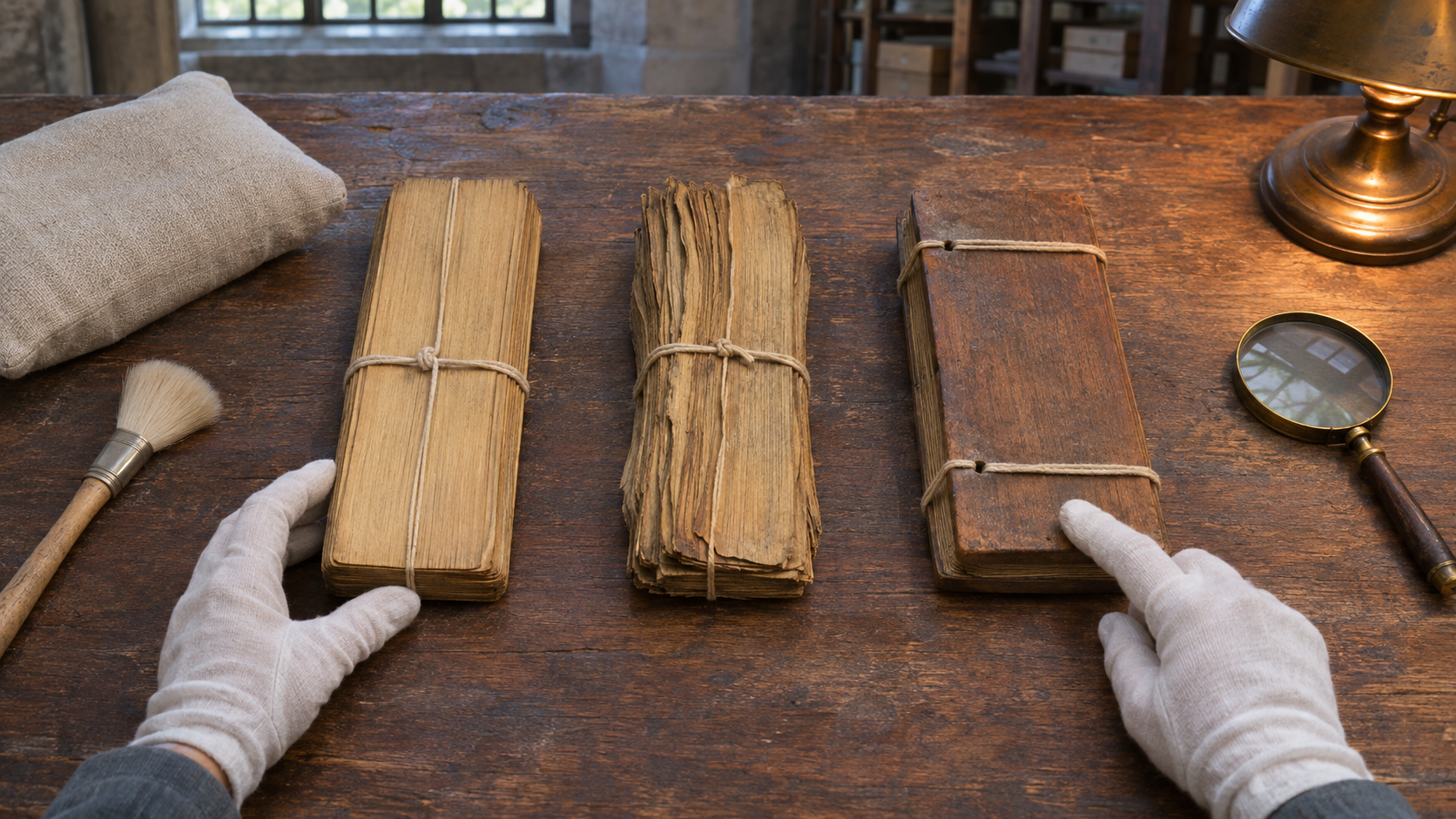
Three parts of that description matter: canonical, esoteric, and Kālīkula. Each narrows the claim rather than enlarging it.
- Canonical means the scripture carries authority within a relevant tradition. It does not mean that every Hindu community follows it, or that it functions as a universal rulebook for Hindu life.
- Esoteric means that context, preparation, authorised interpretation, and the relationship between teaching and practice matter. A ritual direction cannot safely be treated like a freestanding household tip.
- Kālīkula identifies a Kali-centered lineage or stream. It places the work within the diverse world of Shakti worship; it does not reduce every form of Shakta worship to this one textual current.
This gives you a practical test. If someone uses Jayadratha Yamala to make a sweeping claim about what all Hindus, all Shaktas, or all Tantrikas believe, the conclusion is broader than the identification supports. Ask which community, teaching context, and passage the claim actually concerns.
Its great size creates another problem. A sentence may be genuine yet still be unrepresentative when removed from its surrounding teaching. Do not let the prestige of a large canonical work become a substitute for locating the relevant passage.
Keep identity, teaching, interpretation, and practice separate

Confusion usually begins when four different questions are collapsed into one. Keep them separate whenever you read a description, watch a discourse, or encounter a quotation online.
- What work is being identified? Confirm whether Jayadratha Yamala, Jayadrathayāmala, and Tantrarājabhaṭṭāraka are being used as alternate names for the same work rather than presented as separate scriptures.
- What passage is being discussed? A claim about a specific deity, doctrine, mantra, or rite needs a traceable location. The title alone is not a citation.
- Whose interpretation are you hearing? The wording of a passage, its translation, and an interpreter’s explanation are three different things. They should not be presented as though they were identical.
- Are you being informed or instructed? Historical and doctrinal explanation can help you understand the tradition. Ritual instruction asks you to perform something and therefore requires a different level of authority, context, and care.
This distinction is especially important with the word “teaching.” A teaching might mean a doctrinal proposition, a symbolic interpretation, a ritual prescription, or a lineage-specific method. If a speaker does not tell you which meaning is intended, pause before drawing conclusions.
Why its importance to Shakti worship must be stated precisely

Jayadratha Yamala matters because of its canonical standing, exceptional extent, survival, and association with the Kālīkula stream of esoteric Tantra. Those qualities make it an important witness to Kali-centered Shakta tradition. They do not turn it into a simple introduction to every form of Devi worship.
If you are approaching the text devotionally, this precision protects the tradition from two opposite mistakes. The first is dismissal: assuming that an esoteric scripture is marginal merely because its practices are not familiar in ordinary public worship. The second is inflation: treating one prestigious Tantric work as the sole key to Shakti, Hinduism, or Sanātana Dharma.
A sounder approach recognises both particularity and value. A lineage can preserve profound teachings without claiming that every other Dharmic path must use the same forms. Diversity here is not evidence of incoherence. It reflects the importance of adhikāra, context, and the relationship between a teaching and the practitioner for whom it is intended.
The description “surviving” also deserves restraint. It tells you that the work remains available as part of the textual inheritance. By itself, it does not prove that every surviving witness is identical, that every modern quotation follows a reliable edition, or that a circulating translation is complete. Those questions require bibliographic evidence.
How to assess a claim about the Jayadratha Yamala

You do not need to be a specialist to reject weak attribution. Use the following sequence before repeating a claim or treating it as instruction.
- Record the exact title used. Note whether the claimant writes Jayadratha Yamala, Jayadrathayāmala, or Tantrarājabhaṭṭāraka. Alternate naming is legitimate, but inconsistent naming can make a citation difficult to check.
- Ask for a usable location. Look for the edition or manuscript basis, volume or division if applicable, passage designation, page, and the language of the cited wording. Not every publication will organise the text identically, so a page number without edition details is weak evidence.
- Separate quotation from paraphrase. Quotation marks should contain translated or original wording, not an interpreter’s expanded explanation. A paraphrase can be valuable, but it should be labelled as one.
- Classify the claim. Decide whether it concerns the work’s identity, its historical importance, a doctrine, a symbol, or an instruction. The evidence needed for “this is a major Kālīkula scripture” is not enough to prove “this particular practice is commanded by it.”
- Check the scope. Replace “Tantra teaches” with the narrower wording the evidence supports: this work, this passage, this interpretation, or this lineage teaches.
- Do not convert a fragment into a practice. If the material concerns mantra, initiation, ritual procedure, or another esoteric discipline, take the passage to a qualified teacher rooted in the relevant tradition. Internet circulation is not initiation, and textual possession is not ritual competence.
You can also test the wording of a claim itself. “Jayadratha Yamala is a major surviving scripture associated with the Kali-centered Kālīkula tradition” is specific and supportable. “It contains the essence of all Hindu Tantra” is much broader and needs separate proof. A precise claim leaves room for verification; an inflated one borrows authority from the title while withholding the evidence you would need to examine it.
Claims about authorship and date deserve the same discipline. Do not repeat a named author or chronological assertion merely because it accompanies the title. Ask for the textual, manuscript, or scholarly basis. When that basis is absent, “not established here” is more honest than filling the gap with a confident guess.
Key takeaways
- Jayadratha Yamala, Jayadrathayāmala, and Tantrarājabhaṭṭāraka are names you may encounter for the same major Tantric scripture.
- Its clearest established setting is esoteric Tantra, particularly the Kali-centered Kālīkula tradition.
- Canonical importance within that setting should not be expanded into a claim about every Hindu or every form of Shakti worship.
- A quotation needs a passage and edition context; the prestigious title of the work is not enough.
- Historical or doctrinal reading is different from ritual instruction. Esoteric practice belongs with qualified lineage guidance.
Your most useful next step is therefore modest and concrete. Save the exact claim that brought you to the Jayadratha Yamala, obtain its full citation, and decide whether you are seeking textual understanding or practical guidance. For the first, follow the passage and its edition. For the second, follow a competent living lineage rather than an unattributed excerpt.
References

Leave a Reply
You must be logged in to post a comment.