
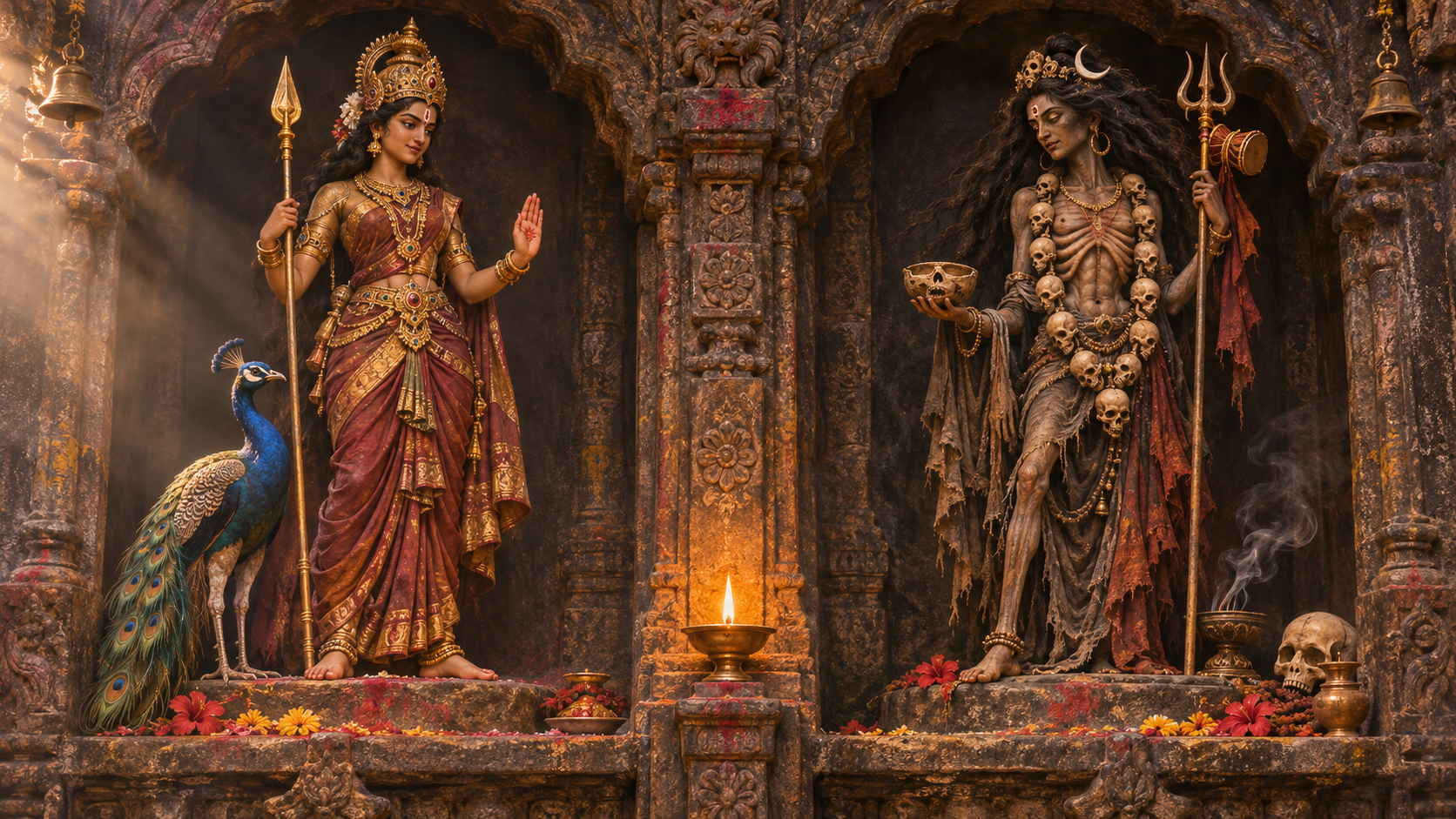
If you feel devotion toward the Divine Mother but hesitate before images of weapons, skeletal bodies, or battle, don’t dismiss that discomfort. Let it sharpen your question. What does divine motherhood look like when gentleness alone will not protect dharma?
Kaumari and Kankaleshwari Chamunda offer two distinct answers. Kaumari embodies disciplined force directed against adharma. Kankaleshwari confronts you with a power that remains when beauty, comfort, and ordinary reassurance have been stripped away. Learning to distinguish these modes will help you approach fierce Devi forms without reducing them to violence, horror, or decorative symbolism.
The Mother is fierce because protection has a cost
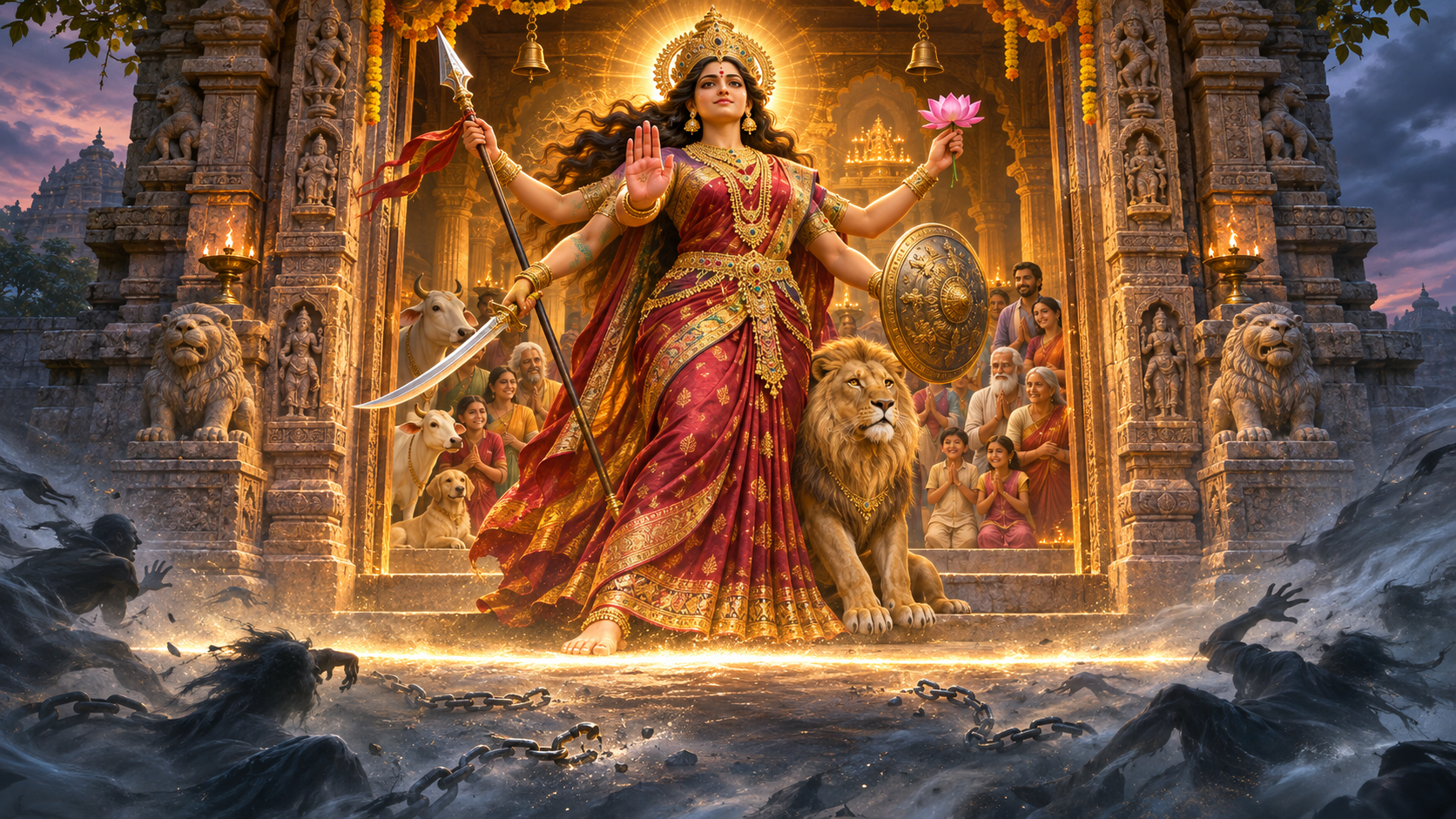
A common mistake is to divide the Divine Mother into two opposing personalities: a benevolent mother who nurtures and a frightening goddess who destroys. That division misses the continuity between them. A mother who protects must sometimes stop what threatens her children. Compassion without the capacity to resist adharma would be sentiment, not complete protection.
Fierce and martial are related, but they are not identical. Martial imagery emphasizes directed action: a weapon, a mount, readiness, and a defined adversary. Fierce imagery may go further. It can disturb your attachment to appearance, expose mortality, or present the Divine in a form that refuses to comfort the ego.
This is a useful interpretive distinction, not a rigid taxonomy for every tradition. A single Devi form may be both martial and terrifying. Still, the distinction gives you a practical starting point. When you encounter an unfamiliar murti, ask two questions: What must this form actively oppose? What illusion does this form make impossible to preserve?
Those questions also prevent a modern misreading. A weapon in a deity’s hand does not automatically celebrate aggression, just as a serene face does not necessarily imply passivity. Look for the moral direction of the power. In the Devi traditions considered here, force becomes sacred because it protects dharma and ends adharma. Ferocity is therefore accountable to purpose.
Kaumari turns maternal care into disciplined force
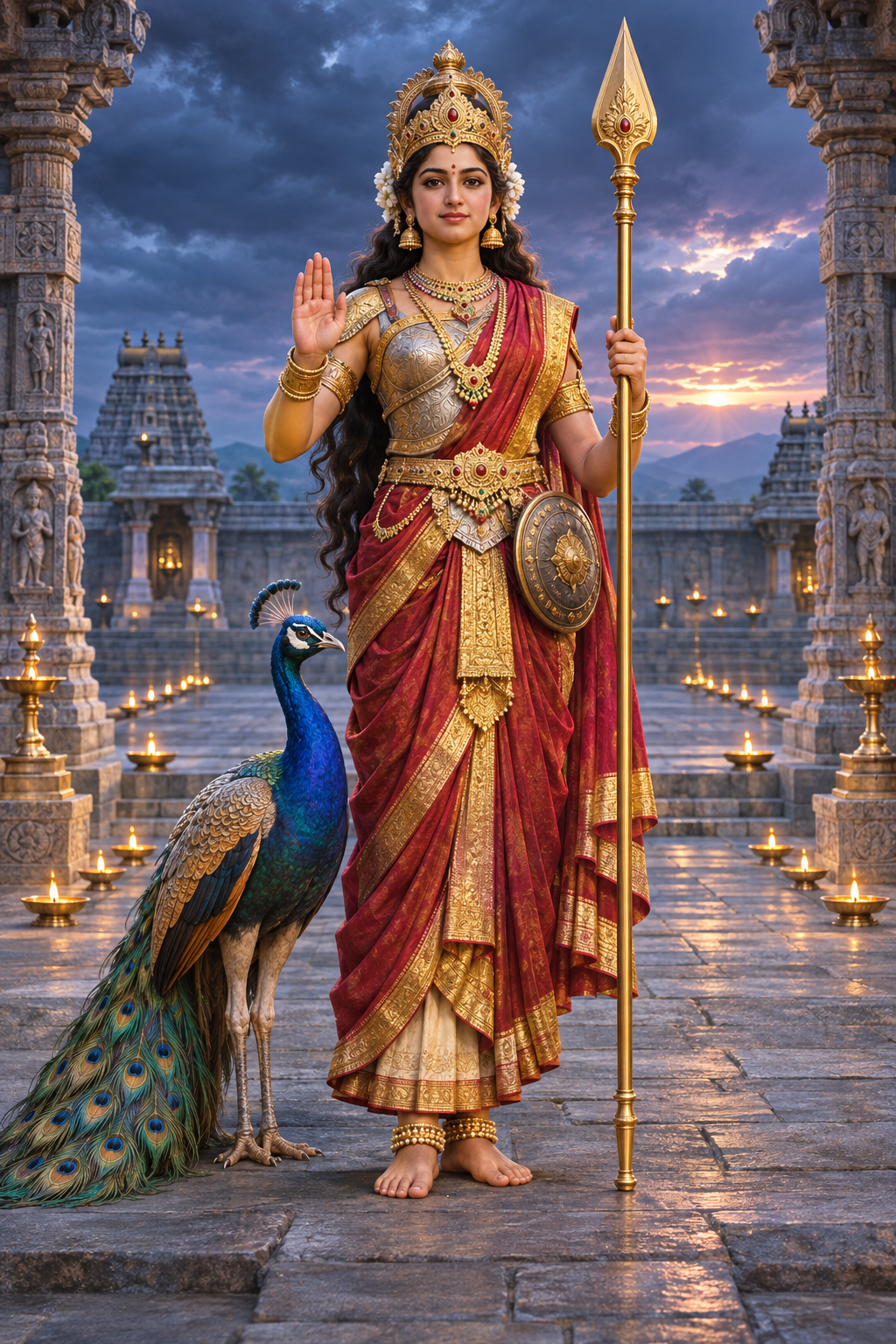
Within the Devi Mahatmya of the Markandeya Purana, peaceful, universal Ambika assumes a form suited to active battle. As Kaumari, she appears as a spear-bearing warrior associated with the peacock. Her transformation answers a specific demand: adharma has become something that must be confronted, not merely endured.
The spear gives the image a clear visual grammar. It is focused rather than diffuse, held for a purpose rather than displayed as an ornament. The peacock places Kaumari in motion. Whatever additional meanings a particular lineage gives these features, the immediate scene is unmistakable: the Mother’s protective intention has become organized action.
That matters when you apply the image to your own conduct. Kaumari should not become a sacred label for anger. Anger can be impulsive, self-protective, and indiscriminate. Martial discipline is different. It identifies what is being defended, names the actual threat, chooses a proportionate response, and stops when protection has been achieved.
If Kaumari draws you, test your response with four concrete questions:
- What duty, person, principle, or boundary actually needs protection?
- What is the specific form of adharma involved, rather than the person or group onto whom you have projected it?
- What action is firm enough to meet the problem without becoming vindictive?
- Can you remain responsible for the consequences after the heat of the moment passes?
This is the difference between courage and emotional combat. Kaumari does not ask you to become perpetually combative. She asks whether you can act when passivity would abandon dharma. Her lesson is especially relevant when people mistake avoidance for peace. Refusing to name wrongdoing may preserve surface calm while allowing the wrong to continue.
Kankaleshwari Chamunda confronts what beauty conceals
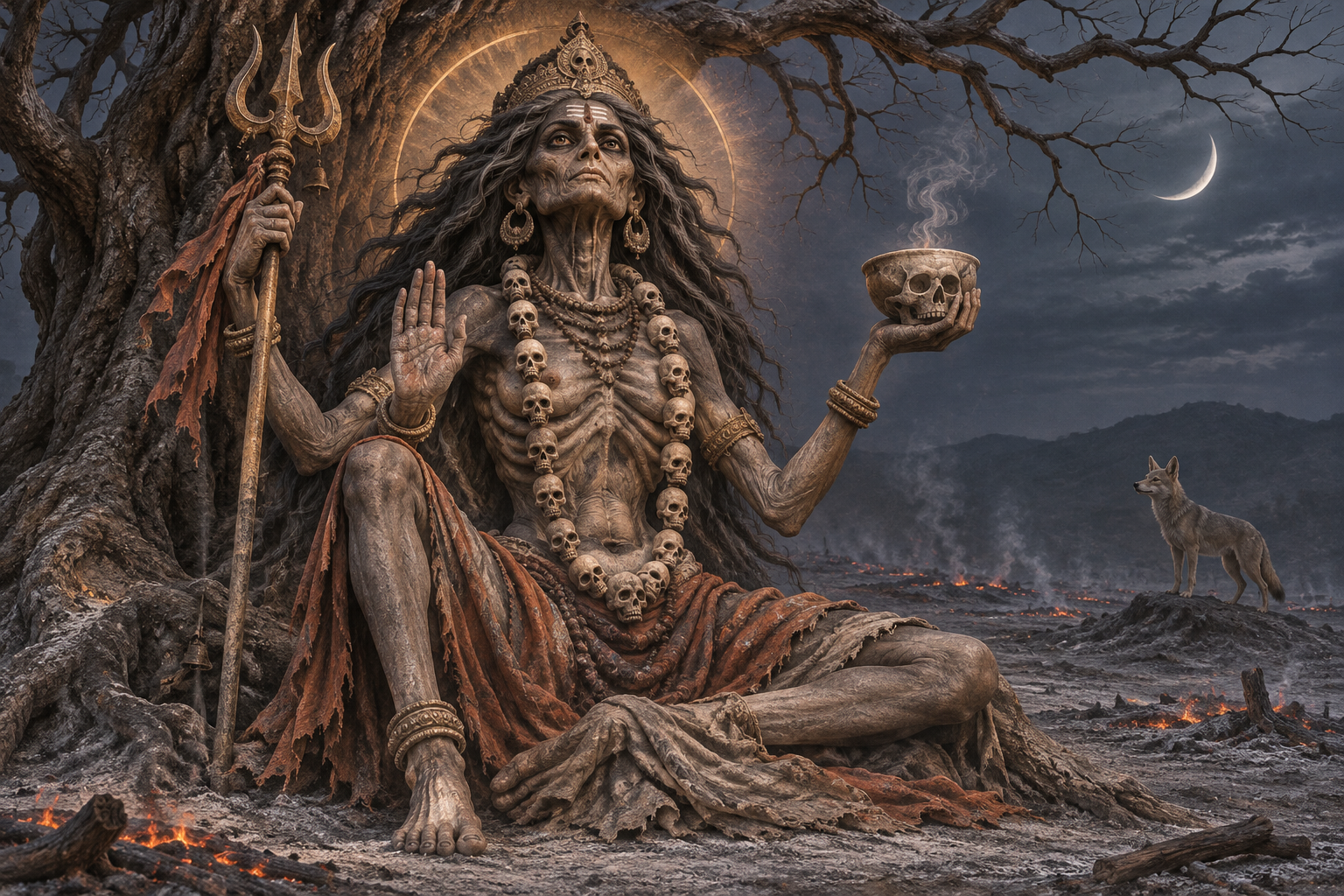
Kankaleshwari presents another kind of sacred severity. At Kanchannagar in Bardhaman, West Bengal, the deity is worshipped as an eight-armed form of Chamunda known as Kankaleshwari Kali or Kankali Mata. Her skeletal appearance gives the devotee no easy refuge in conventional loveliness.
That appearance should not be read as a deficiency in the Divine. It challenges the assumption that sacred presence must always look soft, youthful, abundant, or pleasing. A skeleton reveals the structure beneath the face by which a person is ordinarily recognized. In devotional reflection, that makes Kankaleshwari an uncompromising question: what remains when the identities supported by appearance and circumstance can no longer hold?
Her eight arms and skeletal body create a striking tension. The form is stripped down, yet it is not powerless. Exposure and capacity coexist. This is why fear alone is an inadequate response. The image may frighten you, but its theological force lies in showing that the Divine does not depend on the signs by which human beings usually measure vitality, status, or attractiveness.
Kankaleshwari is therefore useful when your problem is not hesitation but attachment. You may already know what must end, yet continue feeding it because its loss would unsettle your identity. In that situation, ask:
- What am I preserving only because it makes me feel recognizable or secure?
- Which truth have I made frightening by refusing to face it directly?
- What duty remains when praise, appearance, and social approval are removed?
- Am I calling something evil merely because its sacred imagery unsettles me?
The last question is particularly important when viewing fierce Hindu iconography. Visual discomfort is not a moral verdict. If you approach a skeletal goddess through assumptions that equate beauty with goodness and terror with evil, you will misread the form before learning her name. Begin with the living tradition’s identification of the deity, not with an imported reaction to the image.
A five-step way to read fierce Devi iconography
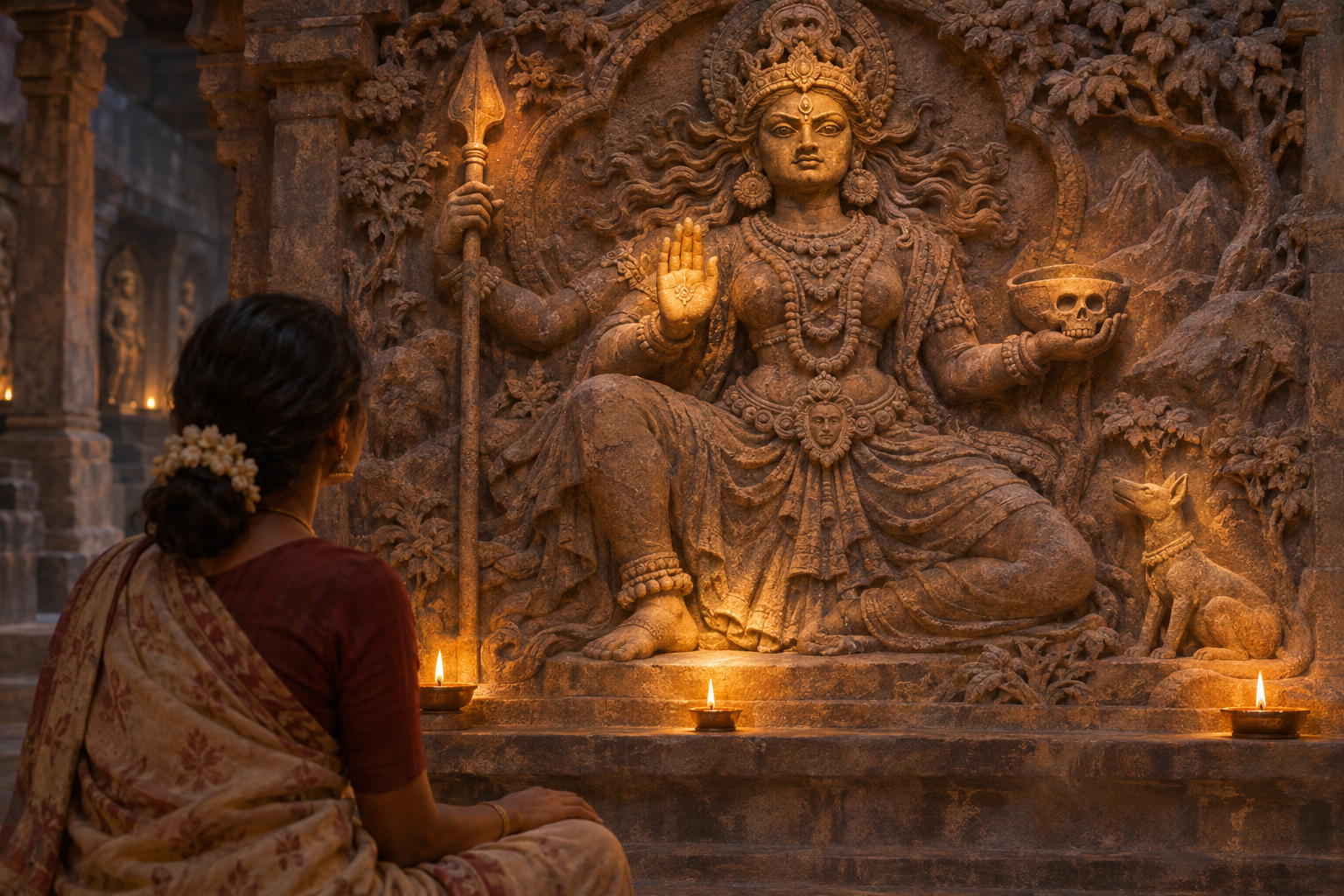
You do not need to erase your first emotional response to a fierce form. You need to keep that response from becoming your entire interpretation. Use this sequence when you encounter a temple murti, painting, or photograph you do not yet understand.
- Identify the proper name and setting. Record the deity’s local name, temple, region, and stated relationship to other forms of Devi. Do not label every fierce female deity as Kali simply because the image looks frightening. At Bardhaman, for example, Kankaleshwari is locally identified with Chamunda and is also popularly called Kankaleshwari Kali or Kankali Mata.
- Describe before interpreting. Note only what is visible or reliably identified: the number of arms, weapons, mount, posture, bodily form, and gestures. Description keeps you from building theology on a detail that is not actually present.
- Ask what the form does. Kaumari’s spear, peacock, and battle setting direct attention toward active protection. Kankaleshwari’s skeletal presentation confronts the viewer through radical exposure. Function is often more revealing than whether an image initially feels pleasant.
- Separate ferocity from malice. Determine what the deity opposes and what she protects. A fearsome appearance may communicate the seriousness of adharma, mortality, or dissolution without making the goddess morally cruel.
- Translate insight into one responsible action. With Kaumari, that may mean stating a neglected boundary or completing a difficult duty. With Kankaleshwari, it may mean relinquishing an attachment that survives only through denial. Keep the action concrete enough to complete and honest enough to evaluate afterward.
Iconographic reflection is not the same as ritual authorization. A picture cannot tell you which mantra, offering, vrata, or initiatory discipline is appropriate. If you want to move from contemplation into formal worship, learn from the relevant temple, lineage, or qualified teacher. That preserves the difference between receiving a tradition and assembling one from disconnected images.
You should also resist turning the goddesses into personality labels. Kaumari is not merely a symbol for being assertive, and Kankaleshwari is not a decorative emblem of darkness. Personal reflection becomes Dharmic only when it remains accountable to the deity’s sacred context, the struggle against adharma, and the disciplines through which devotion is traditionally expressed.
Key takeaways for devotion and daily conduct
- The Divine Mother’s gentleness and ferocity are not competing identities. Protection can require both nourishment and resistance.
- Martial imagery directs power toward a defined threat; fierce imagery may also expose mortality, attachment, and the limits of outward appearance.
- Kaumari helps you examine whether you can defend dharma with focus, proportion, and responsibility rather than impulsive anger.
- Kankaleshwari Chamunda asks what remains when familiar sources of beauty, security, and identity have been stripped away.
- Before interpreting an unfamiliar goddess, identify her proper name, place, attributes, and function within her living tradition.
- Use iconography for reflection, but seek lineage- or temple-specific guidance before undertaking formal ritual practice.
The next time a fierce Devi form unsettles you, stay with the image long enough to ask what kind of strength it demands. If the problem is cowardice before a necessary duty, contemplate Kaumari’s disciplined readiness and take one proportionate action. If the problem is attachment to what must pass, sit with Kankaleshwari’s uncompromising form and name what you are afraid to release. The point is not to become fascinated with ferocity. It is to let sacred power correct the place where comfort has stopped serving dharma.
References
- Hindu Blog — Understanding Kankaleshwari Chamunda – The Hunger That Devours the Cosmos
- Hindu Blog — When Ambika Becomes Kaumari: The Spear Bearer on the Peacock

Leave a Reply
You must be logged in to post a comment.