
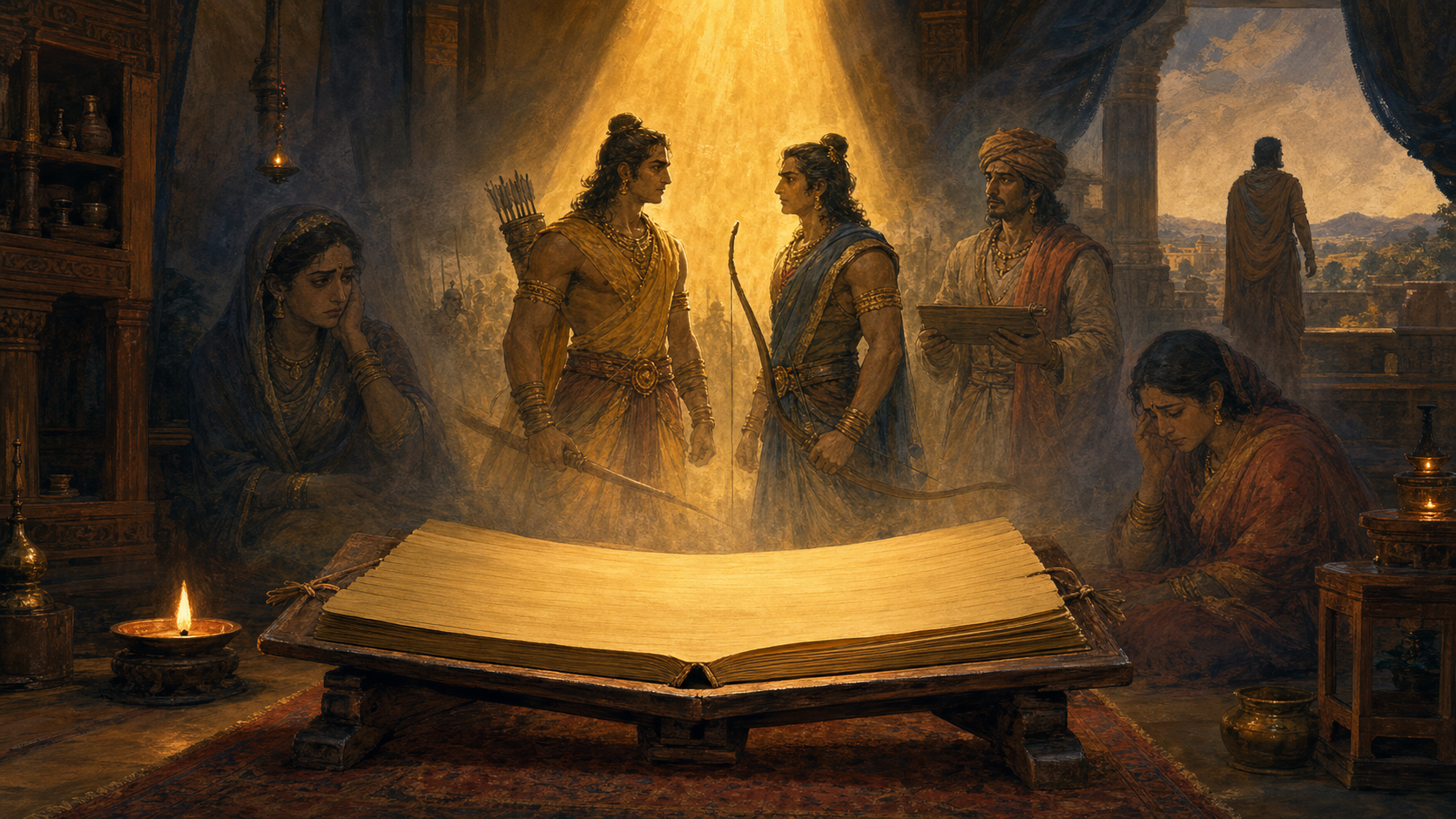
You finish a Ramayana or Mahabharata retelling certain that you know who deserves admiration. Then someone names a neglected warrior, an omitted motive, or a deceptive signal that changes the scene. The familiar moral suddenly looks less secure. Were you misled, or are you simply encountering another layer of the epic?
You don’t have to choose between reverence and scrutiny. Let the story move you on the first reading, then examine how it moved you on the second. That simple discipline helps you distinguish narrative prominence from moral worth, sympathy from approval, and loyalty to a side from loyalty to dharma.
Diagnose the frame before debating the moral
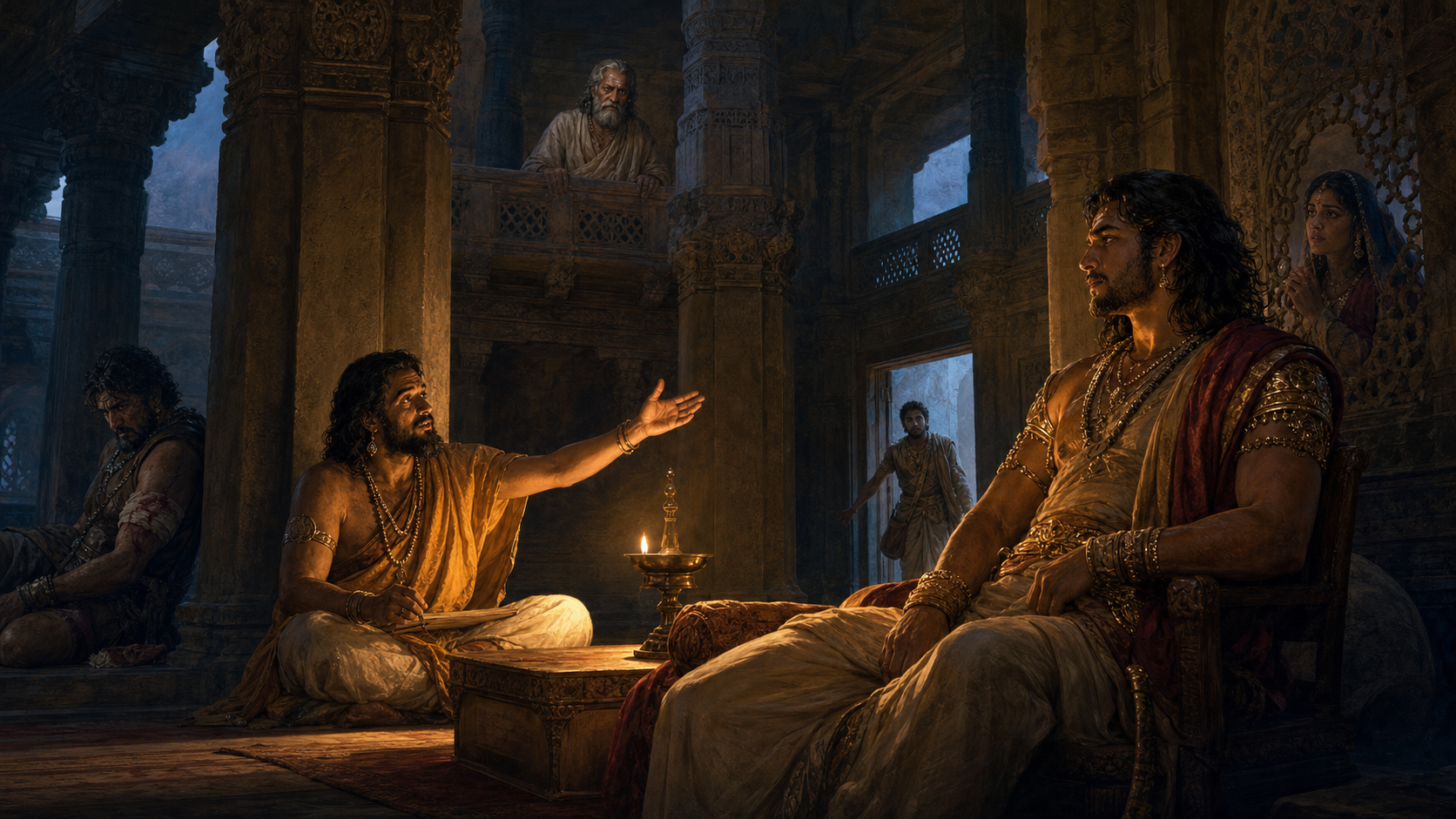
When two people draw different lessons from the same epic, they may not be disagreeing about dharma yet. They may be responding to different kinds of framing. Identify the layer before arguing about the verdict.
| Layer of framing | What it changes | Question to ask |
|---|---|---|
| Narrative emphasis | Which event receives detail, suspense, pathos, or repetition | Would I judge this person differently if the scene were shorter or less dramatic? |
| Manipulation inside the story | What characters believe when they act under deception, fear, or incomplete knowledge | Who knows the claim directly, and who is reacting to a signal? |
| Cultural retelling | Which characters and episodes remain prominent in classrooms, performances, family kathas, and popular adaptations | Am I remembering the epic, or the selection of the epic that I encountered? |
None of these layers is automatically dishonest. Every narration must select, arrange, and emphasize. Pathos can reveal the human cost of a decision more clearly than a bare chronology could. The problem begins when prominence becomes proof: the most memorable character is treated as the most virtuous, the most moving death as the only sacrifice worth remembering, or the winning side as morally correct in every individual act.
Keep four distinctions in view. Attention is not endorsement. Sympathy is not acquittal. Victory is not approval of every means. Defeat is not evidence that courage or dignity was absent.
Separate event, knowledge, emotion, and judgment
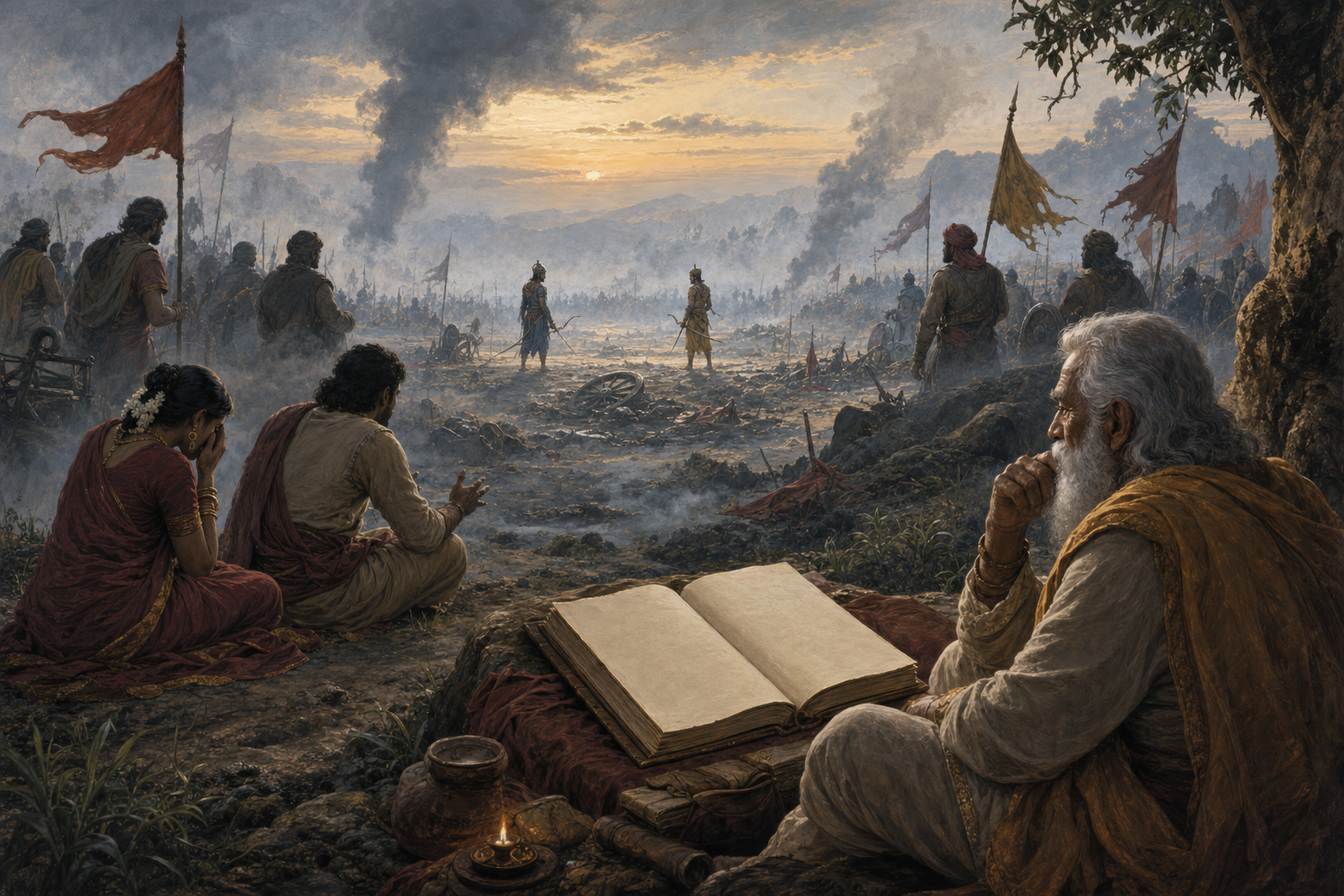
A morally serious reading starts by slowing down the sequence. Before asking whether a character acted rightly, ask what happened, what that character could know, what emotion shaped the response, and which principle should govern your judgment.
The golden-deer sequence offers a precise example. Maricha’s attractive disguise draws Rama away. After being struck, he imitates Rama’s voice and cries for help. The false signal creates urgency, exploits protective instincts, and helps rupture the household’s safeguards. Sita responds to an apparent danger to Rama; Lakshmana’s hesitation is recast as disloyalty; Ravana gains the opening he needs.
If you collapse those stages into a slogan about one character’s weakness, you miss the mechanism. The deception works because it recruits worthy motives. Love, duty, and the impulse to protect are redirected by fabricated evidence. The moral warning is not that affection makes you foolish. It is that urgency can make even a noble obligation vulnerable to manipulation.
Use the same sequence whenever an epic scene troubles you:
- State the event without interpretation. What was said or done?
- Map the knowledge. Who witnessed the event, who received a report, and who encountered an illusion or partial truth?
- Name the pressure. Was the decision shaped by fear, grief, loyalty, humiliation, anger, or haste?
- Identify the obligation. What relationships, promises, protections, or duties were in tension?
- Judge the choice. Did the means preserve truth, restraint, and responsibility, or did they turn another person’s virtue into an instrument?
This order matters. If you begin with a preferred verdict, every fact becomes evidence for it. If you begin with the event and the limits of each character’s knowledge, moral judgment becomes firmer and fairer.
Refuse camp loyalty as a substitute for dharma
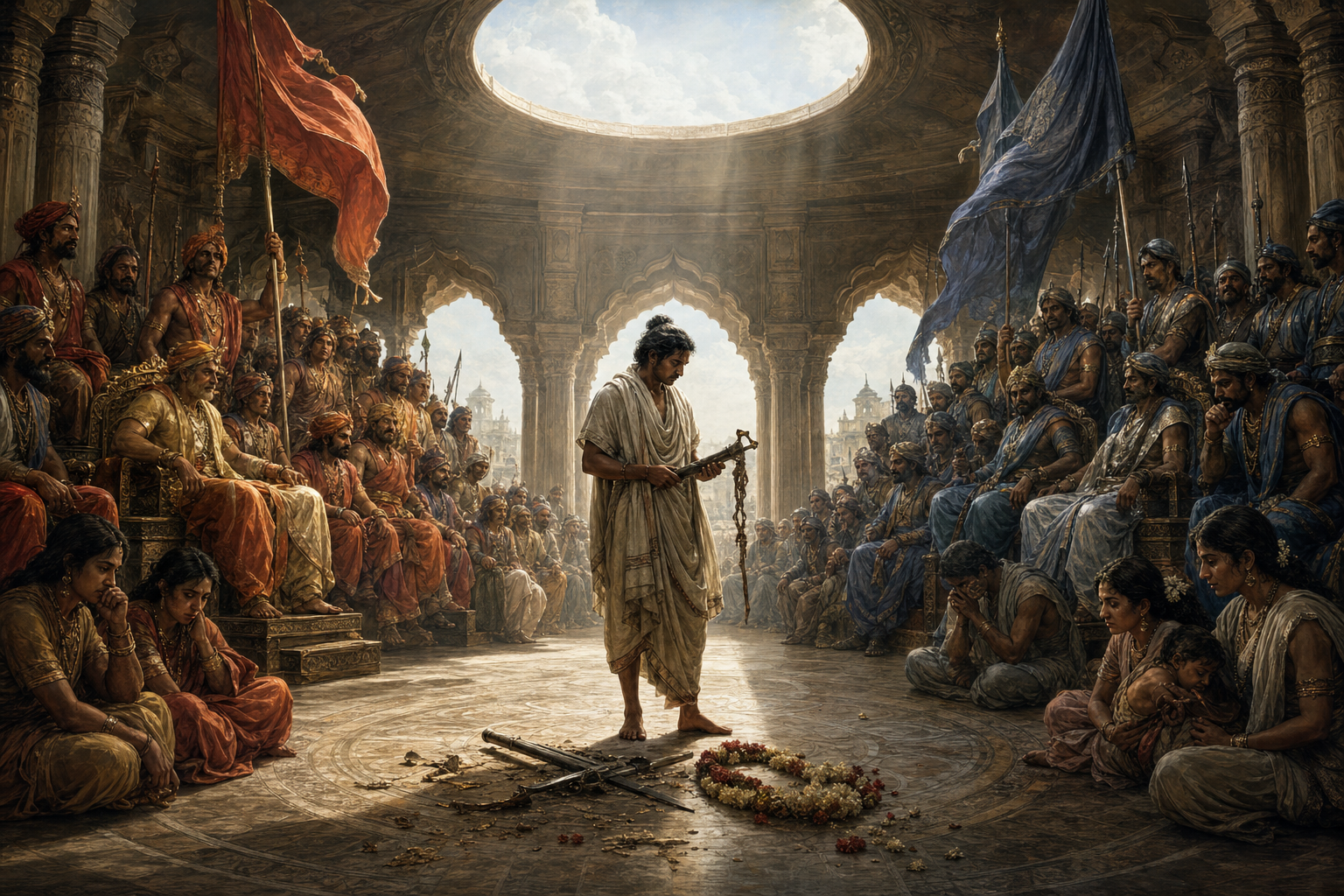
The easiest way to flatten the Mahabharata is to make affiliation do all the moral work. A Pandava association becomes a certificate of virtue; a Kaurava association becomes proof that every admirable quality is counterfeit. The epic’s tragedy becomes much harder to understand once you read this way.
Consider Abhimanyu and Vrishasena. Abhimanyu’s entry into the Chakravyuha carries an unforgettable arc: youthful brilliance, isolation, and a tragic death. Vrishasena, Karna’s eldest son, receives far less attention in popular memory despite being portrayed across the war narrative as a disciplined and tenacious archer. Although manuscript traditions vary in their details, his broader martial profile remains clear. On the seventeenth day, Arjuna kills Vrishasena before the climactic confrontation with Karna.
Remembering Vrishasena does not diminish Abhimanyu, reverse the moral alignment of the war, or require you to declare both causes identical. It corrects a different error: assuming that narrative fame measures courage. Abhimanyu’s concentrated pathos is naturally memorable. Vrishasena’s less celebrated service shows how sustained excellence can disappear behind a more dramatic scene.
To avoid partisan moral shortcuts, judge four things separately:
- The cause: What larger end does the alliance pursue?
- The act: Was this particular choice truthful, proportionate, and consistent with the responsibilities involved?
- The quality displayed: Did the person show courage, discipline, loyalty, compassion, restraint, or another genuine virtue?
- The accountability owed: Does an admirable quality illuminate the person without excusing harmful conduct?
A warrior can display courage while serving a compromised cause. A person on the more righteous side can still make a choice that requires scrutiny. You can grieve a death without endorsing every allegiance, and you can condemn an action without denying the actor’s humanity.
Try replacing labels with propositions. Instead of saying, “He was a hero,” say exactly what you mean: he held his position under extreme pressure, defended an ally, refused a dishonest advantage, or accepted a grave duty. Instead of saying, “He was evil,” name the conduct: he fabricated evidence, silenced counsel, violated trust, or used fear to obtain compliance. Specific moral language makes your judgment testable. Camp labels often make it circular.
Borrow the epics’ verification habits
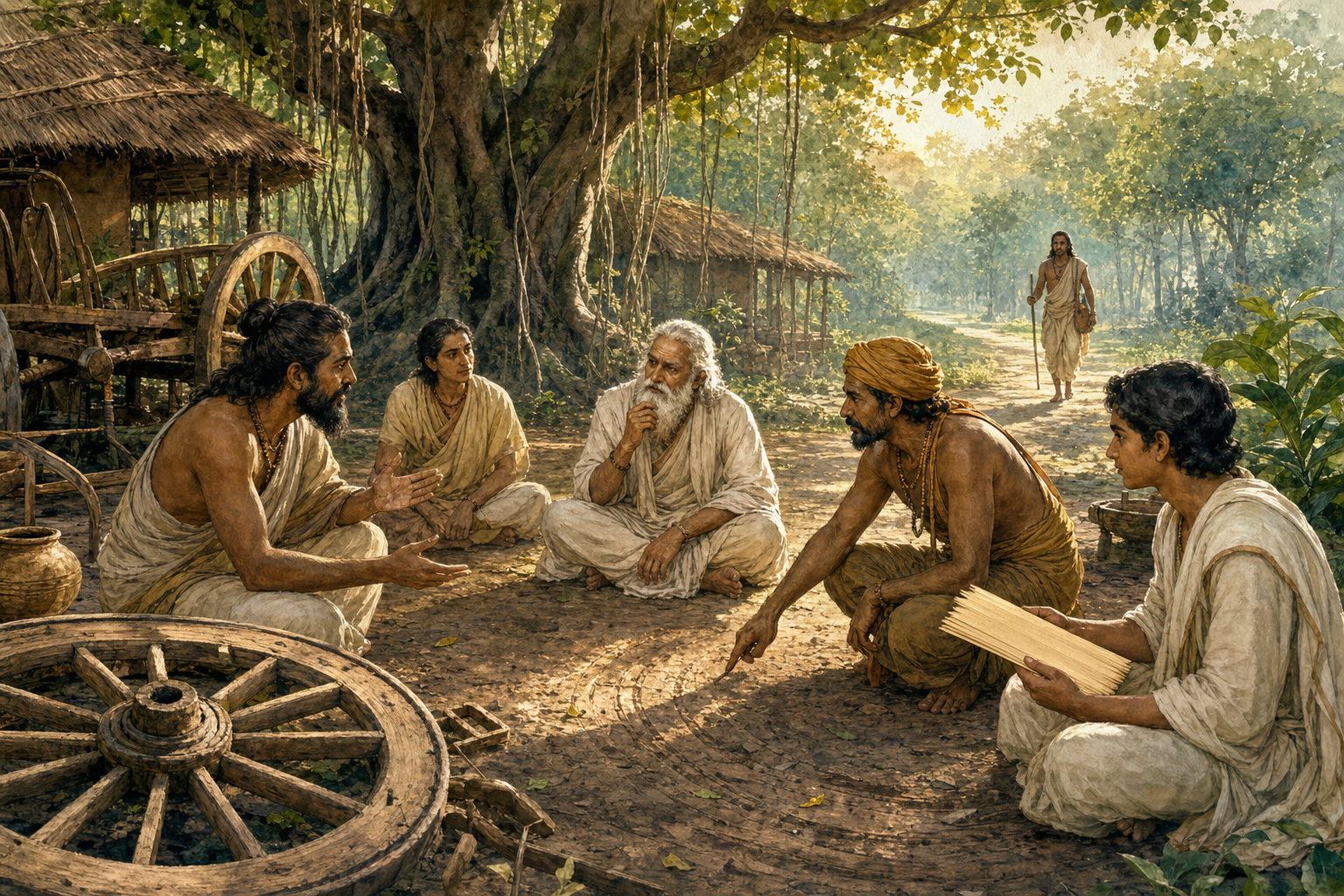
Narrative discernment is not confined to ancient characters. It applies whenever a dramatic clip, quotation, adaptation, or online argument tells you that one scene settles the meaning of an entire epic. Before accepting the claim, ask what would count as authentication.
Hanuman’s mission to Lanka supplies a useful model. He relies on direct observation, remembers details carefully, and carries identity tokens: Rama’s ring for Sita and Sita’s chudamani for Rama. The method combines firsthand verification, authenticated signs, and disciplined transmission. Vibhishana contributes another safeguard by refusing to let loyalty to Ravana override principled dissent.
Translate those habits into your own reading:
- Reduce the claim to one sentence. “This character is never questioned” can be checked; “everyone knows what the epic really means” cannot.
- Locate the scene. Determine whether the disputed detail belongs to the narrative being discussed, a particular retelling, a performance choice, or a later summary.
- Separate observation from relay. Note whether the claim rests on an action shown in sequence, a character’s testimony, a rumor, an illusion, or another person’s paraphrase.
- Inspect the emotional trigger. A message that demands instant outrage may be using your loyalty to prevent examination.
- Seek corroboration before certainty. If manuscript or retelling traditions vary, preserve that uncertainty instead of choosing the most convenient version and calling it universal.
- Protect principled dissent. A person who questions your side may be defending dharma, not betraying the community.
That final point is especially important in communal discussion. Unity built by suppressing truthful criticism is brittle. Vibhishana’s example shows that belonging cannot sanctify falsehood merely because the falsehood benefits one’s own camp.
The wider Dharmic family reinforces this discipline through related ethics of speech: satya and ahimsa in Hindu thought, Right Speech in Buddhism, the close relationship between truth and nonviolence in Jainism, and sach lived with courage in Sikh tradition. These traditions do not erase their differences, but they offer a shared warning: speech should not turn fear, contempt, or group loyalty into substitutes for truth.
Key takeaways: five questions before you call a scene dharmic
- What exactly happened? Describe the act before assigning virtue or blame.
- What could each person know? Distinguish direct knowledge from testimony, rumor, illusion, and inference.
- How is the narration guiding your attention? Notice suspense, pathos, omission, repetition, and the position from which you encounter the scene.
- Would you use the same standard for the other camp? If the judgment changes with the character’s affiliation, you may be defending a side rather than applying dharma.
- What remains true after the emotion settles? Preserve courage without excusing adharma, grief without surrendering judgment, and devotion without abandoning verification.
Use these questions the next time a katha, television adaptation, classroom summary, or social-media debate presents an effortless moral verdict. Choose one decisive scene and write two notes: what the narration made vivid, and what dharma still requires you to examine. You are not trying to become unmoved by the epics. You are learning to receive their emotional force without letting emotional force make the final judgment.
References
- DharmaRenaissance Blog — Ravana’s Propaganda Playbook: Ramayana Lessons to Outsmart Modern Fake News
- DharmaRenaissance Blog — The Forgotten Warrior: Reclaiming Vrishasena’s Valor Beyond Abhimanyu’s Shadow
