
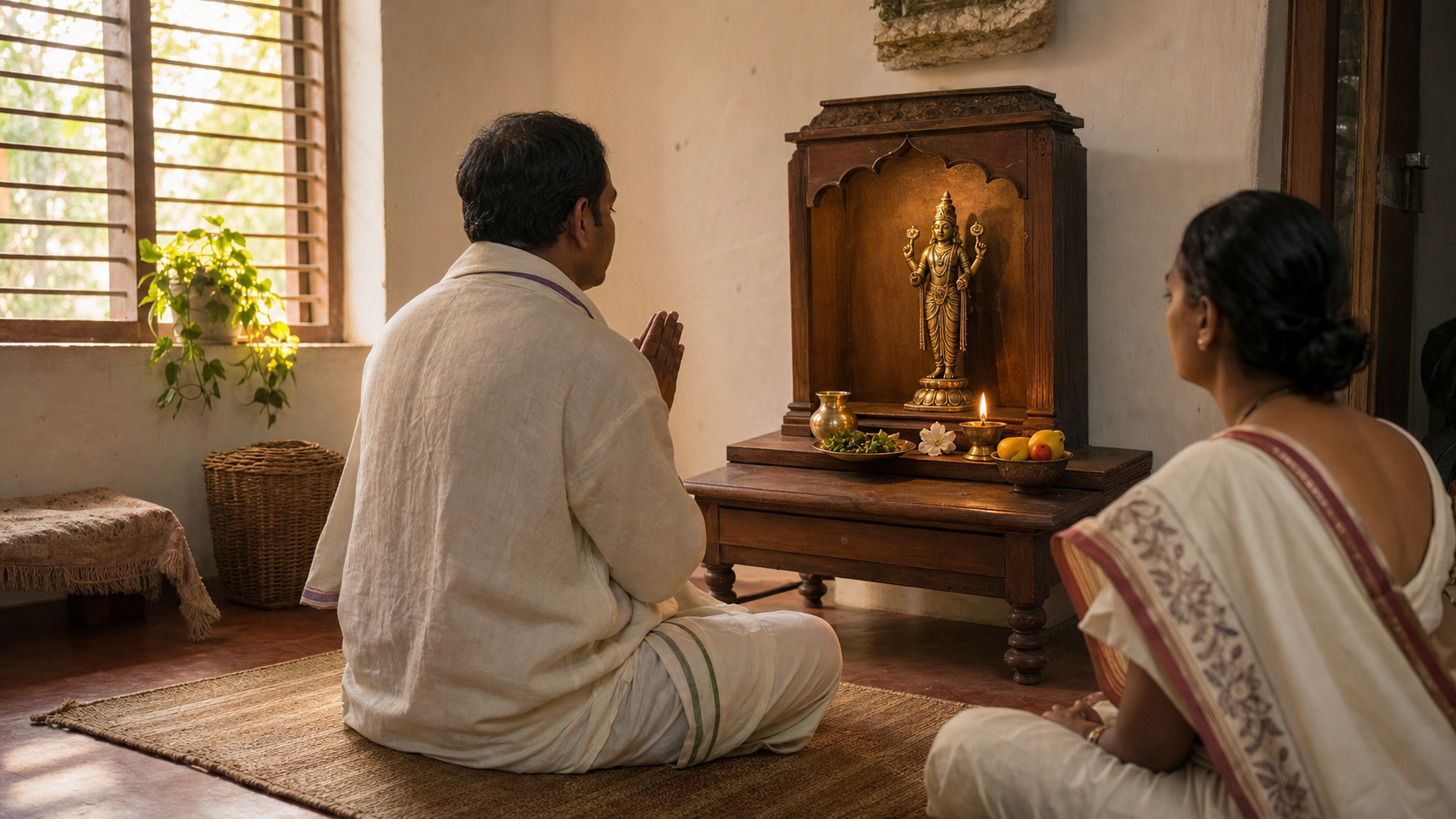
You want a home practice rooted in the Padma Samhita, but the available vocabulary quickly leads into consecration, mantra initiation, nyāsa, homa, temple architecture, and priestly discipline. The real question is simpler: what can you begin faithfully at home, and what should remain under the direction of an ācārya or trained archaka?
Begin with a modest nitya arcana that you can maintain on ordinary days. Treat formal mantra rites and consecration as matters of lineage and training. Then let the quality of your conduct determine whether the worship is reaching beyond the altar.
Choose the right level of Pañcarātra practice
Pañcarātra is a Vaiṣṇava Āgamic tradition with Vedic allegiance, a developed theology of Nārāyaṇa, and precise methods for making devotion bodily and communal. Its standing within Vaiṣṇava Dharma is not an improvised modern claim: Śrī Rāmānuja defended core Pañcarātra doctrines in the Śrī-bhāṣya, while the Nārāyaṇīya section of the Mahābhārata also bears witness to the tradition’s authority. This combination of Vedic grounding and Āgamic precision matters because it tells you how to approach the practice: through sampradāya, not as a collection of detachable techniques.
Across thirty-one adhyāyas, the practical field extends from the qualifications of teachers and worshippers to temple construction, iconography, daily pūjā, abhiṣekam, homa, prāṇa-pratiṣṭhā, festivals, vows, and expiation. That breadth gives you an important boundary. Not everything described within a sacred ritual system is an instruction for every devotee to perform privately.
- Foundational understanding: Nārāyaṇa is supreme, Śrī embodies compassionate mediation, the world is meaningful, and arcā makes divine presence approachable through worship.
- Household discipline: A clean altar, a stable daily sequence, suitable offerings, japa, reverence, and ethical conduct bring Pañcarātra principles into ordinary life.
- Initiatory and temple disciplines: Dīkṣā, technical nyāsa, elaborate mudrās, homa, prāṇa-pratiṣṭhā, temple installation, and festival liturgies call for qualified direction and, in many cases, trained officiants.
If you are a householder beginning without formal training, work within the second level while learning the first. Do not cross into the third merely because a ritual outline is available. Precision in Pañcarātra is part of the practice, not an optional ornament.
Build a nitya arcana that survives busy days
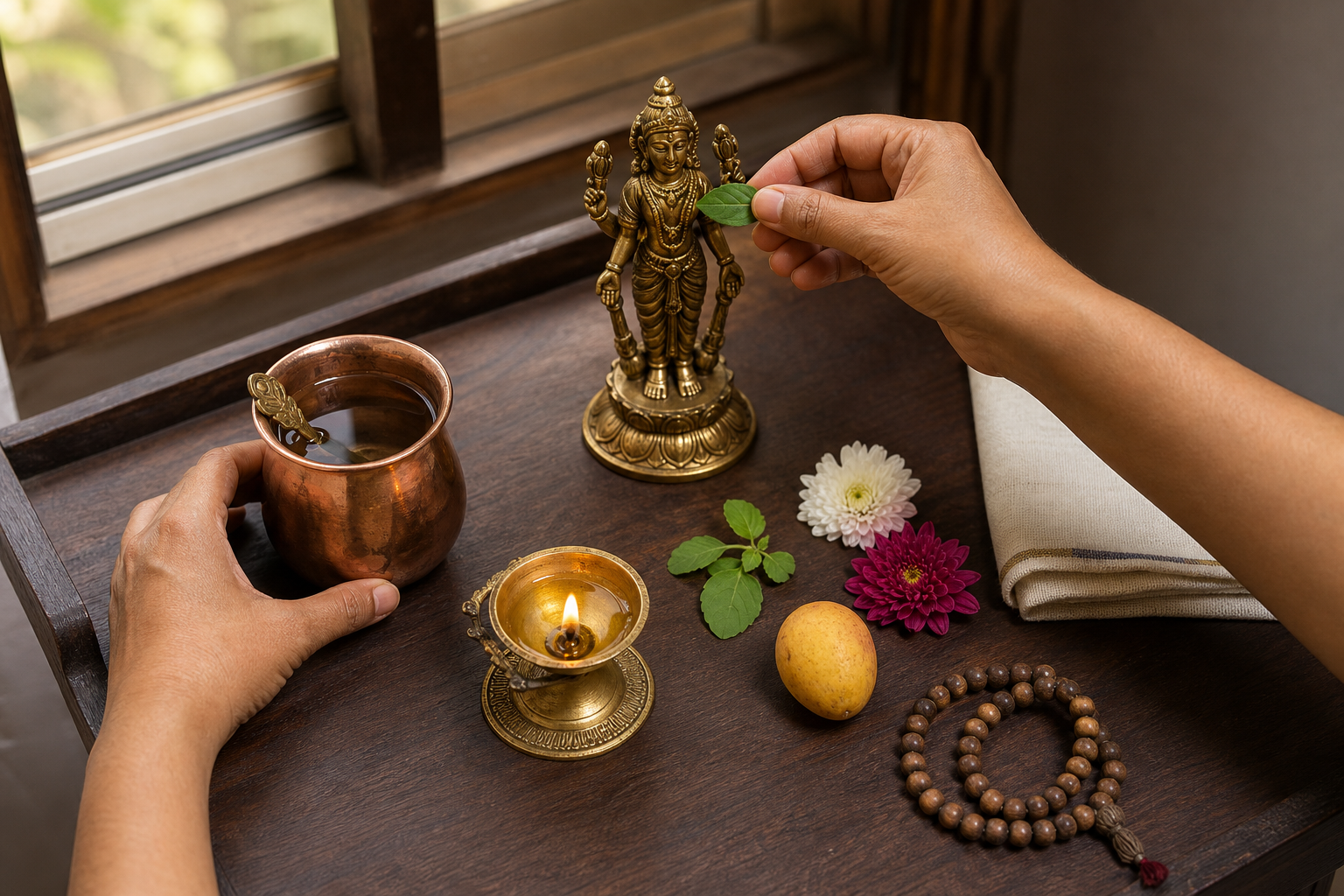
The distinction between nitya, naimittika, and kāmya rites protects a devotee from ritual overload. Nitya is the recurring discipline. Naimittika worship responds to an occasion or sacred observance. Kāmya worship is undertaken with a particular desired end. For a beginner, the daily foundation should come first; an elaborate occasional ceremony cannot compensate for a neglected ordinary practice.
Use the same compact sequence each day rather than designing a new pūjā whenever your mood changes:
- Prepare the place and yourself. Wash your hands, clean the altar surface, remove stale flowers or food, and arrange only what you will actually use. Outer cleanliness steadies attention; it also prevents sacred hospitality from becoming clutter.
- Make a clear saṅkalpa. Name the purpose in plain language: worship of Śrīman Nārāyaṇa, gratitude, purification of intention, and readiness for service. A saṅkalpa is not a wish list. It gathers a wandering mind around a deliberate act.
- Settle the body and breath. Sit or stand steadily and allow the breath to become even. Do not add forceful retention or technical breath ratios without instruction. The immediate purpose is collected attention.
- Recite with lineage awareness. The central Vaiṣṇava mantras include Oṁ Namo Nārāyaṇāya, the aṣṭākṣarī, and Oṁ Namo Bhagavate Vāsudevāya, the dvādaśākṣarī. Where an ācārya has given pronunciation, count, nyāsa, or other instructions, follow them exactly. Without such transmission, do not manufacture a formal tantric procedure around a publicly familiar mantra; use the form of nāma-japa, stotra, or prayer already accepted in your family or community while seeking guidance.
- Offer a sustainable set of upacāras. Fresh water, a flower or tulasī, fragrance or incense, a lamp, and suitable naivedya are enough to establish attentive service. The fuller sequence may include āsana, pādya, arghya, ācamanīya, bathing, clothing, ornament, dhūpa, dīpa, food, and nīrājana. At home, preserve the meaning of hospitality instead of rushing through a long list.
- Conclude with reverence and order. Offer praṇāma, receive the naivedya as prasāda, clear perishable items at the proper time, and leave the altar ready for the next worship. If your lineage uses invocation and visarjana in home arcana, follow its taught sequence rather than guessing.
Keep this daily practice stable before adding more. An evening period of japa can complement morning arcana. A weekly or monthly abhiṣekam may be added when the image is made for bathing and your household can perform it respectfully. A printed picture, painted surface, or material vulnerable to water should not be bathed.
Pañcāmṛta traditionally brings together milk, curd, ghee, honey, and sugar, but more ingredients do not automatically produce deeper worship. A home abhiṣekam using clean water, a few flowers, and sincere japa preserves the essential movement of attention while reducing waste. If you use pañcāmṛta, use only what can be handled, distributed, and cleaned up with respect.
Keep consecration, nyāsa, and fire rites in trained hands
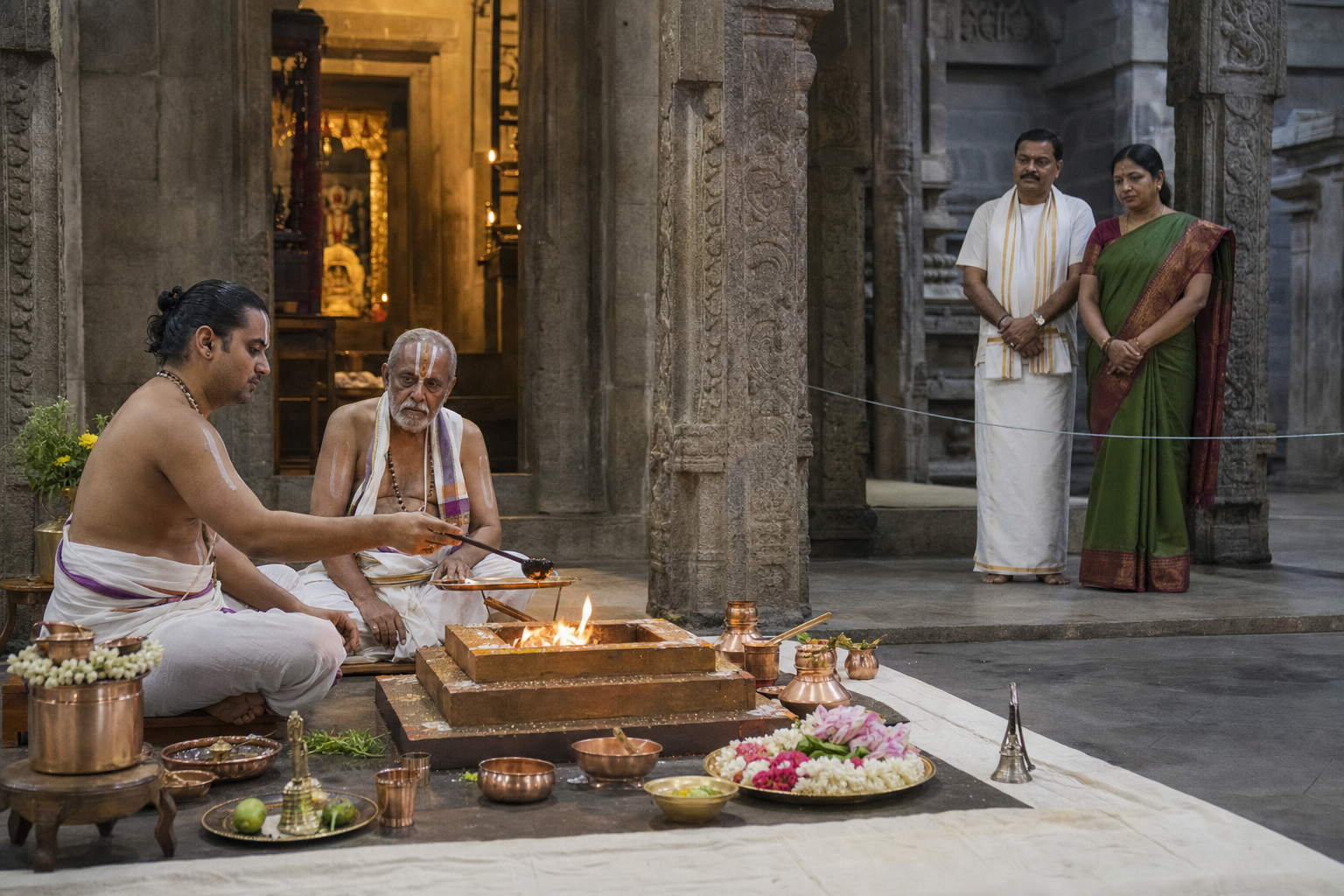
A consecrated temple mūrti is not merely a devotional decoration. Arcā rests on the conviction that the divine has consented to become approachable in a form that can be served. Formal prāṇa-pratiṣṭhā therefore establishes an enduring relationship of presence, worship, and care; it is not a one-time enhancement for a home ornament.
The complete process can involve bhūta-śuddhi, kara-nyāsa, aṅga-nyāsa, invocatory homa, mantra recitation, and the ritual enlivening of the image. A checklist cannot supply the pronunciation, ritual competence, authority, or continuing obligations involved. If you want a formally consecrated mūrti, consult a qualified ācārya or archaka before acquiring the image or setting a date. Until then, a home image can be installed reverently for daily remembrance and service without making claims about a formal prāṇa-pratiṣṭhā.
The same restraint applies to technical nyāsa, mudrā, and homa. Their purpose is to coordinate body, mantra, visualization, and ritual action. Copying hand positions or syllables without understanding their place in the liturgy may preserve the appearance while losing the discipline that gives the act meaning.
For a devotee seeking deeper entry, pañca-saṁskāra or samāśrayaṇa provides a coherent path. Its five dimensions are tāpa, the sign of the conch and discus; puṇḍra, the wearing of ūrdhva-puṇḍra; nāma, a name expressing service to Nārāyaṇa; mantra, transmission of the central mantras; and yāga, instruction in arcana. Tāpa has historically involved branding and is now often represented symbolically in some communities, so ask how the lineage you are approaching observes it. Do not assume every local custom is universal.
Before receiving initiation or commissioning a rite, ask four concrete questions:
- What daily practice will be expected after the ceremony?
- Which mantras or ritual details are to be used only after transmission?
- Which parts of the liturgy may a householder perform, and which require an archaka?
- What arrangements should be made for the deity’s care during travel, illness, or other unavoidable interruptions?
A trustworthy teacher should be able to answer in practical terms. Dīkṣā is not the acquisition of prestigious marks or secret vocabulary. Its purpose is a durable change in allegiance, practice, service, and conduct.
Read the ritual as a discipline of divine presence
The upacāras become intelligible when you stop treating them as items to complete and recognize them as acts of hospitality. Water is offered attentively. The lamp is shown rather than merely lit. Food is first presented rather than immediately consumed. Flowers are selected and placed with care. Ordinary actions are reordered around the conviction that Nārāyaṇa is present and worthy of service.
The doctrine of the four vyūhas offers another way to understand this ordered devotion. Vāsudeva, Saṅkarṣaṇa, Pradyumna, and Aniruddha express plurality without dividing the unity of the Supreme. A useful contemplative application is to let each association call attention to a different dimension of worship:
| Vyūha | Traditional association | Question to bring into practice |
|---|---|---|
| Vāsudeva | Sovereignty and divine presence | Have you paused to recognize whom you are serving? |
| Saṅkarṣaṇa | The individual self and knowledge | Is the act reducing self-importance or quietly feeding it? |
| Pradyumna | Mind and creative intention | Does your saṅkalpa gather the mind around a worthy intention? |
| Aniruddha | Order, protection, and regulation | Are regularity and careful sequence protecting the practice from impulse? |
The final column is a practical aid, not an exhaustive interpretation of vyūha theology. Its value is diagnostic: when attention slips into hurried movement, the associations help you notice what has been lost.
This is also why Pañcarātra practice coordinates body, breath, speech, and mind. Mudrā gives embodied form to intention. Nyāsa understands the body as an instrument of worship. Prāṇāyāma steadies attention for mantra. Saṅkalpa ties intention to memory and accountability. Even a simple household arcana can preserve this integration without imitating advanced procedures: stand or sit steadily, breathe calmly, speak distinctly, offer deliberately, and remain mentally present to the recipient of the offering.
Let conduct reveal whether the worship is working
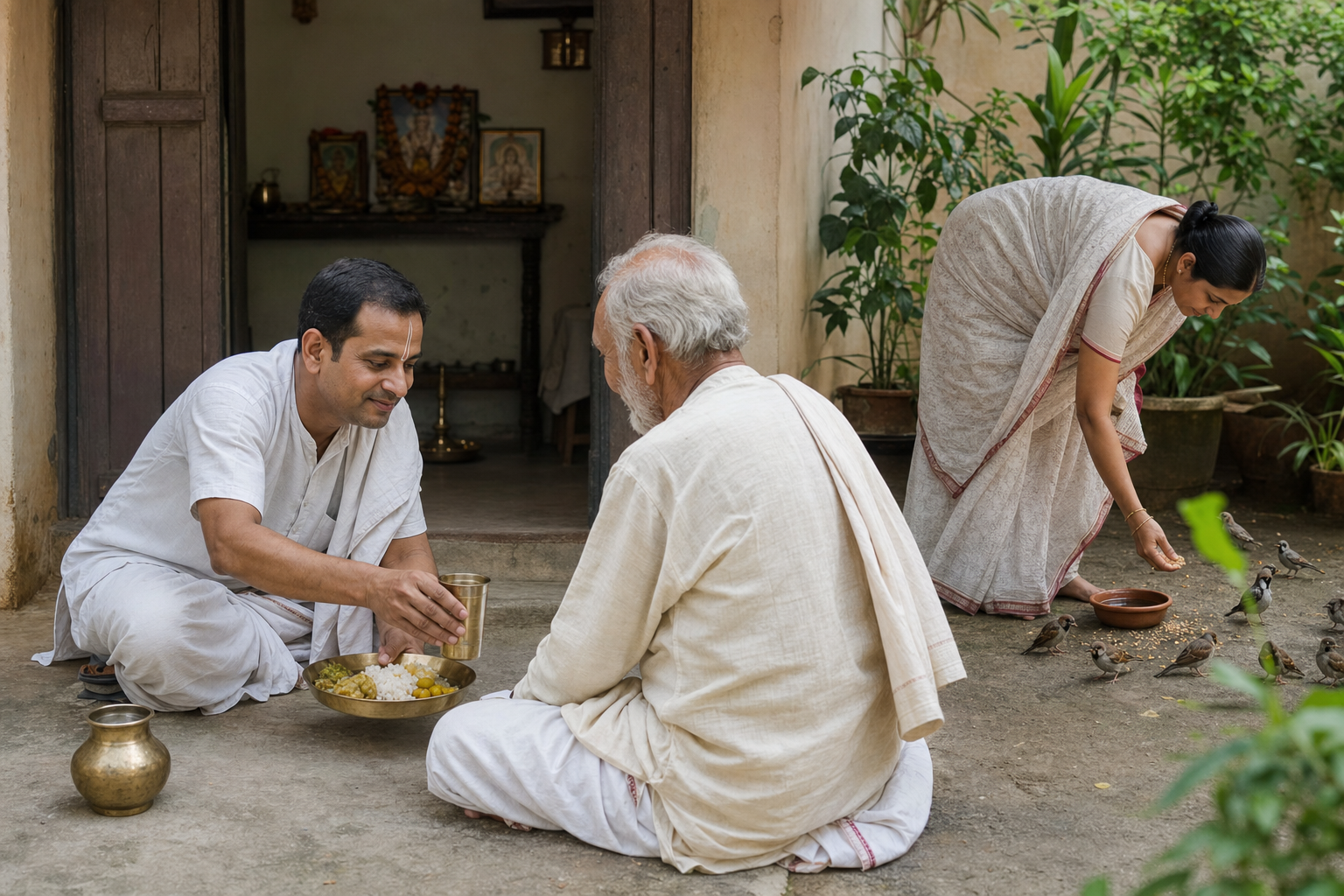
Satya, ahiṁsā, dāna, and dayā are not benefits to pursue after ritual competence has been achieved. They are part of the conditions under which worship becomes truthful. Ethically obtained, sāttvika, and cruelty-free offerings are one expression of that principle, but the test reaches further into daily life.
- Satya: Are your speech, promises, work, and financial dealings becoming more honest? Ritual exactness cannot compensate for deliberate deception.
- Ahiṁsā: Are you reducing harm, waste, harshness, and careless consumption? An excessive offering that is discarded thoughtlessly contradicts the restraint it is meant to teach.
- Dāna: Does devotion loosen your grip on time and resources? Make generosity a recurring discipline rather than an ornament reserved for festivals.
- Dayā: Are the people and living beings around you receiving more patience and consideration? The first evidence of a softened heart should be visible close to home.
If the number of upacāras increases while these qualities diminish, adding another ritual layer is the wrong correction. Simplify the worship, repair the conduct, and restore attention.
Use the same ethical standard when choosing an archaka or teacher. Lineage can preserve continuity and communal accountability, but it does not make competence or character irrelevant. Look for command of mantra and ritual, personal cleanliness, truthfulness, non-violence, freedom from greed, and the patience to teach carefully. Ask how training and accountability are maintained rather than judging only by ceremonial confidence.
Key takeaways
- Establish a small nitya arcana before adding occasional or desire-motivated rites.
- Use mantra according to the instruction available in your family, temple, or sampradāya; do not improvise formal nyāsa.
- Leave prāṇa-pratiṣṭhā, homa, and technical temple liturgy to properly trained practitioners.
- Prefer a respectful water abhiṣekam to an elaborate one that damages the image or creates waste.
- Measure progress through satya, ahiṁsā, dāna, dayā, steadiness, and willingness to serve.
Tomorrow, prepare one clean place, choose one daily time, and perform the same modest sequence with full attention. Once that practice remains steady through ordinary busy days, take the next question to a qualified Vaiṣṇava ācārya. Continuity is not a lesser version of Pañcarātra discipline; it is how devotion begins to inhabit your life.
References
