The Sanat Kumaras and the Ekadasa Rudras enter the creation narrative through an apparent disruption: four sages decline the work Brahma assigns them, and a fierce divine power arises from his restrained displeasure. Read together, these events explore why a complete cosmos needs inward freedom as well as outward growth.
The account reported by DharmaRenaissance connects cosmology with questions that remain recognizable in human life: whether duty permits different callings, how difficult emotion can be disciplined, and why dissolution belongs beside creation. Its central insight is not that one path defeats another, but that dharma must accommodate several necessary movements.
Creation needs both outward and inward movement
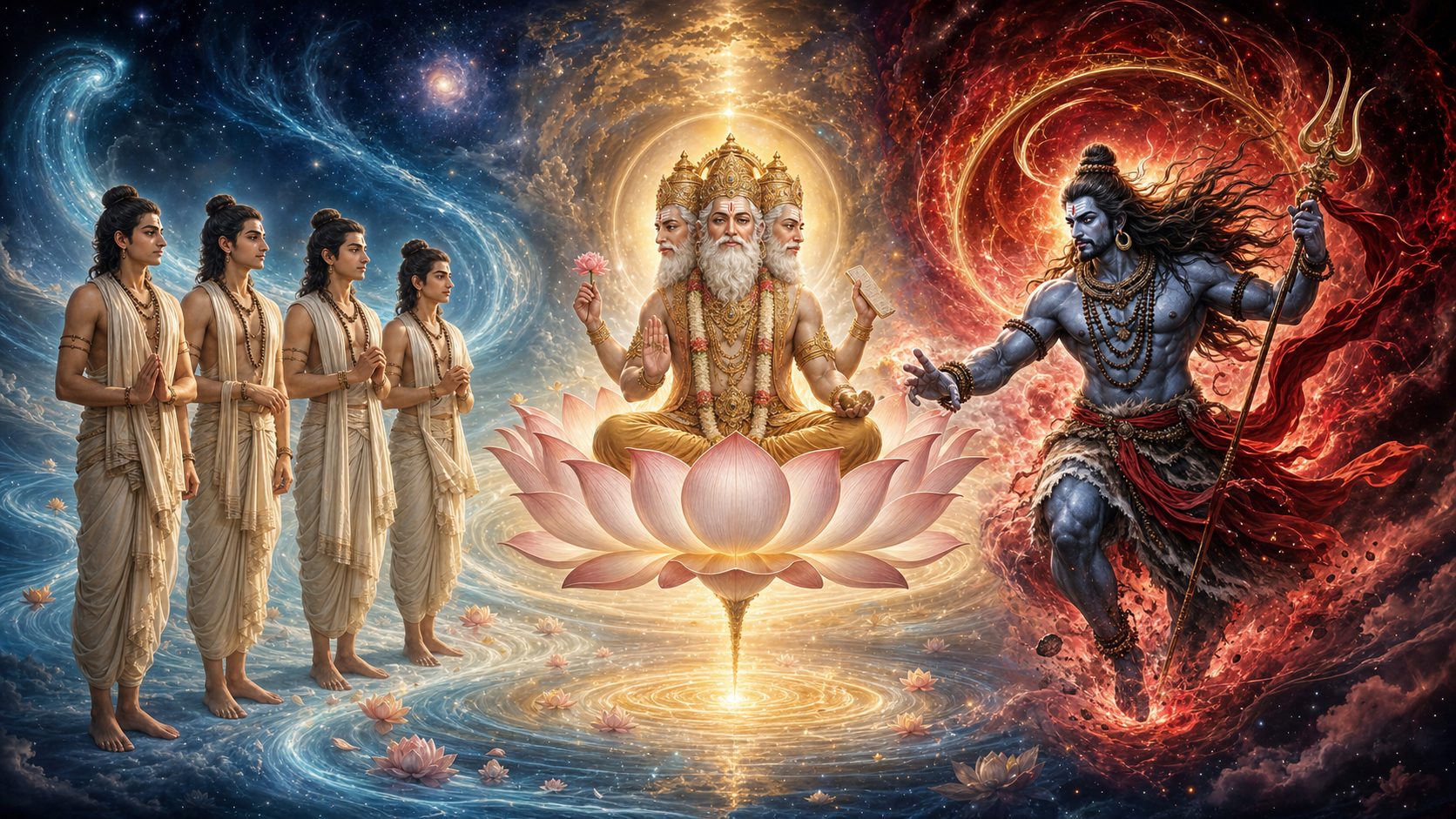
The DharmaRenaissance source identifies Sanaka, Sanandana, Sanatana, and Sanatkumara as the four childlike, mind-born sons of Brahma. Although Brahma expects them to enter household life and produce progeny, they choose brahmacharya, knowledge, and renunciation.
The article interprets this contrast through pravritti and nivritti. Pravritti is the outward movement toward manifestation, continuity, social responsibility, and generative activity. Nivritti turns toward contemplation, detachment, self-knowledge, and liberation. The Kumaras therefore do not make creation meaningless; they widen the meaning of participation in it. A sage who preserves liberating knowledge serves a different need from a progenitor who extends embodied life.
This distinction prevents the episode from becoming a simple conflict between obedience and rebellion. Brahma’s task is necessary, but the Kumaras reveal that necessity does not impose an identical vocation upon every being. The source relates this plurality to svadharma, adhikara, and ishta: differences of calling, capacity, and spiritual orientation can exist within a shared sacred order.
Rudra gives restrained force a cosmic function
According to the source, Brahma restrains his displeasure at the Kumaras’ decision, yet the energy of that anger does not disappear. Rudra emerges from Brahma’s forehead or the space between his brows, appearing in a fierce blue-red form. The newborn cries, and the article connects his name with the Sanskrit root rud, meaning to cry or howl.
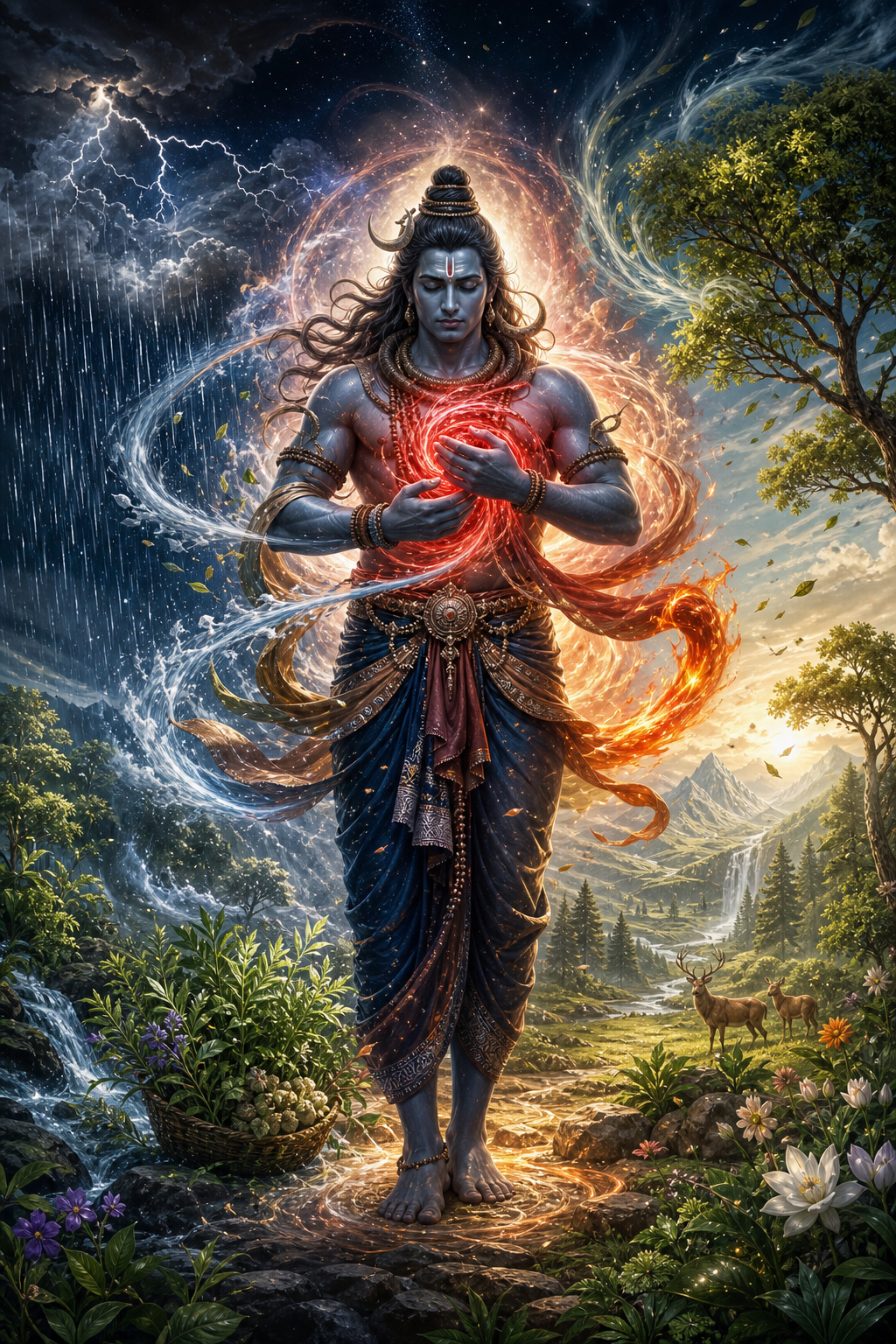
The cry links several dimensions of Rudra that might otherwise appear contradictory. He confronts suffering, separation, fear, and death, but he is also associated with healing. His fierceness threatens what clings to permanence; his medicinal and protective aspects answer the pain exposed by that confrontation. Destruction and compassion consequently become related rather than mutually exclusive powers.
The narrative does not offer divine anger as permission for uncontrolled rage. In the source’s interpretation, anger is raw energy whose moral and spiritual meaning depends on its transformation. Governed by awareness and dharma, it may become tapas, courage, discipline, or the force needed to remove stagnation. Rudra embodies that conversion: the difficult emotion is neither denied nor allowed to rule without purpose.
Eleven forms connect theology with embodied life
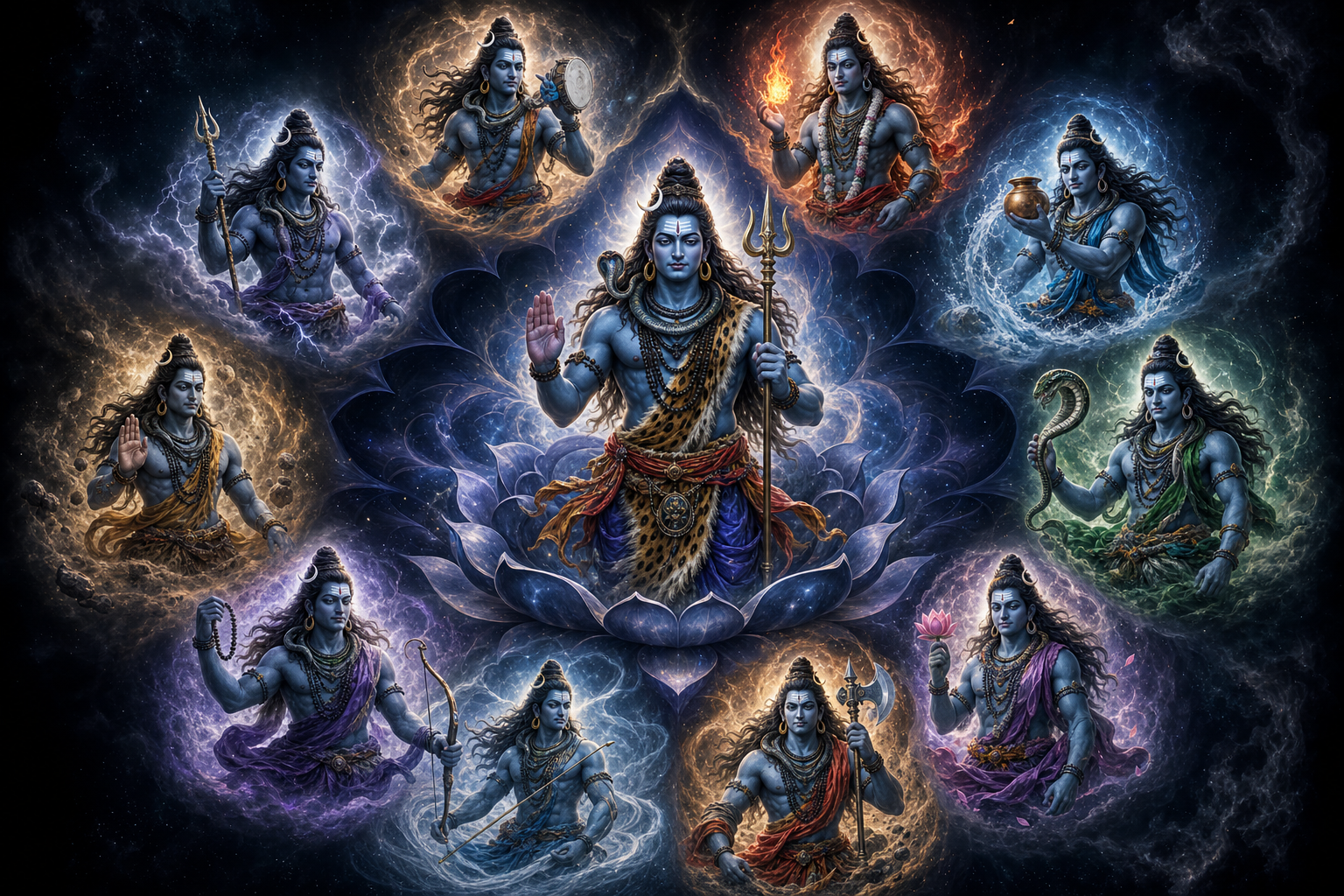
The DharmaRenaissance article reports one Puranic list of the Ekadasa Rudras as Manyu, Manu, Mahinasa, Mahan, Shiva, Rtadhvaja, Ugrareta, Bhava, Kala, Vamadeva, and Dhritavrata. It also notes that other scriptural lists contain names including Aja, Ekapada, Ahirbudhnya, Tvasta, Hara, Shambhu, Tryambaka, Aparajita, Ishana, and Tribhuvana.
These variations matter because a sacred number can organize more than one theological vocabulary. The source treats the different lists as expressions of distinct lineages, ritual settings, and inherited memories rather than as errors that must be forced into a single modern catalogue. The stable element is the elevenfold Rudra principle; the names and emphases may vary with context.
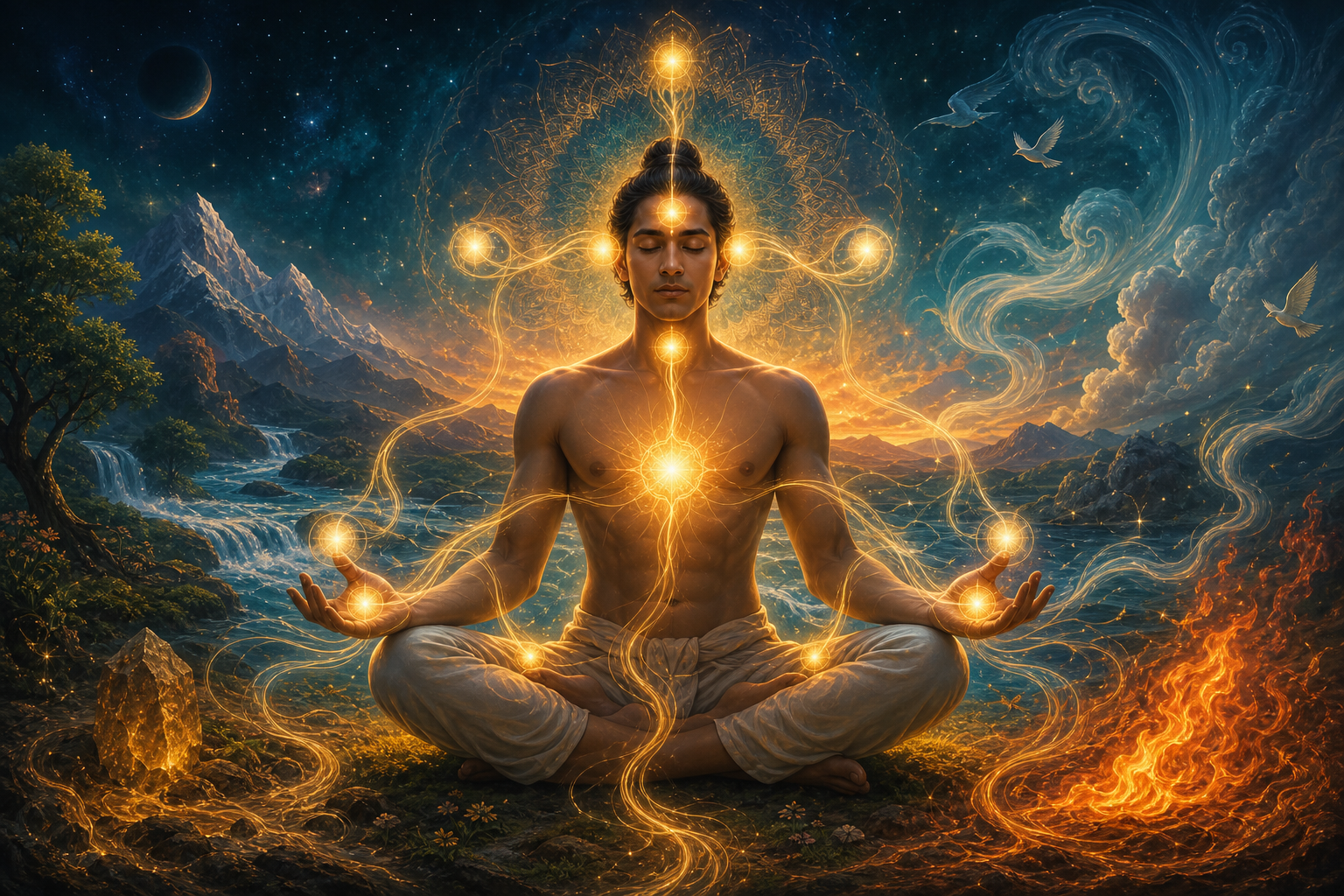
The same principle also moves from the cosmic scale into the human constitution. In the Bhagavata Purana account summarized by the source, Brahma assigns the Rudras abodes associated with the heart, senses, organs of action, vital functions, and mind. The source separately describes the Brihadaranyaka Upanishad as identifying eleven Rudras with ten vital energies and the atman. When these life principles depart, relatives weep; this grief supplies the Upanishadic explanation for the name Rudra.
Placed side by side, the named deities and the embodied interpretation offer two scales of reading. On one scale, the Rudras are divine powers within the structure of the cosmos. On another, Rudra is encountered through breath, vitality, perception, thought, mortality, and the painful departure of life. The doctrine thus refuses to keep theology at a safe distance from bodily existence.
Fierceness and silence meet across traditions
The source presents the movement from Vedic Rudra to later Shiva as an unfolding rather than a replacement. Rudra is described in the Vedic hymns as storm-like, armed, unpredictable, and also a physician. In later Shaiva traditions, Shiva appears as the supreme yogi, lord of dissolution, master of beings, and giver of grace. The archer and healer, like the destroyer and liberator, belong to one theological continuum.
The Kumaras create a second bridge. DharmaRenaissance reports that Vaishnava traditions honor them as devotees and teachers of spiritual knowledge, while Shaiva traditions associate them with Dakshinamurti, Shiva as the silent teacher. Their renunciation therefore does more than trigger Rudra’s birth: it situates knowledge, devotion, contemplation, and transformative power within a connected Dharmic landscape.
The contrast is especially suggestive. The Kumaras teach through restraint, youthfulness, and contemplative independence; Rudra acts through intensity, rupture, and transformation. Yet both resist a world defined only by reproduction and accumulation. One preserves access to liberation through knowledge, while the other prevents manifested life from hardening into permanence.
Questions the narrative helps answer
Did the Sanat Kumaras reject dharma?
In the source’s interpretation, they reject a particular assigned role, not the sacred order itself. Their vocation serves creation by safeguarding wisdom and the path of liberation. The episode consequently challenges any definition of duty that recognizes only one legitimate form of contribution.
Is there one definitive list of the eleven Rudras?
The supplied article reports multiple lists and treats their variation as meaningful. A careful reading should therefore preserve the list used by a particular text or tradition instead of combining every name into a supposedly universal version.
Why are the Rudras associated with both fear and healing?
The reported traditions place Rudra wherever life confronts pain, impermanence, and dissolution. The same power that unsettles attachment can remove what obstructs renewal. Healing here is not merely comfort; it may require a fierce encounter with conditions that cannot remain unchanged.
Future engagement with this narrative can keep three tests in view: whether a calling serves dharma, whether force submits to awareness, and whether dissolution opens space for renewal. Those questions preserve the story’s philosophical force without turning either renunciation or anger into a slogan.