

You may have turned to bhakti because you want peace, clarity, or release from suffering. That creates an awkward question: if you practise devotion to obtain freedom, has devotion become another transaction?
The Bhagavatam gives a demanding answer. Spiritual freedom is not merely a better condition for the self. It is freedom from the need to make every sacred act pay you back. You can see that freedom taking shape when service survives disappointment, obscurity, criticism, and the absence of spiritual excitement.
The Bhagavatam places loving service beyond liberation

In the Vaishnava reading considered here, Bhagavatam 3.29.13 presents five traditional forms of liberation: salokya, residence in the divine realm; sarshti, sharing divine opulence; sarupya, receiving a form resembling the Lord’s; samipya, nearness to the Lord; and ekatva, oneness. Interpretations of these terms, especially oneness, differ among Vedanta traditions. The striking point within this devotional passage is that pure devotees will not accept even liberation if it excludes service to Bhagavan.
This does not make liberation worthless. It exposes a subtler bondage: the habit of treating the Divine as a means to acquire a preferred state. Wealth, recognition, comfort, mystical experience, and liberation are very different achievements, but the possessive grammar can remain the same: “I perform this practice so that I can get that result.”
Bhakti changes the grammar. The central question becomes less “What will devotion give me?” and more “How can this life become an offering?” Peace and insight may follow. They are welcome when they come, but they no longer decide whether worship, remembrance, or service is worthwhile.
You can apply that distinction without pretending to have no needs. Before prayer, recitation, seva, or study, name the result you are hoping for. It may be relief, an answer, appreciation, certainty, or a powerful feeling. Then add a second intention: “Even if this result does not arrive now, let this act still be an offering.” That small correction turns an unexamined bargain into conscious devotion.
This teaching is specifically Bhagavata and Vaishnava in emphasis. It should not be used to erase the real differences among Dharmic darshanas or to claim that every tradition defines moksha in the same way. Its practical challenge is nevertheless clear: liberation is incomplete if the desire to possess, control, and be rewarded still rules the heart.
Key takeaways
- Spiritual freedom is a change of allegiance: your actions are no longer governed entirely by comfort, recognition, or reward.
- The desire for liberation can itself become an attachment when Bhagavan is treated chiefly as the provider of a desired condition.
- Devotional steadiness is tested most clearly when practice feels ordinary, inconvenient, unnoticed, or emotionally dry.
- Freedom from praise and blame does not mean refusing correction. It means using truthful feedback without making public approval your master.
- A workable bhakti discipline joins remembrance, study, concrete service, and honest self-examination.
Praise and blame show you what still has power over you
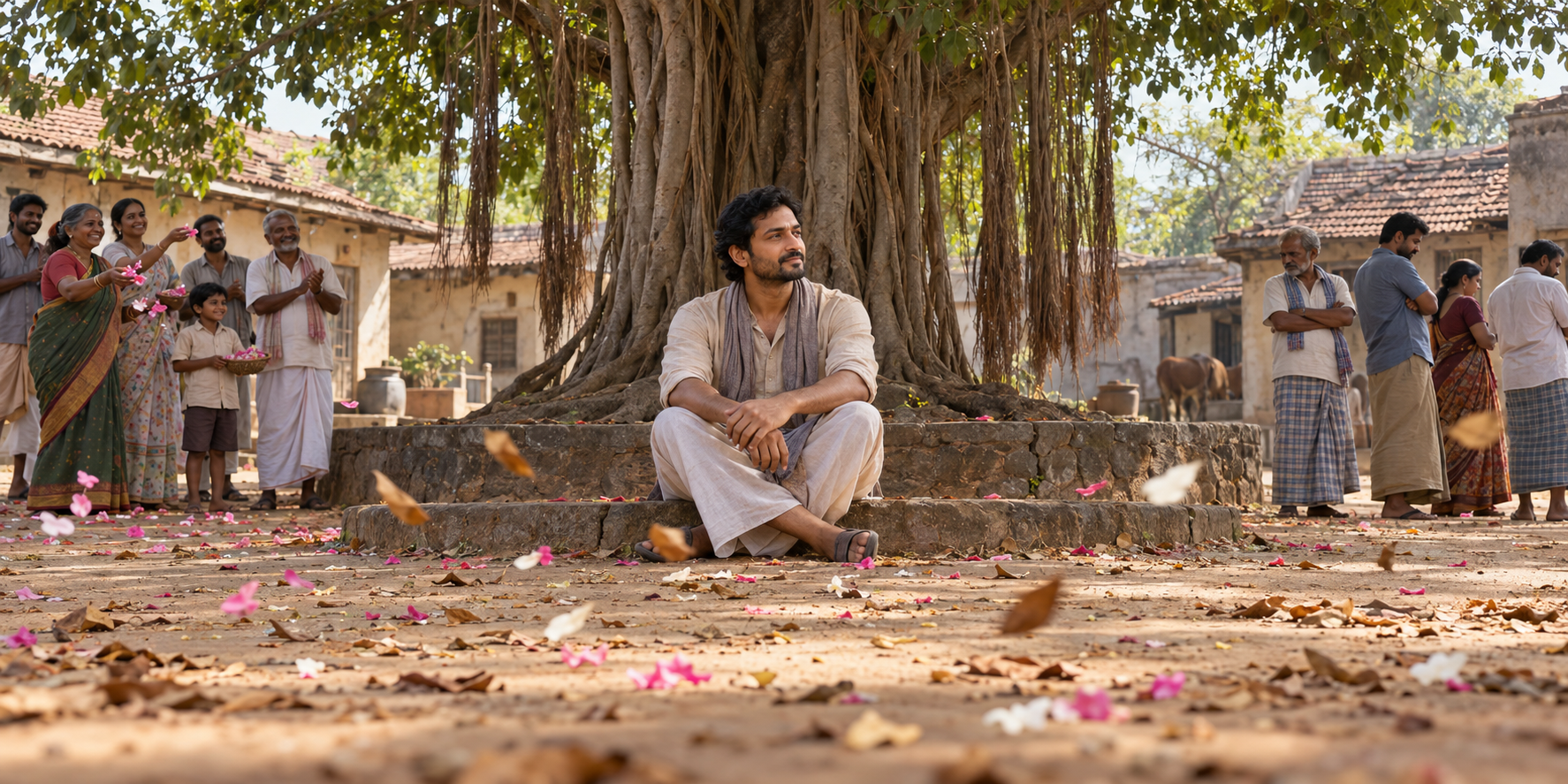
One practical way to examine spiritual freedom is to watch the mind’s response to praise and blame. Both can pull you away from service. Blame can produce resentment, paralysis, or a frantic defence of identity. Praise can make you repeat whatever wins approval, even after it stops being truthful or useful.
Equanimity does not require emotional numbness. Words affect human beings, and criticism sometimes identifies a genuine fault. The freedom lies in placing truth and dharma above the immediate demand to look good. You can correct an error without concluding that you are worthless. You can reject a false accusation without turning revenge into your next duty.
When praise or blame unsettles you, use this sequence:
- Pause before answering. Notice the bodily reaction and the story forming around it.
- Separate information from status. Ask what is factually true, what is interpretation, and what cannot yet be known.
- Correct the part that is yours. An apology, clarification, changed habit, or repaired responsibility is more valuable than prolonged self-defence.
- Decline the part that is not yours. You do not have to accept manipulation, contempt, or an invented accusation as spiritual instruction.
- Return to the next legitimate service. Do not let either applause or resentment occupy the place that belongs to Bhagavan and dharma.
Praise deserves the same scrutiny. Receive sincere appreciation without theatrical self-denial, acknowledge anyone who helped, and then ask whether you would continue the work if no one mentioned it again. If the answer is no, that does not make you a fraud. It reveals where practice is still mixed with the need to be seen.
Being “beyond” praise and blame must never become an excuse for ignoring accountability or remaining in an abusive situation. Detachment concerns your inner dependence on approval; it does not oblige you to tolerate harm. Set boundaries, preserve evidence when necessary, and seek appropriate help when criticism becomes harassment, coercion, or abuse.
Devotion has to become a practice, not a mood

A moving kirtan, an illuminating discourse, or a period of intense prayer can awaken devotion. None of them can carry an entire spiritual life by themselves. A mood rises and falls with energy, company, memory, and circumstance. A practice gives devotion a form that remains available when the mood has gone.
The Bhagavatam does not present worship as one undifferentiated technique. Its descriptions in 11.5.26-27 belong to a broader treatment of sacred forms and modes of worship in different ages. The useful implication for daily life is not that you should invent a private religion whenever circumstances change. It is that disciplined devotion has both a stable object and an embodied form. Practice must be faithful enough to orient you and realistic enough to continue.
A simple daily structure can contain four movements:
- Remember. Begin with the divine name, a familiar prayer, or a verse before unrelated demands take possession of your attention.
- Receive. Read a small, coherent passage and identify its actual instruction. Do not hunt only for a sentence that confirms what you already think.
- Serve. Connect remembrance to one concrete duty: care for a person, maintain a sacred space, support a community task, keep a promise, or perform necessary work honestly.
- Review. At the end of the day, ask where you served freely, where you demanded a return, and what one correction belongs to tomorrow.
Keep a minimum form for difficult days. It might be the divine name, one remembered teaching, and one deliberate act of service. The purpose of a minimum is not to lower devotion permanently. It prevents an all-or-nothing mind from converting one disrupted day into abandonment.
Do not measure progress only by unusual experiences. Look for changes in ordinary conduct. Are you less likely to abandon a duty because nobody notices? Can you admit a fault sooner? Do you recover from insult without rehearsing it for the rest of the day? Can you honour another person’s service without feeling diminished? Those are practical signs that devotion is loosening the rule of ego.
Read a verse inside a living tradition, then test its fruit

A single translated line can be made to support almost anything when it is detached from speaker, listener, surrounding argument, and tradition of interpretation. Bhagavatam study becomes safer and more fruitful when the primary text remains central but is not treated as an isolated slogan.
A living devotional culture often reads the Bhagavatam in conversation with Sri Caitanya-caritamrta and received Vaishnava teaching. This does more than add information. It shows how a theological claim is prayed, sung, taught, and turned into conduct. At the same time, fidelity to a lineage should deepen careful reading rather than replace it.
Use this method when a verse seems decisive:
- Identify who is speaking, who is listening, and what problem is being addressed.
- State the verse’s central claim in plain language before applying it to anyone else.
- Distinguish the translated words, the commentator’s explanation, and your own inference. All three can matter, but they are not interchangeable.
- Check whether your interpretation fits the surrounding passage and the text’s broader devotional direction.
- Discuss difficult points with a trustworthy teacher or mature practitioner who welcomes sincere questions.
- Examine the fruit. A sound devotional reading should make service more truthful and less possessive, not make contempt for other people feel holy.
This last test matters. The ego can turn renunciation, scriptural learning, lineage, and even devotion into property. It can boast of being beyond worldly rewards while demanding religious status. Bhagavatam 3.29.13 closes that escape route: if even liberation cannot outrank service, prestige gained through religion certainly cannot.
At your next act of worship, name one payoff you have quietly been demanding. Do not condemn the need or pretend it vanished. Place it before Bhagavan, release your claim that devotion must satisfy it on your schedule, and complete one useful act of service. That is where spiritual freedom becomes more than an idea.
References
- Dandavats – Srimad Bhagavatam Text 3.29.13, speaker H.G. Sikhi Mahiti Das
- Dandavats – Our Sun, Sri Caitanya-caritamrta | SB 04.31.05 | HG Toshan Krishna Pr
- Dandavats – Beyond Praise and Blame: The Freedom of a Spiritual Mind | SB 11.10.11 | HG Madana-gopala
- Dandavats – His Grace Bhadra Prabhu | SB 11.05.26-27

Leave a Reply
You must be logged in to post a comment.