

If you opened Bhagavata Purana 11.5.38-40 expecting only another warning about Kali Yuga, these verses force a pause. They say that inhabitants of earlier ages may desire birth in Kali because devotees devoted to Narayana will appear, and then they direct attention toward Dravida and its sacred rivers.
The point is not that disorder has become desirable. The point is that a difficult age can still offer an extraordinary spiritual opportunity: the company of bhaktas, a clear refuge in Narayana, and a sacred geography that makes devotion part of embodied life.
Key takeaways
- Kali Yuga is presented as desirable because Narayana-centered devotees will be present, not because the age’s defects are good.
- The passage speaks specifically of Narayana and Vasudeva. Its Vaishnava vocabulary should not be diluted into generic spirituality.
- Dravida and its rivers receive special prominence, but the wording does not establish a regional monopoly or automatic spiritual status.
- The practical response is to seek serious satsanga, examine what you actually treat as your refuge, and honor sacred water through responsible conduct.
Why people of earlier yugas could desire birth in Kali
Verse 38 presents a deliberate reversal. People ordinarily imagine an earlier yuga as the better place to be born. Here, inhabitants of Krita and other ages are said to desire birth in Kali because people wholly directed toward Narayana will be found in it.
The reason matters. The verse does not praise confusion, conflict, weakened discipline, or moral decline. It praises the opportunity created by the presence of devotees. Kali is desirable in this limited and precise sense: even under difficult conditions, a person may encounter bhakti embodied in other human beings.
That keeps two mistakes apart. Romanticizing Kali’s faults is one mistake. Treating Kali as spiritually hopeless is the other. The passage permits neither. Adverse conditions remain adverse, but they do not prevent the appearance of people whose lives are centered on Bhagavan.
This changes how you assess the age in which you live. Do not look only for evidence of decline. Look for disciplined devotion that has survived the decline. Ask where people still gather for sincere nama, study, seva, worship, and accountable spiritual friendship. Once you find such company, approach it as an opportunity rather than as religious entertainment.
The passage’s devotional vocabulary is exact
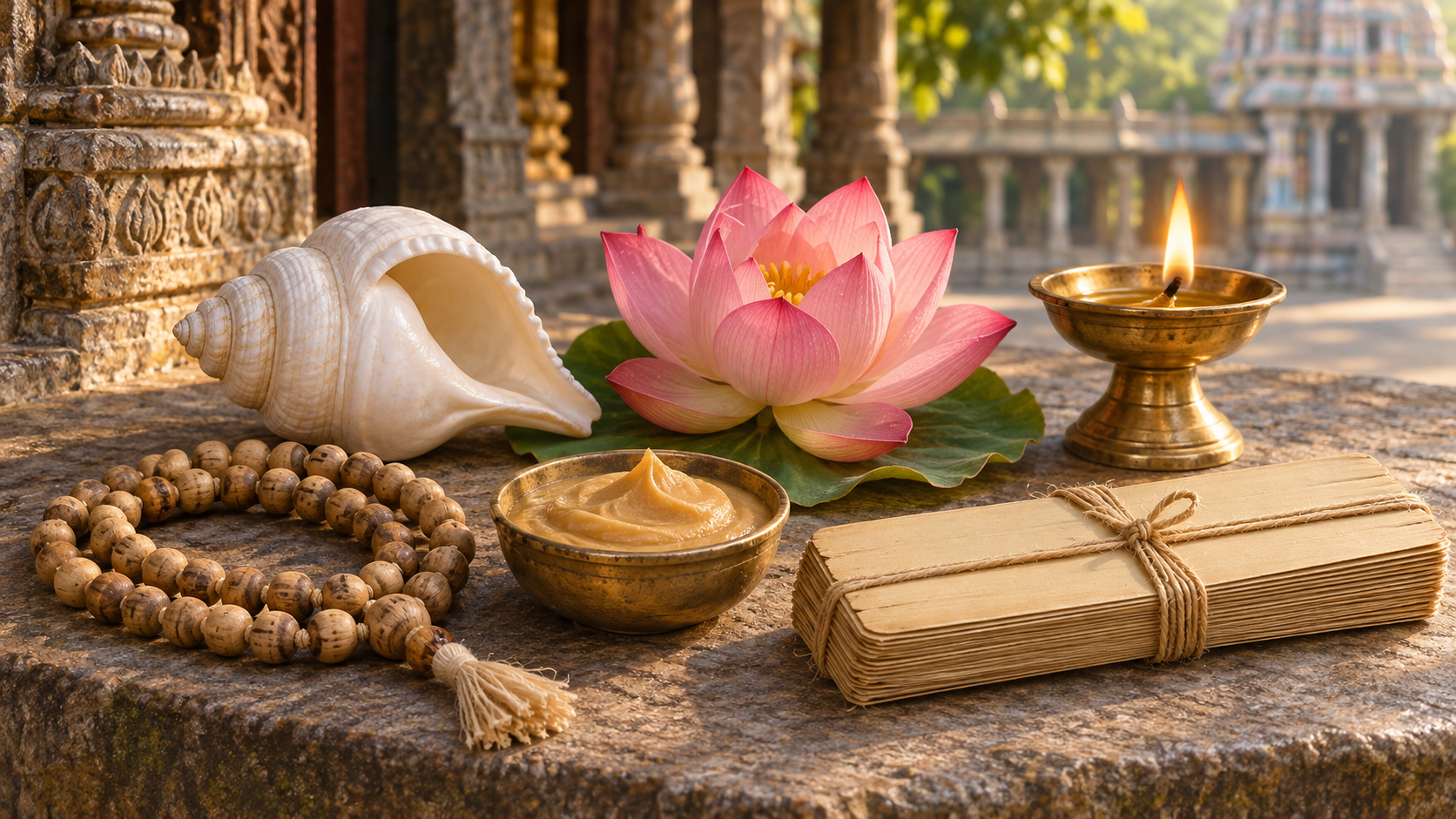
The central expression in verse 38 is Narayana-parayana. Parayana can convey final refuge, highest end, or decisive orientation. A Narayana-parayana person is therefore not merely someone who approves of devotion or carries a religious label. Narayana has become the direction by which that person orders life.
Verses 39-40 complete the thought by speaking of devotees of Bhagavan Vasudeva whose inner disposition is pure. The movement is from refuge to character: devotion is named by its object, Narayana or Vasudeva, and recognized by what it does to the devotee’s inner orientation.
This is more demanding than public identity. A sectarian mark, family inheritance, pilgrimage photograph, or fluent theological vocabulary cannot by itself establish purified intention. The useful question is not simply, “Do I identify as a devotee?” It is, “What becomes my final refuge when desire, fear, reputation, and duty pull in different directions?”
The passage also contains an important restraint: it describes the people associated with these waters as devotees generally or for the most part. That qualifier prevents a mechanical rule. Sacred association is powerful, but geography does not abolish agency, conduct, or sincerity.
Dravida and the rivers make bhakti geographically concrete
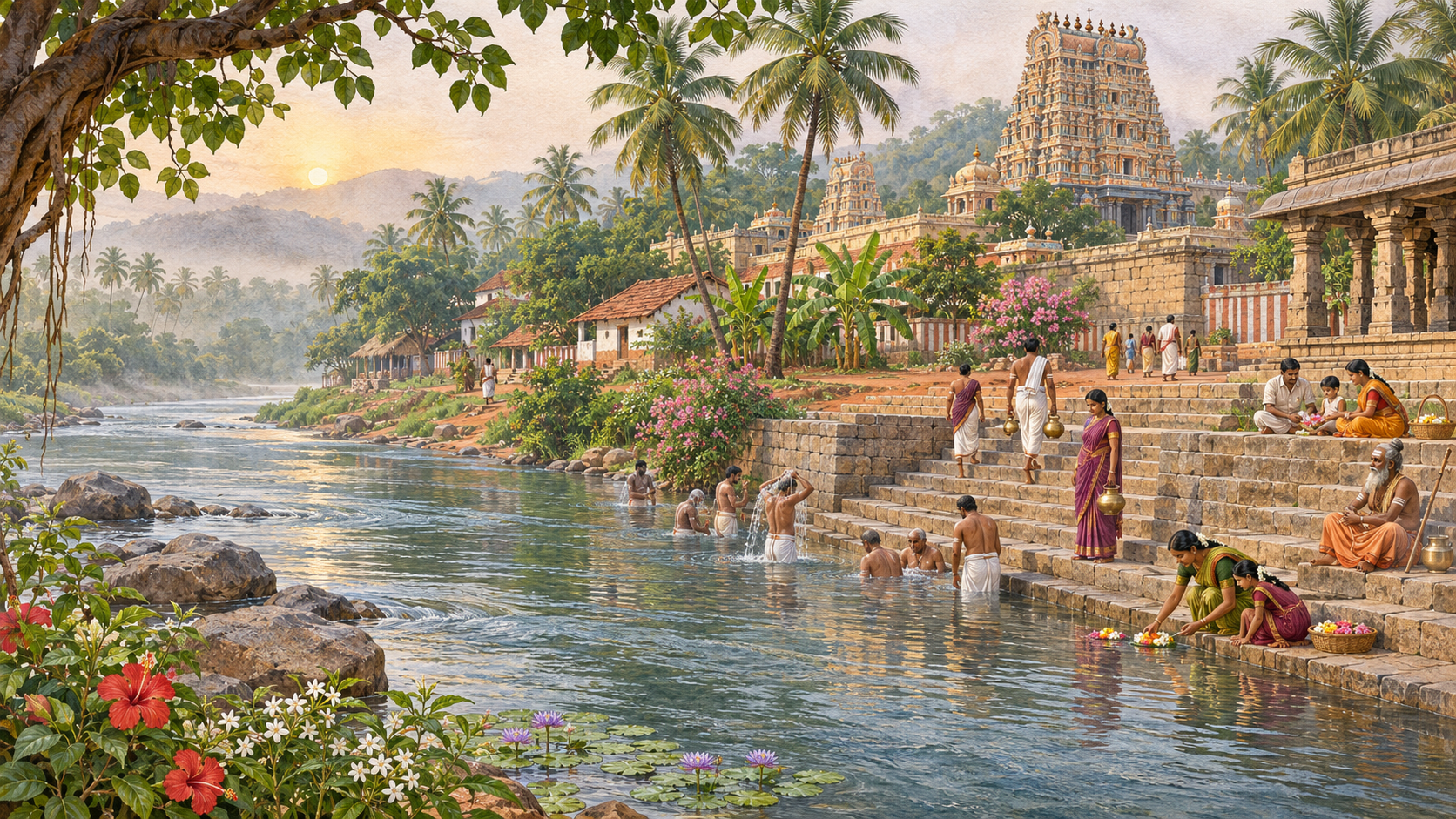
Verses 39-40 do not leave devotion floating in abstraction. They turn toward Dravida and name rivers that include the Tamraparni, Kritamala, Payasvini, and Kaveri. People who drink their waters are associated with pure-hearted devotion to Vasudeva.
The regional emphasis should be allowed to stand. Dravida is not decorative scenery in these verses. It is identified as a place where devotees will be found in abundance. At the same time, you should not force the term into the borders of one modern state or use it as a racial category. Sacred geography and present-day political boundaries are not interchangeable.
Drinking a river’s water is an especially intimate image. It means receiving life from a place rather than merely visiting it. Water enters the body, sustains a settlement, nourishes food, supports ritual, and binds a community to the land. The passage thus connects devotion with habitation: people are formed not only by propositions but also by the places, practices, and relationships from which they continually receive.
This does not require a magical or careless reading. The verses are not modern water-safety instructions, and scriptural reverence is not a reason to drink untreated water. Where water is contaminated or requires treatment, follow appropriate safety guidance. Honoring a river cannot mean ignoring the condition of its water.
The ecological implication is an application rather than an explicit policy statement, but it is difficult to evade. If a river is received as sacred and life-giving, polluting it while praising it is incoherent. You can honor the passage by learning which watershed sustains your own community, keeping plastic and ritual waste out of waterways, and supporting credible local efforts that restore rather than merely celebrate rivers.
Keep the Vaishnava claim without turning it into a weapon
A serious dharmic reading must hold together particularity and humility. The verses name Narayana and Vasudeva. Replacing those names with a vague phrase such as “whatever you believe in” may sound inclusive, but it prevents the text from making its actual claim. You do not understand a tradition by removing its defining nouns.
Yet precision does not authorize arrogance. The passage does not say that every person born in southern Bharat is pure, that devotion cannot flourish elsewhere, or that ancestry automatically produces bhakti. It speaks of abundance in particular places and uses qualified language about the people associated with their waters.
Regional pride becomes a misreading when it treats sacred geography as a hierarchy of human worth. The appropriate response to a land praised for bhakti is gratitude and responsibility. If you inherit such a place, the question is whether you preserve its temples, rivers, recitation, hospitality, and living communities of practice. A celebrated inheritance that is not practiced becomes a slogan.
Readers from another Hindu sampradaya, or from another dharmic tradition, need not pretend that doctrinal differences disappear. The honest first step is simpler: hear the Vaishnava claim accurately, recognize the discipline and sacred geography it commends, and then consider where your own tradition places refuge, purity of intention, holy company, and responsibility toward the land.
Turn the discourse into a practice, not a prediction
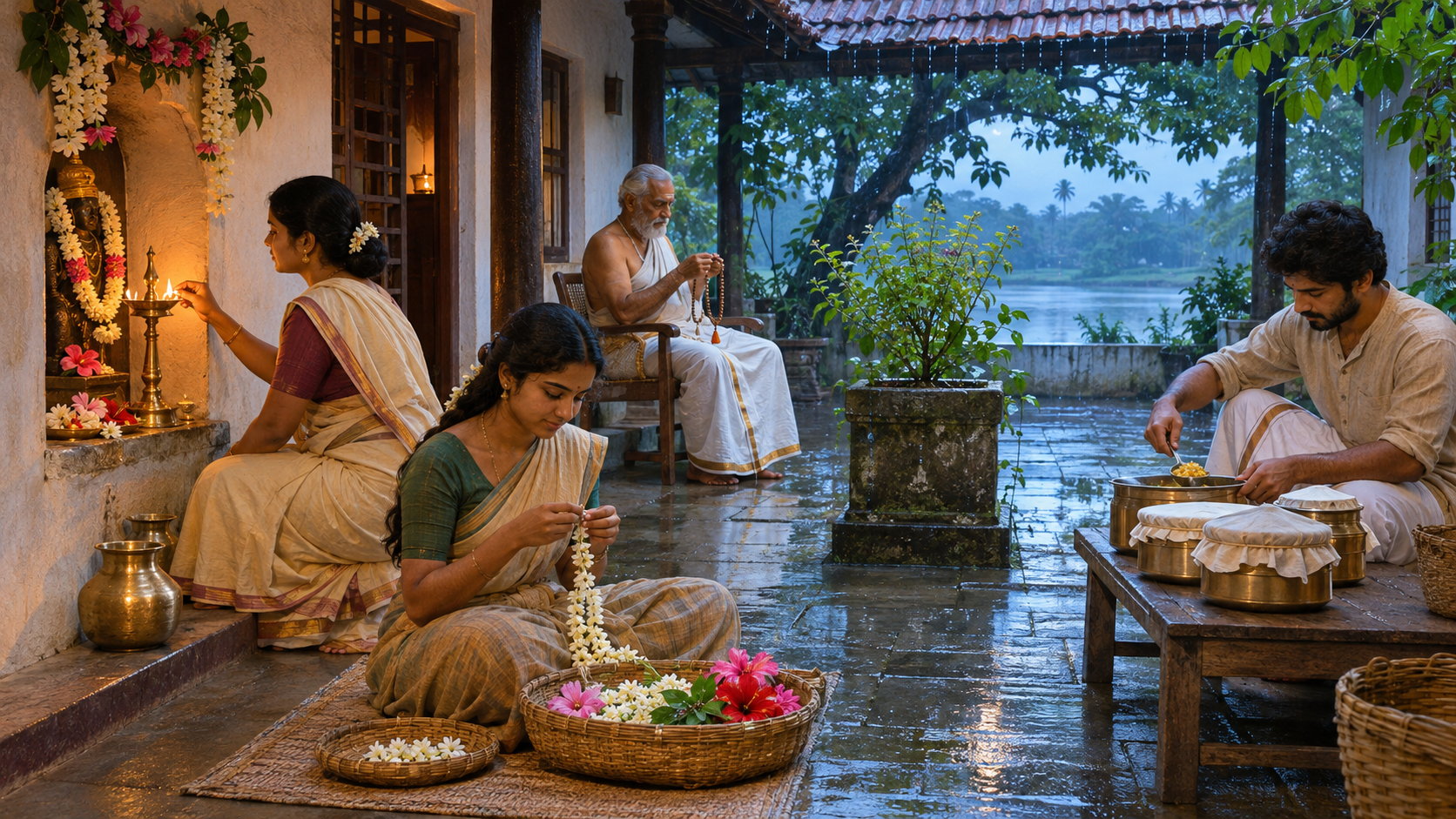
It is easy to leave these verses as a prediction about devotees in another place. A more demanding reading asks what you will do with the opportunity they describe. Use this sequence when you read or hear the passage:
- Read verses 38-40 as one unit. Verse 38 supplies the surprising claim and its reason; verses 39-40 give that claim a geographic and embodied form. Isolating the river statement from the argument invites superstition or regional boasting.
- Separate claim, inference, and application. On one page, write three headings: “What the verses state,” “What they do not state,” and “What they ask me to change.” This simple division exposes assumptions before they harden into doctrine.
- Examine your refuge in one real decision. Choose an unresolved duty, conflict, or temptation. Ask what changes if remembrance of Narayana, truthful conduct, and service take priority over convenience or reputation.
- Seek embodied satsanga. Contact a practitioner whose conduct you respect, attend a serious gathering, or join a concrete act of seva. Consuming devotional content can inform you, but the passage’s emphasis on devotees points toward relationships that can correct and form you.
- Make remembrance regular. If this is your devotional path, set a fixed place in the day for the names of Narayana or Vasudeva through japa, kirtana, prayer, or attentive recitation. Put it before the part of the day in which distraction usually takes control.
- Honor the water that sustains you. Learn the name and condition of your local river or watershed. Then take one fitting action: reduce what you send into drains, keep worship materials out of the water, support a restoration effort, or help your temple adopt cleaner immersion and disposal practices.
The next time you approach these verses, do not ask only whether their prediction is visible in the world. Ask whether you are becoming the kind of person who makes birth in a difficult age spiritually worthwhile for someone else. Find the bhaktas, accept the discipline of their company, and let reverence become conduct.
References

Leave a Reply
You must be logged in to post a comment.