
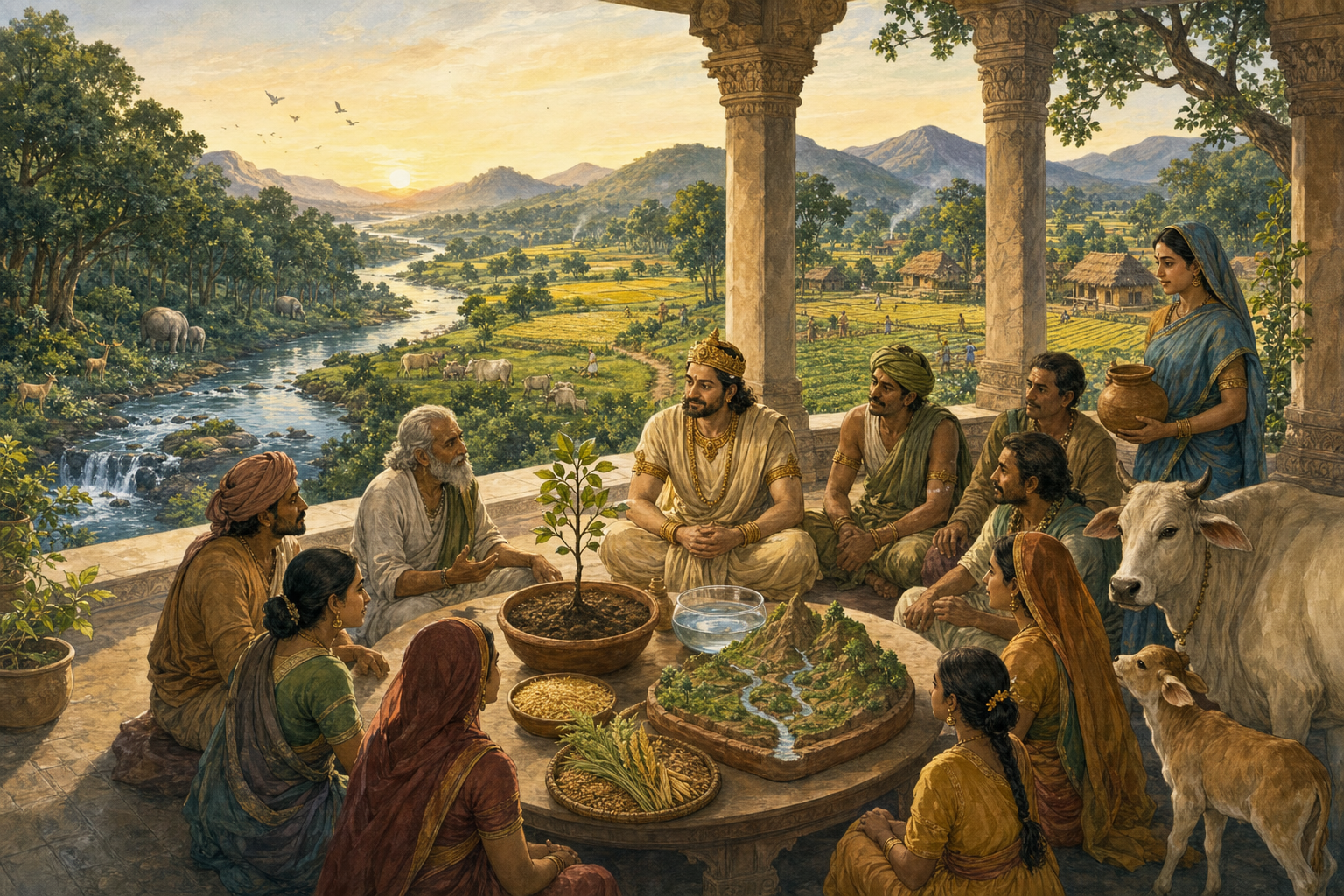
You may be choosing a supplier, approving a building project, expanding a food programme, allocating donations, or deciding how hard a team should push for growth. Every available option may look lawful and efficient. What is harder to see is whether the decision quietly transfers its cost to soil, water, animals, workers, neighbours, or people who will live with it after you.
Bhagavata eco-dharma gives you a disciplined way to see those hidden transfers. Maharaja Prithu’s model joins reverence for Bhumi, restraint in taking, protection of the vulnerable, competent administration, and devotion to the Supreme. It does not hand you a modern policy manual. It gives you the moral architecture with which to judge purpose, limits, methods, distribution, and accountability before you act.
Put Earth inside the decision, not outside it
In Canto 4 of the Srimad-Bhagavatam, disorder under King Vena is followed by scarcity. Earth withholds her bounty, and Maharaja Prithu must restore the conditions under which society can be nourished. His encounter is not with an inert warehouse of raw material. He confronts Bhumi, a conscious being represented through the image of a cow, and must establish a rightful relationship between human need, leadership, and the Earth’s capacity to give.
The practical lesson is neither unlimited extraction nor a refusal to use natural resources. It is calibrated taking: a rightful purpose, an appropriate means, a suitable container, and responsibility for the consequences. Prosperity becomes dharmic only when the source of prosperity is also protected.
This changes the first question a leader asks. Do not begin with how much the institution can obtain. Begin with what must remain healthy after the institution has obtained what it genuinely needs. A project that delivers its target while degrading the source of future nourishment has not succeeded in the Bhagavata sense. It has merely moved the failure beyond the reporting period.
Before approving a resource-intensive decision, require clear answers to four questions:
- What is the need? State the person, duty, or condition the decision is meant to serve. Growth, visibility, and opportunity are too vague.
- Who or what bears the cost? Name the land, water, animals, workers, households, and future users exposed to the decision.
- Where is the limit? Define the condition at which taking must slow, stop, or be redesigned. A budget alone is not an ecological limit.
- What is returned? Identify the protection, repair, replenishment, care, or shared benefit that completes the reciprocal relationship.
If your proposal cannot answer those questions, it is not ready for final approval. This does not mean every leader must personally possess agricultural, engineering, financial, or ecological expertise. It means the leader must bring the relevant expertise into the decision and refuse to hide a moral question inside a technical spreadsheet.
Seeing Earth as a stakeholder is a moral discipline, not a claim that scriptural imagery settles every technical dispute. Watershed planning, animal welfare, procurement, accounting, and labour conditions still require competent practitioners. Shastra establishes what must be protected and why; professional knowledge helps determine how protection can be made real.
Use the cow, calf, pot, and milking as a systems audit
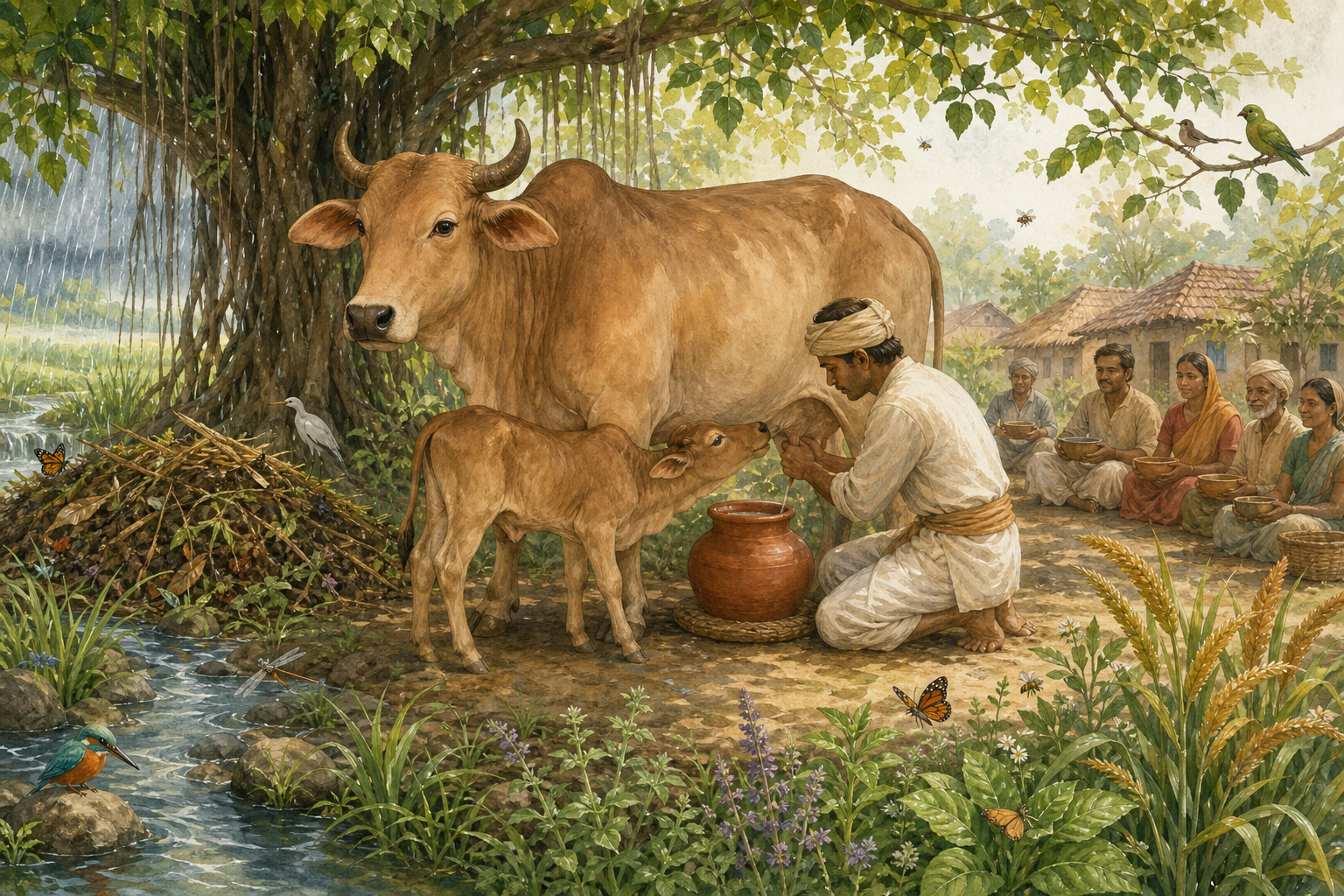
The cow imagery becomes especially useful when you read it as a complete system. The cow is the living source of nourishment. The calf supplies the animating intention. The pot is the institutional capacity that receives and governs what is obtained. Milking is the operational method. Alignment among intention, capacity, and method allows abundance to be received responsibly; misalignment turns even an attractive goal into waste or exploitation.
| Bhagavata image | Leadership meaning | Question to ask |
|---|---|---|
| Cow | Earth and the living systems from which nourishment comes | What must remain healthy, dignified, and capable of giving? |
| Calf | The intention that draws resources toward a purpose | Are we serving a real need, or feeding prestige, fear, control, or appetite? |
| Pot | Rules, skills, budgets, oversight, and institutional capacity | Can we receive and use the resource without leakage, abuse, exclusion, or waste? |
| Milking | The procedure, pace, and conduct by which value is obtained | Does the method respect limits and avoid unnecessary harm? |
Consider a temple committee planning to expand annadana. The devotional intention may be sincere, but sincerity does not remove the need for sound design. The calf is the commitment to nourish people with dignity. The pot includes procurement rules, storage capacity, competent service roles, spending controls, and transparent reporting. Milking includes how supplies are obtained, how quantities are matched to need, and how avoidable waste is noticed and corrected. The cow includes the soil, water, animals, growers, workers, and donors that make the service possible.
A large programme with a weak pot spills service into waste. A capable pot joined to a vain calf makes self-promotion efficient. A worthy intention pursued by a harmful method remains harmful. The audit works because it prevents the leader from treating good motives as a substitute for institutional competence.
You can use the same audit in a business, farm, charity, school, sangha, gurdwara, or public office. When a proposal fails, identify which part failed. If the purpose is sound but the pot is weak, build capacity before expanding. If the method causes needless harm, redesign the operation. If the stated purpose conceals prestige or accumulation, correct the calf before seeking more resources. If the living source cannot remain healthy, the proposal is not sustainable no matter how polished the presentation appears.
Raja-dharma begins where a leader accepts restraint
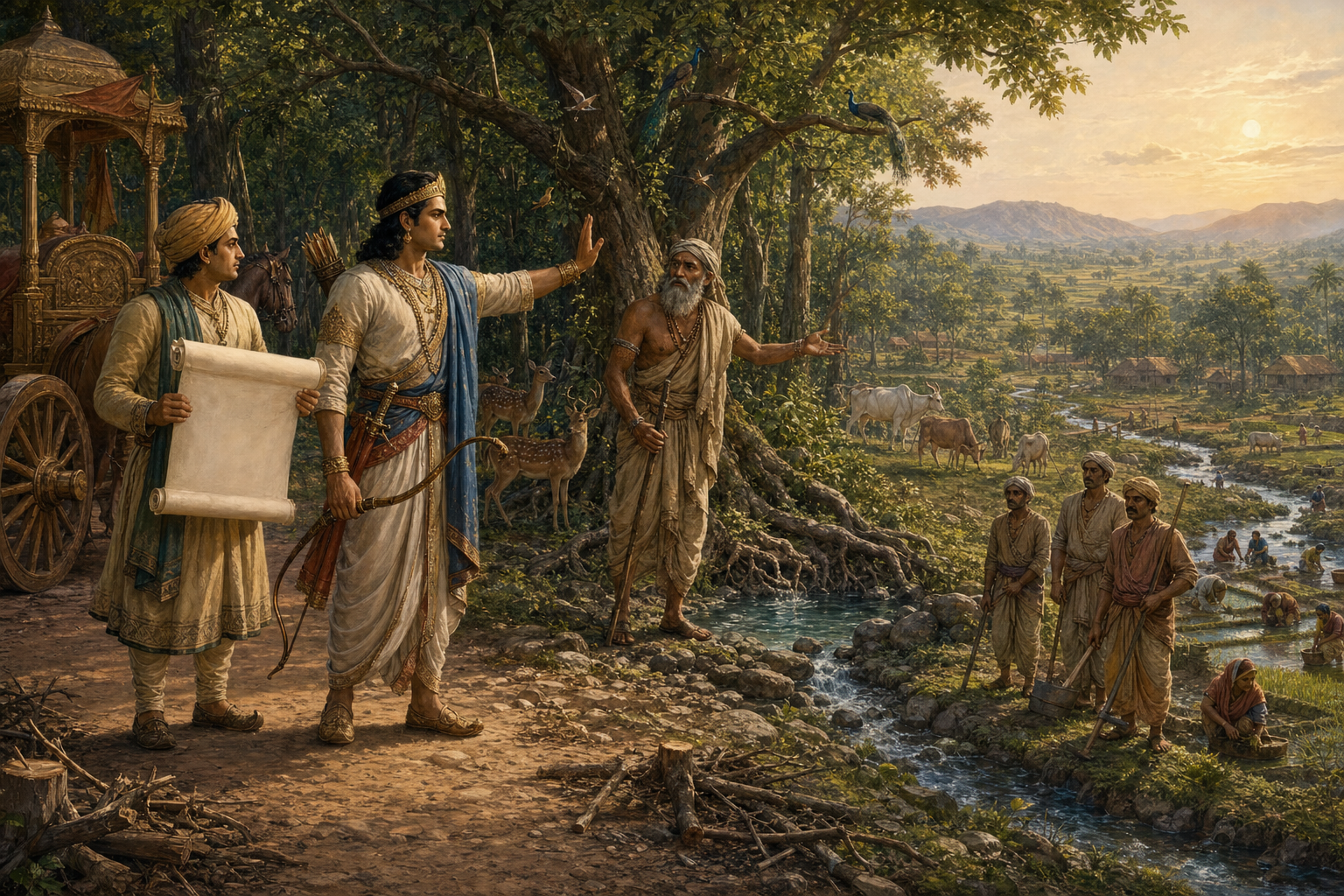
Maharaja Prithu represents authority as service rather than possession. Divine empowerment appears as greater responsibility, not greater entitlement. The ruler is answerable to truth, wise counsel, the welfare of citizens, and the order that makes shared life possible. For a modern leader, the translation is direct: the more power you hold over a resource, the stronger your duty to explain its use and accept limits on yourself.
A service-centred leader should be the first person willing to bear the discipline required by a decision. If an institution must reduce consumption, senior figures should not exempt their own privileges. If a programme needs transparent reporting, the leader’s discretionary choices should not sit outside that transparency. If a project imposes risk, those who benefit from the decision should not place all of that risk on people who had no voice in making it.
Raja-dharma is also distributed responsibility, not solitary rule. Sages, householders, administrators, cultivators, artisans, and other contributors perform distinct duties within a larger order. In the service-and-merit reading relevant here, responsibility follows guna and karma – the qualities required and the work actually performed – rather than janma, inherited birth status. This is not a claim that every historical institution met that ideal. It is a rule for your institution now: assign work by competence, character, and service, and do not use lineage or status to protect poor performance.
Several Dharmic traditions sharpen this leadership discipline without losing their distinct paths. Buddhist raja-dhamma emphasizes generosity, self-restraint, and nonviolence; Jain ethics bring ahimsa and aparigraha to questions of harm and accumulation; Sikh praxis brings seva and sarbat da bhala, service directed toward the good of all. These are not interchangeable theologies. They do, however, yield three useful tests for public conduct:
- The harm test: Have we selected the least harmful workable means, or merely the easiest means for the decision-maker?
- The accumulation test: Is the institution holding more than its duty requires while shifting deprivation elsewhere?
- The service test: Does the benefit reach beyond insiders, patrons, or the most powerful participants?
Bhakti makes restraint durable
Ethical rules are fragile when desire remains unexamined. Bhakti addresses the person making the decision, not only the procedure surrounding it. Regular shravanam refines what you are prepared to hear. Japa and kirtanam interrupt the mind’s rush toward prestige, fear, and possession. Seva makes spiritual intention answerable in conduct. Offering the fruits of work loosens the belief that authority gives you an absolute claim over the result.
This does not turn mantra practice into a guarantee of good administration. A leader can maintain a visible spiritual routine and still make careless institutional choices. The practical safeguard is to place devotion at the point of decision. Before a consequential meeting, hear or read the relevant teaching, state your own interest in the outcome, name who bears the risk, and invite correction from people with moral and practical competence. After the decision, translate devotion into an assigned duty of care. Otherwise bhakti remains ceremonial while the institution acts according to appetite.
Apply the Prithu test before you approve a proposal
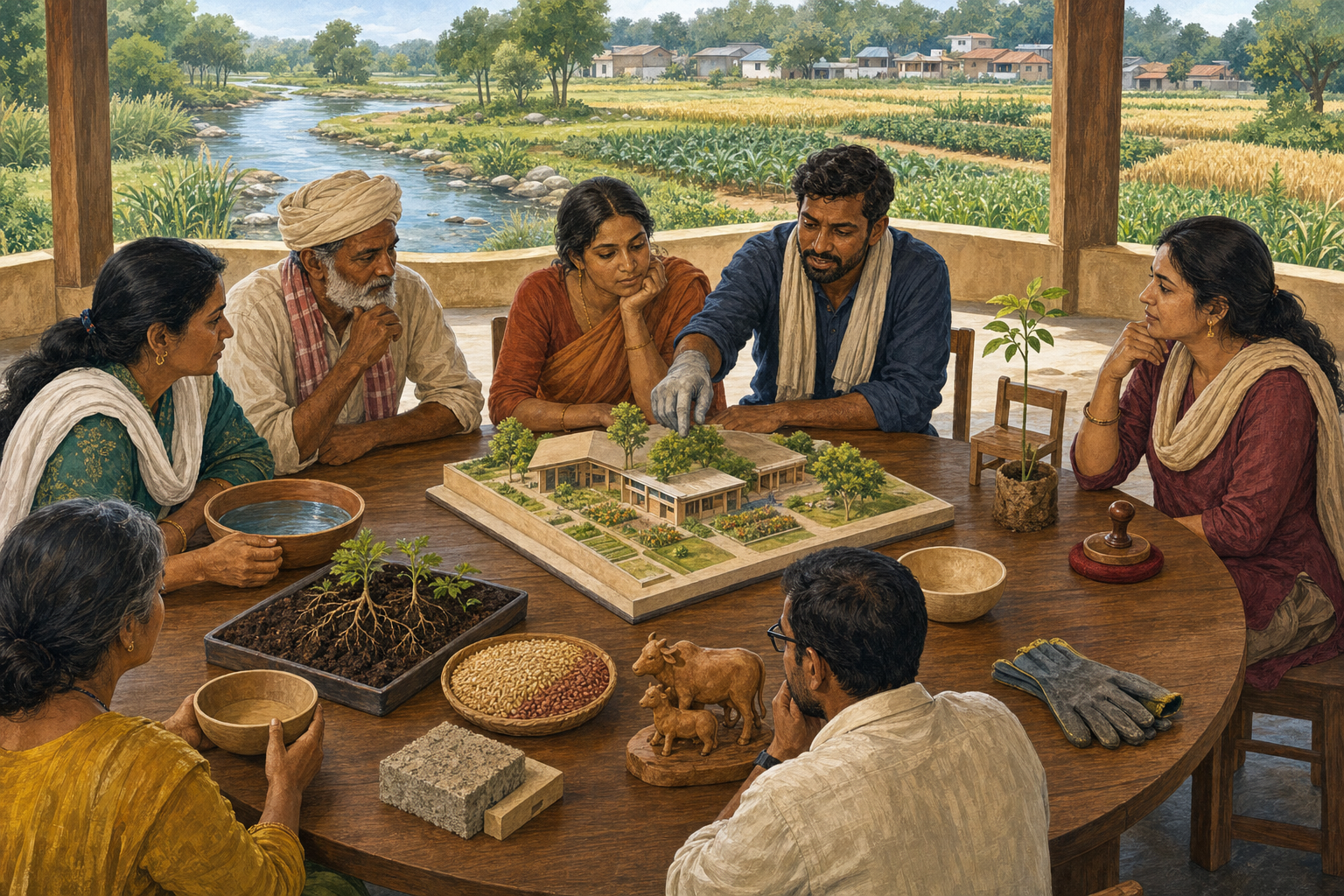
You can turn these principles into a repeatable approval process. Put the following questions on the agenda before discussion begins, not after the preferred option has already gathered momentum.
- Purpose: What precise duty or need does this proposal serve? Replace broad words such as growth, impact, and development with a concrete beneficiary and condition.
- Intention: What is the calf drawing this resource forward? Test whether service is being mixed with prestige, rivalry, fear, control, or institutional self-preservation.
- Living source: Which people, beings, and natural systems make the proposal possible? Record what each one must retain in order to remain healthy and dignified.
- Container: What rule, competence, budget boundary, accountable owner, and reporting mechanism will govern what is received? If no one owns the consequence, the pot has a hole in it.
- Method: Is there a workable method that causes less harm or uses less without abandoning the legitimate purpose? Explain why the chosen pace respects the source’s ability to recover.
- Distribution: Who receives the benefit, who performs the labour, and who carries the risk? Pay particular attention to vulnerable participants and those who cannot enter the meeting.
- Correction: What observable signal will force reconsideration, and who has authority to pause the activity? A promise to monitor is not enough unless the trigger and responsible person are named.
The answers should fit on a one-page decision record. Include the purpose, beneficiaries, resource taken, protected parties, limit or stopping condition, method, accountable owner, review signal, and repair duty. Circulate that record with the meeting agenda. It will expose disagreements early, while the proposal can still be changed without institutional embarrassment.
Use three possible outcomes. Approve when the purpose, limit, method, and ownership are concrete. Revise when the need is legitimate but the container or method is weak. Pause or reject when the benefit depends on concealed harm, unlimited taking, exclusion of affected parties, or the absence of anyone accountable for correction. A pause is not indecision when it prevents an irreversible burden from being passed to others.
Do not confuse a good outcome with dharmic means
An institution cannot justify a harmful supply chain merely because some of the proceeds fund worship or charity. Nor does ecological restraint require paralysis. Maharaja Prithu’s task is to restore nourishment and social order, not to prevent society from using the Earth’s gifts. The ethical demand is harder and more constructive: enable prosperity while preserving the relationships that make prosperity possible.
This distinction protects you from two common errors. The first is extractive piety, in which sacred language is used to bless an unchanged appetite. The second is passive purity, in which a leader avoids responsibility because every available action has some cost. Eco-dharma asks for responsible action: reduce unnecessary harm, define enough, distribute burdens fairly, repair what can be repaired, and remain answerable when conditions change.
Measure what the decision was meant to protect
Classical signs of good rule include contented citizens, safe movement, fair exchange, flourishing households, and timely natural order. Treat these as a picture of social harmony, not as proof that one administrator controls the weather. Within an institution, choose indicators close enough to the decision to reveal whether stewardship is working: avoidable waste, condition of the resource base, treatment of workers and animals, fairness of access, reliability of supply, and whether affected people still trust the process.
Do not report only what the institution gained. Record what the source retained and what the community received. A procurement saving accompanied by declining welfare is not a complete saving. Higher output that exhausts the people, animals, land, or trust supporting it is not complete productivity. The measurement must follow the whole relationship, not merely the transaction visible to management.
Key takeaways for the decision in front of you
- Eco-dharma permits responsible use, but it rejects taking without a rightful purpose, a defined limit, and care for the living source.
- The cow, calf, pot, and milking reveal four different failure points: a damaged source, a corrupt intention, weak governance, or a harmful method.
- Raja-dharma makes authority a duty of service. The leader accepts restraint, invites competent counsel, and remains answerable for costs shifted onto others.
- Bhakti belongs inside decision-making. Hearing, remembrance, self-examination, and seva should change motives and conduct, not merely decorate institutional life.
- A proposal is ready only when it names its beneficiaries, protected parties, limit, method, responsible owner, review signal, and repair duty.
Take the next consequential proposal on your agenda and complete the one-page Prithu record before the meeting. If you cannot name the limit, the protected parties, or the person responsible for correction, do not hide that gap behind a noble purpose. Strengthen the pot, correct the method, and then act in a way that allows nourishment, trust, and the Earth that sustains them to endure.
References
