

You open an international report about Bharat and find that the word “Hindutva” has already done most of the arguing. Before you learn which government acted, what policy changed, or what evidence exists, the label has supplied a motive and often a moral verdict.
You don’t have to choose between trusting that frame and dismissing every foreign criticism as hostile. A better method lets you identify legitimate scrutiny, expose colonial or Hinduphobic framing, and judge Hindu political power by standards strong enough to deserve your support.
Separate the identity, the institution, the policy, and the result

Hindutva is neither a synonym for every Hindu belief nor a political object sealed off from Hindu civilization. Depending on the speaker, it can refer to civilizational self-definition, a party ideology, an electoral vocabulary, a family of organizations, or a legal and administrative programme. Any report that leaves the term undefined can move silently between those meanings.
That ambiguity matters because four different claims are often compressed into one:
- A Hindu civilizational claim: Bharat should understand itself through its own history, sacred geography, and cultural inheritance.
- An organizational claim: the BJP, RSS, or an allied body is pursuing a particular political objective.
- A policy claim: a government is changing law, regulation, curricula, policing, temple administration, or public spending.
- An outcome claim: the change improved delivery, protected rights, created unequal treatment, intensified conflict, or failed in implementation.
These layers influence one another, but they are not interchangeable. The BJP’s evolving model can be understood as a disciplined national narrative combined with regionally rooted leadership, cultural policy, welfare delivery, infrastructure, and electoral organization. Calling the whole arrangement “religious nationalism” may describe one dimension, but it cannot tell you which instrument was used, whether it worked, or whether it was applied fairly.
Regional variation is especially important. Uttar Pradesh’s emphasis on law and order, cultural signalling, infrastructure, and welfare is not the same political package as Assam’s focus on borders, identity, trafficking, narcotics, and family-law questions. Gujarat relies more heavily on organizational continuity and predictable economic administration, while Maharashtra adds coalition management. A report that treats every state as an identical expression of a central ideology erases the level at which much of Indian politics actually operates.
Before accepting or rejecting a claim, rewrite it in this form: actor + action + instrument + evidence + effect. “A state government proposed a change to family law through a specified bill” is testable. “Hindu nationalism is transforming India” is a thesis awaiting particulars. If you cannot complete the five-part sentence from the reporting, you have found an information gap rather than a conclusion.
Run the framing through six concrete checks

You can audit a report without pretending to know the writer’s private motives. Stay with choices visible on the page: definitions, nouns, evidence, comparisons, images, and omissions.
- Check the definition. Does “Hindutva” identify a stated doctrine, an organization, an electoral coalition, or merely any public expression of Hindu identity? If the meaning changes from paragraph to paragraph, the label is carrying more weight than the evidence.
- Check the actor. A decision by the Union government, a state ministry, a party office, an RSS affiliate, a temple trust, and an unaffiliated Hindu citizen are not actions by one collective body. Replace every vague “Hindu nationalists” with the actual decision-maker. If the sentence becomes impossible to write, the category may be too loose.
- Check the policy stage and jurisdiction. A campaign promise, draft proposal, enacted law, administrative order, court challenge, and enforcement practice are different facts. This distinction is essential for subjects such as a Uniform Civil Code, anti-conversion rules, polygamy restrictions, curricula, and temple governance. Also ask whether the matter belongs to the Union, a state, a court, or a local authority.
- Check the evidence of effect. Cultural language does not prove successful administration, and an ideological label does not prove failure. Look for the relevant result: service delivery, implementation capacity, legal safeguards, crime or conviction patterns, infrastructure completion, beneficiary access, or a documented burden on a community. When a report offers only speeches and adjectives, it has not established an outcome.
- Check the comparison. Would similar language be used for another country defending a civilizational inheritance, regulating religious institutions, or pursuing energy security? The point is not to demand identical circumstances. It is to discover whether Hindu political agency is being held to a specially suspicious standard that has never been stated or defended.
- Check the image and metaphor. Ask whether a visual explains the policy or replaces explanation with inherited caricature. A racialized image can bias a reader before any evidence appears, even when the accompanying policy criticism is legitimate.
Use these checks in both directions. They may expose a hostile frame, but they may also show that a report has identified a real drafting problem, an inconsistent rule, or a gap between rhetoric and delivery. A useful method cannot be designed to produce only the answer you wanted before you began.
Colonial imagery turns a political actor into a spectacle
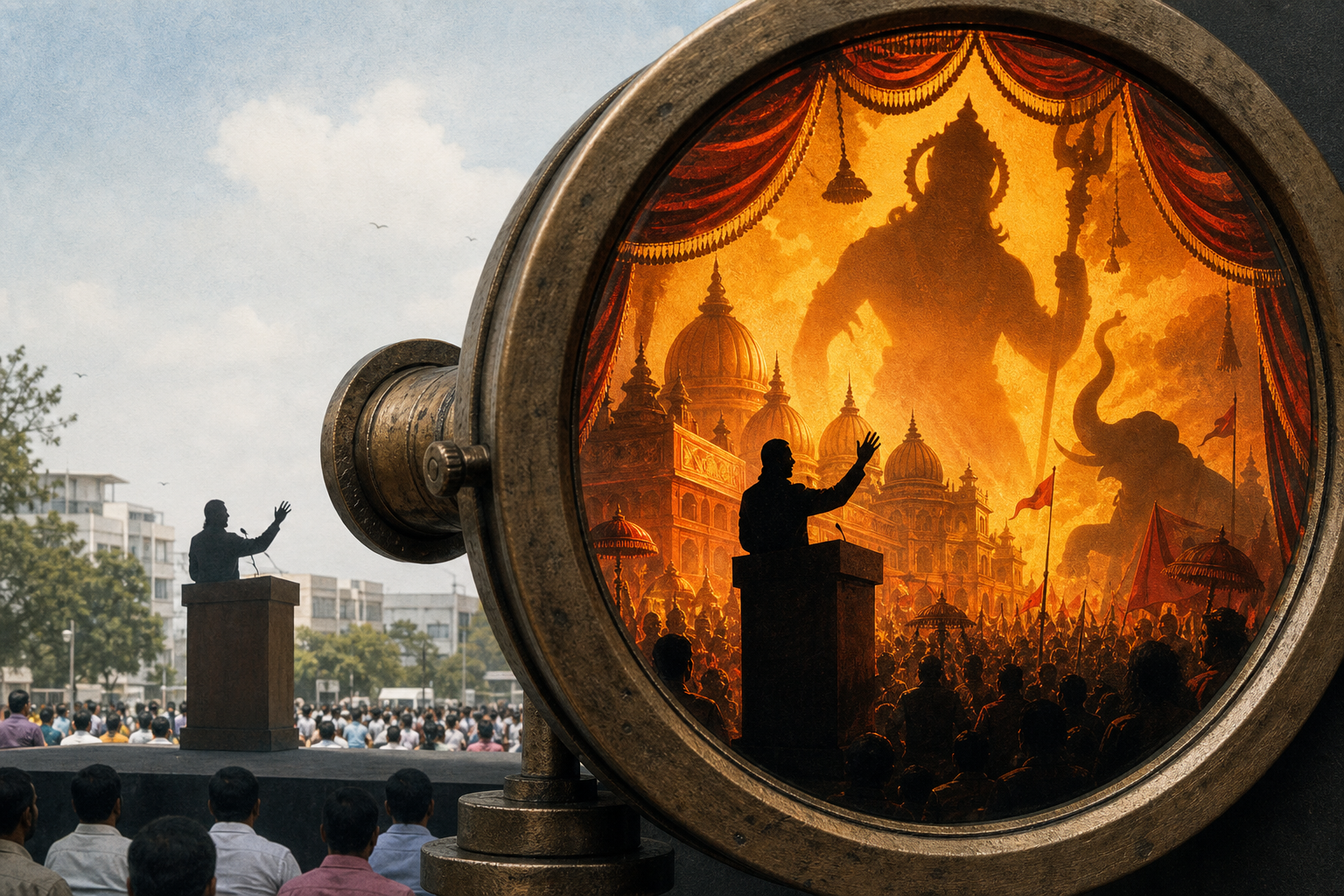
The clearest framing failures are sometimes visual. During Narendra Modi’s visit to Oslo, Aftenposten depicted him as a snake charmer playing to a serpent shaped like a fuel-pump nozzle. The cartoon ostensibly addressed energy politics, but its central code belonged to a colonial tradition that cast Indians as pre-modern, irrational, exotic, and governed by magic rather than statecraft.
The problem was not that India’s energy choices had been criticized. Energy security, supply diversification, prices, diplomacy, and decarbonization all permit rigorous disagreement. The problem was substitution: “charm” displaced negotiation, and an Orientalist stock character displaced the policy actor. The reader received a hierarchy in place of an analysis.
Press freedom protects the right to publish satire. It does not require you to regard every satire as informed, ethical, or free of racism. Editorial independence and editorial accountability can coexist. A newsroom can defend its freedom while readers ask it to retire a demeaning visual code, explain its decision, or add context.
Not every harsh portrayal of Modi, the BJP, or Hindutva is Hinduphobic. If the term is applied to all criticism, it loses the precision needed when prejudice is real. A useful working test – not a legal definition – asks three questions:
- Is Hindu or Indian identity itself made an object of contempt through a religious, racial, or colonial stereotype?
- Does the stereotype perform analytical work that should have been done by evidence about the actual policy or conduct?
- Would removing the trope leave the criticism intact, or reveal that little substantive criticism was present?
One weak signal should prompt examination, not an instant verdict. Several converging signals make the case stronger. This keeps the accusation proportionate and directs attention to what an editor can actually correct.
When you object, name the mechanism and the missing analysis. A precise response would say: criticism of the energy policy is legitimate; the snake-charmer device is unnecessary to that criticism, revives a colonial hierarchy, and replaces examination of supply, price, and diplomatic trade-offs. Then request a specific remedy such as replacement of the image, an editorial explanation, or a contextual note.
The stakes do not end on an editorial page. When prestigious outlets normalize exotic shorthand, similar codes can travel into classrooms and workplaces, where Dharmic traditions are treated as curiosities and prejudice is passed off as humour. That is why Hindu, Buddhist, Jain, and Sikh communities have a shared interest in better religious literacy, even though their histories and doctrines must not be collapsed into one undifferentiated identity.
Defend Hindutva without making power immune to judgment
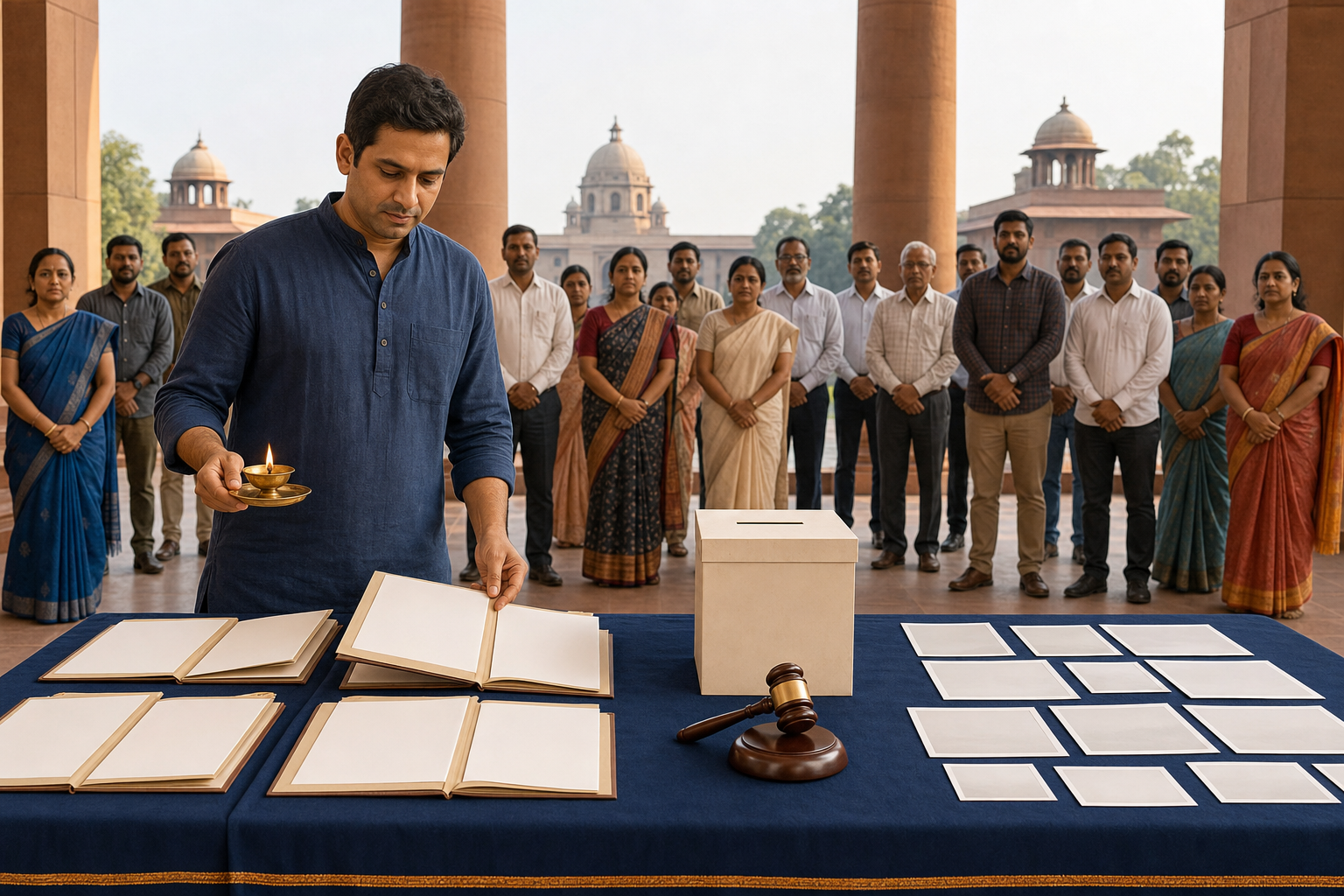
A pro-Hindu response becomes more credible when it refuses two errors at once: the outsider’s presumption that Hindu self-assertion is inherently dangerous, and the insider’s presumption that civilizational language excuses every act of government.
Assess Hindutva politics across the following questions. They force critics to examine the policy rather than fear the identity, while requiring supporters to show that authority has been exercised competently and justly.
| Question | Evidence worth seeking | Warning sign |
|---|---|---|
| What civilizational purpose is claimed? | A named heritage, institutional problem, public practice, or legal objective | Vague existential rhetoric with no defined public purpose |
| What is the governing instrument? | The actual bill, rule, administrative order, budget, policing practice, or institutional reform | A speech is treated as proof that a policy exists or that an outcome has occurred |
| Is the rule legally neutral? | Clear scope, procedural safeguards, review, and consistent treatment of comparable conduct | Collective suspicion, selective enforcement, or an undefined class of targets |
| Can delivery be demonstrated? | Relevant measures for welfare access, infrastructure, digitized services, safety, or implementation | Cultural symbolism is offered as a substitute for administrative performance |
| Does the programme fit India’s federal reality? | State-specific leadership, local consultation, workable fiscal pathways, and clear jurisdiction | A central narrative erases regional conditions or disables local initiative |
| Does the method remain Dharmic? | Dignity, restraint, truthful argument, and equal application of law | Dehumanization of opponents or celebration of arbitrary power |
This is particularly important when cultural policy and material delivery are presented as a single political promise. Infrastructure, welfare, digitization, policing, heritage protection, and legal reform can reinforce one another politically, but success in one field does not prove success in another. A completed expressway cannot answer a due-process objection. A well-drafted cultural policy cannot conceal failed delivery. Judge each claim using evidence appropriate to that claim.
Dharmic vocabulary also places limits on political means. Sarva Dharma Sambhava, the Jain discipline of Anekantavada, and the wider commitments to karuna, ahimsa, seva, and shanti are not interchangeable doctrines. They nevertheless warn against falsehood, needless humiliation, and certainty that refuses to see another standpoint. Civilizational confidence is strongest when it can protect heritage without requiring legal arbitrariness or contempt for a community.
This standard gives you a principled answer to two familiar forms of pressure. To a foreign critic, you can say that Hindu political agency is entitled to the same presumption of seriousness as any other political agency. To a Hindu government or party, you can say that invoking civilization increases its duty to govern well; it does not reduce that duty.
Key takeaways: respond with a record, not an outrage cycle
- Make the word “Hindutva” operational: ask which actor, doctrine, organization, policy, or outcome it names.
- Separate Union, state, party, movement, temple, and citizen actions before assigning collective responsibility.
- Demand evidence suited to the claim: legal text for a legal claim, implementation data for a governance claim, and the actual image or wording for a framing claim.
- Challenge colonial or Hinduphobic framing by identifying the device, its historical burden, and the policy analysis it displaced.
- Apply the same discipline inward: civilizational purpose does not excuse weak drafting, selective enforcement, administrative failure, or dehumanizing rhetoric.
Before contacting an editor, press council, ombudsman, institution, or public audience, create a one-page record. Save the URL, headline, date, exact wording, and relevant image. State the strongest fair version of the political criticism. Mark the factual error, category mistake, missing context, or stereotype separately. Finish with one remedy you can defend: a correction, image replacement, context note, right of reply, or explanation of the editorial decision.
Keep the response in two layers. First address accuracy: what happened, who acted, which instrument was used, and what the available evidence can establish. Then address framing: which label or image changed the reader’s interpretation, why it was misleading, and what a more exact presentation would look like. Accuracy makes the objection difficult to dismiss; restraint prevents the controversy from becoming a substitute for the underlying issue.
The next time a global headline invokes Hindutva, do not begin by asking whether it is friendly or hostile. Write down its actor, action, instrument, evidence, and effect. You will usually see quickly whether you are reading serious scrutiny, incomplete reporting, or a civilizational stereotype dressed as analysis – and you will know exactly what to do next.
References
- DharmaRenaissance Blog – Inside BJP’s Power Shift: Hardline Hindutva, Regional Titans, and 2026 Governance
- Hindu Human Rights – Norway’s Modi Cartoon: How ‘Freest Press’ Narratives Enable Hinduphobia – and How to Fix It
