
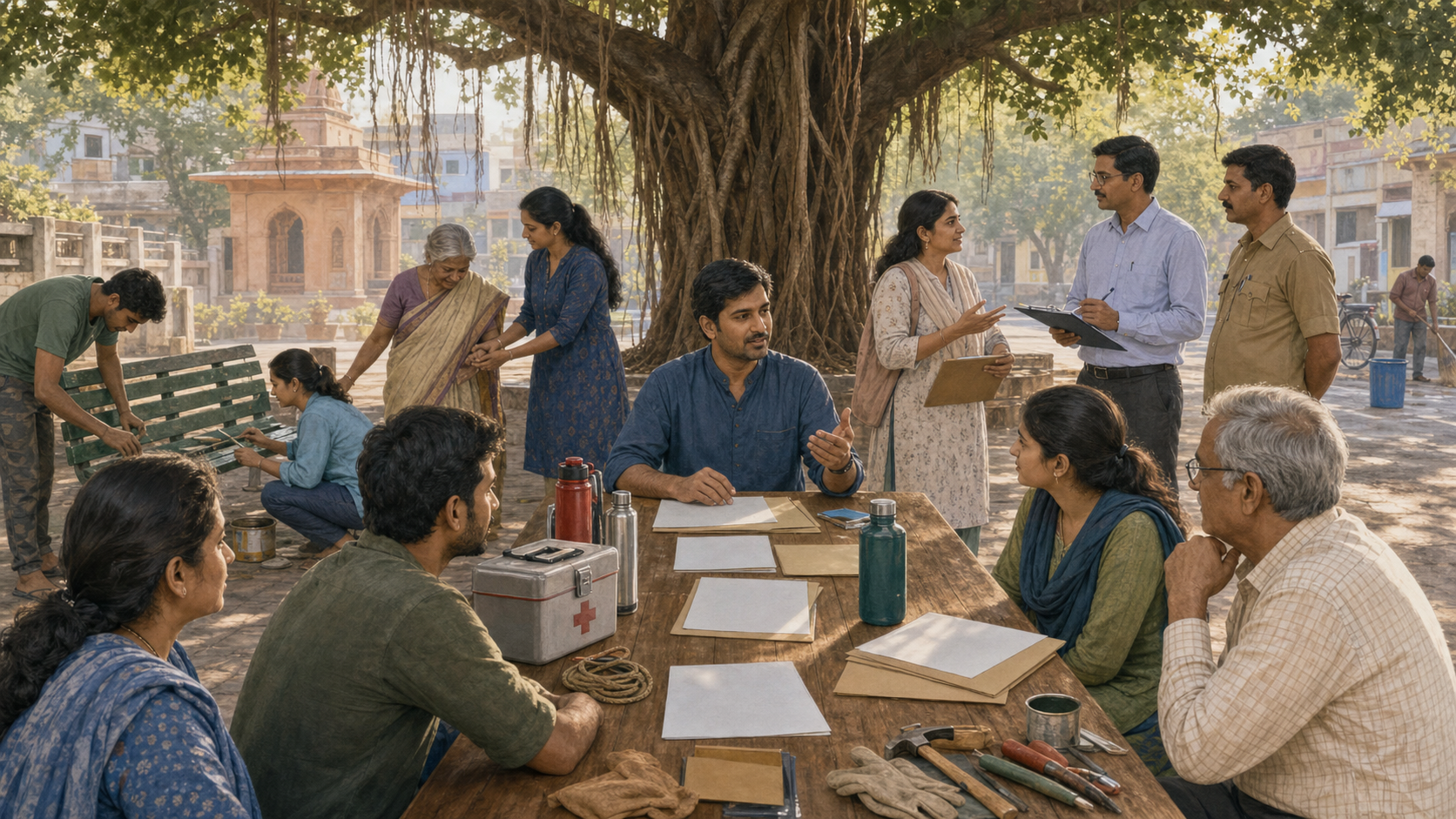
You want to serve Dharma in public life, but the decision in front of you is usually unglamorous: whether to file a grievance, organize your neighbors, challenge an official decision, protect a community institution, or turn a public pledge into work that actually helps someone.
The danger lies at both extremes. If every disagreement becomes a civilizational emergency, anger replaces judgment. If conviction never leaves the meeting hall or place of worship, public duty becomes a slogan. What you need is an operating discipline: choose a just objective, escalate without losing restraint, protect people who are not responsible for the wrong, and verify that your action produced a durable public good.
Begin with the duty you owe, not the opponent you dislike
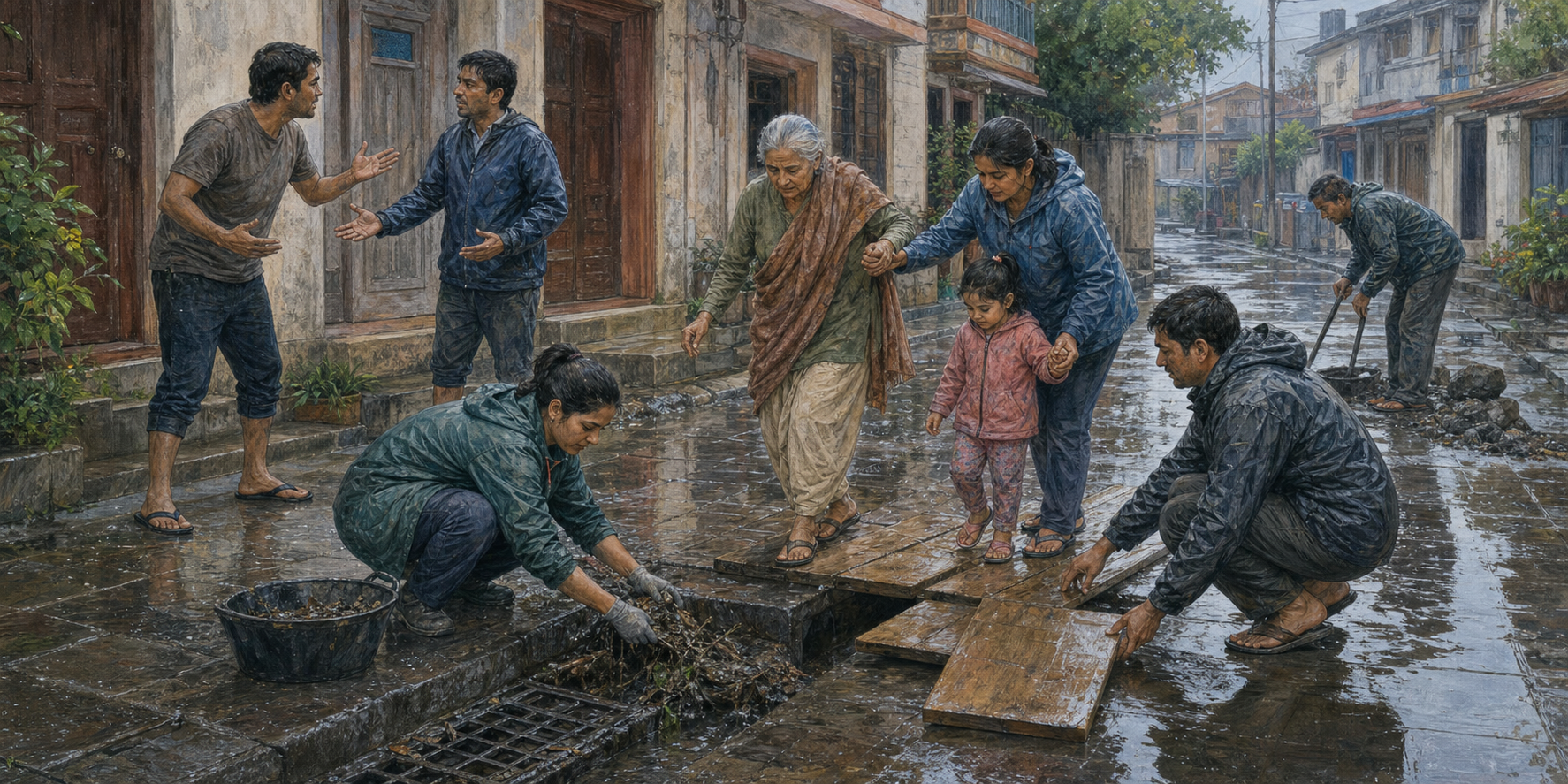
A Dharmic campaign begins by identifying an obligation. Who is exposed to harm? Which institution has responsibility? What remedy would restore order? These questions keep your attention on the work that must be done rather than on the satisfaction of defeating someone.
This distinction matters because rajadharma and civic dharma do not confer the same authority. A ruler or state institution may possess lawful coercive powers. A citizen, association, temple committee, volunteer group, or cultural organization does not acquire those powers merely by invoking Dharma. Your legitimate instruments are documentation, persuasion, assistance, formal escalation, peaceful assembly, public accountability, and persistent seva.
The dharmic family gives civic action a wide moral vocabulary. Hindu sankalpa and seva, Buddhist compassion and ethical attentiveness, Jain ahimsa and anuvrata, and the Sikh aspiration for sarbat da bhala all connect inner discipline with responsibility for others. Across these traditions, truth, compassion, self-restraint and service provide common ground for public conduct. You do not need theological uniformity to clean a street, protect a heritage site, assist an elderly resident, or make a dangerous route safer.
Apply four tests before you act
- Name the public harm precisely. Replace a sweeping complaint such as authorities never care with a verifiable statement: the streetlight on a particular school route is not working, waste has not been collected at a specified location, or an accessible entrance is blocked.
- Identify the duty-holder. Determine which office, department, committee, contractor, or organizer can authorize the remedy. Do not direct pressure at whoever happens to be most visible.
- Choose the least coercive method likely to work. A clear request with evidence may solve the problem. If it does not, move through a defined escalation path instead of improvising under anger.
- Describe the day after success. Ask whether residents will be safer, whether the institution will function better, whether uninvolved people will retain their dignity, and whether the same problem is less likely to return.
The fourth test is where many campaigns fail. They know what they oppose but cannot describe the order they intend to build. A dark school route, a persistent leak, or uncollected waste affecting residents and shopkeepers needs a completed repair, an accountable owner, and a way to confirm closure. Public outrage by itself delivers none of these.
Restraint is not passivity. Hemu’s twenty-two battlefield successes before his fall at Panipat in 1556 sharpen a permanent statecraft problem: how do you remain ethically bounded when an adversary may not respect the same limits? The answer cannot be helplessness, but neither can it be imitation. At civic scale, if another group distorts facts, intimidates critics, or targets identities, your task is to improve evidence, organization, lawful pressure, and protection – not to adopt the same conduct under a Dharmic label.
Classical rules of combat protected the unarmed, infirm, sleeping, surrendering, displaced, religious functionaries, teachers, ascetics, guests, and people engaged in sacred rites. That detailed insistence on distinction and noncombatant protection supplies a direct civic guardrail: hold the responsible decision and decision-maker to account without treating an entire family, faith, neighborhood, profession, or workforce as the enemy.
- Name the office, decision, action, or ticket at issue. Do not assign collective guilt to a community.
- Remove unnecessary addresses, phone numbers, identity documents, children’s faces, and other personal details before publishing evidence.
- Do not turn relatives, uninvolved employees, places of worship, or ordinary service users into pressure points.
- When a mistake is acknowledged and the remedy is completed, stop punitive escalation. Accountability should close a breach, not create a permanent target.
Use the four-step escalation ladder
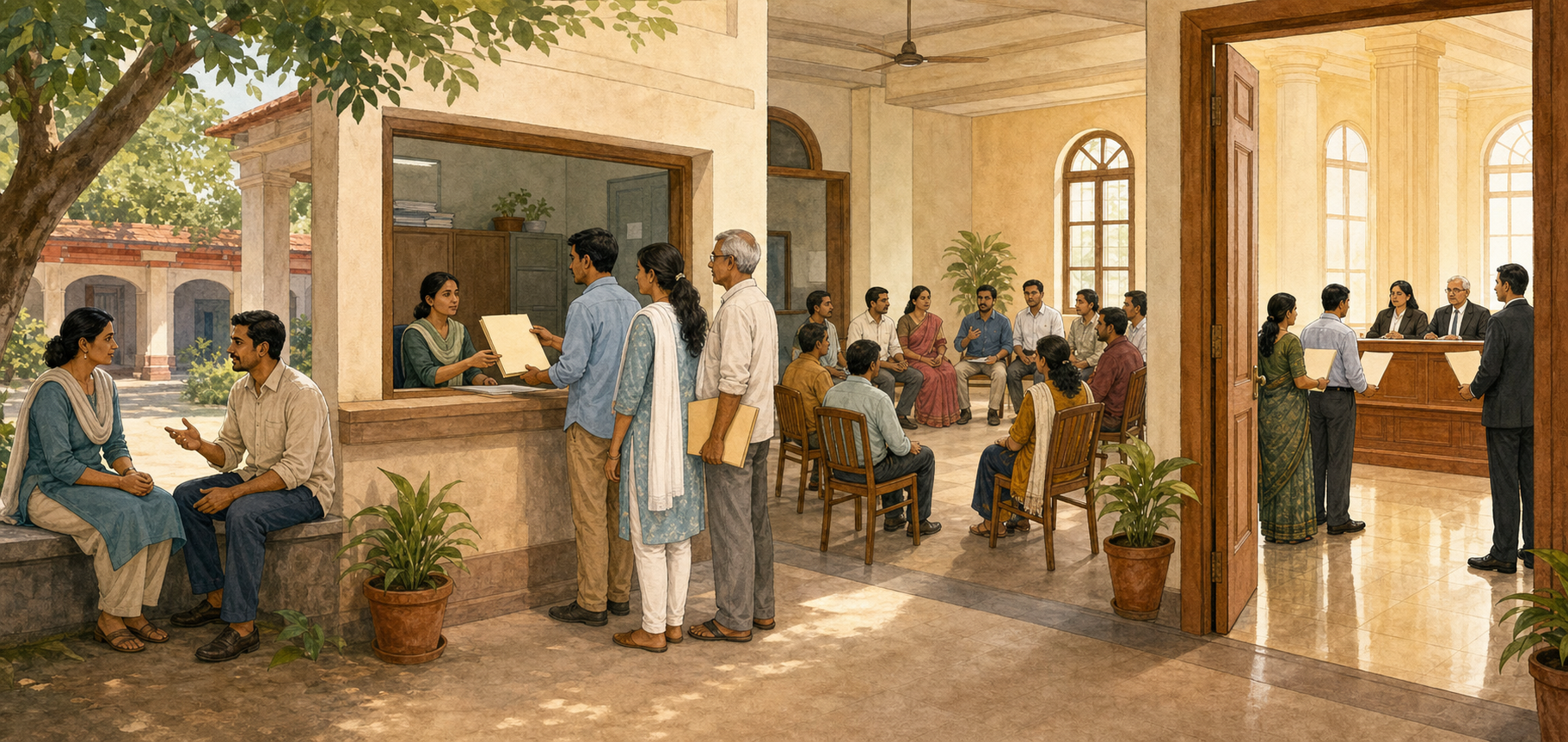
Dharmic statecraft did not treat force as the first proof of seriousness. The classical sequence required Sama, Dana and Bheda before Danda: conciliation, incentives or constructive contribution, strategic separation, and finally coercive enforcement. The sequence can guide civic action, but each term must be translated into lawful citizen practice.
- Sama: establish facts and seek agreement. State the problem in one sentence, attach proportionate evidence, identify the requested remedy, and submit it to the responsible body. Ask for an acknowledgment and a reference number. The aim is not submissiveness; it is to remove misunderstanding and give ordinary administration a chance to work.
- Dana: make cooperation easier. Offer information, translation help, volunteer coordination, a map of affected locations, or several workable remedy options. Dana in civic life is not bribery and should never become an unofficial payment. It means contributing something legitimate that reduces friction without purchasing favoritism.
- Bheda: separate what has been wrongly bundled together. Distinguish the urgent safety issue from the larger political argument, the responsible department from unrelated staff, and the point of agreement from the point still disputed. Route each part to the correct authority. This is disciplined analysis, not deception, rumor, or the manufacture of personal quarrels.
- Danda: use formal and lawful leverage. Escalate through the published chain of responsibility, oversight process, grievance mechanism, peaceful public meeting, or documented public accountability campaign. For a citizen group, Danda does not mean private force, threats, vandalism, or collective punishment.
Do not jump to the fourth step merely because it is more visible. Premature confrontation can turn a repairable service failure into an identity conflict. It can also leave you without the record needed to prove neglect. Conversely, do not repeat Sama indefinitely after the responsible body has ignored clear evidence. Restraint requires an escalation rule, not endless pleading.
Build the record before you need it
Keep one issue log. A simple sheet or ticket register is enough if it preserves the chain from observation to verified remedy. Record:
- the exact location and relevant jurisdiction;
- the date and time the condition was observed;
- the issue category and any immediate safety concern;
- a photograph or short video when it is safe, lawful, and necessary;
- the requested remedy in concrete terms;
- the office contacted, ticket number, and first response;
- the next escalation point if the response does not resolve the issue; and
- the resident or volunteer who will verify closure on the ground.
This record changes the tone of civic action. Instead of saying nothing happens, you can show what was reported, who received it, what response followed, and what remains undone. It also protects a conscientious official from vague accusation and exposes a negligent process without embellishment.
A useful stopping rule is equally important. Close the matter only when the requested public condition exists, not when a file is marked closed. If a drain is superficially cleared and blocks again, reopen the ticket. If a light is repaired, verify it after dark. If accessibility was promised, ask the person affected to test it. The citizen, not the dashboard, experiences the result.
Choose Dharma Vijaya before you choose a tactic

Indic statecraft classified victories by their moral quality. Dharma Vijaya sought legitimate order, Lobhavijaya pursued territory or treasure, and Asura Vijaya moved toward humiliation, elimination and devastation. The categories are not relics. They reveal what a civic campaign is becoming before its organizers admit it.
| Classical lens | Civic symptom | Corrective question |
|---|---|---|
| Dharma Vijaya | The remedy is achieved, legitimate order is strengthened, and dignity survives disagreement. | Will this result still look just when the excitement of winning has passed? |
| Lobhavijaya | The public issue becomes a vehicle for organizational credit, access, influence, money, or territorial control. | Would we accept the same remedy if another group received the recognition? |
| Asura Vijaya | The objective shifts from correcting conduct to humiliating people, exposing families, destroying livelihoods, or making coexistence impossible. | Are we removing a wrong, or trying to make a person or community socially untouchable? |
This test should occur before you select a slogan, publish a name, or call a gathering. Tactics create incentives. If organizers are rewarded mainly for attention, an issue that can be quietly resolved may be kept alive. If volunteers are rewarded for verified outcomes, they have reason to cooperate, document, and close the loop.
The same discipline applies to statecraft. A state may have to use force to protect order, but the legitimacy of that force depends on intention, necessity, proportionality, distinction, and the order created afterward. The tension between Dharmayuddha and crisis-driven stratagems shows that moral difficulty cannot be abolished by naming one’s side righteous. Power remains answerable for its means.
Plan the peace while you plan the campaign
Rajadharma after victory required more than cessation of fighting. It included restoring civic order, safeguarding worship and learning, protecting merchants and artisans, and granting abhaya – an assurance that ordinary people could live without fear. Ashoka’s post-Kalinga ideal of dhamma-vijaya similarly placed prestige in welfare, justice, and concord rather than territorial appetite.
Your civic equivalent is an aftercare checklist:
- Ask the affected person to confirm that the remedy works.
- Check whether the intervention transferred the burden to another street, neighborhood, group, or worker.
- Correct or remove obsolete allegations and unnecessary personal data from public channels.
- Acknowledge officials, residents, or opposing participants who helped resolve the matter.
- Publish what changed, what did not change, and who owns the remaining work.
- Set a proportionate follow-up check for problems likely to recur.
A campaign that cannot end is usually serving an identity, an organization, or an appetite rather than the original duty. Dharma Vijaya permits closure because the purpose was restored order, not permanent mobilization.
Build a civic campaign that can survive scrutiny

A large gathering can demonstrate shared intent, but attendance is not impact. The 11,000-plus participants at the Hadapsar Dharma gathering showed substantial capacity for collective sankalpa. The harder test begins afterward: can that moral energy become a repaired light, an assisted resident, a cleaner public space, a protected heritage site, or a process that treats citizens fairly?
Write one service promise
Choose one visible and bounded public condition. Do not begin with a promise to awaken society. Begin with a promise residents can verify. A campaign brief should fit on one page and answer eight questions:
- What exact condition are we trying to change?
- Who is affected, especially among people with less access or influence?
- Which authority can authorize or perform the remedy?
- What evidence establishes the problem without violating privacy?
- What does successful closure look like on the ground?
- Which Sama, Dana, Bheda, and Danda steps will we use?
- Who will maintain the log and communicate updates?
- Who will independently confirm that the result is real?
For a grievance platform or volunteer help desk, the operating design needs structured intake, classification and triage, time-bound workflow, and a citizen feedback loop. Without intake standards, complaints become anecdotes. Without triage, urgent and routine matters compete blindly. Without an owner and response expectation, tickets drift. Without citizen confirmation, cosmetic closure can be counted as success.
Measure closure, not activity
Volunteer-hours, meeting attendance, social impressions, and complaints submitted show effort or reach. They do not show that public service improved. Track the measures that expose the process:
- Average first-response time: whether the receiving body acknowledges citizens predictably.
- Average resolution time: whether acknowledged work reaches a completed remedy.
- Escalation rate: whether the first routing and level of authority are adequate.
- Reopen rate: whether closure claims survive inspection by the affected citizen.
- Satisfaction: whether the process was understandable and the result useful.
- Equity by locality and channel: whether digitally connected neighborhoods receive better service than rural, elderly, low-income, or otherwise excluded residents.
These response, resolution, escalation, reopening, satisfaction, and equity measures should be published at a level that improves accountability without exposing complainants. A small group can issue a periodic summary. A larger platform can use ward- or panchayat-level dashboards. In both cases, randomly sample claimed closures and contact the citizen who reported them. Do not reward the mere act of changing a ticket status.
Include the citizen your interface excludes
A smartphone-only campaign is not citizen-first. It quietly selects for literacy, connectivity, confidence, language, age, and physical ability. Offer assisted centers, helpline or IVR access, language localization, accessible interfaces, and offline-to-online entry by trained volunteers. Every channel should feed the same queue so an assisted complaint does not become a second-class request.
Train volunteers to assist without taking control of the citizen’s story. Read the submitted wording back to the complainant. Explain what information will be shared. Provide the ticket number in a usable form. Never demand public political alignment, religious participation, a donation, or organizational membership as the price of help. Seva loses its moral character when vulnerability becomes a recruitment opportunity.
Treat data restraint as civic restraint
A grievance system may hold names, phone numbers, locations, photographs, health-related circumstances, or details about a person’s daily movements. Poor handling can expose the very citizen you meant to serve. Build around purpose limitation, minimal collection, consent, role-based access, encryption, audit logs, retention rules, and a vulnerability-reporting channel. In India, the design should be reviewed against the Digital Personal Data Protection Act 2023 and any requirements applicable to the actual deployment.
- Collect a field only when you can explain why resolution requires it.
- Separate internal contact details from information shown on public dashboards.
- Limit volunteers to the records needed for their assigned work.
- Remove unnecessary faces, vehicle numbers, home interiors, and identity details from attachments.
- Set a retention rule before collecting data, not after the archive becomes unmanageable.
- Obtain qualified security and legal review before operating at a scale or sensitivity the volunteer team cannot safely govern.
Make public assembly hospitable as well as lawful
Speech, peaceful assembly without arms, freedom of conscience, and religious practice sit within a constitutional framework that also protects public order, morality, health, and safety. Articles 19(1)(a), 19(1)(b), and 25-28 provide the relevant constitutional setting for disciplined religious and civic gatherings. Verify current permissions and local requirements with the responsible authorities before the event.
A serious event plan includes a safety audit, defined entrances and exits, trained marshals, medical aid, drinking water, accessible facilities, waste handling, liaison with civic authorities, and a code of conduct that prohibits violence and hate speech. These are not peripheral logistics. They reveal whether the gathering’s devotion extends to elders, people with disabilities, nearby residents, sanitation workers, and emergency personnel.
Apply the same discipline to communications. Verify a claim before amplifying it. Label opinion as opinion. Do not use an unverified image or clipped video merely because it confirms your fears. Publish the purpose of the gathering, its conduct standards, and the service outcomes that followed. Accurate documentation and non-inflammatory framing protect the moral clarity of a Dharma pledge better than an attention-maximizing narrative.
Key takeaways
- Begin with a specific duty and verifiable remedy, not a generalized enemy.
- Move through Sama, Dana, Bheda, and lawful Danda; do not confuse patience with passivity or escalation with intimidation.
- Protect uninvolved people, private data, livelihoods, and places of worship even when a dispute becomes intense.
- Test every tactic against Dharma Vijaya: restored order and dignity matter more than credit, influence, or humiliation.
- Use structured intake, clear ownership, citizen-confirmed closure, reopen checks, and public performance measures.
- Convert sankalpa into inclusive seva that a resident can see, test, and trust.
Before your next meeting, choose one recurring civic problem and write its duty-holder, requested remedy, first peaceful step, escalation path, protection rule, and closure test on a single page. Then assign an owner and open the log. Dharma becomes credible in public life when moral resolve leaves behind a safer street, a fairer process, a protected person, and an institution more capable of doing its duty.
References
- The Dharma Dispatch – Courage and Compassion in Statecraft: Hindu War Ethics from Hemu to Kautilya and Ashoka
- Hindu Janajagruti Samiti – Surajya Abhiyan Launches Citizen Portal for Civic Grievances, Inaugurated by VHP’s Alok Kumar
- Hindu Janajagruti Samiti – Pune’s Hadapsar Hosts 11,000+ at Hindu Rashtra-Jagruti Sabha for a Powerful Dharma Pledge