
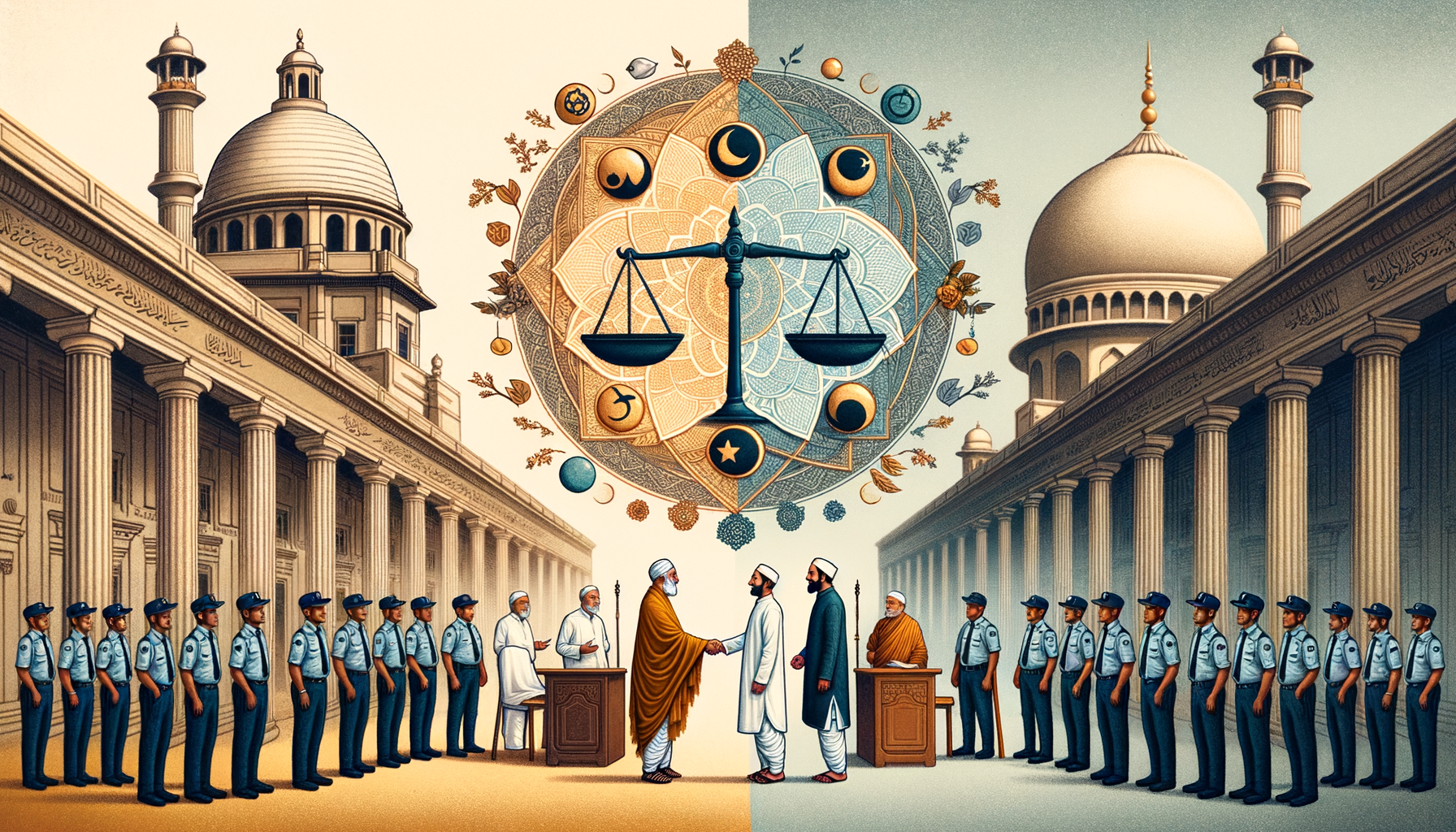
On 5 December 2025, the Calcutta High Court permitted a mosque-related gathering in Beldanga, Murshidabad, under strict security arrangements. The decision, framed within constitutional guarantees and public-order obligations, directs attention to how courts balance freedom of assembly with the imperative to prevent unrest in West Bengal.
Law-and-order planning has taken center stage, with security agencies tasked to ensure that the event proceeds peacefully and that all stakeholders adhere to established protocols. In such situations, the judiciary’s role is not to endorse any side but to safeguard rights while mitigating the risk of communal friction.
In response, Shankaracharya Avimukteshwaranand Saraswati contextualized the development within a broader civilizational memory. While invoking historical experiences, the emphasis remains on nonviolence, dignity, and dialogueprinciples that resonate across dharmic traditions. The moment calls for restraint and responsibility in language and action, ensuring that historical reflections do not fuel contemporary division.
Across Hinduism, Buddhism, Jainism, and Sikhism, shared values such as ahimsa, karuna, and satya provide a constructive path forward. Interfaith dialogue and community-level mediation can help transform tense episodes into opportunities for trust-building. Communities in Murshidabad and beyond benefit when voices of calm encourage mutual respect and uphold the rule of law.
Experience shows that potential flashpoints can be defused through transparent communication, local peace committees, and adherence to clear codes of conduct for public events. Civil society groups and religious leaders can jointly discourage rumor-mongering and provocative speech, promoting dharmic unity and Hindu–Muslim relations grounded in fairness and empathy.
Practical stepssuch as monitored venues, agreed speech guidelines, and rapid fact-checkingcan strengthen communal harmony. Educational outreach that highlights shared heritage and service (seva) further reduces mistrust. These approaches align with constitutional values, the Calcutta High Court’s directives, and the social contract that binds diverse communities across West Bengal.
Ultimately, the judiciary’s measured intervention underscores a vital principle: rights are best protected when exercised responsibly. By prioritizing interfaith dialogue, communal harmony, and the ethics of nonviolence, society can honor historical memory without compromising the inclusive future that the dharmic traditions collectively envision.
Inspired by this post on Struggle for Hindu Existence.
