
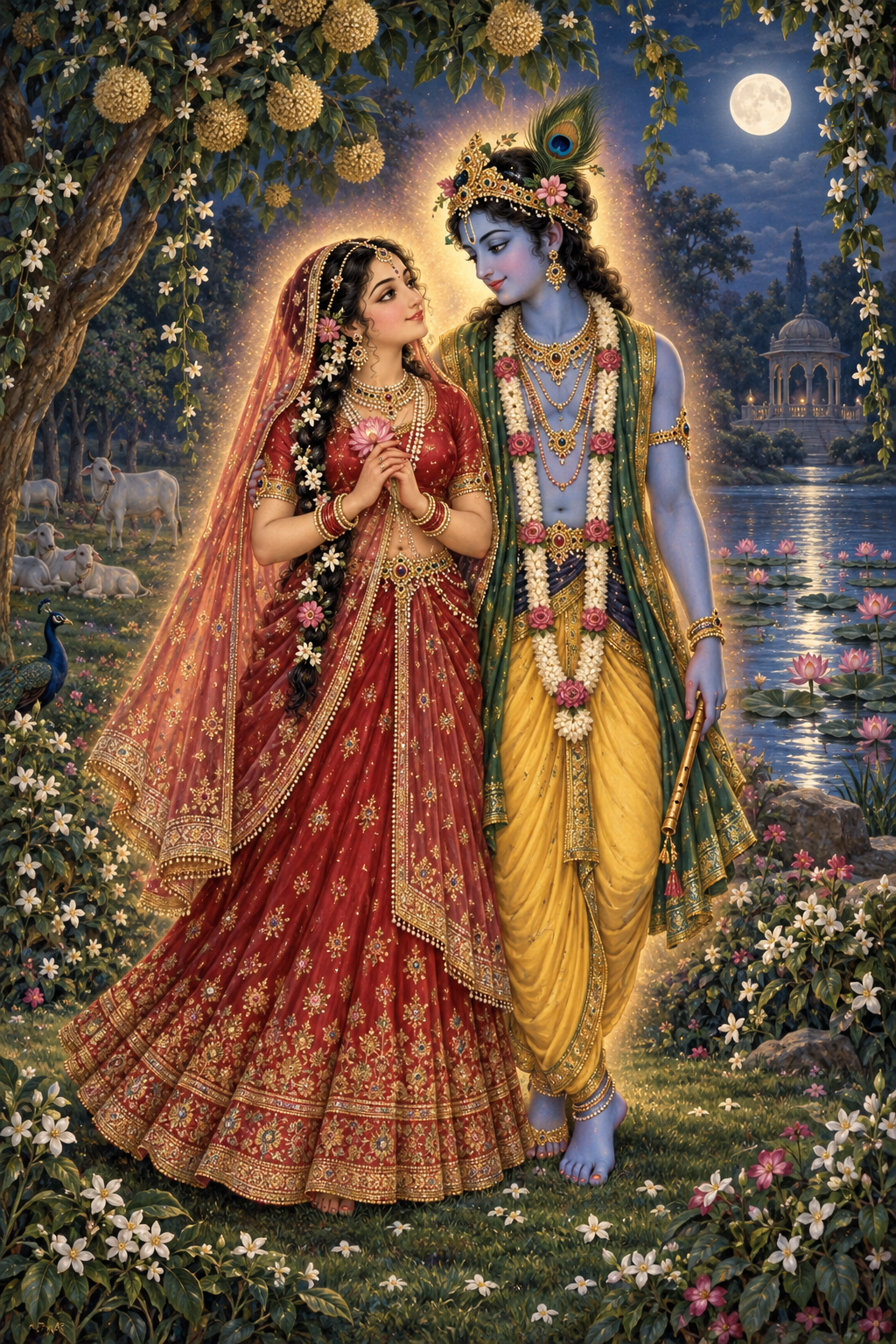
You see Radha standing beside Krishna and meet a question that ordinary labels cannot settle. Is she his devotee, his consort, a goddess, his spiritual power, or somehow Krishna himself? Gaudiya theology answers with a carefully qualified yes to several of these descriptions, but no single one is adequate by itself.
The deceptively simple question Who is that girl with Krishna? therefore opens into the heart of the tradition. The short answer is that Radha is Krishna’s hlādinī-śakti: his divine potency of bliss and love, fully personal and eternally related to him. If you keep that definition in view, the apparent contradictions begin to resolve.
The shortest accurate answer: Radha is Krishna’s loving potency
In Gaudiya Vaishnava theology, Radha is not a created soul who eventually became Krishna’s greatest devotee. Nor is she an independent deity who happens to share his divine rank. She is Krishna’s own internal spiritual potency in personal form.
The technical term hlādinī-śakti identifies the divine capacity for bliss. Hlādinī is not merely the pleasure Krishna possesses, as though bliss were an object stored within him. It is the power through which Krishna experiences bliss, gives bliss, and enters loving relationship. Radha is the fullest personal manifestation of that power.
This is why calling Radha only Krishna’s consort is incomplete. Consort describes a relationship, but not her identity. Calling her only a devotee is also incomplete. Devotion describes what she does and the love she embodies, but it can leave the false impression that she belongs to the same created category as an ordinary jīva. Calling her only an energy is equally misleading if energy makes you picture an impersonal force. In this theology, śakti can possess personality, intention, agency, emotion, and relationship.
A sound definition must therefore hold four points together:
- Radha is divine, not a created being elevated to divinity.
- She is Krishna’s own śakti, not a second self-existing supreme principle.
- She is fully personal, not an abstract power or poetic ornament.
- She is the supreme lover and devotee of Krishna, without that devotion making her ontologically inferior.
If an explanation drops any one of these points, it will usually turn Radha into an ordinary romantic partner, an impersonal energy, a subordinate celestial being, or a rival God. None of those models expresses the Gaudiya position.
How Radha can be one with Krishna and still love him
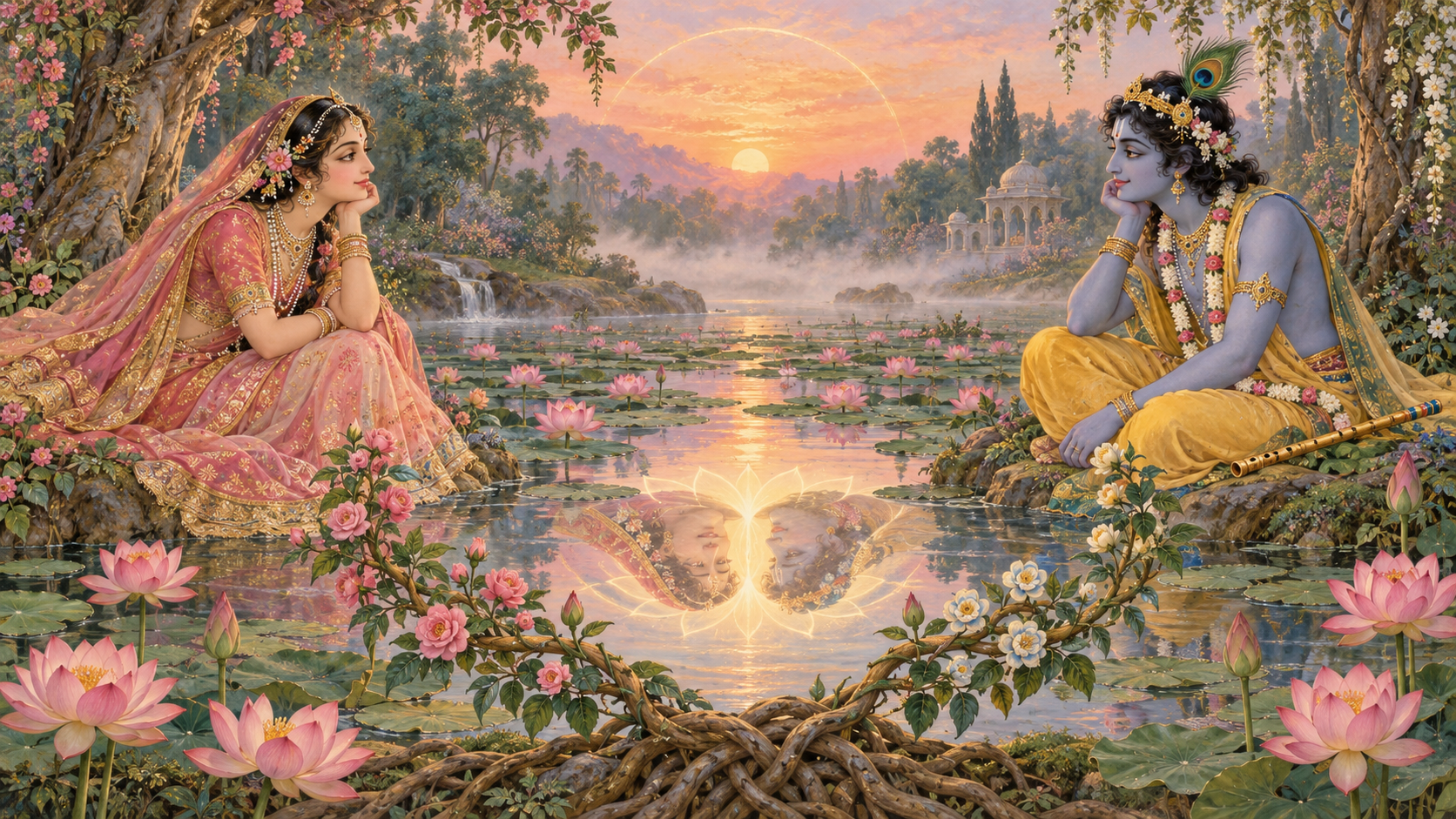
The key is Acintya-bheda-abheda, the Gaudiya teaching of inconceivable simultaneous difference and non-difference. Applied here, Radha and Krishna are non-different in divine reality yet distinct in personal identity and loving relationship.
This is not a loose way of saying that nobody knows the answer. Acintya marks the limit of reducing divine reality to ordinary categories; it does not cancel disciplined thought. Bheda means that Radha is genuinely Radha and Krishna is genuinely Krishna. Their exchange of love is real, not a drama performed by one person pretending to be two. Abheda means that Radha does not possess a separate divine essence or an independent source of existence outside Krishna.
You can think of the distinction between śakti and śaktimān: potency and the possessor of potency. The two can be distinguished because they play different roles, but they cannot be separated without destroying the meaning of both terms. A possessor entirely without potency would not be the same possessor, while potency with no relation to its possessor would be something else altogether.
Analogies such as fire and heat can help at this point. Heat is not an independently existing second fire, yet fire without heat is inconceivable. But every physical analogy eventually fails. Heat does not freely love fire, respond to it, serve it, challenge it, or intensify its joy. Radha’s personhood is essential, not an optional embellishment added to a metaphysical principle.
Use a two-part test when you encounter descriptions that seem to pull in opposite directions. When a teaching stresses Radha’s unity with Krishna, do not erase her personality. When a devotional account stresses their distinct emotions and actions, do not turn them into two competing supreme beings. Gaudiya theology asks you to preserve both truths at once.
Why being Krishna’s devotee does not make Radha less divine
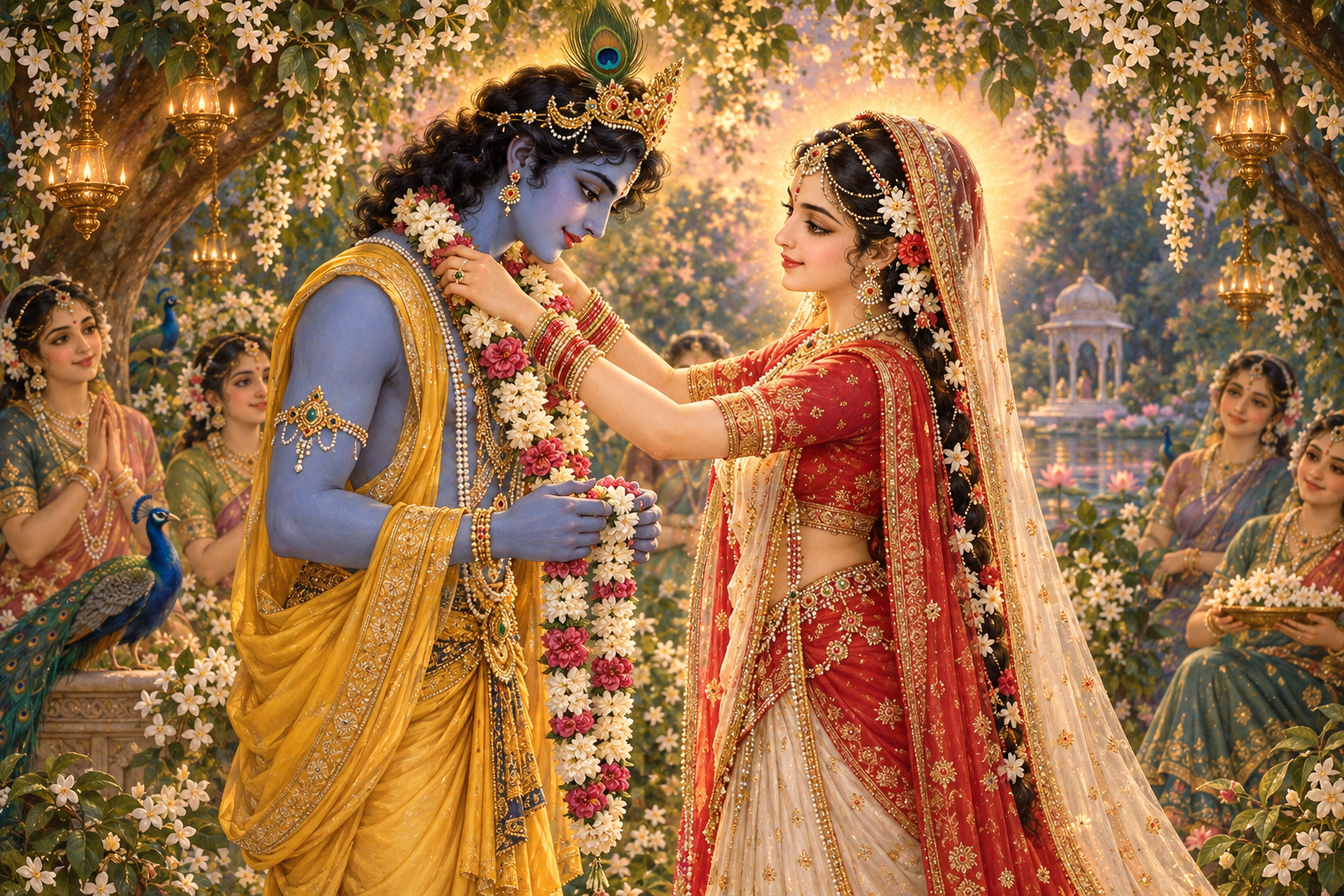
Many misunderstandings begin with a worldly assumption: the one who serves must be lower than the one who receives service. Gaudiya theology does not treat divine love as a political chain of command. In the realm of prema, the capacity to love completely is itself the highest spiritual excellence.
Krishna is the supreme object of love, while Radha is the supreme embodiment of love for Krishna. These are distinct relational positions, not a ranking in which one participant is divine and the other merely dependent. Radha’s entire identity is oriented toward Krishna, but Krishna’s identity as the enjoyer of perfect love cannot be disclosed without her. Their relation reveals what divine fullness means in this tradition: not solitary power, but reciprocal love.
This also explains language in which Radha appears to overcome, command, captivate, or delight Krishna. Read such language relationally, not politically. It does not describe one independent deity defeating another. It expresses love’s power within the one divine reality: Krishna freely responds to the perfect love embodied by his own hlādinī-śakti.
Three different questions are often collapsed here. Separating them will make your reading much clearer:
- What is Radha? Krishna’s internal spiritual potency, not a created material or finite being.
- Who is Radha? A distinct divine person whose identity is perfect love for Krishna.
- What does Radha do? She serves, delights, and loves Krishna, revealing the highest form of devotion.
The first question concerns divine reality, the second personhood, and the third relationship. A sentence may answer one without denying the others. This is why Radha can be described as Krishna’s potency, his beloved, and his supreme devotee without the tradition treating those claims as mutually exclusive.
A practical way to read Radha-Krishna theology

The right categories matter because Radha-Krishna devotion is easy to reduce to something more familiar. You can avoid the most common mistakes by reading in four steps.
- Fix the theological scope. Ask what Gaudiya Vaishnavism means by Radha before importing definitions from another Hindu sampradāya, modern psychology, or comparative religion. Hindu traditions need not use one identical theological vocabulary.
- Identify the level of the claim. Is the passage speaking about Radha’s divine identity, her personal relationship with Krishna, or the devotional disposition she teaches? Do not use a statement about one level to cancel a statement about another.
- Preserve both personality and unity. If Radha becomes merely a symbol, her agency disappears. If she becomes an independent supreme being, her inseparability from Krishna disappears. Both reductions miss Acintya-bheda-abheda.
- Read intimate imagery through self-giving devotion. Divine romantic language is meant to disclose complete, selfless love. Treating it as sacred permission to imitate desire on the material plane reverses its devotional direction.
This method also tells you what temple images and paired names are asking you to notice. Radha is not decorative company placed beside an otherwise complete solitary deity. Her presence declares that loving relationship belongs to the fullness of the divine. Krishna is encountered with the potency that makes perfect love, bliss, and loving exchange possible.
The distinction between theology and history is equally important. A theological answer explains who Radha is within the Gaudiya system. It does not by itself answer a historical question about when particular names, images, practices, or formulations first appeared. If you are investigating chronology, manuscript history, or sectarian development, you need historical evidence suited to that question. Do not treat a historical argument as though it automatically settles devotional identity, or a devotional claim as though it supplies a textual chronology.
For personal practice, the decisive shift is from observation to orientation. Do not stop at asking where Radha fits in a divine hierarchy. Ask what her identity says about bhakti: the highest love seeks the beloved’s joy rather than possession, status, or self-display. That gives you a concrete standard for examining your own devotion. A practice centred mainly on what you want to obtain has not yet adopted the direction represented by Radha.
Key takeaways
- Radha is Krishna’s hlādinī-śakti, the personal and internal divine potency of bliss and love.
- She is not a created jīva, an impersonal force, an optional companion, or a second independent God.
- Radha and Krishna are simultaneously one and different: one in divine reality, distinct in personhood and loving relation.
- Radha’s identity as the supreme devotee does not diminish her divinity. Her perfect devotion is the fullest manifestation of divine love.
- Read Radha-Krishna imagery as theology of self-giving prema, not as ordinary romance or a model for imitating material desire.
- When an explanation seems contradictory, separate questions about Radha’s nature, personhood, and relational activity before deciding that the claims conflict.
The next time you hear Radha called Krishna’s energy, devotee, beloved, or feminine counterpart, ask what the speaker means and what the label leaves out. Keep hlādinī-śakti and Acintya-bheda-abheda together. That pair of ideas will let you recognise a genuinely Gaudiya explanation instead of a familiar category imposed from outside it.
References

Leave a Reply
You must be logged in to post a comment.