

You can affirm the unity of life in prayer and still become harsh in an argument, ignore an unfair arrangement, or buy and discard without considering where the waste goes. The difficulty is rarely accepting oneness as an idea. It is allowing that idea to govern what you do when comfort, status, loyalty, and convenience pull in another direction.
Hindu spiritual oneness gives you a practical test for those moments: does this choice recognize relationship, reduce avoidable harm, and support the welfare of the whole? Applied consistently, that test changes how you handle disagreement, injustice, work, consumption, and care for the living world.
Oneness is a discipline of perception, not a slogan
Advaita Vedanta gives spiritual oneness one of its clearest Hindu formulations: Atman and Brahman are not ultimately separate. This does not require you to pretend that every person, creature, tradition, or situation is identical. It asks you to see plurality without turning difference into absolute separation.
That distinction matters. Sameness erases real histories, responsibilities, abilities, and needs. Oneness does not. You and another person can possess equal dignity while making unequal claims. Two communities can belong within one moral field while bearing different responsibilities for a conflict. Human needs can matter without making the rest of life disposable.
Nor is Advaita the only language available within Hindu life. Hindu pluralism permits devotion through different forms, teachers, philosophies, and chosen ideals. The Ishta framework is especially important here: unity need not flatten spiritual plurality. A shared ground can sustain genuine difference.
Three practical consequences follow. First, no person may be reduced entirely to a label, mistake, faction, caste, class, nationality, or opinion. Second, conduct has consequences beyond the isolated individual because lives are interdependent. Third, perceiving a relationship creates a duty; it is not enough to feel connected while leaving preventable harm untouched.
Key takeaways
- Oneness protects equal dignity without requiring you to treat every belief, claim, or action as equally sound.
- Compassion becomes dharmic when it moves beyond sentiment into restraint, service, fair access, and repair.
- Ahimsa places human and nonhuman life within your moral field, even when a completely harmless choice is unavailable.
- Meditation and breath awareness are preparation for ethical action, not substitutes for it.
- Unity in diversity works only when differences remain visible and participation is not coerced.
Use oneness to confront conflict without erasing injustice
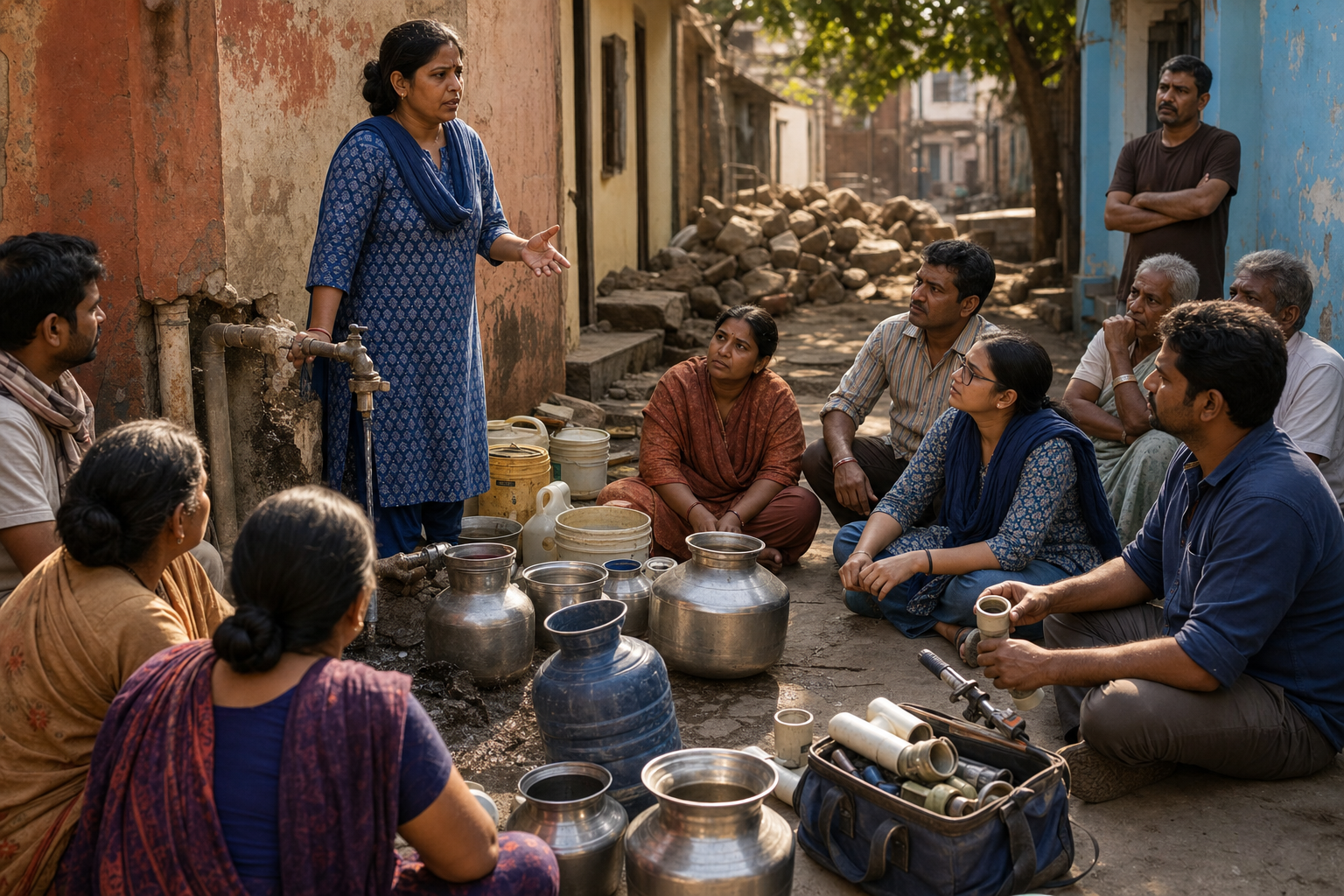
Conflict narrows perception. A person becomes an enemy, a community becomes a stereotype, and the most provocative statement comes to represent everyone. Spiritual oneness interrupts that reduction. It does not ask you to abandon judgement. It asks you to judge conduct without denying the humanity of the person before you.
A useful response sequence is:
- Regulate your first reaction. Use a quiet breath or brief pause before answering. The purpose is not to suppress anger but to keep anger from choosing your words.
- Separate identity from conduct. Name the specific statement, decision, or harm instead of condemning an entire person or population.
- Restate the other position fairly. If the other person would not recognize your description, you are probably fighting a caricature.
- Identify the shared obligation. Ask what dignity, safety, truthfulness, or community welfare requires from everyone involved.
- Choose a form of repair. That may mean an apology, restitution, a changed rule, protected access, facilitated dialogue, or a clear boundary against repeated harm.
This sequence reflects a wider Dharmic ethical convergence without pretending that all Dharmic traditions teach the same metaphysics. Jain anekantavada trains attention toward the many-sided character of a dispute, while ahimsa limits the violence of thought, speech, and action. Buddhist interdependence connects clear seeing with compassion for suffering. Sikh Ik Onkar, seva, and sangat join spiritual unity to egalitarian community life. These are distinct paths, but each challenges the habit of treating the other as morally irrelevant.
Oneness must never become a demand that an injured person preserve superficial harmony. Saying “we are all one” while resisting accountability turns a spiritual teaching into cover for power. The dignity of the wrongdoer does not cancel the protection owed to the harmed. If a situation involves violence or a credible threat, establish safety and involve appropriate help before attempting dialogue. Reconciliation cannot be extracted under pressure.
The same reasoning applies to economic life. Dana and seva are not merely generous feelings. They direct resources and effort toward people whose dignity or access has been neglected. Langar demonstrates this through a shared meal served without social distinction. The deeper lesson is structural: assistance should not humiliate its recipient or preserve an avoidable barrier.
When you make a workplace, community, or household decision, ask who receives the benefit, who carries the burden, who was absent from the decision, and who can challenge it without retaliation. Then ask whether the arrangement would still look reasonable if you occupied its least protected position. This translates lokasangraha, work for the welfare of all, from a noble word into a decision rule.
Sacred ecology begins before something reaches the bin

An ecological ethic built on oneness does more than describe nature as sacred. It changes the status of soil, water, plants, animals, and shared spaces in your decisions. They are no longer scenery surrounding human life. They participate in the conditions that make life possible and therefore cannot be treated as morally invisible.
Ahimsa is useful here when understood honestly. It does not promise that every ordinary choice will be harmless. Eating, building, travelling, and producing goods all affect other beings. Ahimsa makes avoidable harm visible and asks you to restrain appetite where convenience has been mistaken for necessity.
Begin at the point of acquisition, not disposal. Before buying, ask whether you need the object, whether what you own can be repaired, whether the need can be met by sharing, and whether the replacement is likely to endure. Recycling may manage a discarded item, but restraint and repair can prevent that item from entering the waste stream in the first place. This is why restraint, waste reduction, repair culture, and sustainable consumption belong together.
Your rubbish can serve as an audit. Notice which disposable item appears repeatedly. Then move upstream: change the purchase, the packaging choice, the storage habit, or the routine that produces it. A vague promise to “use less” is hard to sustain; redesigning a repeated behaviour is concrete.
Tree planting deserves the same seriousness. Planting expresses reverence only when the species, location, and continuing care allow the tree to live. A ceremonial act without stewardship can satisfy the planter while failing the place. The ethical unit is not the moment of planting but the relationship that follows.
Shared spaces offer another point of action. A neighbourhood clean-up, repair effort, or planting project joins ecological care with social trust. When people of different traditions or social groups work beside one another, the place stops being somebody else’s responsibility and the stranger stops being an abstraction. One activity can cultivate both forms of oneness.
Watch for the gap between ritual reverence and material conduct. Honouring Mother Earth while accepting preventable waste, polluted surroundings, or careless consumption leaves devotion disconnected from consequence. The correction is not to abandon worship. It is to let worship set the terms of ordinary behaviour.
Build a practice loop that reaches speech, service, and consumption

Insight is fragile under pressure. Dhyana, pranayama, and mindful attention help because they expose the movement between impulse and action. You notice irritation before it becomes contempt, desire before it becomes unnecessary consumption, and defensiveness before it prevents an apology.
But an inward practice proves little by itself. The practical loop is to see clearly, restrain the harmful impulse, perform the needed service, and review the result.
- See. During meditation or breath awareness, notice the identities, fears, and desires that dominate your attention.
- Restrain. At the next moment of speech or consumption, interrupt the automatic response that would cause avoidable harm.
- Serve. Convert concern into seva: give time, skill, food, attention, access, or practical help where it is actually needed.
- Review. Ask whether the action restored dignity, reduced harm, and strengthened a relationship, or merely made you feel virtuous.
This loop can enter settings that already structure your day. In a family, make gratitude specific by naming the people, animals, land, water, and labour that supported a meal or household task. The purpose is to train attention toward dependence that usually goes unnoticed.
In a team, begin a difficult meeting with a minute of breath awareness, then ask who will bear the consequences of the decision. The pause is valuable only if it produces better listening and a more responsible choice.
In a neighbourhood or congregation, choose seva that creates real contact across a social boundary. Serving meals, repairing a shared place, or cleaning a common area can replace vague goodwill with cooperation. Avoid turning recipients into props for the volunteers’ moral self-image. Ask what help is wanted, preserve choice, and let the people affected participate in shaping the work.
Mindful speech is the most immediate test. Before repeating a claim about a person or group, ask whether it is true, necessary, and phrased in a way that preserves human dignity. Refusing dehumanizing language does not make criticism weaker. It makes criticism more exact by forcing you to identify the conduct and evidence at issue.
Institutions need structures, not spiritual decoration

A school, workplace, temple, or civic organisation cannot embody oneness by adding spiritual language to an unchanged hierarchy. Its procedures must make dignity, participation, accountability, and stewardship visible.
In education, students can encounter the Vedas and Upanishads alongside Jain anekantavada and ahimsa, Buddhist compassion, and Sikh seva. The traditions should not be blended into an invented sameness. Teach what each term means in its own setting, where the traditions differ, and how each can sharpen an ethical question. Contemplative exercises can support attention, but participation should not become a religious test or a disguised form of coercion.
In disciplinary settings, a restorative approach asks more than which rule was broken and what punishment follows. It asks who was harmed, what responsibility the person who caused the harm must accept, what repair is possible, and what condition allowed the harm to recur. Restoration does not mean the absence of consequences, and it should never require the harmed person to reconcile or surrender a protective boundary.
In professional life, lokasangraha can be built into the decision itself. Before approving a policy or project, record whose welfare it advances, which costs it transfers to others, how affected people can respond, and what repair will occur if the decision causes damage. A moment of mindfulness at the start of a meeting is helpful; a process that changes who is heard and how harm is corrected is better.
Public celebrations and interfaith service can demonstrate unity in diversity when every community retains its own voice. The aim is not to prove that all paths are interchangeable. It is to practise coexistence without indifference: distinct convictions, reciprocal dignity, and shared responsibility for the place people inhabit together.
You do not need to wait for a large programme. Choose a recurring boundary in your own life: a person you routinely dismiss, a purchasing habit that produces avoidable waste, or a decision process that excludes those who bear its costs. Change the next encounter at that boundary. Listen accurately, repair what can be repaired, and redesign the habit that keeps recreating the harm.
Then repeat the action until oneness becomes visible without needing to be announced. That is where a spiritual insight becomes social and ecological dharma.
References
