
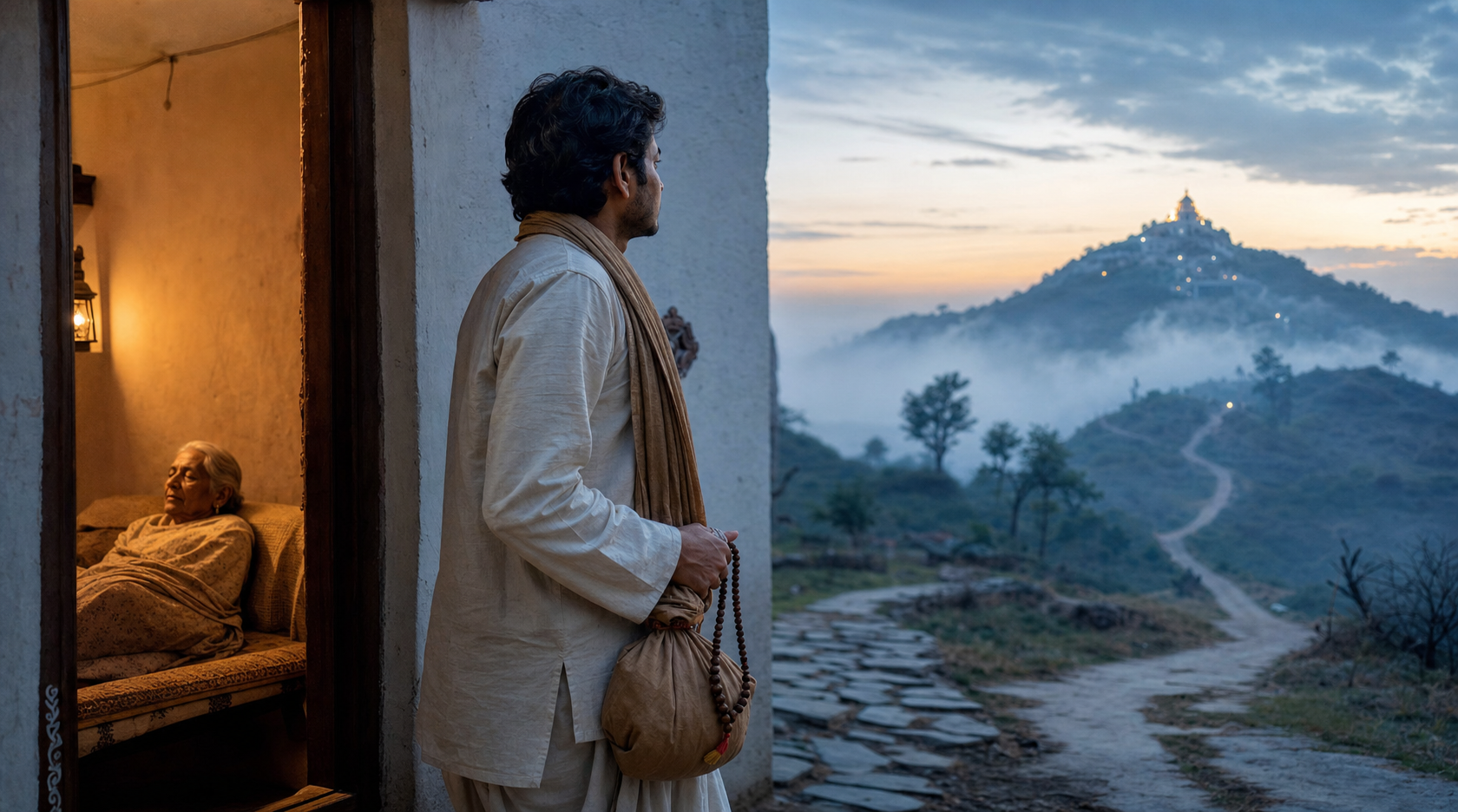
You may be certain that a pilgrimage, vow, retreat, or act of service is spiritually right and still be unsure whether you should undertake it now. That tension does not prove your devotion is weak. It may be the point at which devotion must become discerning.
The practical question is not simply, “How intensely do I want this?” You also need to ask whether the present time, method, and setting will protect the sacred purpose or quietly work against it. Dharmic prudence does not extinguish longing. It gives longing a form that you, your family, and your community can responsibly sustain.
A delayed pilgrimage is not a defeated desire
When Śrī Caitanya Mahāprabhu expressed his desire to go to Vṛndāvana, Rāmānanda Rāya and Sārvabhauma Bhaṭṭācārya did not dismiss the goal. In Caitanya-caritāmṛta, Madhya-līlā 16.220–237, they raised indirect impediments because the timing and circumstances required care. Uncontrolled crowds could disturb public order, complicate the journey, and intrude upon Mahāprabhu’s interior devotional state.
This gives you a crucial distinction: a sacred intention can be sound even when its present expression is unwise. The goal, the method, and the timing are separate questions. Confusing them creates two common errors. You may rush ahead because changing the plan feels like betraying the goal, or you may abandon the goal because someone questioned the plan.
When you encounter resistance, find out what kind of “no” you are actually hearing:
- No to the goal: the desired act itself is inconsistent with dharma, your commitments, or the discipline you claim to serve.
- No to the present form: the intention may be worthy, but the scale, route, companions, publicity, or method would create avoidable disturbance.
- No for now: the goal and method may both be sound, but the season, your duties, or the community’s readiness make delay prudent.
Do not answer all three as though they were an attack on your sincerity. Ask which part needs correction. A change of date may preserve the intention. A smaller group may preserve the pilgrimage. A quieter form of service may preserve the bhāva that public attention would dissipate.
Test the longing through icchā, adhikāra, kāla, and consequence

Intensity alone cannot determine a spiritual decision. Gauḍīya discernment brings holy desire into relationship with fitness and ripeness: icchā, adhikāra, and kāla. The welfare of other people must then be included, because your private aspiration may have public effects.
- Clarify the icchā, the actual desire. State what you seek without describing the plan. Is it darśana, deeper remembrance, service, purification, sacred association, or escape from an unresolved duty? If the purpose can survive a different date, route, or degree of recognition, you are more able to refine the means without feeling that the devotion itself has been rejected.
- Assess adhikāra as fitness, not prestige. Ask whether your present practice, responsibilities, discipline, and practical capacity can support what you want to undertake. Adhikāra is not a declaration that one person is spiritually valuable and another is not. It is a sober judgment about readiness for a particular act under particular conditions.
- Examine kāla and deśa, time and place. Season, crowd levels, travel conditions, community rhythms, and the availability of appropriate support can change whether the same plan nourishes remembrance or produces confusion. Waiting for a suitable setting is not automatically hesitation; it can be obedience to reality.
- Account for pātra and loka-saṅgraha. Consider the people who will receive, support, witness, or bear the consequences of the decision. Who must take over your duties? Are dependants genuinely provided for? Can hosts and fellow pilgrims absorb the plan without being burdened by your urgency? A choice can be personally sincere and socially careless.
Once you have answered these questions, choose among three honest outcomes: proceed, reshape, or wait. Proceed when the purpose is clear, essential duties are responsibly covered, and the arrangement supports the practice. Reshape when the goal is sound but the scale or method is disruptive. Wait when unresolved obligations, unsuitable conditions, or serious communal consequences remain.
Waiting should have a purpose. Name the condition that would justify reconsideration: a quieter season, a manageable route, completed responsibilities, adequate hospitality, or agreement from those directly affected. Then use the interval to prepare. Delay without a condition easily becomes inertia; delay joined to preparation becomes part of the sādhana.
Receive counsel without surrendering responsibility
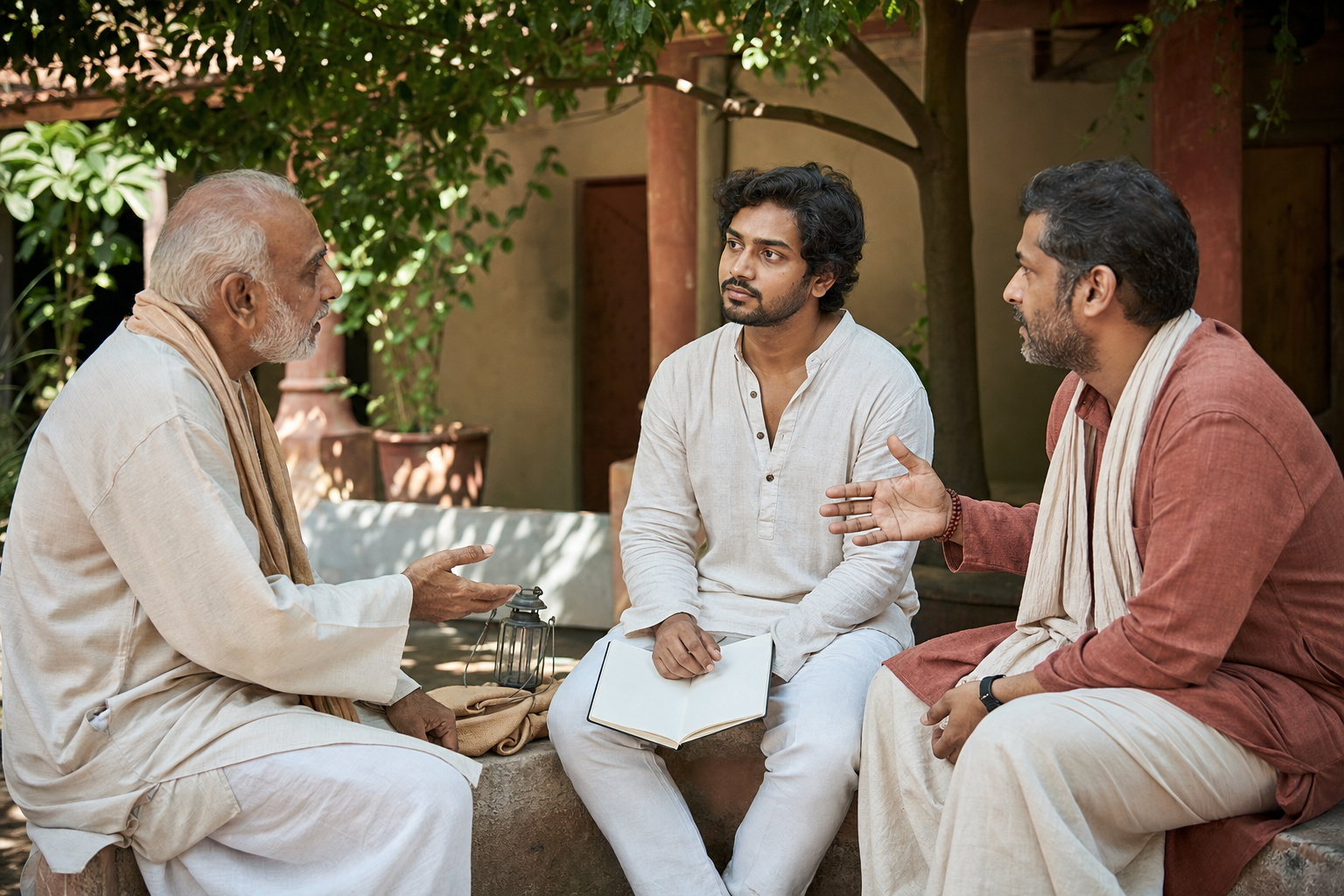
Rāmānanda Rāya and Sārvabhauma Bhaṭṭācārya could counsel restraint because they revered Mahāprabhu’s intention while also understanding its public consequences. That combination matters. Advice from someone who respects only your enthusiasm may become flattery. Advice from someone who sees only problems may become obstruction. Seek a person capable of protecting both the sacred aim and the people affected by it.
A suitable adviser should be able to do the following:
- Explain what is worthy in your aspiration before discussing its risks.
- Distinguish a problem with the goal from a problem with timing or method.
- Understand the relevant practice, place, community, or household obligations.
- Name the likely consequence of proceeding too soon.
- Describe what greater readiness would look like.
Bring the full situation to that conversation. If you omit the dependant who needs care, the host who has not consented, the crowded season, or the duty you hope someone else will quietly absorb, the resulting advice will address an imaginary decision.
Ask three direct questions: What in this desire should be protected? What in the current plan should change? What would make the action timely? These questions turn a vague blessing or prohibition into usable discernment.
If qualified advisers disagree, do not collect opinions until someone endorses the answer you already wanted. Compare their reasons. One may understand the inner discipline while another understands the route, household, or institution. Slow the decision until you can identify the facts behind the disagreement. Submission to counsel does not remove your responsibility for the result.
Make logistics part of the sādhana

It is tempting to regard routes, seasons, lodging, crowd management, and family arrangements as merely administrative. In pilgrimage, however, those conditions shape whether people can remember the sacred purpose, receive darśana with dignity, and avoid placing preventable strain on others.
The third annual journey of the Bengal devotees to Jagannātha Purī included wives and other family members. Their participation shows that a living devotional community cannot plan only for solitary renunciants. Pace, hospitality, safety, household responsibilities, and the needs of different participants belong inside the spiritual plan.
Before committing to a pilgrimage or intensive devotional undertaking, examine the arrangement in concrete terms:
- Daily purpose: Does the schedule leave real space for japa, kīrtana, darśana, study, service, and necessary rest, or does it turn the journey into hurried movement?
- Season and crowd: Will congestion overwhelm the experience or disrupt the surrounding community? Would another time, smaller group, or less public arrival better serve the same intention?
- Route and hospitality: Are transport, stopping places, accommodation, and local support suited to the people actually travelling?
- Household duties: Have affected family members participated in the decision, or are they expected to repair the consequences after it is announced?
- Privacy and publicity: Could attention, status, or the desire to display the journey displace its inner purpose? If so, reduce the audience rather than abandoning the aspiration.
- Return to ordinary duty: Will you come back able to resume your responsibilities, or has the plan treated the journey as though its effects end at the destination?
If an answer exposes a mismatch, alter the design. Change the season, pace, route, group size, companions, or degree of publicity. Prudent adjustment is not lesser bhakti. It is yukta-vairāgya: refusing both careless indulgence and empty renunciation in favour of engagement that serves the devotional aim.
This grammar of restraint is not confined to Gauḍīya Vaiṣṇavism. Buddhist discipline around the rains retreat, Jain care in monastic travel, and Sikh emphasis on ordered participation in sangat and yatra are not identical practices, but each refuses to separate aspiration from responsibility. Across dharmic paths, a boundary can become an expression of reverence when it protects life, community, and the integrity of practice.
Key takeaways for your next spiritual decision
- Protect the sacred goal while remaining willing to revise its timing and form.
- Do not use emotional intensity as the sole evidence of readiness.
- Assess fitness in relation to the particular act, not as a judgment of personal worth.
- Count burdens placed on family, hosts, fellow practitioners, and the public as part of the decision.
- Ask trusted advisers for reasons, consequences, and conditions of readiness, not merely permission.
- If you wait, identify what you will prepare and what change will trigger reconsideration.
Before you book the journey, announce the vow, or accept the responsibility, write down the devotional purpose without naming your preferred method. Then list who will be affected and decide whether to proceed, reshape, or wait. If waiting is wiser, give the longing disciplined work to do. A desire protected from haste need not become colder; it can become clearer, steadier, and more capable of serving the One toward whom it is directed.