

You can be surrounded by affection and still feel that something essential remains unfed. More attention, entertainment, travel, possessions, or social approval may quiet that feeling for a while, but the quiet rarely lasts. The mistake is not that you want love. It is that a finite experience, object, or person has been asked to satisfy a longing larger than it can carry.
If you are wondering what Radha-Krsna bhakti offers beyond beautiful imagery and devotional emotion, the answer is practical: it gives love a lasting center. It also gives you a way to test whether devotion is becoming genuine. The test is not how intensely you feel during worship, but how patiently, truthfully, and generously you treat living beings afterward.
Your heart is not asking for more stimulation
Stimulation, affection, and spiritual fulfillment are not the same experience. Stimulation captures the senses and occupies the mind. Affection creates a meaningful bond with another being. Bhakti directs the heart’s capacity for love toward the Divine Source from whom life, relationship, and the capacity to love arise.
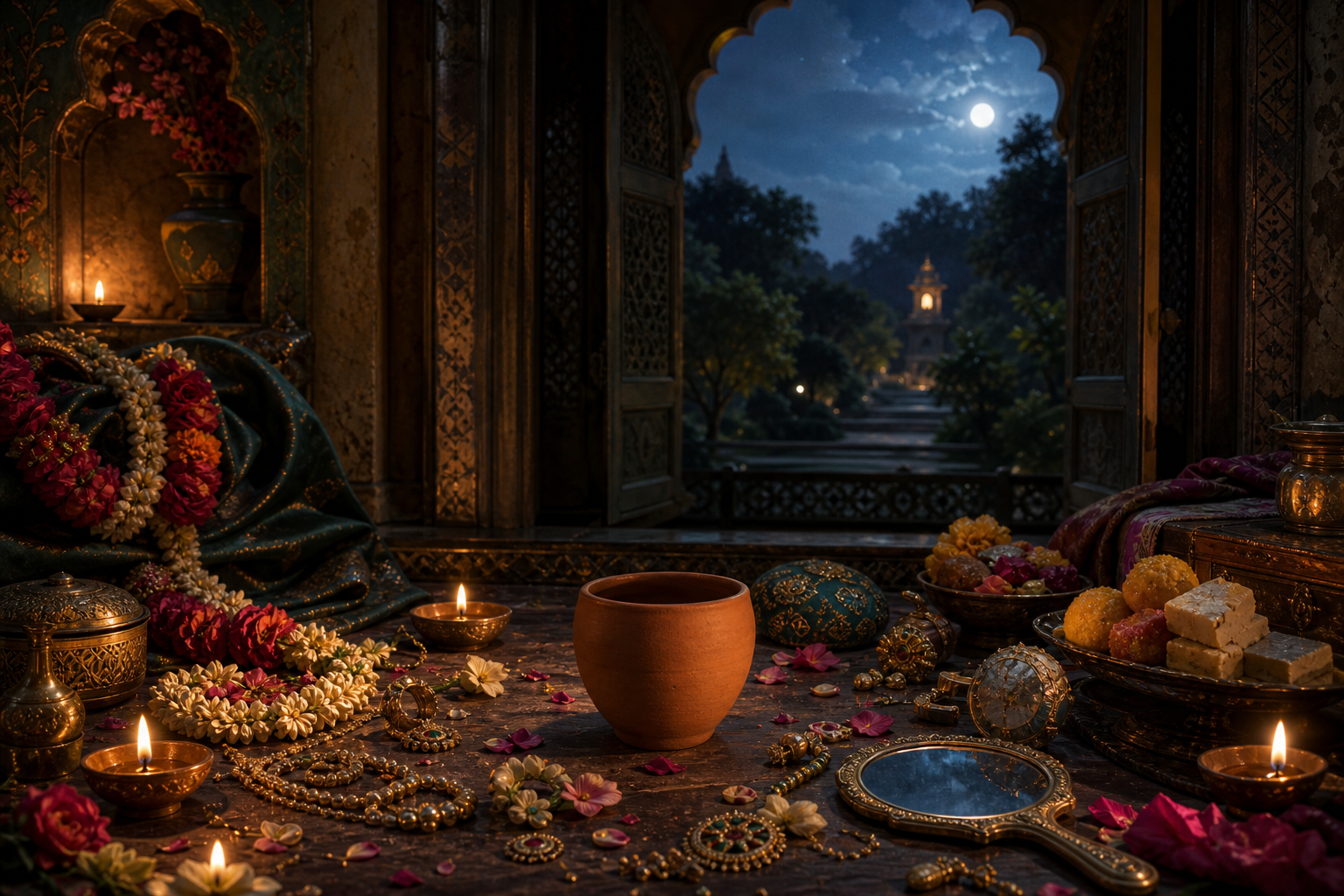
Confusing these experiences creates a predictable cycle. Novelty produces excitement, excitement fades, and the mind searches for its next object. A larger audience, a more expensive possession, an exotic holiday, or another stream of entertainment can intensify sensation without resolving the heart’s deeper thirst. That is why glamour, visibility, and sensory excitement can absorb the mind without fulfilling it.
This does not make pleasure sinful, friendship unimportant, or family affection unreal. It means none of them should be forced to do the work of the Absolute. When you expect another person to complete your being, affection easily becomes pressure: the person must reassure you, agree with you, remain available, and protect your preferred image of yourself. Bhakti loosens that demand by relocating the deepest center of belonging.
The traditional image is simple: water the root and the branches are nourished. In the Vaishnava understanding, Krsna is that root. Love offered to Krsna is therefore not meant to compete with love for a spouse, child, friend, neighbor, colleague, stranger, or animal. Properly cultivated, it gives those relationships a sounder foundation. You no longer approach every branch as if it were responsible for keeping the whole tree alive.
You can notice the difference by asking a direct question after any desired experience: “Has this made me more available to serve, or only more eager for another dose?” The answer is not a final judgment on the experience. It does reveal its direction. Restless consumption keeps returning attention to what you lack. Nourishing love increases your ability to notice what another being needs.
Radha-Krsna reveal love as relation, not possession
Radha-Krsna bhakti places a relationship, the Divine Couple, at the center of contemplation. This matters. The ultimate reality is approached not merely as an impersonal force or a distant ruler, but through loving exchange. Radha and Krsna are remembered together because divine love is not reduced to possession, control, or solitary power.
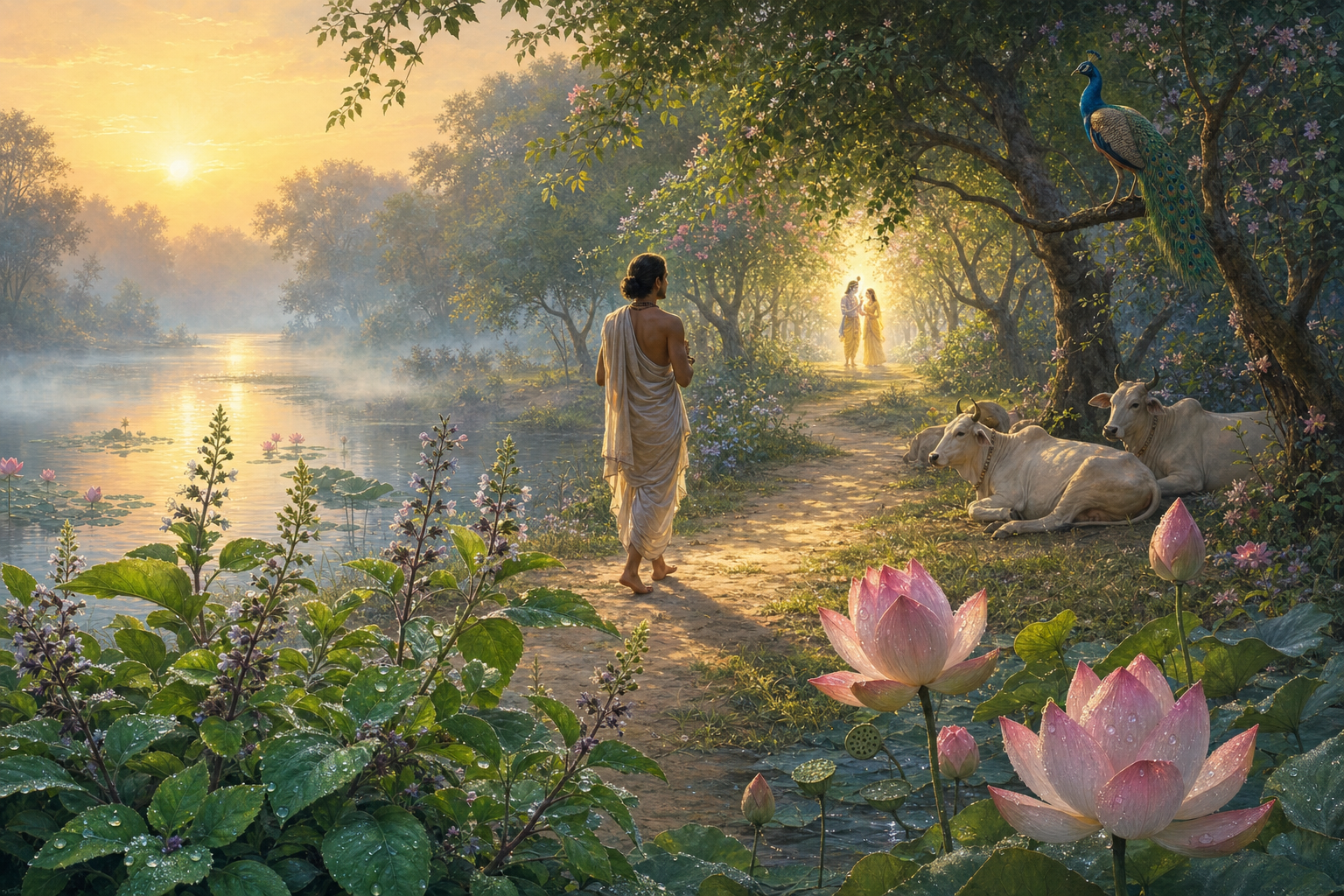
Devotional descriptions present Radha and Krsna as golden and dark splendors moving through Vrindavan’s groves and along the Yamuna. Krsna’s blue-lotus radiance, His flute, Radha’s grace, the forest paths, and the fragrant trees form a language of remembrance. These details are not merely ornament. They give the wandering mind something sacred and relational to behold.
Radha’s place in this vision also changes what fulfillment means. Fulfillment is not the acquisition of a divine object for private enjoyment. It is the purification of love until loving service itself becomes precious. The practitioner learns to ask less often, “What am I receiving?” and more often, “How may my attention, conduct, and affection become an offering?”
This intimate sweetness should not be turned into a sectarian contest. Devotional comparisons between Radha’s attendants and Laksmi in the majesty of Narayana are traditionally clarified as differences of rasa, or modes of loving relationship, rather than rivalry. Majesty and intimacy disclose distinct devotional approaches. Honoring the sweetness of Vrindavan does not require belittling another form of worship.
That distinction gives you a useful safeguard. If attraction to Radha-Krsna makes you more contemptuous of other sincere devotees, you have begun using intimacy as status. If it makes you humbler, more attentive, and less eager to dominate, you are moving closer to its devotional meaning. The sweetness of Vrindavan is not a badge of superiority. It is a demand for finer love.
Make Vrindavan an inner discipline without erasing the place
Vrindavan is both a physical tirtha and a contemplative landscape. Its forests, groves, riverbanks, trees, temples, and pilgrimage paths give embodied form to remembrance. A pilgrim does not encounter an interchangeable backdrop. Vrindavan matters as a sacred place shaped by generations of worship.
At the same time, you do not have to wait for a journey before beginning to train your attention. The vision of Radha and Krsna moving among the groves and along the Yamuna can become an inner orientation wherever you live. Inner Vrindavan does not mean pretending that imagination and pilgrimage are identical. It means refusing to let distance become an excuse for forgetfulness.
A simple practice can connect remembrance with conduct:
- Choose one stable devotional anchor: japa, kirtan, smarana, contemplative study, or seva. If your guru or sampradaya has given you a mantra and method, follow that instruction rather than replacing it with an improvised formula.
- Before beginning, identify the desire, resentment, or worry currently consuming the most attention. Naming it prevents vague practice and shows you what repeatedly pulls the mind away.
- Turn attention toward Radha-Krsna. Recall one coherent Vrindavan image rather than forcing many details at once: the Divine Couple in a grove, Krsna’s flute, the Yamuna’s bank, or the shade of tamala and kadamba trees.
- When the mind wanders, return without dramatizing the distraction. The return is part of abhyasa. It is not evidence that the practice has failed.
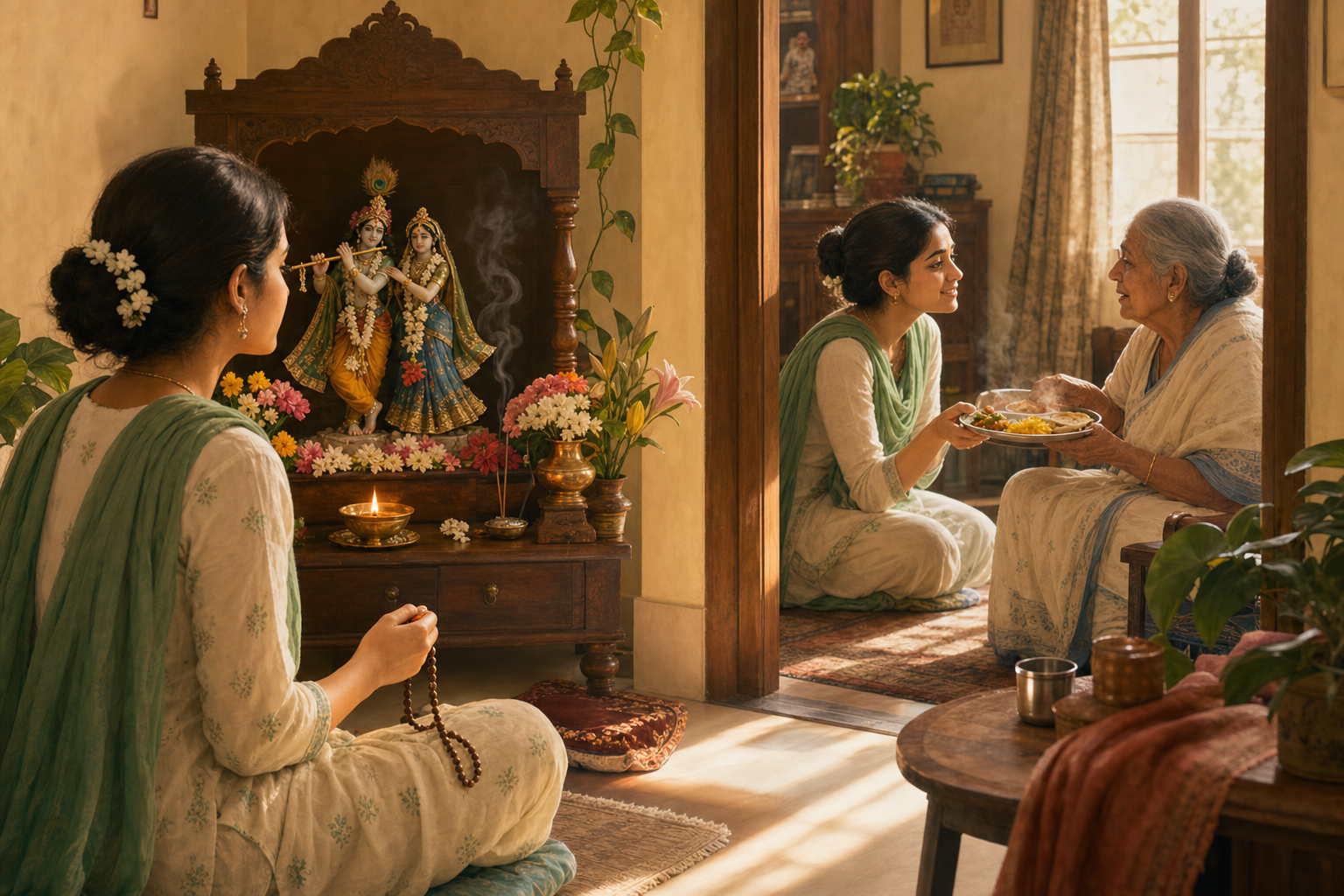
- End by translating remembrance into one definite act of service. Listen without interrupting, keep a neglected promise, offer help without advertising it, or approach a strained relationship without rehearsing how to win.
This sequence prevents two common distortions. The first is aesthetic consumption: enjoying sacred imagery while leaving one’s habits untouched. The second is moralism without remembrance: trying to manufacture good behavior through willpower while the heart remains centered on ego. Bhakti joins the inward and outward movements. You remember the Divine Couple, and that remembrance changes how you meet the next living being.
If you do travel to Vrindavan, carry the same discipline into the pilgrimage. Let walking support smarana instead of treating every sacred view as material to collect. A place associated with divine play invites attention, humility, and service. The most revealing question after returning is not how many sites you saw, but what kind of sight you brought home.
Judge devotion by the love it releases into daily life
Devotional feeling can be powerful, but intensity alone cannot tell you whether love is maturing. Music, crowds, beauty, memory, and expectation can all heighten emotion. The more reliable evidence appears later, especially when another person is inconvenient, critical, slow, or unable to reward you.
Look first at conflict. Mature remembrance does not mean that you never disagree. It should make disagreement less dependent on humiliation, retaliation, and the need to have the last word. If you can preserve another person’s dignity while speaking truthfully, devotion is entering conduct.
Look next at service. Bhakti becomes easier to evaluate when no one is watching. An unnoticed task, a fulfilled duty, patient care for a dependent being, or help given without constructing an identity around generosity reveals more than a public display of spirituality. Seva is not an accessory to remembrance. It is one way remembrance becomes visible.
Then examine the range of your concern. Love centered on the Divine is expected to expand toward family, neighbors, colleagues, community, and non-human beings. Compassion, patience, empathy, and generosity are practical fruits of a heart anchored beyond restless desire. If your circle of care keeps shrinking while your devotional vocabulary grows, the imbalance deserves attention.
This ethical test also reveals a meaningful resonance across Dharmic traditions without collapsing their theological differences. Hindu bhakti directs love toward Ishvara. Buddhism cultivates karuna while loosening craving. Jain dharma joins ahimsa with vigilant carefulness. Sikh dharma connects remembrance of the Divine Name with humility and seva. These are not interchangeable doctrines, but they converge in refusing to separate inner discipline from the treatment of living beings.
Radha-Krsna bhakti therefore does not ask you to withdraw love from the world. It asks you to stop making the world bear the weight of being your ultimate source. Once that weight is removed, a person can be loved as a person rather than used as an answer to metaphysical hunger. Care becomes less possessive because its center is no longer another finite ego.
Key takeaways: begin where love is already being tested
- The heart’s longing is not cured by multiplying stimulation; novelty occupies attention but cannot become its permanent center.
- Radha-Krsna bhakti directs love toward the Divine Source so that affection can flow outward without asking finite relationships to provide infinite completion.
- Vrindavan’s sacred imagery supports smarana, but remembrance should lead to disciplined conduct rather than remain an aesthetic mood.
- Distinct devotional rasas need not become rival claims. Intimacy with Radha-Krsna should deepen humility, not spiritual status-seeking.
- The clearest fruits of practice are patience in conflict, service without display, wider compassion, and greater care for human and non-human beings.
Begin with the relationship in which your love is already under pressure. Bring that person or situation to mind before your regular practice, but do not spend the practice prosecuting your case. Return attention to Radha-Krsna. Then choose one action that relinquishes control without abandoning truth: listen fully, keep your word, apologize without self-defense, or perform needed service quietly.
Do not measure the practice by whether it produces an elevated mood. Measure what you carry into the next encounter. Each time remembrance makes you a little less possessive and a little more capable of service, love is moving toward fulfillment.
References
- Dandavats – Vrindavan’s Enchanted Forest: A Contemplative Journey into Radha-Krsna’s Divine Love
- Dandavats – Beyond Glamour and Noise: How Bhakti Love of God Satisfies the Heart’s Deep Thirst
