
Hindu unity becomes easier to understand when it is separated from the demand for uniformity. The image of differently colored cows producing milk of a shared nature offers a useful starting point: visible distinctions remain real, yet they do not exhaust what the different forms have in common.
The supplied DharmaRenaissance article applies this insight to deities, philosophies, disciplines and communities. Read together, its examples show that Hindu unity is neither a claim that all doctrines are identical nor a license to ignore disagreement. It is a framework for sustaining belonging across meaningful differences.
What the cows-and-milk metaphor actually claims
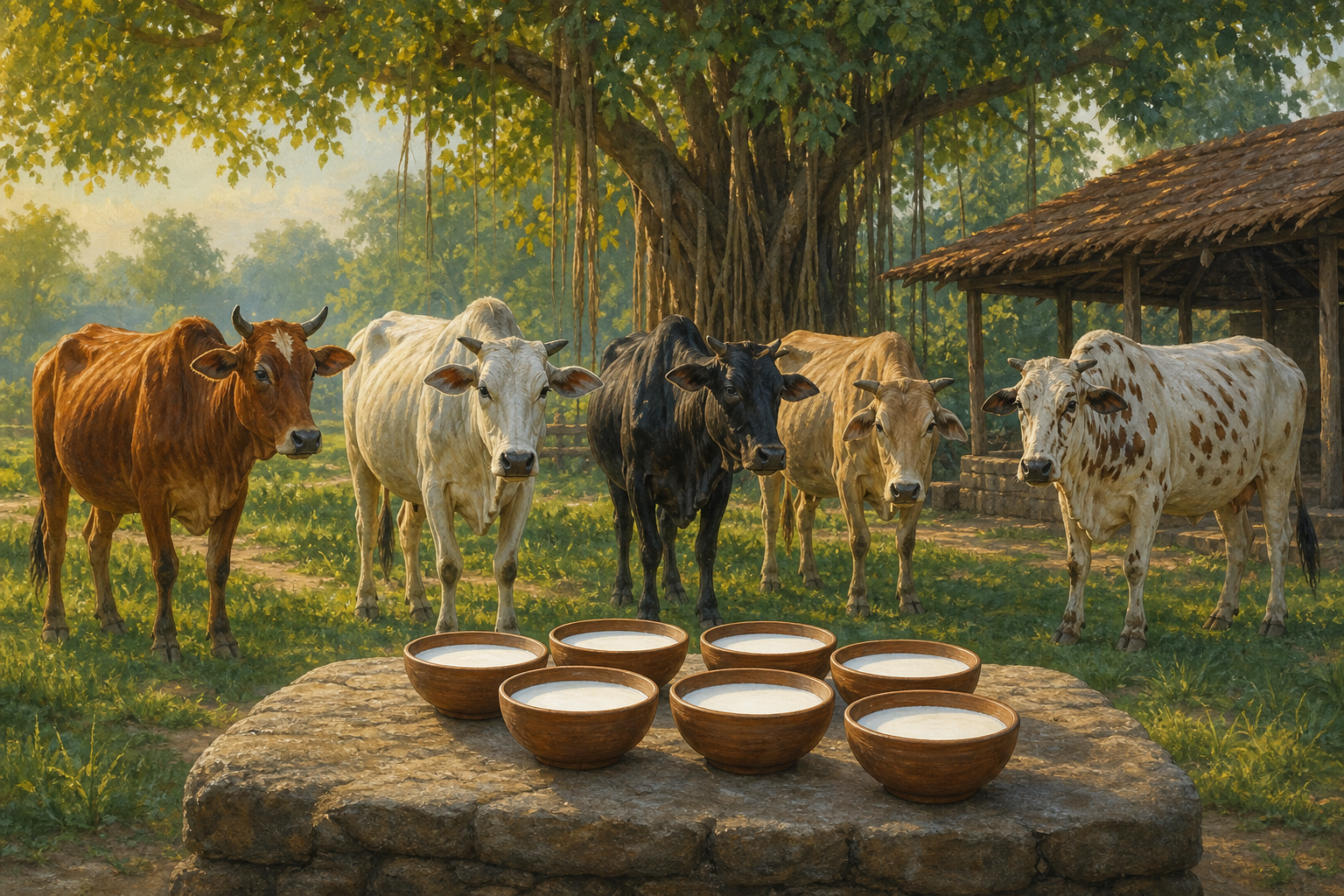
The metaphor begins with two observations rather than one. Cows differ in color and appearance, while their milk remains recognizably nourishing. Difference is therefore acknowledged before commonality is identified. The comparison would lose its force if the cows had to look alike, just as religious unity becomes empty when it depends on making every practice or belief identical.
According to the source article, this kind of everyday image translates an abstract spiritual intuition into familiar experience. Hindu teachings about ultimate reality, the self and dharma can be difficult to approach through philosophical terminology alone. An image drawn from care, food and household life makes the central distinction more accessible: outward form matters, but it is not necessarily the deepest measure of value.
The source also notes that milk can vary somewhat with breed, diet, fat content and other conditions even while remaining identifiable as milk. That qualification sharpens the analogy. The unity being proposed is not mechanical sameness; it is continuity of nature amid variation. Applied to Hindu life, the metaphor invites a search for the principles that connect traditions without pretending that their differences are imaginary.
Many paths express unity without using one theology

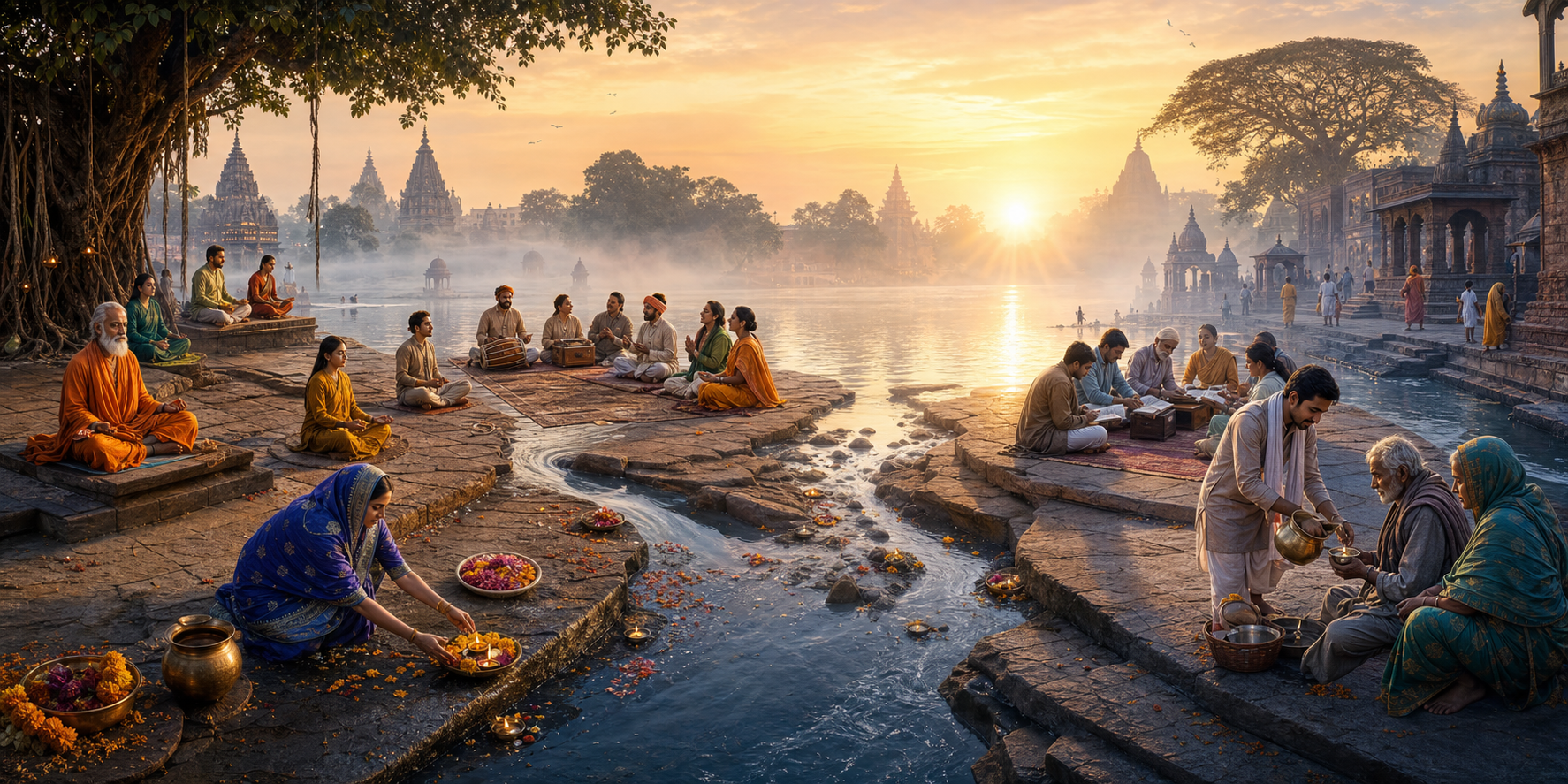
The DharmaRenaissance account places bhakti, jnana, karma, yoga, mantra, temple worship, meditation, household duty, renunciation and philosophical inquiry within Hinduism’s varied spiritual landscape. These approaches do not merely use different techniques. They can begin from different temperaments, understand the human problem differently and emphasize devotion, knowledge, action or disciplined practice in different proportions.
The idea of Ishta, or a chosen form through which a person approaches the Divine, gives this plurality a practical shape. As the source explains, devotees may orient themselves toward Shiva, Vishnu, Devi, Ganesha, Surya, Subrahmanya or a formless absolute. Such choices may reflect lineage, family practice, regional culture and individual disposition. Unity resides not in selecting the same form, but in recognizing sincere spiritual orientation across forms.
Philosophical diversity makes the same point at another level. The source highlights Advaita Vedanta’s account of Brahman as ultimate reality, while observing that other Hindu schools give greater weight to divine personality, devotion, enduring difference, qualified unity or cosmic order. These positions cannot be collapsed into a single proposition without misrepresenting them. What connects them is a shared civilizational field of inquiry in which the visible world is not treated as a collection of unrelated surfaces.
Unity sets conditions for disagreement; it does not end debate
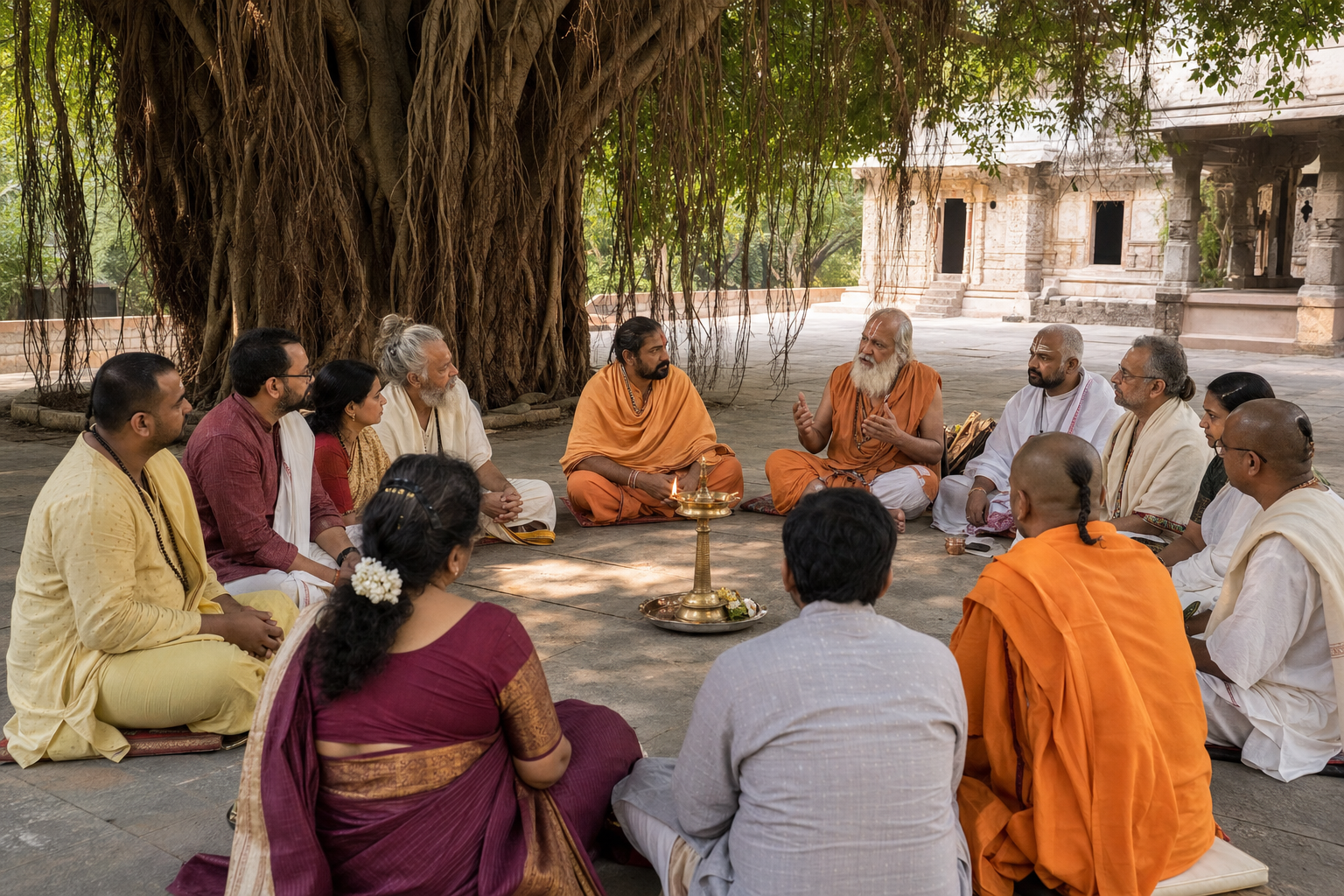
A serious account of Hindu unity must leave room for contradiction. The source points to Vedanta, Samkhya, Yoga, Nyaya, Mimamsa, Shaiva, Shakta and Vaishnava traditions as participants in substantial philosophical disagreement. Their arguments concern reality, knowledge, liberation, worship and interpretation; they are not merely different labels for one undifferentiated teaching.
The more defensible principle is disciplined plurality. A tradition can defend its conclusions, test arguments and preserve its distinctive practices without treating every other path with contempt. This distinguishes conviction from hostility. It also avoids the opposite error of calling every claim equivalent simply because several claims coexist.
The source associates this orientation with the Vedic formulation commonly rendered as truth being one while sages name it in many ways. In its account, the formulation does not eliminate standards of reasoning or practice. It recognizes that access to the sacred is mediated by language, culture, temperament, discipline and degree of realization. Pluralism, on this reading, calls for intellectual humility rather than intellectual indifference.
The practical test of unity is ethical conduct
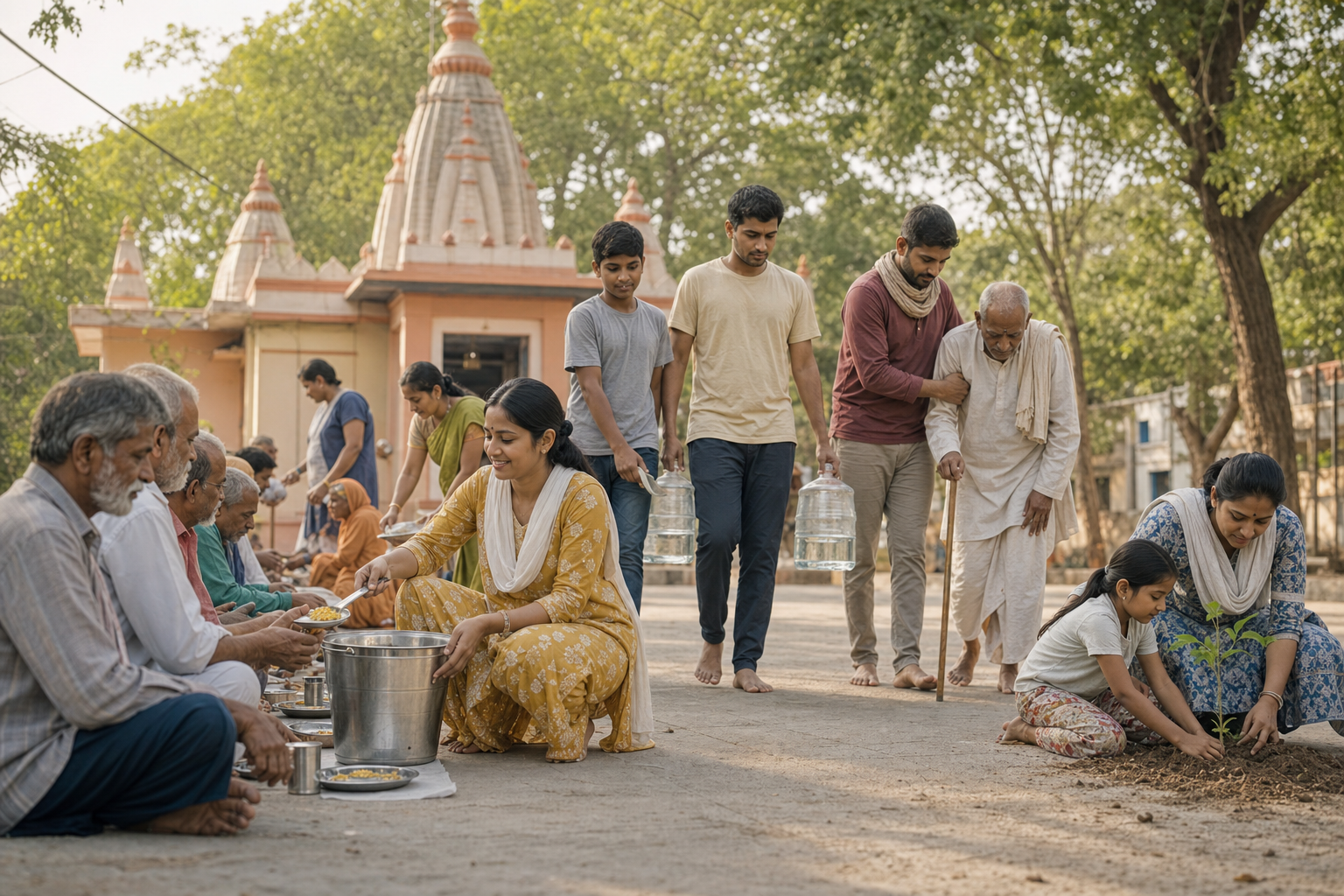
The metaphor becomes socially demanding when applied beyond theology. The source identifies differences of caste background, region, language, ritual custom, dress, food habit, profession, education and family structure as possible grounds for pride or exclusion. Unity beneath diversity asks whether those distinctions are being ordered by dignity, restraint, compassion and mutual responsibility, or hardened into claims of superior human worth.
This changes unity from a ceremonial slogan into a discipline of character. The article connects it with control of ego, care in speech, openness to learning and the ability to honor one path without erasing another. Communities demonstrate unity not simply by affirming a shared identity, but by refusing to convert internal variety into humiliation, exclusion or spiritual isolation.
The source also draws careful parallels with other Dharmic traditions while stating that their doctrines are not identical. Jain Anekantavada is presented as a reminder that a complex reality cannot be exhausted by one partial viewpoint. Buddhist interdependence supplies an ethical warning against imagining communities as isolated from one another’s suffering. Sikh affirmation of Ik Onkar, together with its emphasis on seva, remembrance, courage and equality, provides another expression of oneness joined to action. These comparisons illuminate related ethical intuitions; they do not absorb Jainism, Buddhism or Sikhism into Hindu theology.
The result is a layered understanding of unity. At the spiritual level, it looks beneath names and forms. At the philosophical level, it permits rigorous disagreement. At the social level, it demands that inherited distinctions remain subordinate to human dignity and moral responsibility.
Key takeaways
- Hindu unity concerns shared orientation and deeper continuity, not identical appearances, practices or doctrines.
- Different deities and disciplines can serve different temperaments without making every theological claim interchangeable.
- Debate belongs within pluralism when conviction is joined to restraint, intellectual humility and respect.
- Unity becomes credible when it shapes speech, relationships and the treatment of people across social differences.
A durable Hindu unity will therefore depend on more than celebrating variety. It will require institutions, teachers, families and practitioners to preserve distinct inheritances while cultivating the ethical habits that allow those inheritances to share a civilizational home.