

If you are the person your family or sangha turns to when a difficult question arises, the hardest part is rarely remembering a principle. It is deciding whether that principle requires restraint, permits personal choice, governs only a particular ritual, or condemns the way someone is being treated.
You do not have to choose between fidelity to dharma and compassion for the person in front of you. A sound Jain and Dharmic response begins by separating spiritual worth from conduct, conduct from identity, and religious discipline from inherited social custom. Those distinctions give you a practical way to address gender equality, LGBTQ inclusion, menstruation and abortion without pretending that every question has the same answer.
Begin with the distinctions that moral arguments usually miss
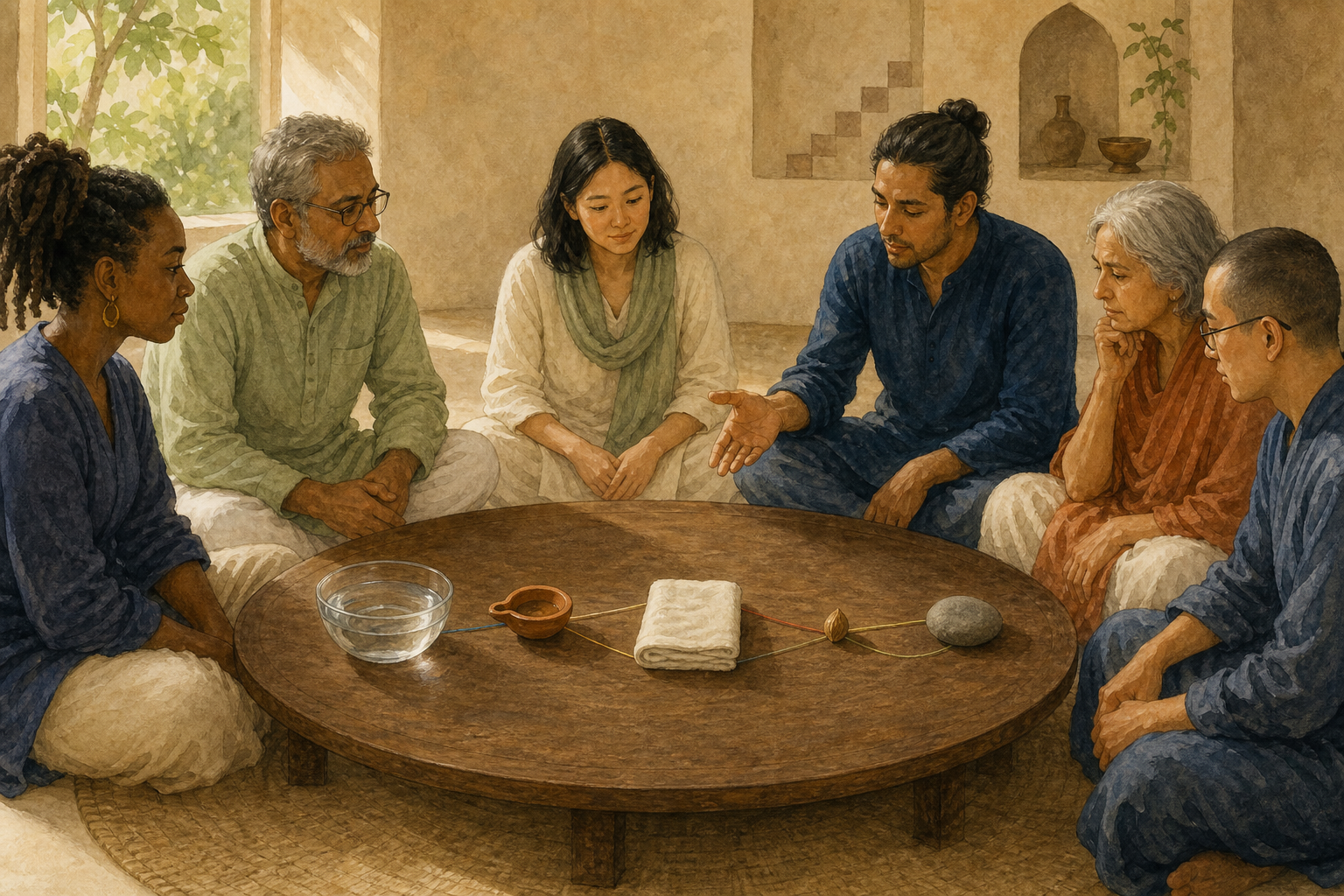
Four ideas do most of the ethical work in a Jain approach. Ahimsa asks what physical, verbal, emotional or social injury a choice may cause. Satya requires an honest account of the situation rather than one shaped by fear or stereotype. Anekantavada reminds you that your first description may capture only one side of a complicated reality. Aparigraha asks whether attachment to status, control, reputation or a fixed identity is distorting judgment.
These ideas are complementary, but they are not interchangeable. Anekantavada is not the claim that every opinion is equally true. It is a discipline of intellectual humility. It asks you to examine other standpoints before acting, while ahimsa continues to place a real moral limit on cruelty, coercion and injury. Compassion does not make every action harmless, and a rule does not become compassionate merely because it is old.
Key takeaways
- Spiritual worth: Ask whether the dispute concerns the dignity and spiritual potential of a person. Bodily sex, gender identity and sexual orientation should not be used to rank souls.
- Ethical conduct: Ask what someone is choosing and whether that choice involves harm, dishonesty, coercion, possessiveness or irresponsible desire. Apply the same standard regardless of identity.
- Ritual or monastic discipline: Determine whether a rule belongs to an ascetic order, a particular vrata, a temple practice or ordinary lay life. A narrowly defined discipline should not silently become a judgment on an entire class of people.
- Custom and practical care: Identify whether the practice is actually a theological requirement, a local convention, or advice once associated with rest, hygiene or social conditions. Each requires a different response.
This separation matters because a tradition can affirm equal spiritual dignity while prescribing different disciplines for different vows. Conversely, a community can repeat the language of equality while denying education, participation or safety in practice. You have to examine both doctrine and consequences.
Gender and sexuality: judge conduct without grading souls
The Jain goal of moksha is an emancipation from karmic bondage, not the perfection of a social identity. The ethical center of the tradition therefore places spiritual progress in self-restraint, insight and conduct rather than in a person’s gender. The fourfold sangha itself includes sadhus, sadhvis, shravakas and shravikas: monks, nuns, laymen and laywomen all belong to the religious community.
That does not erase a real doctrinal disagreement. Shvetambara traditions affirm that a woman can attain kevala-jnana and moksha in her present female embodiment. Classical Digambara reasoning connects final liberation with ascetic conditions that include nudity and holds that a woman must first be reborn male. The disagreement concerns the conditions of advanced monastic practice; it should be stated accurately rather than hidden behind a vague claim that every Jain school teaches exactly the same thing.
It also should not be expanded beyond its scope. A dispute about the prerequisites for final liberation does not justify denying laywomen access to samayik, pratikraman, meditation, vrata observance, scriptural learning or seva. Women already form an indispensable part of Jain religious life, including teaching younger practitioners, leading study and sustaining charitable work. If your community limits one of these roles, ask for the exact spiritual or disciplinary reason. Social habit is not an adequate answer.
The same distinction between identity and conduct is essential when a relative tells you that they are lesbian, gay, bisexual or transgender. An orientation or gender identity is not, by itself, an act of violence, deception or possessiveness. Treating the person as defective, humiliating them, excluding them from family rites or allowing hostile speech against them can produce precisely the kinds of injury that ahimsa governs in thought, word and deed. A Jain response centered on maitri, satya and anekantavada therefore begins with equal human dignity and honest attention to lived reality.
Acceptance does not require abandoning sexual ethics. It requires applying ethical standards consistently. Restraint, truthfulness, responsibility and non-harm cannot mean one thing for a heterosexual family member and another for an LGBTQ family member. If conduct is the concern, name the conduct. Do not turn a concern about conduct into a verdict on the person’s spiritual worth.
When someone comes out to you, your first response sets the conditions for every later conversation. Keep the initial disclosure private unless immediate safety requires outside help. Make clear that belonging at home is not conditional. Ask what support the person wants instead of beginning with an interrogation. Stop mocking language in the household, and do not exclude the person from worship, celebrations or seva merely because of identity. If your family has caused harm in the past, pratikraman gives you a disciplined way to acknowledge it, seek forgiveness and change conduct; it should not be used to demand repentance from the person who was mistreated.
Menstruation: distinguish bodily care from moral stigma

A menstruating woman may want to know something very concrete: Can I enter the temple, perform puja or continue my ordinary sadhana? The first honest answer is that practice varies across Dharmic communities. The second is that menstruation is a physiological process, not evidence of moral failure or diminished spiritual worth.
Some Hindu customs have treated a person as temporarily unfit for particular rites, while other temples and lineages allow ordinary worship and darshan. Ritual fitness and moral purity are not the same category. A temporary parameter attached to a defined vrata or ritual does not establish that women are spiritually inferior. Problems begin when a limited observance becomes a blanket ban, a source of public embarrassment or a lesson to girls that their bodies make them unworthy.
Within Jain households, advice to rest during physically difficult menstrual days can be understood as care when it remains voluntary and free of stigma. It becomes something else when rest is enforced as segregation or when a woman is told that ordinary remembrance, reflection and devotion are unavailable to her. Jain emphasis on inner purity and equanimity offers no reason to treat menstruation as a moral stain. Buddhist lay communities generally permit temple visits, chanting and dana during menstruation, while the Guru Granth Sahib rejects the idea that a bodily process makes a person spiritually impure. Sikh women participate in sangat, seva and kirtan throughout the menstrual cycle. These different practices converge on dignity, personal agency and freedom from shame, even though their ritual cultures are not identical.
If you are responsible for a household or temple policy, ask five precise questions before defending a restriction:
- Is this a rule of a named ritual or vrata, a temple-specific convention, general household advice, or simply something people remember elders doing?
- Does the rule describe temporary ritual conditions, or does its language imply that the woman herself is dirty, sinful or less worthy?
- Can a person choose rest according to discomfort and fatigue, or is isolation imposed regardless of her condition?
- Has the community provided clean, private facilities and menstrual supplies so participation is practically possible?
- Can the policy be explained without shaming girls, interrogating women or encouraging intrusive enforcement?
If the answers reveal only inherited stigma, revise the practice. If a specific ritual parameter remains, state its exact scope, its rationale and the forms of devotion that remain open. Do not use a narrow rule to deny darshan, learning or community belonging. Pain, fatigue or unusually difficult symptoms are health matters, not tests of devotion; a qualified medical professional, rather than a temple committee, should address individual medical concerns.
Abortion: hold the Jain presumption and the human situation together

Abortion differs from disputes about identity or temple participation because classical Jain ethics understands a jiva to be present from conception. On that account, abortion involves harm to embodied life and is generally prohibited. The mahavrata of ahimsa binds ascetics in its most rigorous form, while the ahimsa anuvrat asks laypeople to reduce injury within the conditions of household life. This is a serious moral presumption, not merely a cultural discomfort that can be dismissed by invoking personal preference.
Anekantavada does not cancel that presumption. Its role is to prevent a morally serious situation from being described carelessly. It asks you to understand the medical facts, the people affected, the available alternatives, the likely harms and the limits of your own knowledge before delivering judgment. Compassionate deliberation does not make harm disappear; it changes how responsibly you perceive the situation and how you treat the person facing it.
The most practical Jain response begins before a crisis. Responsible family planning, restraint in intimate life and contraception understood not to act after conception can reduce the likelihood of an abortion dilemma. Many Jain families connect such planning with brahmacharya anuvrat, foresight and the prevention of harm. If the ethical acceptability of a contraceptive method depends on how it works, do not rely on a slogan or product label. Ask a qualified clinician to explain its mechanism and suitability, then consider that information alongside your religious commitments.
When a pregnancy decision is already urgent, general principles cannot determine an individual’s medical risk. Seek qualified medical care promptly, especially when there is an immediate health concern. A trusted Jain teacher can clarify the discipline of a particular lineage, but religious counsel cannot replace patient-specific medical assessment; a clinician can explain medical options, but cannot make the person’s religious judgment for them. Keep the matter private, resist public moral theatre and do not let debate delay necessary care.
After a difficult decision, samayik and pratikraman can support honest reflection, remorse where the person believes harm occurred, and recommitment to wiser conduct. They should not become instruments of humiliation. Family members can uphold a demanding ethic of life while refusing gossip, abandonment and self-righteousness. That combination is not moral weakness. It is the difference between treating ahimsa as a complete discipline and reducing it to condemnation of one act by one person.
Hindu, Buddhist, Jain and Sikh traditions share moral languages of compassion, restraint, responsibility and reverence for life, but shared values do not guarantee one identical rule for every reproductive case. Dharmic unity is strongest when it supports careful dialogue without erasing doctrinal differences.
Turn principles into a decision your family can defend
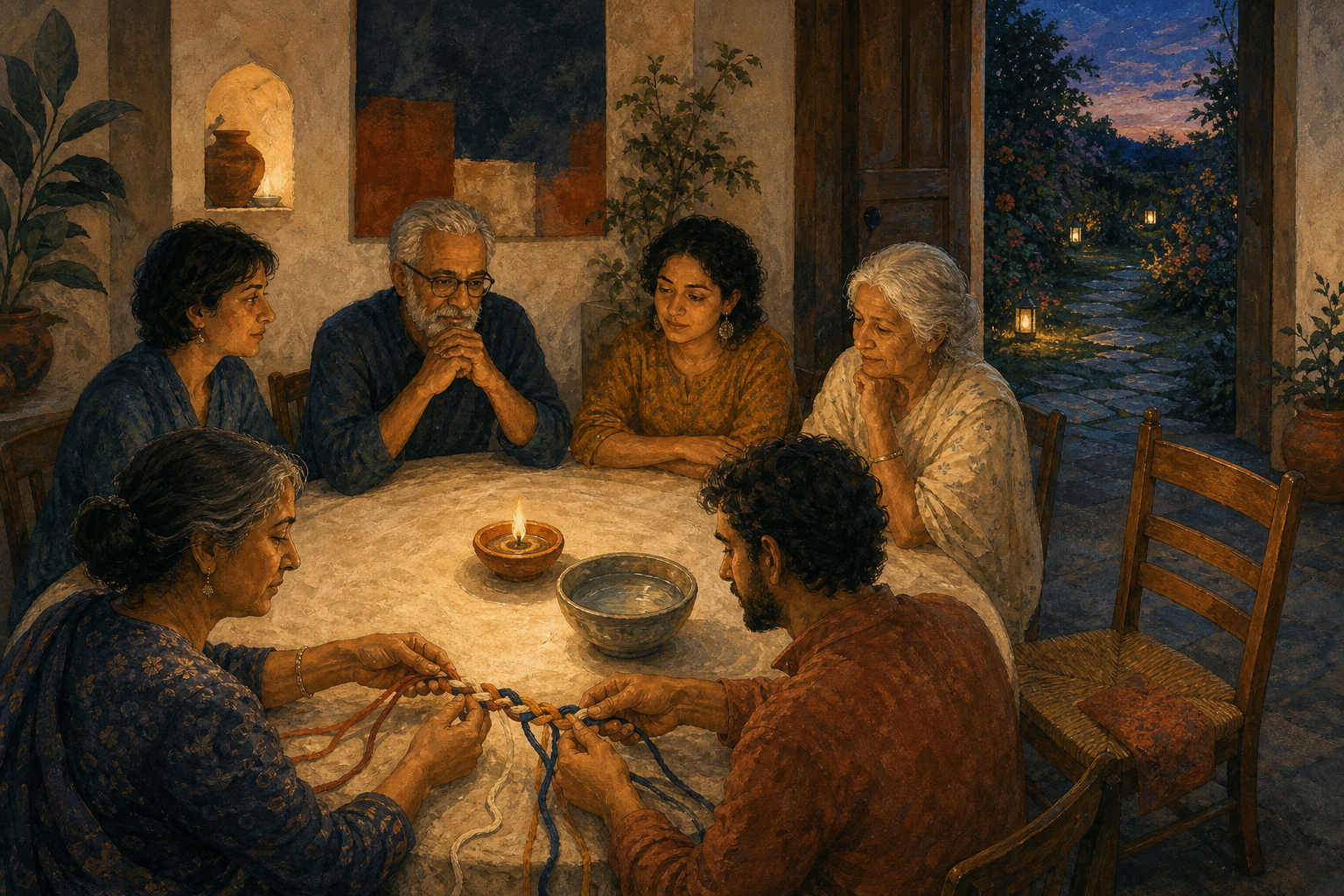
When the next disagreement arrives, do not begin with the broad question, What does dharma say about people like this? That wording has already turned a person into a category. Use a decision process that makes the rule, its scope and its consequences visible.
- Name the actual decision. Are you deciding spiritual status, access to worship, eligibility for a role, the ethics of conduct, observance of a vrata, or a time-sensitive medical choice? Do not answer one question with a rule meant for another.
- Locate the rule. Establish whether it belongs to ascetic discipline, lay vows, a particular sect, one temple, family custom or practical health advice. State internal disagreements where they exist.
- Map the harms. Include physical injury, coercion, psychological distress, public humiliation, hostile speech, family exclusion and the harm that the religious rule itself is intended to prevent.
- Test for consistency. Ask whether you would apply the same expectations of honesty, restraint, responsibility and non-harm to a person of another gender or orientation.
- Choose the narrowest faithful response. If a precise ritual condition is genuinely at issue, do not inflate it into a verdict on spiritual worth or permanent community standing.
- Leave room for correction. Samayik, svadhyaya and pratikraman allow a family or institution to notice bias, learn, acknowledge injury and revise its conduct without pretending that tradition has no ethical boundaries.
This process produces concrete answers. A menstruating daughter is not to be called impure; any specific ritual rule must be identified and explained without denying her dignity. An LGBTQ relative retains an equal place in the family and sangha; the same standards of conduct apply to everyone, and stigmatizing speech must stop. A disagreement about women’s liberation should acknowledge the Shvetambara and Digambara positions without using an ascetic dispute to deny laywomen education or seva. A pregnancy crisis requires prompt medical facts, serious religious discernment and privacy rather than a public verdict.
A sangha can make these commitments operational. Put eligibility rules in writing. Distinguish monastic requirements from lay participation. Train teachers, priests and volunteers not to use shaming language. Give women equal access to study and visible service. State that LGBTQ people are not to be mocked or excluded. Provide usable menstrual facilities. Create a confidential way to report mistreatment, and review any rule whose practical effect contradicts its stated ethical purpose.
At your next family or committee meeting, choose one disputed rule and write down its purpose, authority, scope and foreseeable harms. If no one can explain the rule without declaring a class of people spiritually inferior, that is the point to pause and reform it. If a genuine discipline remains, practice it precisely, without adding contempt. That is how ahimsa becomes more than a revered word: it becomes the standard by which a Dharmic community treats the person standing before it.
References
- DharmaRenaissance Blog – Jainism’s Proven Insights on Gender Equality: Discover an Anekantavada-Inspired Path to Liberation
- DharmaRenaissance Blog – Complete, Evidence-Based Guide: Menstruation, Rituals, and Temple Access in Dharmic Traditions
- DharmaRenaissance Blog – Jainism’s Essential View on Abortion: Discover Ahimsa, Anekantavada, and Ethical Conduct
- DharmaRenaissance Blog – Essential Jain Breakthrough: Discover Ahimsa and Anekantvad to Embrace LGBTQ Equality
