
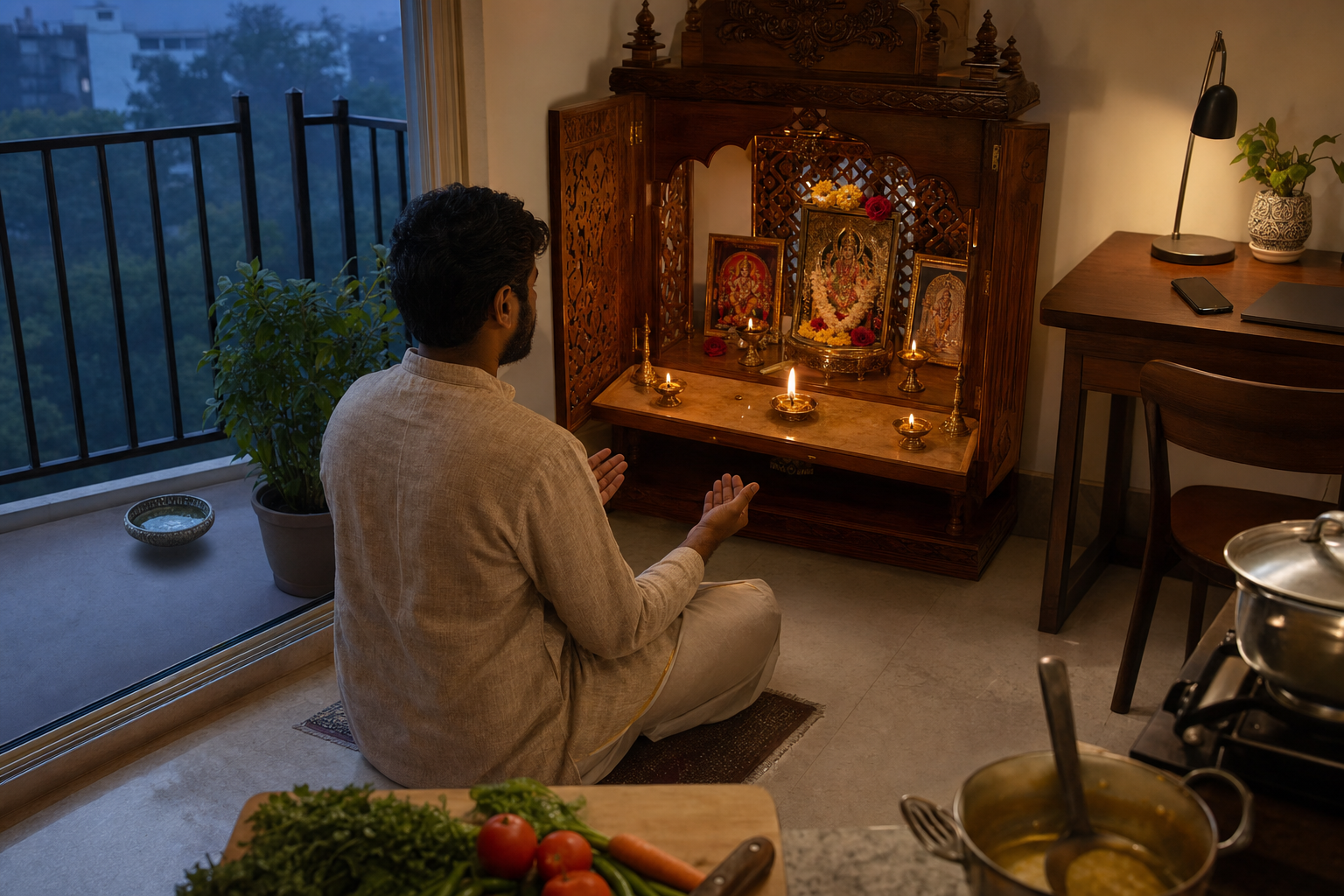
Devotion is more than an emotion felt during prayer. It becomes a spiritual path when attention, conduct, relationships, and the sense of self are all gradually oriented toward the Supreme.
A brief teaching reported by Hindu Blog identifies five requisites for such devotion: undivided attention to the Supreme, freedom from domination by opposites, mastery of mind and senses, goodwill toward all beings, and surrender to Bhagavan. Read together, these are not isolated virtues but parts of one coherent discipline.
Devotion must gather the scattered mind
An undivided mind does not necessarily mean that a devotee abandons family, work, study, or social responsibility. It means that these activities cease to compete with the highest spiritual orientation. Remembrance of the Divine becomes the center that gives ordinary duties their direction.
This distinction protects bhakti from becoming a passing mood. Ritual, chanting, meditation, service, and study may support devotion, but their deeper purpose is to reduce inner fragmentation. A person may perform many sacred acts while remaining driven by resentment, vanity, or distraction. One-pointed devotion asks whether the mind is actually becoming steadier and the heart more transparent.
Equanimity prevents circumstances from ruling the heart
The source places unusual emphasis on indifference to pairs such as honor and dishonor, friendship and hostility, heat and cold, and pleasure and pain. In this context, indifference is best understood as freedom from compulsive reaction. It does not require emotional numbness, nor does it erase the need to distinguish dharma from adharma.
Praise can inflate the ego, while criticism can provoke anger or despair. Comfort can encourage attachment, while discomfort can produce bitterness. Equanimity allows a devotee to respond according to principle rather than impulse. Pleasure may be received without clinging, and pain may be endured without allowing it to define the whole of consciousness.
Inner restraint should mature into compassion
Control of the mind and senses is not merely the suppression of desire. It is the capacity to notice an impulse without automatically obeying it. The senses provide experience, and the mind interprets it; disciplined devotion places both under thoughtful guidance. This makes restraint a form of freedom rather than self-punishment.
The ethical test of that discipline is conduct toward living beings. The source joins freedom from attachment with freedom from malice. Here, non-attachment need not mean coldness or withdrawal from loving relationships. It means caring without possessiveness, and opposing harmful conduct without cultivating hatred toward the person.
This union of disciplined awareness and concern for life also reveals a broad Dharmic kinship. Hindu paths express it through bhakti, self-mastery, and reverence for the Divine; Buddhist traditions cultivate freedom from reactive grasping; Jain thought gives central importance to non-harm and non-attachment; and Sikh spirituality joins remembrance with humble service. Their teachings are not interchangeable, yet they show how inner transformation and ethical responsibility can reinforce one another.
Key takeaways
- Undivided devotion: Let remembrance of the Supreme organize the rest of life.
- Equanimity: Do not allow praise, blame, pleasure, or pain to dictate conduct.
- Self-mastery: Train the mind and senses so that impulses do not become commands.
- Goodwill: Replace possessiveness and malice with clear, compassionate regard for beings.
- Surrender: Relinquish the ego’s claim to be the sole center and controller of life.
Surrender gives every discipline its purpose
The final requisite, complete surrender at the feet of Bhagavan, brings the others into focus. Without surrender, concentration can become pride, restraint can become harshness, and detachment can become aloofness. Surrender turns spiritual discipline away from self-glorification and toward trust, humility, and alignment with the Divine.
Such surrender should not be confused with fatalism. A devotee still acts, exercises discernment, accepts responsibility, and serves others. What is surrendered is the insistence that personal preference, status, and control must prevail. Devotion then becomes visible not only in worship but also in steadiness under pressure, restraint in action, and goodwill across differences.
The enduring task is therefore practical: to let every act of remembrance weaken self-centeredness and deepen responsible care. When devotion produces that movement, it can strengthen both the individual seeker and the wider unity of the Dharmic family.
Inspired by this post on Hindu Blog.
