
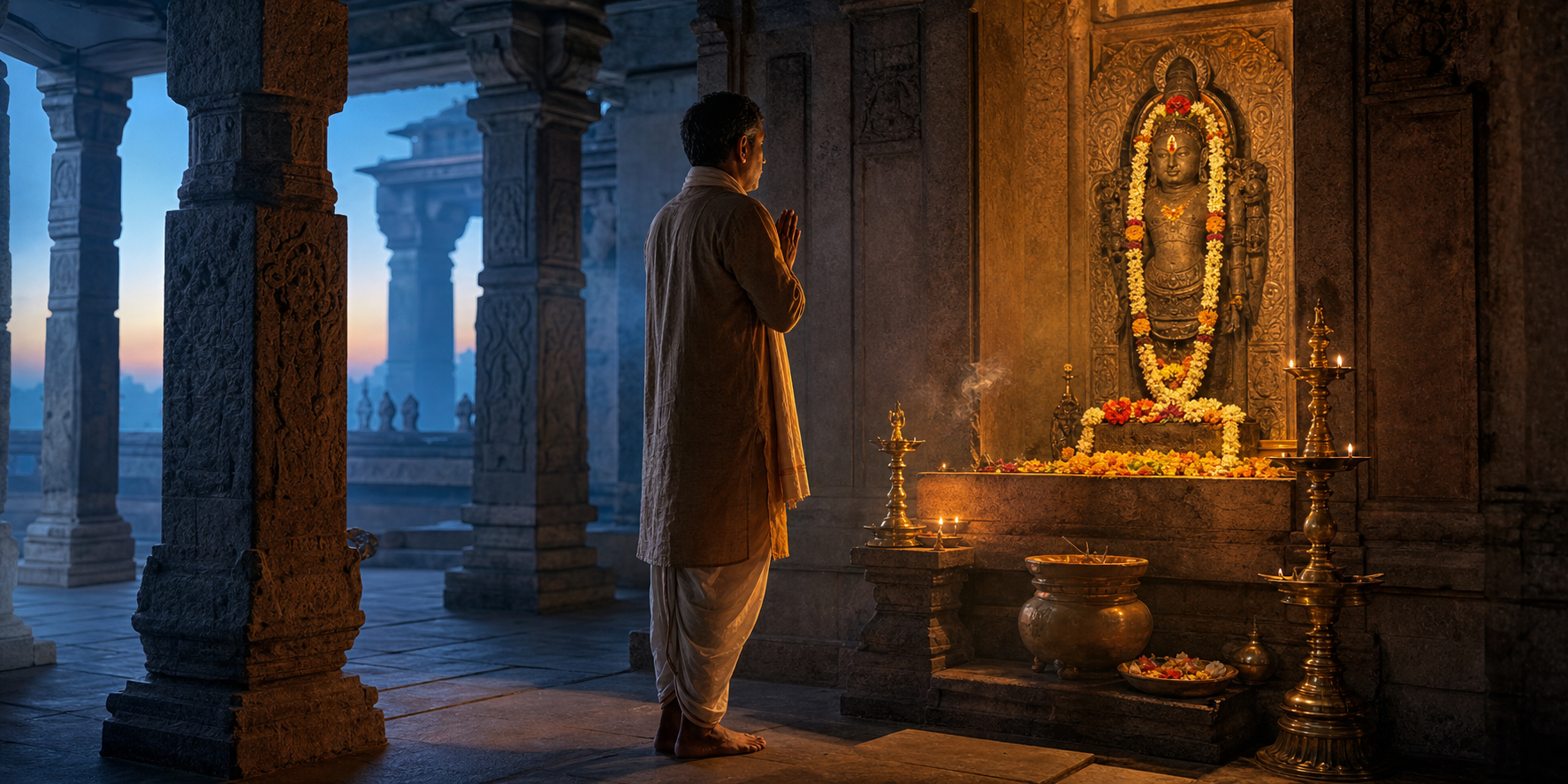
You come before the murti, fold your hands, and wait. Perhaps the mind becomes quiet. Perhaps it does not. Then an uncomfortable question appears: was that really darshana, and if divine grace is causeless, what difference does your practice make?
The answer becomes clearer when you stop treating darshana as a spiritual experience to collect, grace as a reward to earn, or liberation as an elevated mood. Darshana trains you to receive sacred presence. Grace makes transformation possible beyond the limits of personal deserving. Liberation is the freedom toward which that transformed life must move. Each has a distinct role, and confusing them leads either to anxious striving or passive wishfulness.
Grace is not a spiritual shortcut

In bhakti traditions, kṛpā or anugraha names the Divine initiative that the finite self cannot manufacture. Gaudiya Vaiṣṇava theology calls this ahaitukī kṛpā: mercy with no material cause. It does not arise because a devotee has accumulated enough points, performed an impressive ritual, or forced Bhagavān to respond. Mercy belongs to the Divine nature.
Causeless does not mean irrational, indiscriminate, or unrelated to how you live. The Bhagavad-gita presents the Divine as impartial while also reciprocally intimate with those who practise bhakti. In 10.10, Kṛṣṇa bestows the intelligence by which a devotee can come to Him; in 12.6-7, He promises deliverance to those who entrust themselves to devotional service. Practice does not buy this help. It makes the person more willing and able to follow it.
This distinction resolves a common puzzle. If grace had to be earned, it would merely be another karmic payment. If effort were irrelevant, the ethical and contemplative disciplines of dharma would be pointless. Bhakti holds both truths together: you cannot compel grace, but you can resist it through pride, distraction, dishonesty, and refusal to change. Sādhana reduces that resistance.
Karma and grace therefore should not be imagined as rival bookkeeping systems. Karma gives moral consequence to intention and action. Grace can open a path that karmic self-improvement alone could not create. It may arrive as discernment, an unexpected opportunity to repent, the strength to endure a consequence without hatred, protection from a destructive impulse, or a relationship that redirects your life. It does not make the original conduct harmless.
- Ajāmila: the accidental utterance of the holy name at the end of a compromised life became an opening for rescue and transformation. The practical lesson is to begin remembrance before you consider yourself pure enough.
- Gajendra: danger stripped away self-reliance and produced wholehearted surrender. When crisis reduces your prayer to honesty, do not mistake simplicity for spiritual failure.
- Ambarīṣa and Durvāsā: divine protection revealed the Lord’s fidelity to His devotee. Protection, however, is not permission to become vindictive or careless; a protected devotee remains accountable to dharma.
These episodes show why mercy is hopeful without being morally cheap. A ruined past need not control the final direction of a life. Yet divine protection cannot responsibly be reduced to a guarantee that a devotee will avoid illness, bereavement, failure, or death. Grace may remove a danger, but it may also change the consciousness with which an unavoidable trial is met.
Keep three distinctions close: discipline is not payment, hardship is not proof of divine abandonment, and temporary relief is not liberation. They will protect your practice from both despair and entitlement.
Darshana begins when looking becomes receptive
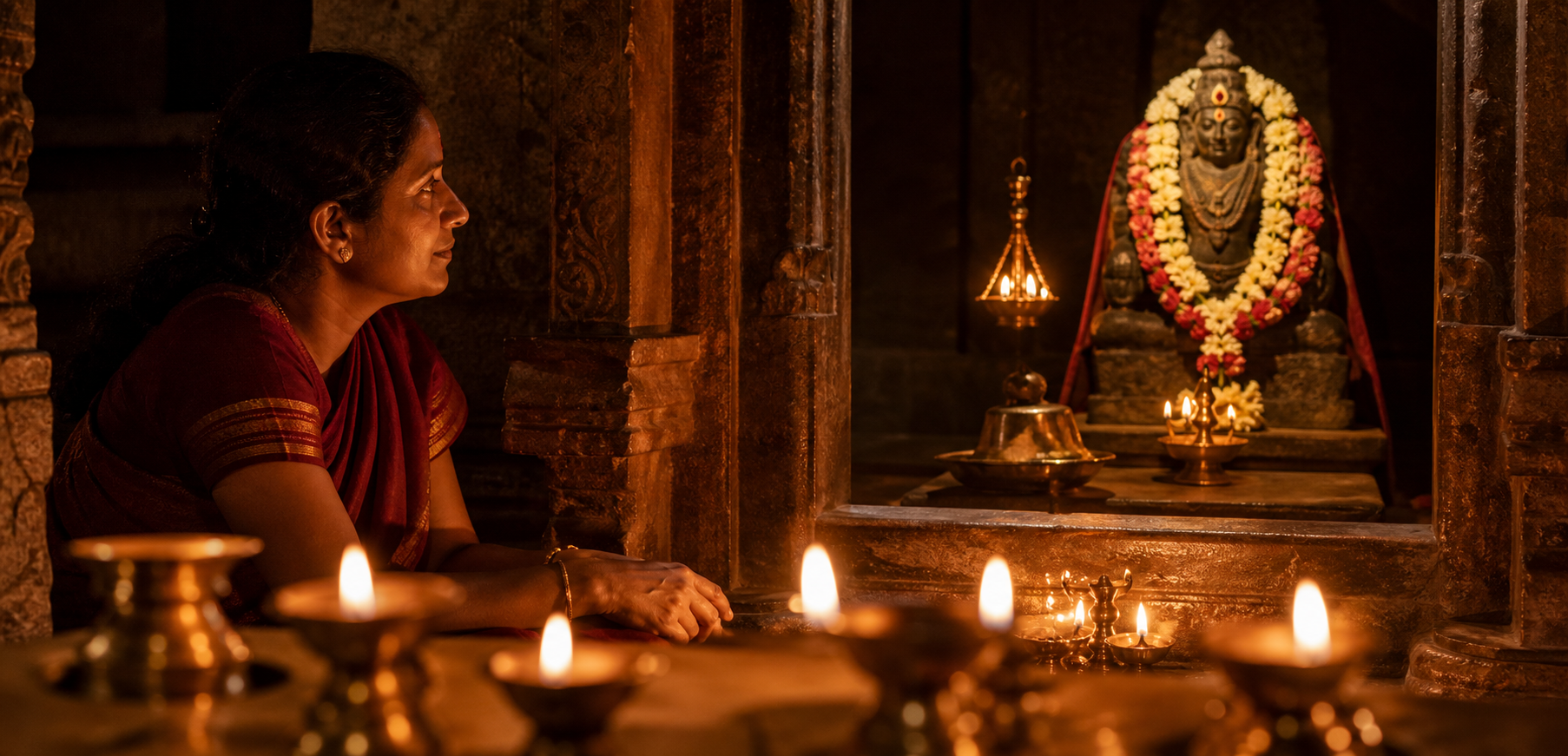
Ordinary sight starts with the observer: you look, evaluate, like, dislike, and move on. Darshana reverses that posture. You approach the sacred form not merely to inspect it but to become available to a presence that already knows you. Within bhakti, this is why darshana is often understood as reciprocal seeing. Your eyes turn toward Bhagavān while your heart consents to being seen without disguise.
Akrūra’s journey to Vraja offers a precise model. He travelled under Kaṁsa’s political command, yet his inward allegiance was to Kṛṣṇa. Hearing had given him knowledge of the Lord, remembrance refined his anticipation, and longing turned the road itself into pilgrimage. His example shows that darshana begins before the physical meeting: it begins when attention, intention, and love are ordered toward the Divine.
You can apply that pattern before, during, and after a temple visit:
- Prepare perception. Before entering, slow the rush to acquire an experience. Recall whose presence you are approaching. If you carry a request, state it honestly, then add a more searching petition: “Let me see truthfully and respond rightly.”
- Receive instead of measuring. During darshana, let the form, name, worship, and remembered līlā hold your attention. Do not continually ask whether you feel peace, energy, tears, or certainty. That self-monitoring turns the gaze back toward the ego.
- Complete the encounter through conduct. Carry one concrete response out of the sacred space. Apologise where pride has hardened you, finish a neglected duty, restrain cruel speech, give useful service, or resume a discipline you have abandoned.
The third movement is indispensable. A powerful feeling may accompany darshana, but feeling is not its final test. Sacred seeing should gradually rehabilitate ordinary seeing: you become less inclined to treat another person as an obstacle, instrument, stereotype, or enemy. The person who bows deeply before the murti but humiliates people outside the temple has preserved the gesture while refusing its meaning.
Nor is darshana reserved for those who can reach a famous tīrtha or see perfectly with the physical eyes. A home shrine, recitation of the Divine Name, attentive hearing, and remembered sacred form can orient the heart when travel is impossible. The point is not to declare every act of imagination identical to temple darshana. It is to recognise that grace is not imprisoned by geography and that longing can turn an ordinary journey into spiritual approach.
Dharmic traditions do not all mean the same thing by grace
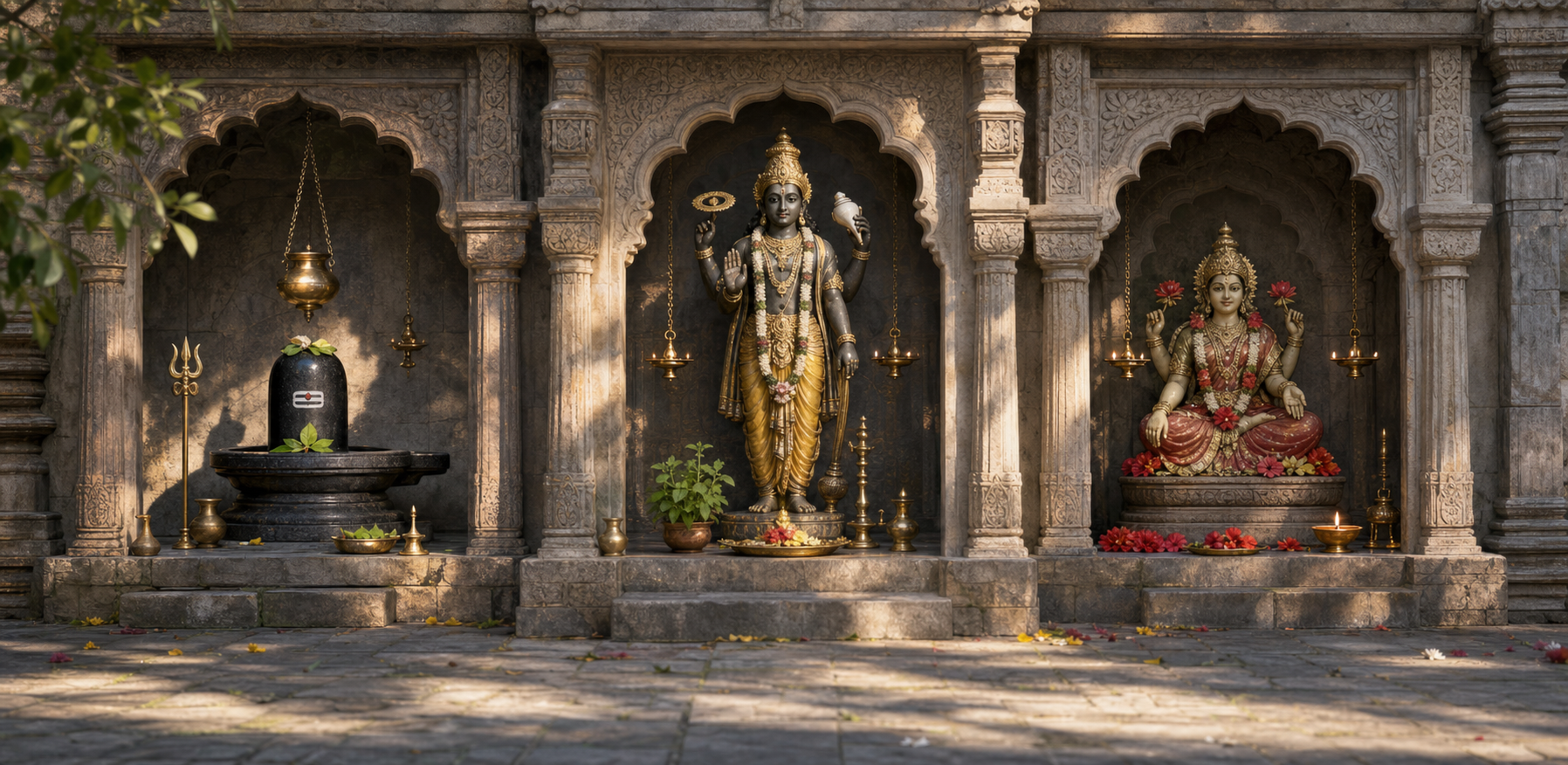
Hinduism, Buddhism, Jainism, and Sikhism share disciplines of ethical restraint, contemplation, compassion, community, and freedom from egoic bondage. Their vocabulary should still be handled carefully. Calling every form of transformative help “divine grace” would erase important differences, particularly where a tradition does not posit a creator God.
| Tradition | Transformative principle | Practices that cultivate receptivity | Liberative horizon |
|---|---|---|---|
| Hindu bhakti | Kṛpā or anugraha: divine mercy that cannot be purchased by karmic merit | Śravaṇa, kīrtana, smaraṇa, japa, seva, worship, and sādhu-saṅga | Moksha, described differently by different schools; in personalist bhakti, loving attainment of and service to Bhagavān |
| Buddhism | Puñña, compassion, disciplined attention, and liberating insight rather than creator-deity grace | Śīla, samādhi, prajñā, mindfulness, mettā, and dedication of merit | Nirvāṇa: freedom from greed, hatred, and delusion |
| Jainism | Restraint of karmic influx and the shedding of karmic matter; puṇya is beneficial but is not itself final freedom | Ahimsa, vows, samayik, svādhyāya, tapas, dāna, and pratikraman | Kevala jñāna and moksha through complete purification of the jīva |
| Sikhism | Nadar, mehar, or kirpā: the Divine glance or grace received in humility and alignment with Hukam | Nām-simran, kīrtan, Ardas, honest work, sharing, sangat, and seva | Freedom from egoic separation and union with the Divine through Nām and grace |
This comparison is an orientation, not a claim that the traditions are interchangeable. A Buddhist should not be told that puñña is secretly the favour of a creator. A Jain should not be told that divine intervention replaces saṁvara and nirjarā. A Sikh understanding of nadar should not be detached from Nām, Hukam, honest living, and seva. Hindu schools also disagree about the relation among self, God, knowledge, devotion, and moksha.
The shared ground is practical rather than doctrinally uniform. Across these paths, spiritual maturity becomes visible as less cruelty, less possessiveness, greater truthfulness, steadier attention, and wider compassion. Ethical self-mastery, contemplative steadiness, service, and devotion to truth give you a sound basis for cooperation without pretending that every metaphysical claim means the same thing.
For a bhakti practitioner, this distinction sharpens rather than weakens faith. You can affirm Kṛṣṇa’s personal grace and the reality of darshana while learning from Buddhist vigilance toward craving, Jain seriousness about non-violence, and Sikh insistence that remembrance must become honest work, sharing, and service. Respect does not require dilution.
Build a daily rule that turns grace into response
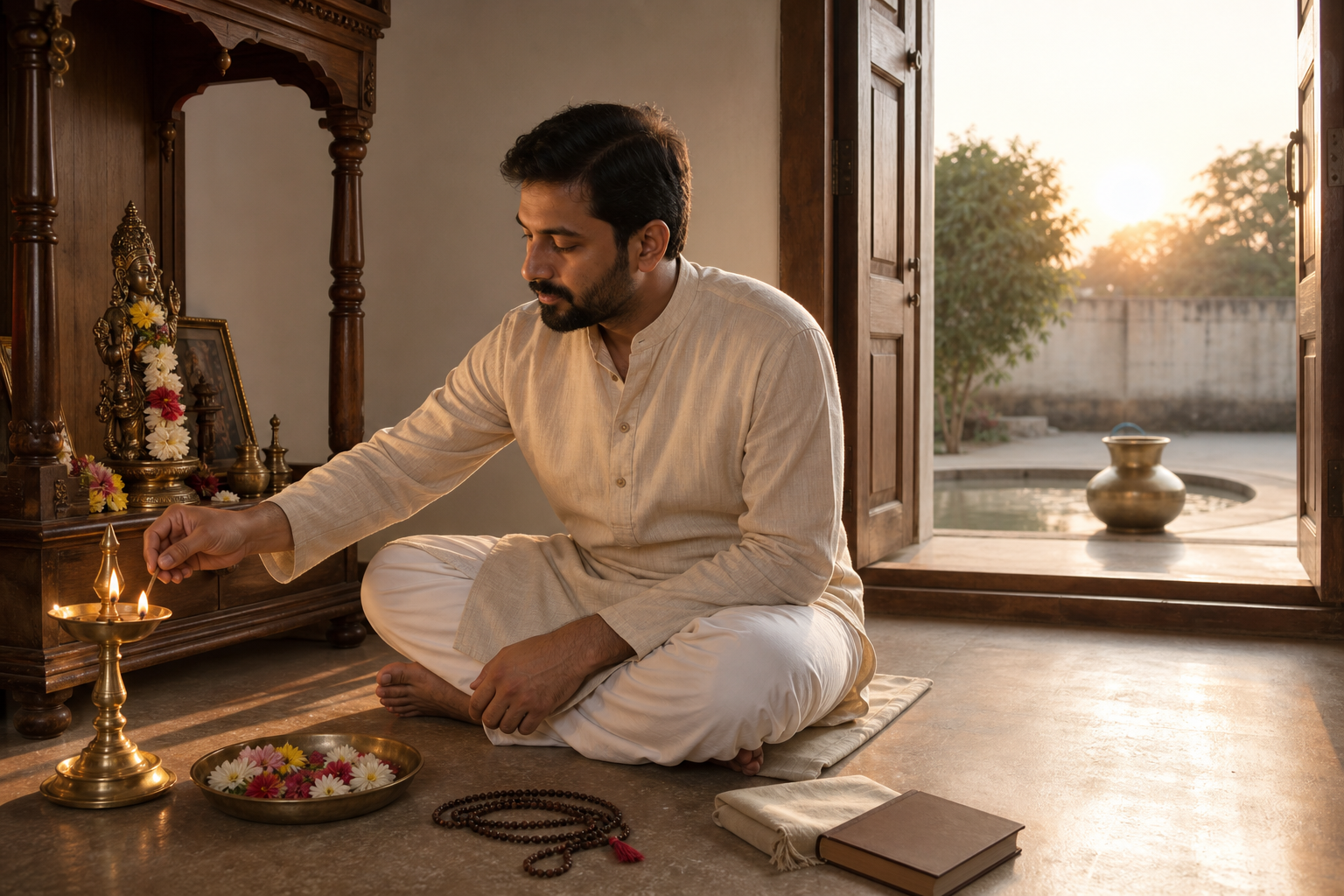
You do not need to manufacture a mystical event. You need a dependable form of life in which remembrance can survive changing moods. Use the following rule with one mantra, one primary spiritual community, and enough continuity for your habits to become visible. Constantly changing methods can feel expansive while preventing any one discipline from exposing your resistance.
- Begin the day by receiving, not bargaining. Offer gratitude before presenting requests. A simple prayer is enough: “May I remember the Divine, recognise what is mine to do, and serve without claiming ownership.”
- Anchor the mind in śabda and Nām. Chant the mantra received through your tradition, hear kīrtana, or read a short passage from a primary scripture. Return to the same words when novelty loses its appeal; repetition is where deeper habits are often revealed.
- Make darshana deliberate. At a temple or home shrine, arrive with one honest attachment, fear, or fault that you are willing to place before the Divine. Do not ask only for the external situation to change. Ask for truthful sight and the strength to act dharmically within it.
- Attach remembrance to movement. A commute, walk, or necessary journey can carry japa, Nām-simran, or quiet recollection. This does not make every journey a formal pilgrimage, but it prevents travel from becoming an automatic surrender to distraction.
- Give grace a social form. Perform seva that answers a real need. Feed, teach, clean, listen, share resources, protect a vulnerable being, or complete unglamorous community work. Choose service that costs attention or convenience, not merely service that reinforces your preferred self-image.
- Repair harm promptly. If you lied, correct the falsehood. If speech became harsh, apologise without explaining away the harm. If you owe something, return it. Repentance becomes spiritually credible when it changes the conditions that allowed repetition.
- End with examination rather than self-condemnation. Notice where remembrance held, where ego took command, whom your conduct helped, and what repair should begin next. Then entrust the result instead of rehearsing either pride or shame.
Trust fruit more than intensity
A dramatic inner state can be sincere, psychologically generated, grace-enabled, or some mixture you cannot confidently separate. You do not need to settle that question immediately. Watch what the experience produces after the excitement fades.
- Speech becomes cleaner: you catch exaggeration, mockery, and manipulation sooner.
- Correction becomes bearable: you can admit error without collapsing into shame or attacking the person who noticed it.
- Practice survives dryness: you continue hearing, remembrance, and service when no special feeling appears.
- Compassion widens: concern extends beyond people who flatter you, agree with you, or belong to your group.
- Possessiveness loosens: time, status, knowledge, and resources become easier to place in service.
- Responsibility deepens: grace makes you more willing to repair consequences, not more eager to declare yourself exempt from them.
Be cautious when the supposed fruit moves in the opposite direction. Chasing ever more spectacular darshanas, claiming private exemption from dharma, boasting of divine favour, or using devotional language to avoid apology are signs that the ego has appropriated sacred experience. The corrective is plain: return to Nām, scripture, accountable community, quiet service, and the unfinished duty directly in front of you.
Questions seekers ask about grace and liberation
Can one darshana grant liberation?
Bhakti does not place a limit on divine freedom. A moment of mercy can decisively redirect a life, as the accounts of Ajāmila, Gajendra, and other recipients of grace demonstrate. You should not turn that possibility into a technique or declare yourself liberated because one encounter felt powerful. Receive the moment gratefully, then allow its truth to be tested through surrender, conduct, and sustained remembrance.
Does grace cancel karma?
Not as a mechanical rule you can invoke after harmful action. Grace may prevent, transform, abbreviate, or redirect a consequence according to divine wisdom, but the practitioner cannot presume upon that freedom. Where repair is possible, make it. Where a consequence must be endured, ask for the clarity to endure it without creating further harm. The safest sign of received mercy is not escape from accountability but freedom from the ego that resisted accountability.
What if I feel nothing during darshana?
Do not fabricate emotion or assume that quietness means rejection. Fatigue, distraction, expectation, and temperament all affect conscious feeling. Offer attention as it is. Continue hearing, chanting, remembrance, and seva, and examine the longer arc of your conduct. A less reactive response to insult may reveal more spiritual movement than tears before the altar.
Can I ask for grace if it cannot be earned?
Yes. Petition is an expression of relationship, not a purchase order. Ask plainly for remembrance, discernment, shelter, and the capacity to serve. Then remain open to an answer that corrects your desire rather than merely fulfilling it. Sometimes the mercy you seek as comfort arrives first as exposure of a habit that must end.
At your next darshana, bring one attachment you have been protecting from scrutiny. Ask for clear sight rather than a sign. Before the day closes, make one repair or perform one act of needed service in response. That small movement from being seen to living differently is where darshana becomes sādhana and grace begins to reshape the road toward liberation.
References
- DharmaRenaissance Blog – Krishna’s Causeless Mercy: Profound Grace, Devotee Protection, and Practice in Kali-yuga (SB 6.19.5)
- DharmaRenaissance Blog – What If This Is Our Last Day? Dharmic Pathways to Grace, Merit, Karma, and Moksha
- DharmaRenaissance Blog – SB 10.38.11: Akrūra’s Yearning for Kṛṣṇa Darśana – Profound, Practical Lessons by HG Bhagavat Ashraya Das
