

Perhaps this question reached you after a miscarriage, the death of a child, or a young person’s blunt challenge: if the cosmos has moral order, why can an innocent being suffer? The word karma can steady the mind, but used carelessly, it can wound a grieving family.
Dharmic traditions do not provide one uniform creation account or a case file explaining every tragedy. They offer something more responsible: ways to distinguish cosmic order, karmic causation, and your duty toward the person who is suffering. That distinction lets you take karma seriously without turning it into blame.
Start by separating three different questions
The apparent conflict between creation, karma, and innocent suffering usually contains three questions. Answering them as if they were one question produces confusion.
- The metaphysical question: Why does anything exist, and what governs creation, preservation, change, and dissolution?
- The causal question: What conditions brought about this particular illness, death, miscarriage, disaster, or other loss?
- The ethical question: What should you do when another being suffers?
A religious account of cosmic order may address the first question without revealing the complete cause of an individual event. Karma may provide a framework for moral causation without giving you access to another person’s karmic history. Neither framework removes the immediate duty to respond with compassion.
The dangerous leap sounds like this: the universe is ordered; karma operates within that order; therefore, anyone who suffers must deserve the suffering. The conclusion does not follow. A lawful cosmos is not a courtroom in which observers are authorized to pronounce a victim guilty.
This is the first practical test for any explanation you hear. Ask which of the three questions it actually answers. If someone offers a theory about creation as proof that a bereaved parent is at fault, the theory has crossed from metaphysics into an unsupported moral accusation.
Creation and dissolution are not one uniform Dharmic doctrine
Hinduism, Buddhism, Jainism, and Sikhism share a civilizational conversation, but they do not merely repeat one theology in different vocabularies. A responsible Dharmic answer preserves both their relationships and their differences.
Hindu perspectives: functions within a deeper reality
One common Hindu explanation understands the Trimurti as the functions of origination, sustenance, and transformation within the one Supreme Reality, Brahman. Brahman is described as the enduring ground of existence: beyond ordinary change, yet the basis upon which changing worlds appear. Creation and dissolution therefore form a rhythm rather than a single beginning followed by absolute annihilation. Worlds and living forms arise, endure for a time, and recede within a larger order.
This makes transformation intelligible, but it does not make every painful ending emotionally small. Telling a grieving person that death is merely transformation can be doctrinally tidy and pastorally cruel. The cosmic scale explains why ending and renewal can coexist; it does not cancel the human scale on which a particular absence is devastating.
Sikh perspectives: life within Hukam
Sikh wisdom begins with Ik Onkar, the One Reality, and understands birth and death within Hukam, the all-pervading Divine Order. Hukam does not mean that a human observer can disclose the hidden reason for someone else’s tragedy. It orients the Sikh toward remembrance through Naam, prayer through ardas, fellowship, and service.
Acceptance of Hukam is not permission to become passive. Seva and sarbat da bhala, the welfare of all, require practical concern for people in pain. If an interpretation of divine order makes you less willing to help, it has failed the ethical test built into the tradition.
Buddhist perspectives: arising through conditions
Buddhist teaching directs attention to dependent origination, or pratītya-samutpāda. Phenomena arise when supporting causes and conditions come together, and they pass when those conditions change. The emphasis falls on conditionality and impermanence rather than on locating a single cosmic agent behind every event.
This is useful when suffering tempts you to demand one total explanation. A loss can involve many intersecting conditions. Reducing it to one moral cause is not greater spiritual insight; it is usually a refusal to respect complexity. Mindfulness, mettā, and karuṇā train the response even when the entire causal chain remains inaccessible.
Jain perspectives: many-sided truth and disciplined conduct
Jain anekāntavāda teaches that reality should be approached from more than one standpoint. It restrains the urge to make an absolute claim from partial knowledge. Jain karma theory is highly developed, yet its practical demands include ahiṁsā, self-restraint, introspection, and care for living beings.
The shared Dharmic statement must therefore remain modest: existence unfolds through an order larger than any individual’s present view; conditioned forms arise and pass; and human conduct matters within that process. Agreement at that level should not be used to erase real differences about divine agency, soul, causation, or liberation.
Karma explains continuity, not a verdict about a victim
Karma is often reduced to a slogan: good things happen to good people and bad things happen to bad people. That formula does not survive contact with serious Dharmic thought. Karmic causation extends beyond the fragment of a life visible to an observer, and its workings cannot be reconstructed with certainty from one event.
Three guardrails keep karma from becoming spiritualized blame:
- You do not possess the full causal record. Belief in karma is not knowledge of which past action, if any, corresponds to a present loss.
- Karma is not the only useful level of causation. Personal, collective, bodily, social, and environmental conditions can converge in an event. A karmic framework does not make those immediate conditions unreal.
- Causation is not the same as condemnation. Even if an event has karmic conditions, you have not proved that the sufferer is morally blameworthy or deserves your judgment.
In many Hindu understandings, the jīva travels through saṁsāra while carrying karmic residues and saṁskāras. Prārabdha karma refers to the portion that becomes operative in a particular birth. Some schools interpret an infant’s very brief life as the completion of a small remaining karmic momentum. In those perspectives, the ātman remains untouched in its essential nature. Yet this remains a possible theological interpretation, not evidence that parents or bystanders can diagnose the child’s moral past.
That limit matters. A consoling possibility for a believing family can become an accusation when imposed from outside. You may hold that a jīva’s journey exceeds one lifetime while also admitting that you do not know why this life ended when it did. Humility is not a weakness in the karmic account; it is what prevents the account from pretending to knowledge it does not contain.
Buddhist dependent origination likewise resists the search for one isolatable reason. Jain philosophy describes karma as subtle matter binding to the jīva through actions and intentions, but its ethical response to suffering is ahiṁsā and pratikraman, not public speculation about another being’s guilt. Sikh teaching locates life within Hukam while directing the person toward Naam, ardas, and seva rather than disclosure of hidden causes.
You can test the use of karma by its immediate moral fruit. Does it make the speaker humbler, more responsible, and more compassionate? Or does it make the speaker feel superior while adding shame to someone else’s pain? The second result is not spiritual clarity. It is a misuse of doctrine.
Karma is most useful when it turns attention toward the action available now. Your words, neglect, tenderness, generosity, and service are also causes. The question is not only what may have led here. It is what you are setting in motion next.
Speak about innocent suffering without adding another injury
Calling a child innocent is not a denial of rebirth or karmic continuity. It is a morally necessary statement about the child before you: the child is not an appropriate target for accusation, and the grieving family is not an object lesson for your metaphysical theory.
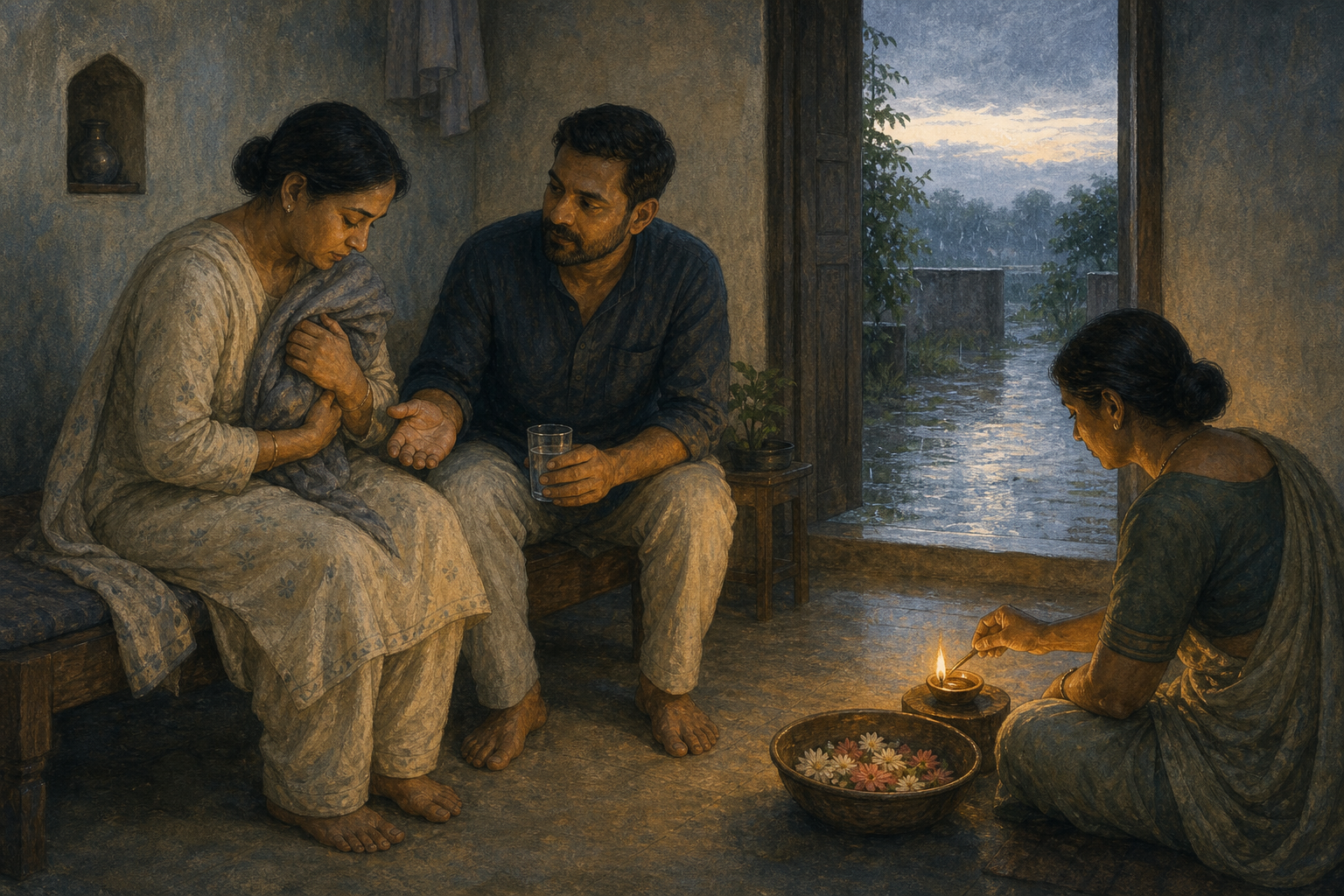
This is especially important after miscarriage or child loss. Do not tell a mother that her grief proves bad karma, spiritual impurity, failed devotion, or divine rejection. Do not invent a spiritual biography for the child by claiming certainty that the child came only to teach a lesson, chose the manner of death, or completed a precisely known debt. None of those claims is available to ordinary knowledge.
What not to say to a grieving person
- This happened because of your karma.
- Everything happens for a reason, so you should accept it.
- The child must have done something in a previous life.
- Your grief shows that you lack faith or detachment.
- At least the jīva has moved on.
Each sentence moves too quickly from a large doctrine to a claim about a particular person. It also asks the bereaved person to manage the speaker’s need for an explanation.
What you can say instead
- I do not know why this happened, and I will not turn karma into blame.
- This loss is not proof that you or your child deserved suffering.
- Would prayer, quiet company, a remembrance rite, or practical help feel supportive?
- I can listen without trying to explain the loss.
- If you want, we can honor the child through dāna, seva, ardas, mettā, or another practice meaningful to your family.
Notice the difference. These sentences do not abandon Dharma. They practice dayā, ahiṁsā, truthfulness, and restraint. They also give the grieving person agency instead of forcing a ritual or interpretation upon them.
A clear answer for a young seeker
When a child or student asks who creates and destroys, answer at the level of the question without pretending that every tradition gives the same response. You can say: Dharmic paths describe creation and ending in different ways. Hindu teachings often speak of origination, preservation, and transformation within Brahman; Sikh teaching speaks of life within Hukam; Buddhism examines causes, conditions, and impermanence; and Jainism teaches disciplined attention to the many-sided nature of reality. Karma means that actions have consequences, but it does not give us permission to blame someone who is suffering. Our task is to act truthfully and reduce suffering.
That answer is honest about difference, clear about karma, and usable in daily life. If the young person continues asking, welcome the questions. Curiosity becomes mature conviction when it is allowed to examine distinctions rather than being silenced with a slogan.
Turn metaphysical uncertainty into compassionate action
You do not need to solve the entire karmic history of a loss before doing something worthy. Begin with the need directly in front of you.
Stabilize the human situation first
- Remove spiritual blame. Make it explicit that you will not speculate about fault, punishment, or hidden sin.
- Ask what support is wanted. The family may want prayer, silence, food, help contacting relatives, assistance arranging a rite, or simply someone who will remain present.
- Follow the family’s tradition. Do not impose a Hindu, Buddhist, Jain, or Sikh practice merely because it comforts you.
- Offer one concrete act. Instead of saying that help is available, offer to prepare a meal, accompany the family to a place of worship, organize a memorial act, or handle a specific household burden.
Choose a practice for remembrance, not explanation
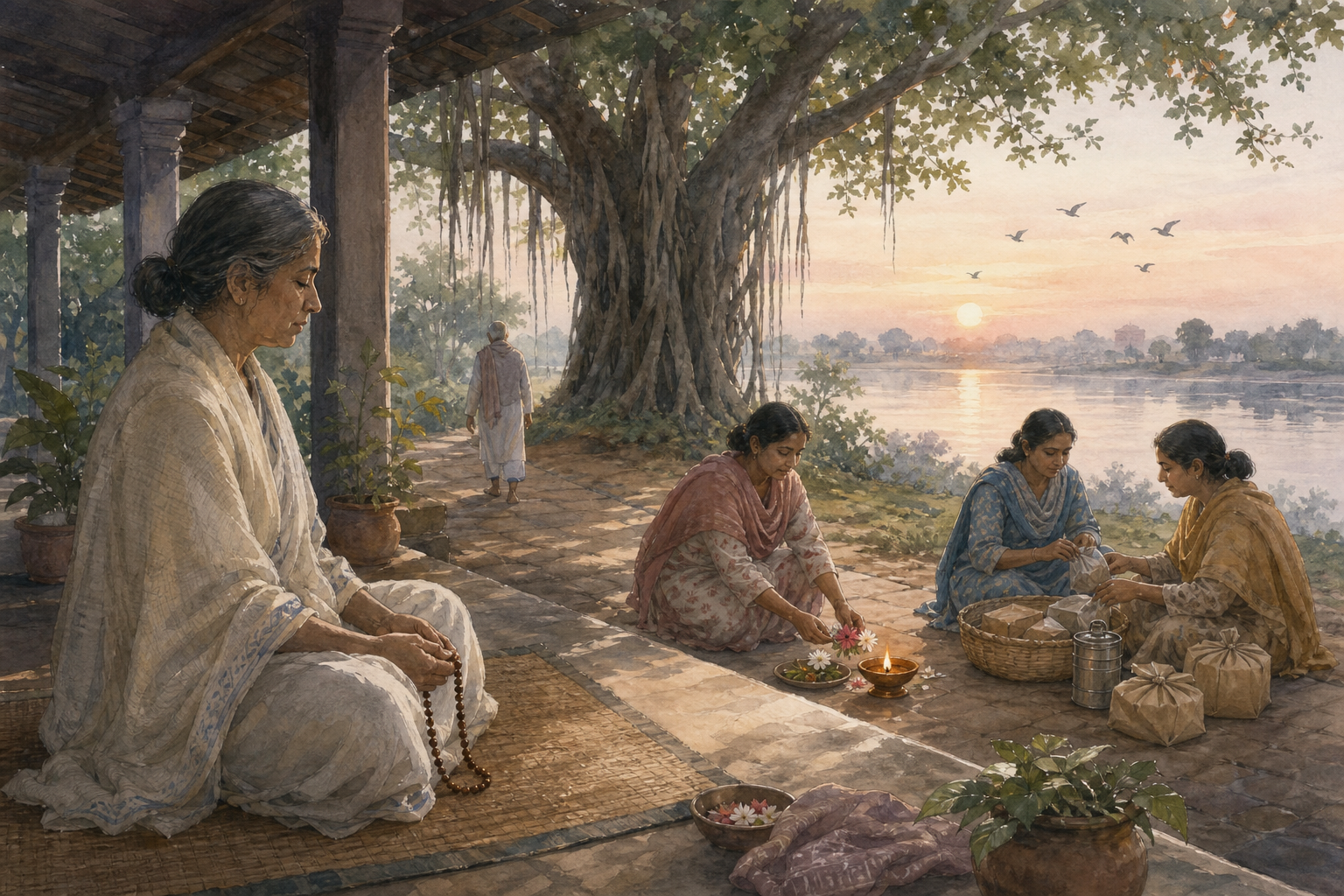
A Hindu family may turn to prārthanā, japa, dāna, seva, or a remembrance or śrāddha practice appropriate to its lineage and circumstances. A Buddhist may offer mettā, cultivate karuṇā, and sit in mindful presence. A Jain may undertake pratikraman, deepen ahiṁsā, or dedicate renewed ethical discipline to the memory of the departed. A Sikh family may gather for ardas, Naam or simran, sangat support, and seva.
These practices need not pretend to decode karma. Their honest purposes are to honor the departed, steady the heart, gather the community, and direct grief toward compassionate conduct. If the family is unsure which rite is appropriate, a trusted teacher or community elder from its own tradition can help without declaring a hidden cause for the death.
Create a living memorial
A memorial becomes especially meaningful when it serves life. A family might feed people in need, support maternal health, plant trees, contribute to a temple or gurdwara service effort, or perform another act of dāna or seva in the child’s name. Choose an act the family can sustain without turning it into a test of devotion.
The point is not to purchase a better karmic outcome or erase grief. It is to let love continue as conduct. Sorrow remains real, but it no longer has to remain socially isolated or ethically motionless.
Know when spiritual care is not enough
Prayer, meditation, ritual, and community care do not replace medical follow-up after a miscarriage or other physical crisis. They also do not replace qualified mental health support when grief becomes overwhelming. A trusted spiritual teacher and a licensed grief counselor can serve different, complementary needs.
If someone may harm themselves or cannot remain safe, seek urgent local emergency help rather than relying only on spiritual counsel. Supporting professional care is consistent with Dharma’s demand to protect life and reduce suffering.
Key takeaways
- Creation, the cause of a particular tragedy, and your ethical response are three separate questions.
- Hindu, Buddhist, Jain, and Sikh traditions relate to one another, but they do not offer an identical doctrine of creation or divine agency.
- Karma affirms causal and moral continuity; it does not authorize you to declare that a sufferer deserved pain.
- Prārabdha and other karmic explanations should be presented as tradition-specific possibilities, never as a diagnosis of a child’s or parent’s guilt.
- Prayer, remembrance, dāna, meditation, ardas, and seva are ways to honor life and shape your present conduct, not tools for proving why a loss occurred.
- Compassion includes practical help and, when needed, medical or professional grief support.
The next time this question arises, resist the urge to complete the cosmic puzzle on someone else’s behalf. Ask a nearer question: what response would reduce suffering without hiding the truth or assigning blame? Then do that concrete thing. Sit with the family, pray if invited, arrange a meal, make dāna, join in seva, or help someone reach qualified care. Humility about hidden causes and precision in compassion are not evasions. In the presence of innocent suffering, they are Dharma in practice.


References
- DharmaRenaissance Blog – Karma and Innocent Suffering: A Compassionate Dharmic Guide to Miscarriage and Child Loss
- DharmaRenaissance Blog – Who Orchestrates Creation and Destruction? Dharmic Wisdom That Empowers Young Minds
