

You may have encountered a youthful form of the Divine and wondered what you are actually being asked to see. Is Bala simply an endearing image, a theological statement, a devotional relationship, or a technical form of Tantric practice?
The answer begins with a distinction: divine childhood is not divine incompleteness. Bala invites you to change the way you approach the Divine. It does not ask you to imagine that divine power must grow up before it becomes whole.
The child form changes the relationship, not the Divine
Bala means a child or youthful one in this context. When the Divine appears through childhood, the form carries qualities such as freshness, openness, intimacy, dependence, play, and freedom from social calculation. These qualities belong to the devotional encounter. They should not be mistaken for a claim that the Divine lacks knowledge, strength, or sovereignty.
This matters because an ordinary child is vulnerable through limitation. The divine child voluntarily receives affection, attention, service, or protection without being reduced to helplessness. The apparent smallness of the form can therefore conceal rather than cancel its fullness.
That reversal is central to Bala devotion. The immeasurable becomes approachable. The devotee who normally asks for protection may find himself protecting, feeding, dressing, comforting, or simply delighting in the Divine. Authority is not abolished, but it is encountered without emotional distance.
When you contemplate a Bala form, do not begin by asking, “How powerful is this deity?” Ask, “What kind of relationship does this form make possible?” The first question treats the image as a catalogue of powers. The second lets the form work on your habits of devotion.
Read Bala through four distinct lenses

Tantra is not one uniform system, and every youthful divine form should not be forced into the same explanation. Before adopting a practice or interpretation, separate four questions that are often mixed together.
- What does the form show? Notice youthfulness, posture, expression, gestures, ornaments, and the mood of the representation. Begin with what is actually present rather than importing a story the form does not display.
- What relationship does it invite? Does the form awaken parental tenderness, companionship, protective care, trust, wonder, or the wish to surrender? Your response is part of the meaning, but it is not automatically the whole meaning.
- What does the tradition say? A temple custom, household devotion, philosophical interpretation, and lineage-specific Tantric discipline may approach the same form differently. Identify the context before treating one explanation as universal.
- What kind of practice is involved? Looking upon a form with devotion is not the same as undertaking a mantra, visualization sequence, ritual installation, or other technical discipline. Do not turn symbolic appreciation into a self-authorized esoteric practice.
This four-part reading protects you from two opposite mistakes. One is to dismiss Bala as decorative sweetness. The other is to assume that every attractive image conceals a secret technique that you should reconstruct for yourself.
If you are looking at a Bala image outside its original setting, record what you know and what you do not. You may know the name but not the ritual context. You may feel parental affection but not know whether that is the traditional devotional mood. Honest limits produce a better encounter than confident invention.
Choose whether you are caring for the child or becoming the child

Bhakti can be lived through reverence, surrender, friendship, parental affection, or the trust of a child toward its mother. Bala makes two of these movements especially easy to confuse: caring for the Divine as a child and approaching the Divine with a child’s dependence.
When you care for the Divine as a child
Here the devotee adopts a parental or protective disposition. The practice turns attention away from personal demand. Instead of asking, “What will the Divine give me?” you ask, “How can I serve with care?”
The theological paradox is deliberate. The Divine does not need protection in the ordinary sense, yet accepts loving service. Your care is not supplying a deficiency in God. It is training your attention to become steady, tender, and less transactional.
Notice what happens when service is not rewarded immediately. If tenderness disappears as soon as your request is unanswered, the relationship may still be functioning as a bargain. Bala exposes that bargain gently because the child form asks for affection before it offers authority, fear, or visible reward.
When you approach the Divine as a child
In the other movement, you relinquish the performance of total self-sufficiency. You approach with trust, dependence, and the willingness to be guided. This is not permission to abandon discernment. A child’s trust in the sacred sense is openness without manipulation, not obedience to every human being who claims spiritual authority.
You can test the distinction in your own prayer. Are you admitting that you do not control every outcome, or are you using “surrender” to avoid a responsibility that is plainly yours? The first can deepen devotion. The second merely gives avoidance a religious name.
Both movements are valid devotional possibilities, but they do different work. Choose one consciously during a period of contemplation. If you keep switching between protecting the Divine and seeking protection from the Divine, you may miss what either relationship is revealing.
Childlike play is not the same as childish impulse
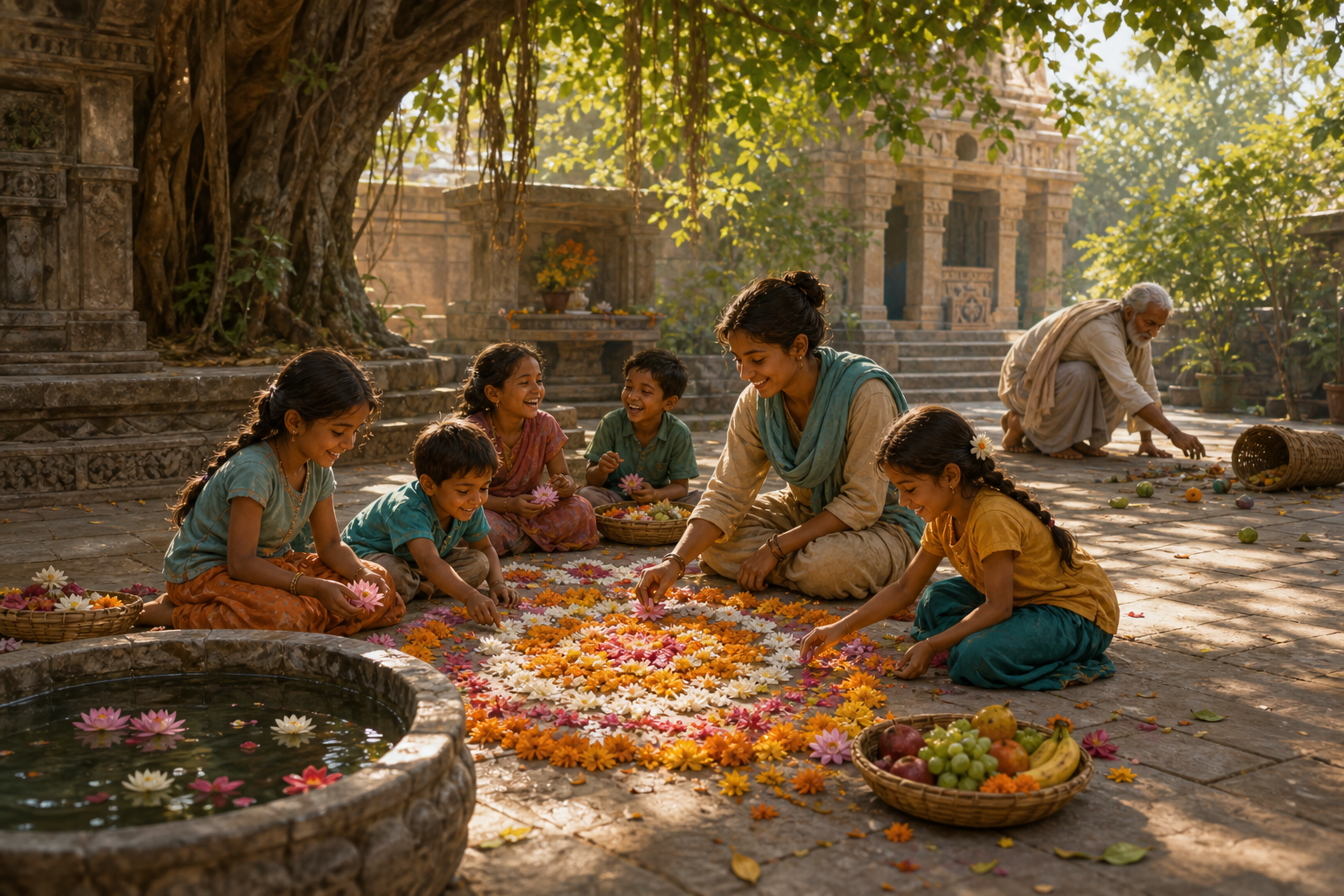
The playful heart associated with Bala can easily be sentimentalized. Spiritual play does not mean that consequences disappear, commitments become optional, or every passing desire becomes sacred. Childishness demands that reality conform to the self. Childlikeness meets reality without the same burden of calculation and display.
A useful test is to examine what your idea of play produces. If it makes you more attentive, receptive, affectionate, and able to begin again, it may be loosening rigidity. If it makes you careless about truth, duty, boundaries, or the effects of your actions, it is not a profound Tantric insight. It is indulgence.
Bala also challenges spiritual self-importance. Adults often want religious life to confirm their seriousness, knowledge, rank, or control. A divine child can interrupt that performance. You cannot enter genuine play while constantly measuring how advanced you appear.
Watch for three reactions when you sit with the form: the urge to control it, the urge to sentimentalize it, and the urge to explain it too quickly. Each reaction tells you something useful. Control resists vulnerability. Sentiment avoids depth. Premature explanation protects the intellect from being changed by the encounter.
A grounded way to explore Bala without inventing a Tantra
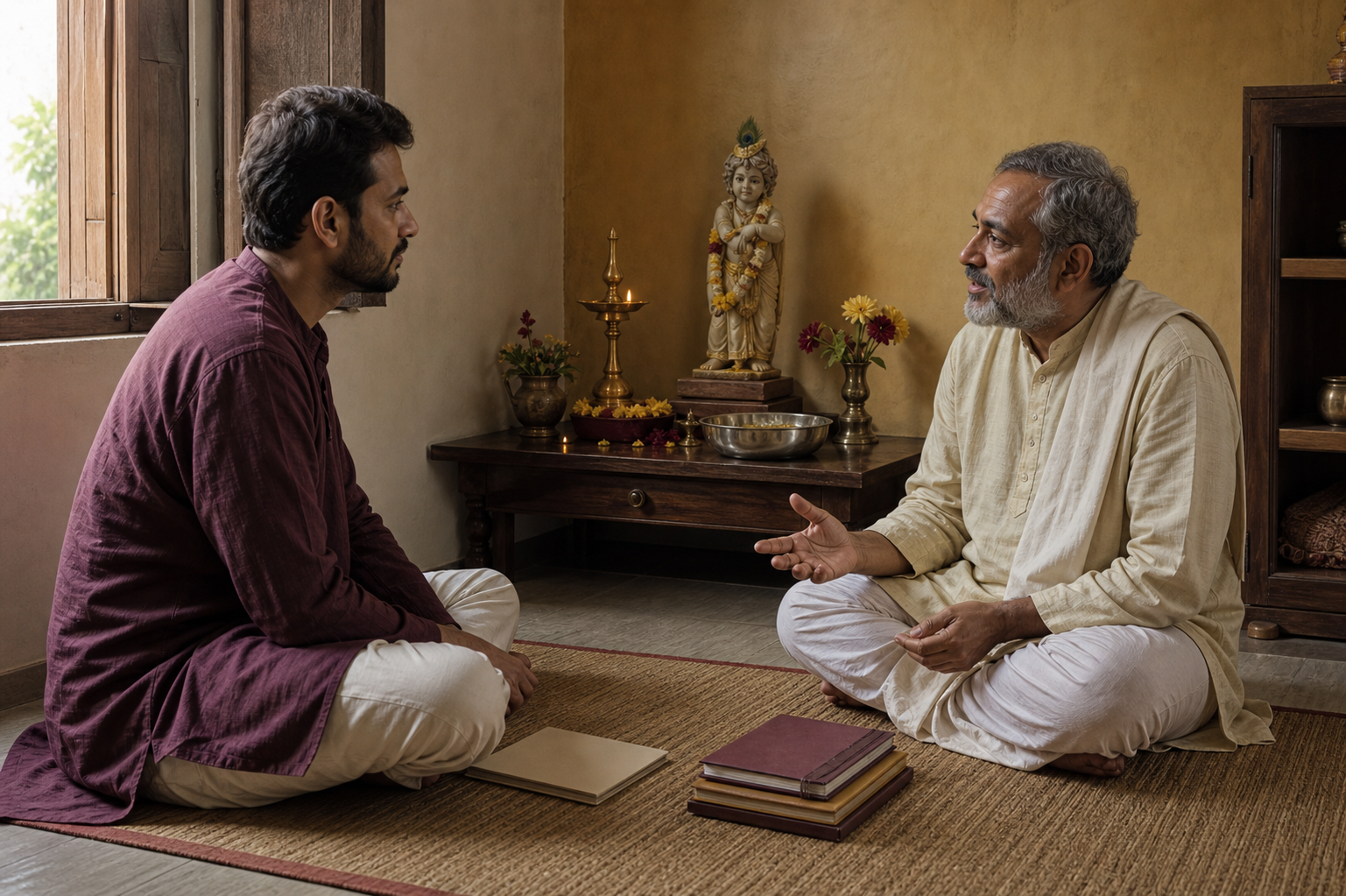
You do not need to imitate an initiatory ritual in order to reflect seriously on divine childhood. If no authorized practice has been given to you, keep your exploration devotional and observational. The following is a framework for contemplation, not a lineage-specific Tantric rite.
- Begin with a form you already honor. Use a familiar image, name, or remembered presence rather than assembling unfamiliar ritual elements from fragments found elsewhere.
- Name the relationship for this sitting. Decide whether you are offering parental care, approaching with childlike trust, or simply observing the symbolism. A clear intention prevents devotional moods from collapsing into vagueness.
- Notice your first resistance. You may find the child form too small, too intimate, too dependent, or insufficiently majestic. Do not suppress that response. Ask what picture of divinity it threatens.
- Offer one simple, truthful response. This may be a familiar prayer, respectful silence, an act of gratitude, or service already accepted in your tradition. Simplicity keeps the focus on relationship rather than novelty.
- Close by carrying one quality into conduct. Choose attentiveness, tenderness, trust, freshness, or freedom from display. Make it visible in one responsibility or relationship instead of leaving the experience inside the shrine or meditation space.
After several sittings, review the pattern rather than chasing a dramatic experience. Has the form made your devotion less transactional? Has it softened fear without weakening discernment? Has playfulness made you more present, or merely less disciplined? These questions give you a practical measure of whether the symbolism is transforming conduct.
If a particular Bala practice is described as initiation-dependent, mantra-based, or restricted to a lineage, do not fill in the missing instructions yourself. Seek guidance from a qualified practitioner within that tradition. Respecting the boundary is part of respecting Tantra.
Key takeaways
- Bala presents divine fullness through childhood; it does not portray an incomplete deity waiting to mature.
- The central question is relational: what becomes possible when majesty approaches you through tenderness, youth, and play?
- Caring for the Divine as a child and trusting the Divine as a child are different devotional movements. Choose consciously rather than blending them automatically.
- Childlikeness can loosen calculation and self-importance, but it does not excuse irresponsibility, gullibility, or impulsiveness.
- Symbolic contemplation is not a substitute for instruction in a lineage-specific Tantric discipline.
Begin with the Bala form that is already before you, not the hidden technique you imagine might be behind it. Let one relationship become clear, carry one quality into your conduct, and allow repeated attention to show whether divine childhood is making your devotion more intimate, honest, and free.
References
