
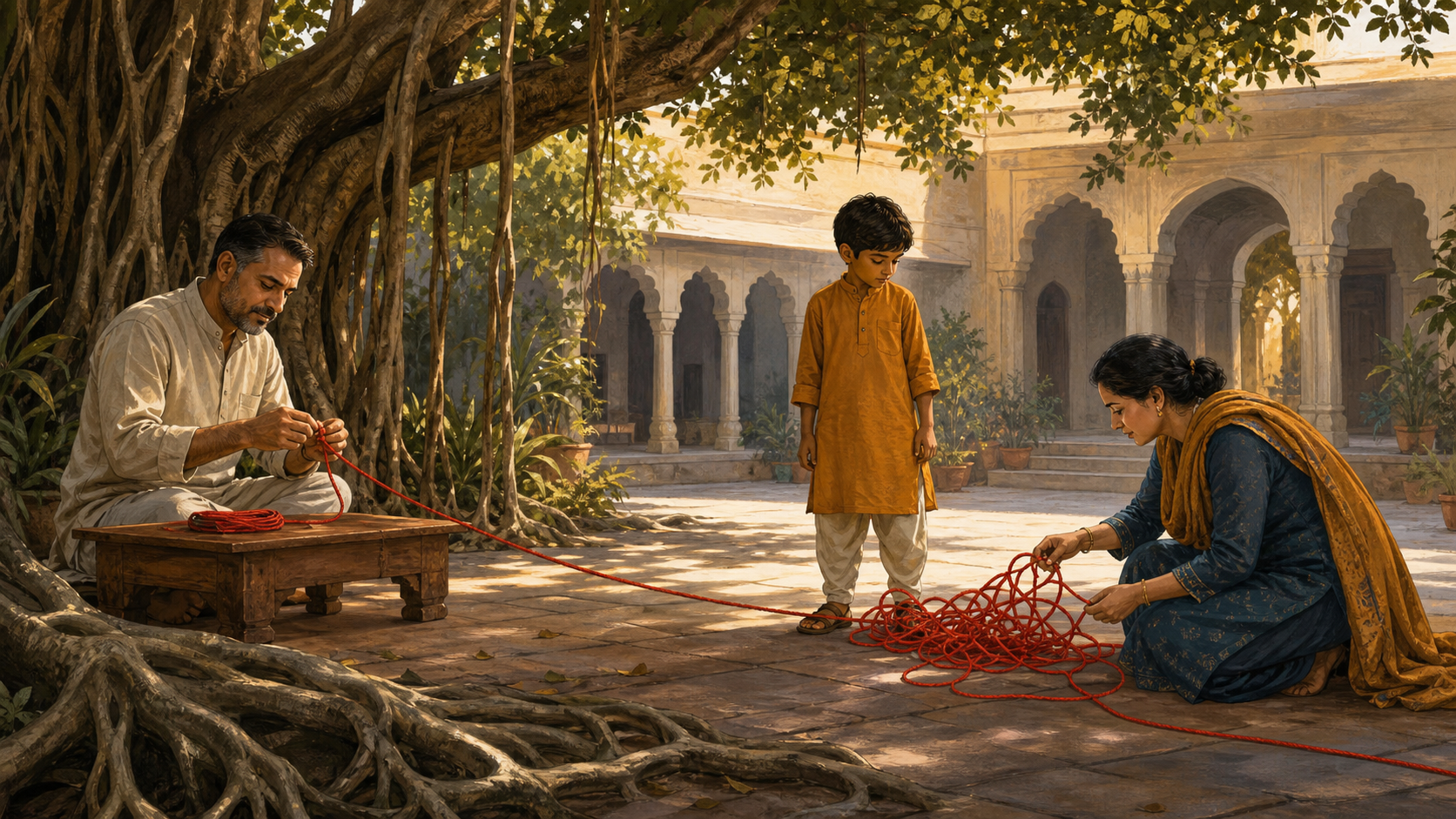
You may be facing a decision whose benefits arrive now while its costs will fall on your children later. Or perhaps you are already living with the consequences of choices made by parents, elders, institutions, or an entire generation. The question is not merely whether the past was unfair. It is what responsibility belongs to whom now.
A Dharmic understanding of karma can help, but only if we refuse a dangerous confusion: suffering from another person’s actions does not make you guilty of those actions. The useful task is to trace the chain honestly, place responsibility where agency existed, and prevent an avoidable burden from travelling further.
A child can inherit consequences without inheriting guilt

Every choice, act of negligence, and misuse of power can begin a chain of consequences. Those consequences do not always remain with the person who initiated them. They can alter a household, exhaust shared resources, establish a harmful custom, or leave work that someone else must eventually perform.
That does not mean a child becomes morally guilty because an adult acted badly. Questions about rebirth and the precise operation of karmaphala belong to deeper theological discussions. You do not need to settle those discussions before recognizing a practical moral distinction:
- Authorship concerns who chose, intended, enabled, or knowingly neglected an action.
- Exposure concerns who must live with the conditions that action produced.
- Responsibility now concerns who has the power to stop, repair, or continue those conditions.
A child may have no authorship, extensive exposure, and eventually some capacity to respond. That later capacity does not rewrite the original responsibility. It simply creates a new moral choice: whether to repeat the inherited pattern, accommodate it, or interrupt it.
This distinction matters whenever someone uses karma to blame a vulnerable person. If you hear that a child’s suffering must be deserved, move the conversation back to observable responsibility. Ask who made the relevant decision, who possessed the power to prevent the harm, who benefited, and what repair is possible. Karma should sharpen accountability, not turn another person’s pain into evidence against them.
If you are carrying the effects of an elder’s conduct, you may name the injury without declaring yourself spiritually stained. If you are the elder, do not hide behind the thought that the next generation will have its own karma. Their future agency does not cancel your present duty.
Notice how an adult choice becomes a child’s environment

Intergenerational consequences are easiest to miss when we look only for a dramatic act. A single decision matters, but repetition often matters more. What adults repeatedly permit becomes part of the world in which a child learns what is normal.
- Material conditions: Adults can consume shared savings, neglect property, deplete land, pollute common surroundings, or leave unfinished obligations. The next generation receives a narrower set of choices even when it had no voice in creating the constraint.
- Learned conduct: A household that repeatedly rewards dishonesty, cruelty, waste, or silence teaches more than any formal lesson. Children observe which behaviour brings status, which suffering is ignored, and which truths may not be spoken.
- Institutional conditions: Rules created by one generation can outlive their makers. An unfair procedure, an opaque authority structure, or a neglected community asset can keep distributing the original decision’s effects long after the initial actors are gone.
- Moral language: Harm becomes harder to correct when adults rename convenience as duty, domination as discipline, or avoidance as destiny. A Dharmic word should never be used to make preventable conduct appear sacred.
The time lag is morally important. The benefit of a decision may be visible immediately, while maintenance, restoration, or reconciliation is postponed. Once the cost appears, the original decision-maker may no longer control the situation. That is why responsibility must be considered before the burden is transferred, not only after someone complains.
When examining a repeated family or community practice, do not ask only whether elders also endured it. Endurance proves that a burden existed; it does not prove that passing it onward is righteous. Ask instead whether the practice cultivates truthfulness, restraint, compassion, courage, and reciprocal duty. If it survives mainly because younger people are denied the power to question it, age alone cannot make it dharmic.
Run an intergenerational audit before you decide
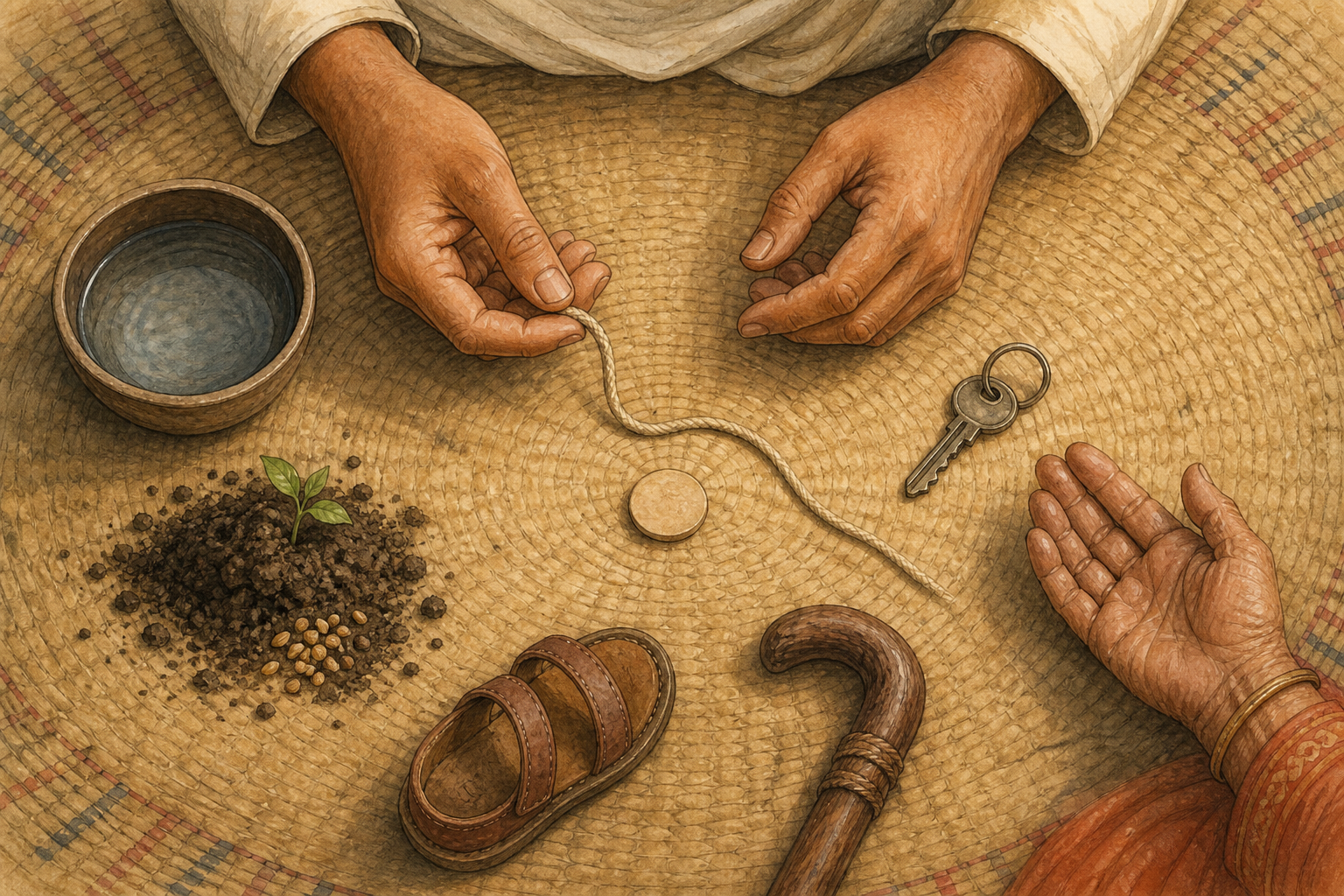
You can apply a simple audit to a household purchase, the use of inherited property, a community celebration, a temple project, an organizational rule, or a public policy. Write down the answers rather than relying on a general feeling that the decision is well intentioned.
<!– wp:list {