

When your mind is racing, the immediate problem is rarely a lack of wisdom. You may already know that anger can distort speech, fear can magnify a possibility, and grief can make the present feel permanent. The problem is gaining access to better judgment while the emotion is still moving through you.
Dharmic practice gives you a way to recover that access. You don’t have to become emotionless or wait for perfect calm. You need a reliable return: an anchor for attention, a test for conduct, and a rhythm that makes both familiar before the next difficult moment arrives.
Equanimity means steady participation, not emotional numbness
Equanimity is the capacity to remain ethically available while thoughts and feelings change. Indifference withdraws from what matters. Equanimity stays present without letting the loudest inner impulse take command.
The Bhagavad Gita gives this discipline a compact expression: samatvam yoga ucyate – equanimity itself is yoga. The instruction is not to become passive. It is to act without allowing attraction, aversion, praise, blame, success, or disappointment to seize control of your discernment.
The image of an undisturbed cosmos is useful here. A storm in your mind can be intense without becoming the whole of reality. The larger order continues. This perspective does not make your grief unimportant or your injustice imaginary. It places the experience inside a wider field, where response remains possible.
The Dharmic traditions approach this field through distinct teachings:
- Hindu thought turns attention toward rta and dharma: an order larger than personal preference, and the conduct appropriate to your place within it.
- Buddhist practice uses mindfulness and anicca, or impermanence, to observe sensations, thoughts, and emotions as changing events rather than permanent identities.
- Jain samayik cultivates equanimity through disciplined attention, restraint, and a temporary stepping back from habitual reactions.
- Sikh remembrance through Naam places attention in relation to the Divine, while acceptance of hukam loosens the demand that reality conform to personal expectation.
These teachings are not interchangeable names for one doctrine. Each belongs to a complete lineage with its own theology, discipline, and goal. If you are rooted in one tradition, begin there. Let the resemblance among the paths strengthen mutual respect, not erase meaningful differences.
Use a dharmic pause before the next consequential action
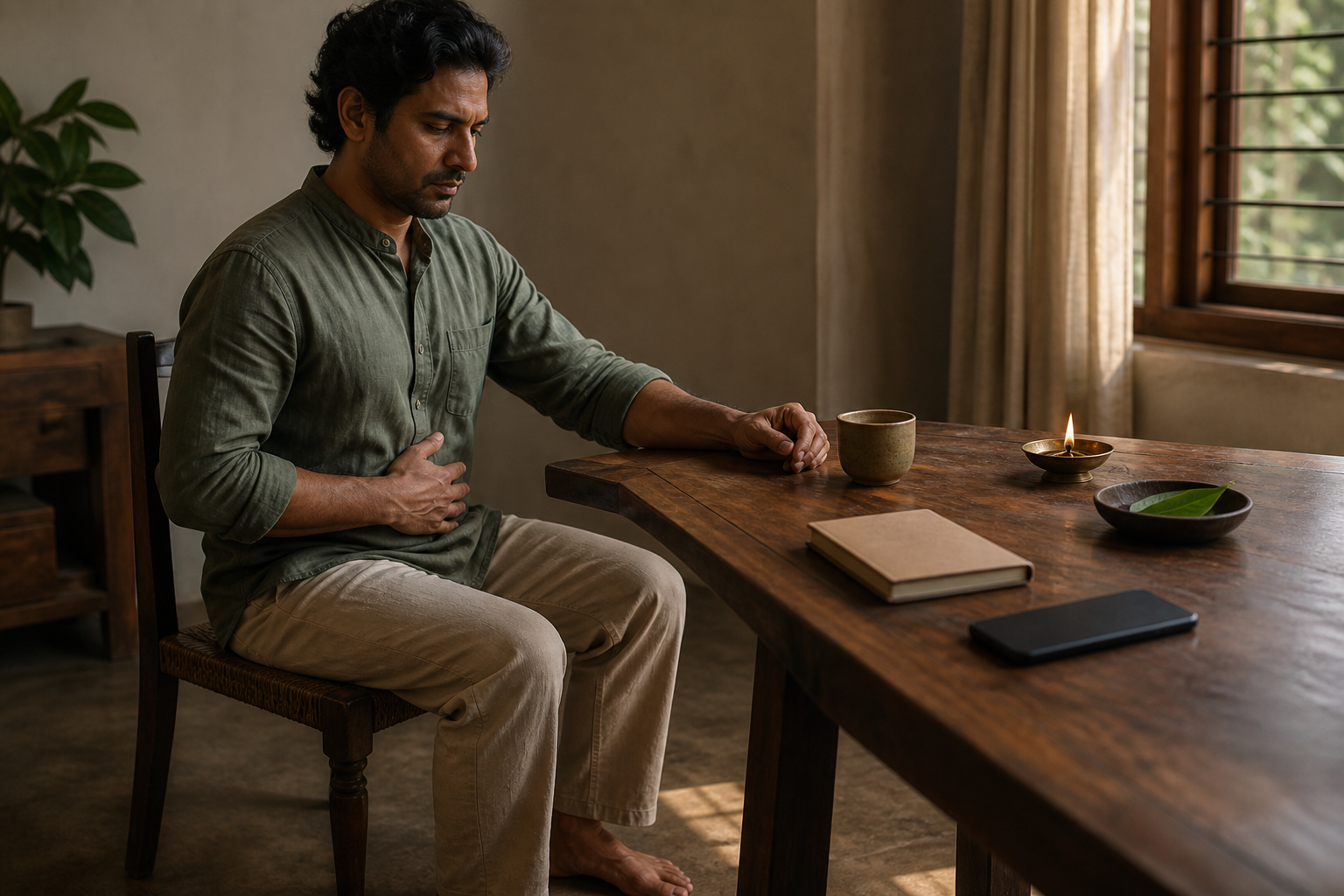
A pause matters most before an action that will be difficult to reverse: a harsh sentence, a public accusation, a retaliatory message, an impulsive promise, or a decision made mainly to escape discomfort. If immediate safety is at stake, act to protect life and seek help. Otherwise, move through this sequence before you speak or decide.
- Stabilize the body. Sit or stand in a balanced posture. Unclench the jaw, lower the shoulders, and feel where the body meets the floor or chair. This gives attention something more reliable than the argument running through the mind.
- Regulate the breath gently. Allow the breath to become smooth and unforced. Pranayama is not a contest in breath retention. If deliberate breathing causes discomfort or dizziness, stop forcing it and return to ordinary breathing.
- Name the movement without becoming it. Use plain language: “Anger is present,” “Fear is present,” or “The mind is rehearsing humiliation.” Saying “this is present” creates more room than saying “this is what I am.”
- Return to one lineage-rooted anchor. Use mantra japa, remembrance of Naam, awareness of bodily sensation, or simple observation of breath. Stay with the practice you actually know instead of searching for a novel technique in the middle of distress.
- Test the intended action against dharma. Ask whether it is truthful, whether it creates avoidable harm, whether it preserves compassion, and whether it serves something beyond wounded pride.
- Take the smallest clean action available. That may be answering calmly, postponing a reply, stating a boundary, correcting an error, apologizing, seeking counsel, or doing the next duty without dramatizing the result.
The Yoga Sutra describes yoga through citta-vrtti-nirodha, the settling of the mind’s movements. In practice, this does not require you to defeat every thought. It requires enough space to see that a thought has appeared, examine what it is asking you to do, and decline obedience when it points toward adharma.
Let ethics decide what calm is for
Inner steadiness becomes Dharmic when it changes conduct. Use these questions when two impulses are competing:
- Satya: Am I responding to what is true, or to a story enlarged by fear, resentment, or vanity?
- Ahimsa: What avoidable harm would this action cause through words, neglect, humiliation, or force?
- Daya: Can compassion shape the manner of my response without making me dishonest or unable to hold a necessary boundary?
- Seva: What response serves the person, family, community, or duty entrusted to me rather than merely protecting my self-image?
These questions are not a mechanical calculator. Satya can require an uncomfortable statement, and ahimsa does not require dishonest agreement. When the duties appear to conflict, delay the non-urgent decision, consult a trusted teacher or elder, and return when the wish to punish or flee is less dominant.
Build the return path into dawn, dusk, body, and community

A crisis is a poor time to invent a spiritual discipline. The mind reaches most easily for what it has rehearsed. A modest practice repeated at stable transitions is therefore more useful than an elaborate routine attempted only when life has already become unmanageable.
At dawn, establish direction before distraction
- Settle the posture and let the breath become regular.
- Use the mantra, Naam remembrance, mindfulness practice, or contemplative silence received from your tradition.
- Read a short passage from scripture slowly enough to identify the conduct it asks of you.
- Choose a quality to carry into the first demanding interaction of the day: truthfulness, restraint, compassion, courage, or service.
The aim is not to manufacture a special mood. It is to establish the direction in which you intend to return when the day pulls attention elsewhere.
At dusk, review conduct without staging a trial
- Recall where emotion governed speech or action.
- Notice where you remained steady without becoming cold.
- Identify any repair that remains necessary: a correction, apology, fulfilled promise, or clearer boundary.
- Release the demand to rewrite the completed day, then return attention to the duty still in front of you.
This review should produce learning and repair, not self-contempt. Shame that endlessly repeats “I am bad” keeps attention fixed on the self. Discernment asks the more useful questions: “What happened, what did it lead me to do, and what is the Dharmic correction?”
Support the contemplative rhythm with ordinary bodily rhythm. Regular eating and rest reduce the number of avoidable disturbances you ask the mind to overcome. Walking in nature can widen attention beyond the private loop of memory and anticipation. None of this guarantees calm; it makes returning less unfamiliar.
Community makes the return more durable. Shared meditation, congregational recitation, scriptural dialogue, and cooperative seva place your practice among people who can challenge self-deception as well as offer support. Put a recurring communal practice on your calendar before the week fills with whatever appears urgent.
Recognize the habits that imitate equanimity
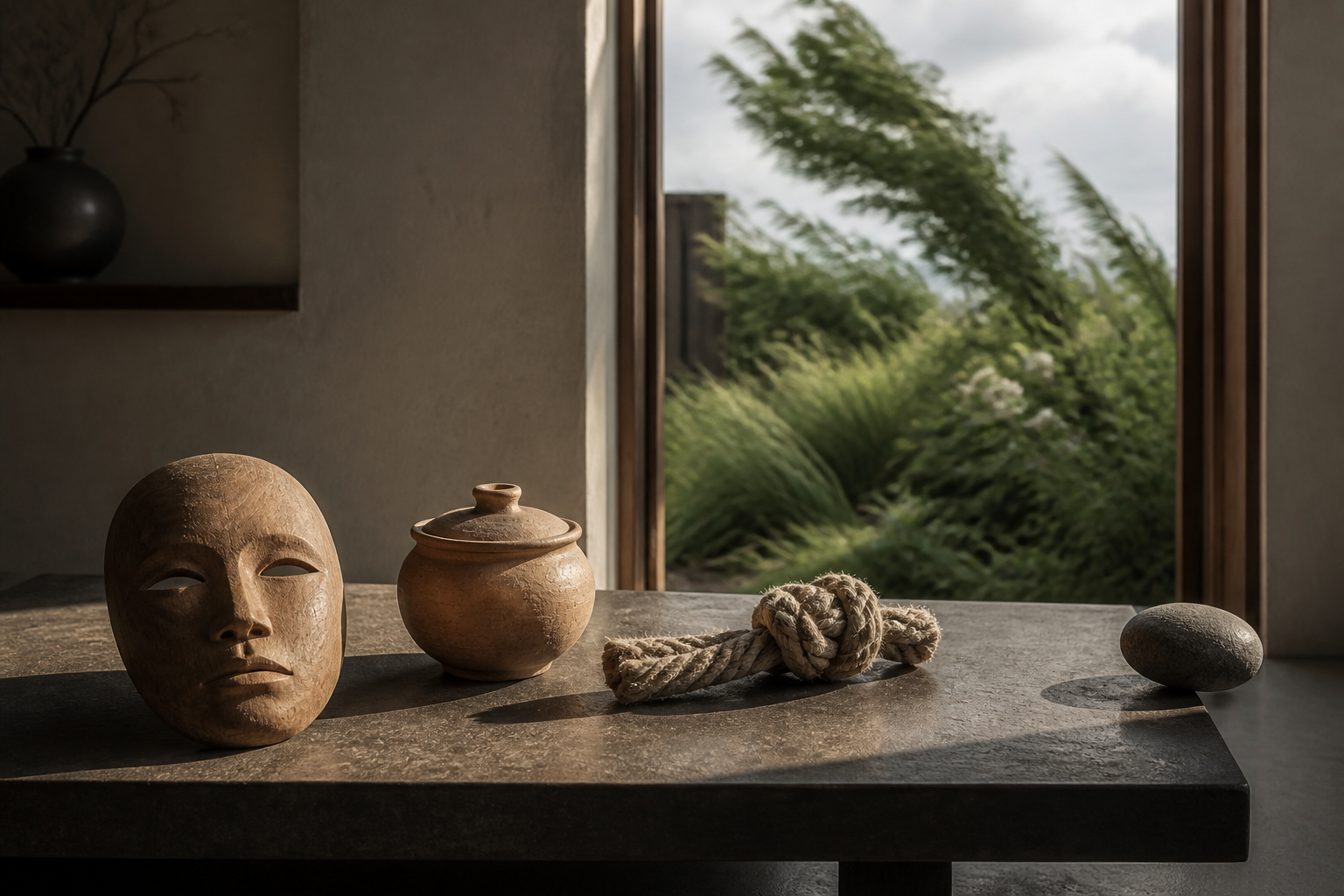
Several common reactions can look spiritual while leaving the underlying pattern untouched. Notice them early:
- Suppression: “A spiritual person should not feel this” drives emotion out of speech but not out of the body. Acknowledge the sensation, restrain harmful action, and investigate the feeling after the immediate surge has passed.
- Fatalism: Acceptance of cosmic order, impermanence, or hukam can be misused to avoid a duty. Acceptance begins with seeing what is present; it does not cancel truthful speech, protection, repair, or service.
- Spiritualized avoidance: Repeating a mantra while refusing a necessary conversation is not resilience. Use the anchor to become capable of the conversation, not to disappear from it.
- Technique collecting: Constantly changing practices can keep you occupied without training attention. Choose a method consonant with your lineage and repeat it long enough for it to become available under pressure.
- Performing calm: A soft voice can still conceal contempt, manipulation, or cowardice. Judge steadiness by the truthfulness and consequences of your conduct, not by its appearance.
- Self-punishing discipline: Missing a practice period is not repaired by hostility toward yourself. Resume at the next established transition and examine what made the rhythm difficult.
Dharmic disciplines can support psychological resilience, but they are not substitutes for medical or mental-health care. If distress is persistent, disabling, or makes you feel unsafe, seek qualified professional help and use spiritual practice as support rather than replacement. If you may harm yourself or someone else, contact local emergency or crisis support immediately.
Key takeaways
- Equanimity is not the absence of emotion; it is the preservation of discernment and ethical agency while emotion changes.
- Before a consequential action, stabilize the body, soften the breath, name the mental movement, return to an anchor, and test the response against dharma.
- Satya, ahimsa, daya, and seva turn calm from a private feeling into responsible conduct.
- Dawn and dusk practices, regular bodily rhythms, nature, and community make the return path easier to find under strain.
- Use the practice of your lineage deeply. Respect shared Dharmic concerns without collapsing Hindu, Buddhist, Jain, and Sikh teachings into one system.
At the next dawn or dusk, choose the anchor you will actually use and place the ethical questions where you can see them. When the next wave rises, pause before the consequential act and choose the cleanest response available. That repeated return – not permanent serenity – is how equanimity becomes resilience.
References
