
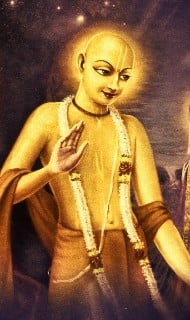
In a quiet, unguarded moment, Srila Prabhupada sat alone. A seeker approached without recognizing him and asked a simple question that would open a profound dialogue: “Where is A.C. Bhaktivedanta Swami?” The ensuing exchangelater recounted by Radha Govinda Swamireveals a pedagogical method rooted in the Guru–Shishya Tradition: inquiry that tests understanding, strengthens devotion, and anchors faith in śāstra.
The conversation unfolded step by step. When asked why he wished to meet A.C. Bhaktivedanta Swami, the seeker responded, “Because he is my guru. I like him very much.” The next question came: “Why you accept him as your guru?” The answer was immediate: “Because he is the servant of Chaitanya Mahaprabhu.” Probing further, Prabhupada asked, “Who is Chaitanya Mahaprabhu?” The reply was firm: “He is Krishna Himself.” When challenged again“Why you accept Lord Chaitanya as Krishna?”the seeker referenced scripture: “Because I read Chaitanya-caritamrta, Krishna Himself came as a devotee to preach.” At that point, Prabhupada countered, “No, no, no, He’s not Krishna, He is devotee of Krishna.” The seeker held his ground: “No, He is Krishna Himself.”
Viewed through the lens of Gaudiya Vaishnavism and the Bhakti Tradition, the exchange functions as a test of śraddhā (faith) and śāstra-pramāṇa (scriptural grounding). The seeker’s appeal to Chaitanya-caritamrta aligns with the theological understanding that Śrī Chaitanya is Svayam Bhagavān Krishna in the mood of a devotee, distributing prema-bhakti. Prabhupada’s questioning sharpened the seeker’s conviction and clarified the necessity of scriptural reasoning in matters of guru, Krishna, and Chaitanya.
This style of rigorous yet compassionate questioning resonates across dharmic traditionsHinduism, Buddhism, Jainism, and Sikhismwhere respectful dialogue, inner inquiry, and teacher-guided reflection are central to spiritual growth. The method fosters unity in spiritual diversity by encouraging learners to test beliefs against scripture, lived ethics, and reason, rather than relying on mere sentiment or identity claims.
Emotionally, the scene is striking: a humble question becomes an unexpected test; a gentle challenge becomes an invitation to deepen understanding. The respectful back-and-forthanchored in love for the guru and reverence for śāstramodels how seekers can navigate complex theology without polemics. Such exchanges build clarity, humility, and resilience, virtues essential for interfaith harmony within the broader dharmic family.
For contemporary readers and practitionersespecially within ISKCON (International Society For Krishna Consciousness)the episode offers a timeless lesson in spiritual pedagogy. Under the Guru–Shishya Tradition, questions are not obstacles but instruments; differences in wording are opportunities for precision; and scripture remains the compass. In that light, Prabhupada’s probing affirms a core principle of Hindu philosophy: truth is realized through disciplined inquiry, devotion, and compassionate guidance.
Inspired by this post on Dandavats.
