
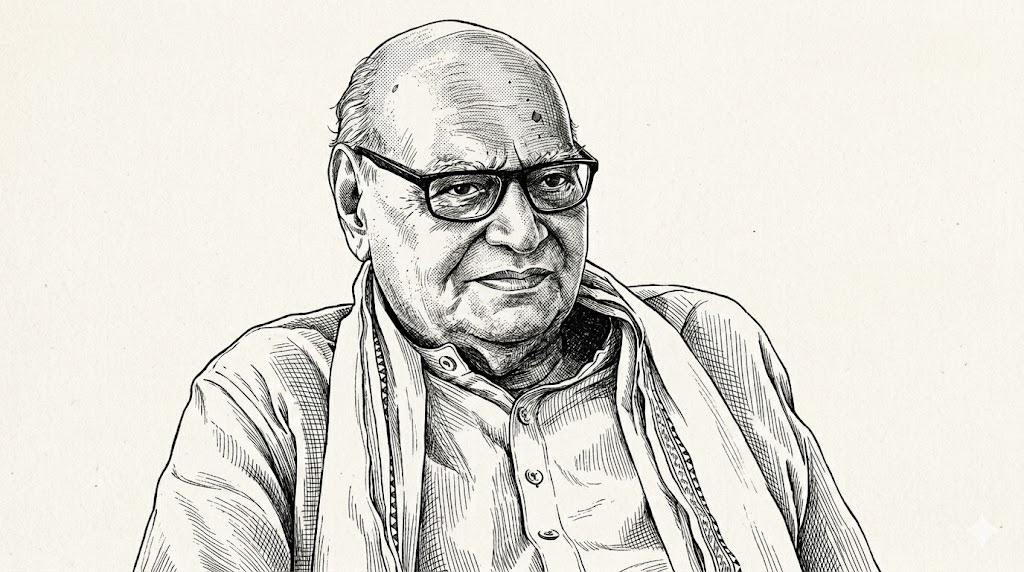
Sondekoppa Ramachandra Sastri Ramaswamy (S.R. Ramaswamy; SRR) passed away in the serenity with which he had lived, leaving behind a void that remains palpable. At 88, his intellect retained its characteristic acuity even as age taxed the body. Those who encountered him in his final months recall an unwavering presencewelcoming mentees and friends, shaping ideas with calm precision, and submitting his column to the Kannada monthly Utthana days before the final summons. He completed the polish on a forthcoming historical volume and, with disarming ease, alternated between weighty tomes and thrillers, joking that he had to “ration his vision,” even as he continued to offer rigorous analyses of contemporary commentary.
SRR was a rarefied cultural phenomenon whose range defies neat categorisation. He was a journalist, editor, institution-builder, and a public-spirited catalystyet such labels only suggest, never capture, his stature. In this, he stands as the natural successor to his Guru, D.V. Gundappa (DVG). Like DVG, he earned a livelihood through journalism but devoted himself to a far more expansive civilisational mission. His literary curiosity spanned the canon and the popular alike; he could, offhand, cite multiple authoritative sources on Arthur Conan Doyle and Sherlock Holmes without the slightest need to impress. His erudition appeared not as display but as easemore a reservoir than a fountain, more a disciplined river than a flood, always contained by the sluice-gates of humility.
SRR’s life-work is best illuminated by a classical definition from the Bhagavad Gita: Yogah karmasu kaushalammastery in action. From his early years at the WQ Judge Press to his lifelong journalistic practice, and through forays into activism and photography, one observes the same signature: steadiness, workmanship, and uncompromising ethical clarity. In the spirit of a true Karma Yogi, he neither sought nor clung to rewards. When recognition found him, he accepted it with equanimity and the familiar, unassuming stillness that defined him.
Despite the numerous laurels he received, SRR has not been accorded the full recognition his accomplishments meritnowhere more so than in journalism. Having entered the profession in the mid-1950s, he would go on to serve for nearly five decades as Chief Editor of Utthanain recent years in an honorary capacity. Like DVG, he endowed timely writing with a timeless quality, but he did so through old-fashioned methods and unimpeachable integrity, armed with little more than a handful of fountain pens, a writing pad, and the discipline that sustains true journalism.
Proximity to power never altered his bearing. He served as a quasi-policy adviser to former Chief Minister Devaraja Urs, drafting several of his speeches; he maintained cordial relations with former Prime Minister H.D. Deve Gowda and counted among his friends senior civil servants and judges, including those of the Supreme Court. Such connections sat lightly upon him, instruments for service rather than levers of ambition.
SRR’s oeuvre offers original and searching analyses of India’s epochal transitions after the late 1980s and into the liberalisation era. Works such as Shatamanada Tiruvinalli Bharata (India at the Turn of the New Century), Swadeshi Jagruti (Awakening of Indigenisation), Swadeshi: Ondu Samvada (Indigenisation: A Conversation), Bharatadalli Samajakarya (Social Work in India; edited by him), Arthikatheya Eradu Dhruva (Two Poles of Economics), and In The Woods of Globalisation belong in the front rank of Kannada literature that engages policy, society, and culture with uncommon balance. Their analyses of swadeshi and globalisation remain a valuable guide for those rethinking economic development through the lens of civilisational resilience, cultural preservation, and social cohesion.
SRR’s greatest public service was rescuing DVG from the slow sediment of obscurity that often engulfs great figures after their passing. Members of DVG’s own family have acknowledged that the sustained remembrance of DVG’s life and scholarship is owed in no small measure to SRR and his circle. A surge of rediscovery over the last decadepropelled by the internet and, at times, by commercial motivesvaries in quality from thoughtful to trivial. Between DVG’s centenary in 1987 and this recent wave, public memory dimmed, with Mankutimmana Kagga surviving in scattered renditions and commentaries. Through those quiet decades, SRR and devoted admirers preserved DVG’s voice and vision.
This preservation required a concrete foundation: the revival of the Gokhale Institute of Public Affairs (GIPA), Bengaluru, established by DVG in 1949. After DVG’s death, the Institute suffered management drift; by the late 1990s it was in serious disrepair. Although SRR had been associated with GIPA since around 1954 as a direct disciple of DVG, he remained at a distance when he lacked institutional latitude under new dispensations. Patiently, and with like-minded colleagues, he nursed GIPA back to intellectual and organisational health. Today, it functions in substantive fidelity to DVG’s ideals, offering a platform for rigorous public discourse, cultural memory, and civilisational reflection across the dharmic spectrum.
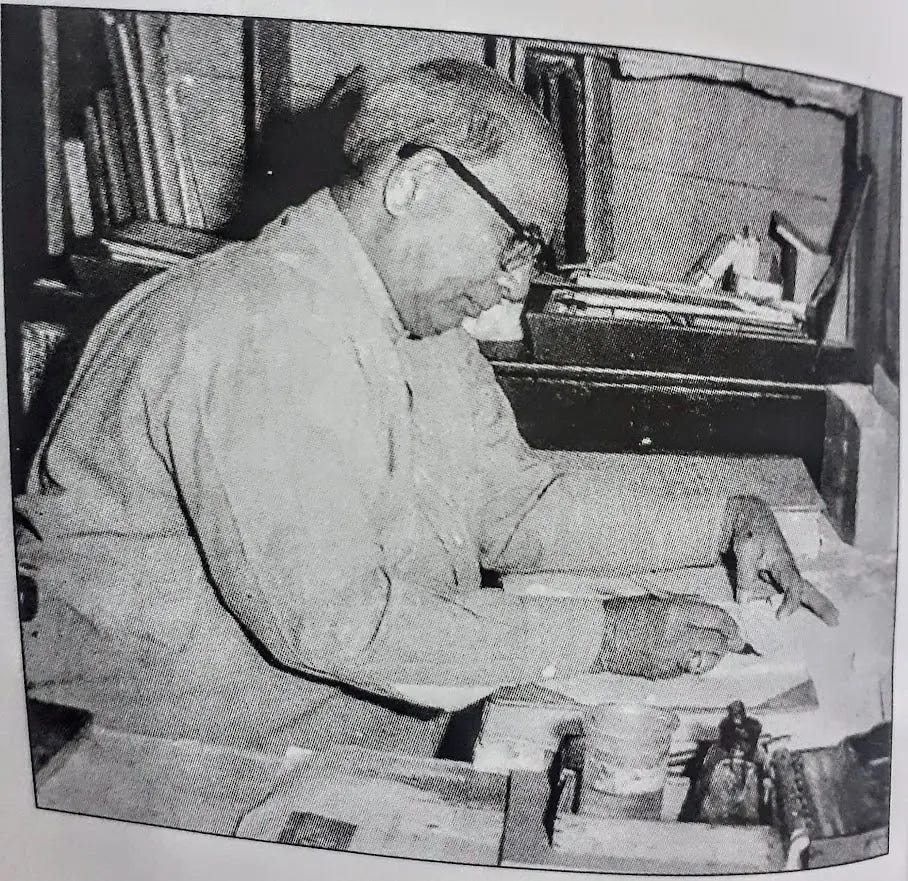
In GIPA’s anteroommodest, orderly, and filled with a working scholar’s essentialsSRR could often be found quietly writing as lectures and dialogues unfolded in the adjoining hall. Many regulars only later realised that the unassuming figure at the small wooden desk was the animating force behind the institution’s resurrection. Such understatement was not incidental; it was a habit of being.
For more than three decades, a weekly Saturday morning conclavelong called Baitak and renamed Anubhava Mantapa by Kannada writer Sri Babu Krishnamurthyconvened in SRR’s compact editor’s chamber at Rashtrotthana Parishad. The sessions resembled an old Indian social rhythm: people gathering, like villagers under a Pipal tree, to exchange news, sift ideas, and share snacks (often Rava vada and tea). It was at once a private parliament without a recess and a university without classes. Such living traditions of discourse help sustain the ethical and intellectual muscle of a culture. As his health declined, the conclave halted in November, leaving participants with a vivid sense of absenceencapsulated by the reflection, “there is no one to fall back upon now.” The atmosphere evoked Evelyn Waugh’s haunting line: “Anthony Blanche had taken something away with him when he went; he had locked a door and hung the key on his chain; and all his friends…needed him now.”
SRR’s social presence was marked by rare accessibility and kindness. He met strangers and companions on the simplest terms, preferred to remain inconspicuous in crowds, and became a palpable presence in personal conversationsometimes by speaking, often by listening. He consistently chose to mentor those who brought sincerity and value to the table, regardless of age, status, or ideology. The ideals he nurtured under the canopy of Bharatiyata were explicitly inclusive, evoking civilisational unity and pluralism across Hinduism, Buddhism, Jainism, and Sikhismdharmic traditions bound by ethical inquiry, intellectual humility, and respect for diverse paths.
Equally striking was his combination of latitude and resolve. He tolerated a remarkable range of posturing and inelegance, never quick to judge. Yet he remained unsparing toward attempts to trivialise or injure his deepest convictions. He was clear-eyed, candid, and immovable when honour demanded itbecause he had placed himself beyond the lure of material outcomes, and spoke plainly when the occasion required.
SRR’s roots lay in spiritual practice and traditional learning, and his formative years were shaped in the company of giants: DVG, Motaganahalli Subrahmanya Sastri, A.R. Krishna Sastri, Rallapalli Anantakrishna Sharma, S. Srikanta Sastri, and Masti Venkatesha Iyengar. His portraits of such luminaries in Deevatigealu (Torchbearers) reveal, in part, the contours of his own evolution: rigorous, reverent, and unsentimental.
He also embodied the spirit of a Viraktaa renunciatecaptured in Mankutimmana Kagga through this verse:
horage lokāsaktiyoḻage sakala virakti ।
horage kāryadhyānavoḻagudāsīna ॥
horage saṃskṛtibhāravoḻagadara tātsāra ।
varayogamārgavidu – mankutimma ॥
On the outside, engage in every worldly activity. Inside, practice detachment from it. On the outside, give yourself fully to the work at hand. Inside, be indifferent to its result. On the outside, take part in cultural endeavours. Inside, remain aloof from it. This is the path of Yoga – Mankutimma
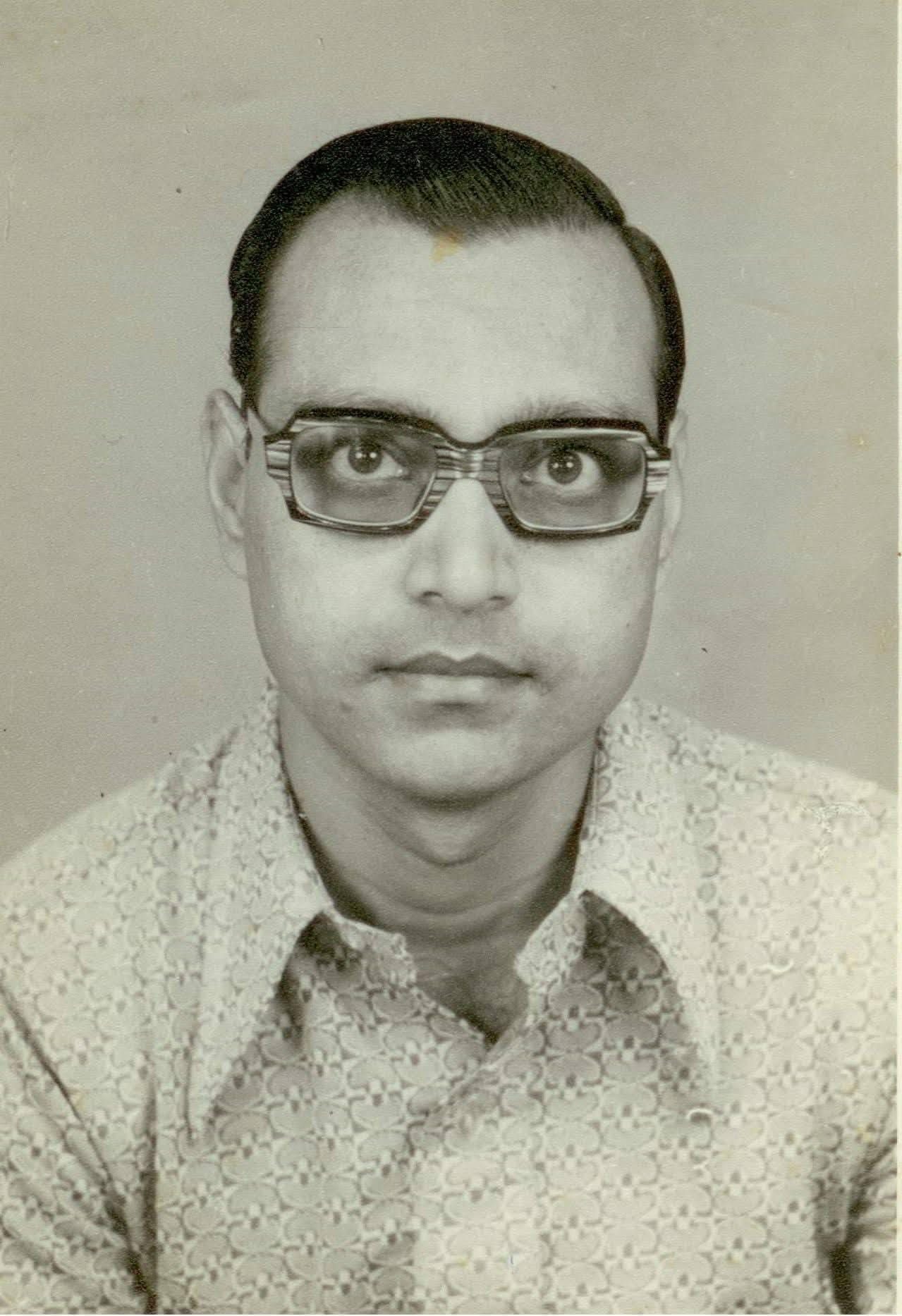
In practice, SRR consistently set aside credit. A considerable, often unacknowledged body of labour across essays, books, reports, speeches, and institutional work bears his influence without bearing his name. He treated the absence of attribution as an elegant trifle unworthy of energy better spent in service.
The last seven to eight years brought persistent ailments, which he bore with uncomplaining fortitude. He continued to attend Anubhava Mantapa sessions as long as he could, revealing the extent of his endurance only when the body finally intervened. He relished occasional excursions to second-hand bookshops, concluding the hunt with a mealoften at Ballal Residencyinsisting on hospitality as a gesture of companionship and encouragement.
Though stoic in work, he was also deeply sentimental in remembrance. At public gatherings, the recollection of those he reveredDVG, or Swami Satchidanandendra Saraswaticould move him to copious tears. The combination of tenderness and toughness marked a personality that refused to become brittle with age.
In comparing DVG and SRR, one observes kinship without imitation. The symmetry across a half-century is striking: SRR was born fifty years after DVG and left the world fifty years after him. Each shaped a canon and a community, yet their angularities were distinct. DVG viewed technology with suspicion, including the tape recorder, and disliked cinema; SRR assigned technology its proper place, enjoyed a range of masala films, and regularly tuned in to vintage BBC and VOA broadcasts. DVG kept pulp fiction at a distance; SRR delighted in it. DVG died in the aftermath of the Emergency, dismayed by the spectacle of freedom bartered for authoritarian excess; SRR departed when the political forces responsible for that trauma had, in large measure, been ideologically containedan outcome to which he quietly contributed. DVG wrote poetry spontaneously; SRR, though prolific, never penned a verse.
It is therefore aptindeed imperativeto recognise SRR as a national treasure, not as an accolade but as a factual assessment of his contribution to Kannada literature, true journalism, cultural preservation, and the wider Indian public sphere.
His final sustained undertaking was to edit and publish the complete English writings and letters of DVGa formidable editorial and archival exercisecompleted in about eight years in collaboration with B.N. Shashi Kiran. With its publication, SRR completed a vital circle of stewardship, ensuring that DVG’s voice would remain available to scholars, readers, and future institution-builders.
To many, SRR was a Wise Elder: a solace, a succour, a steadfast friend across generations, a repository of lived anecdotes, a Renaissance man rooted in place and time, andabove allan exemplar of the Sthithaprajna ideal in the Bhagavad Gita. The most durable homage to such a mentor is not nostalgia but the preservation and application of insights distilled in casual banter and rigorous debate alike. Those insights ennoble; they do not erode.
What lingers, beyond words and works, is the steadying warmth that so many recall in his presencethe intangible assurance of a hand upon the back, the quiet blessing of eons. || Om Shanti Shanti Shantih ||
Inspired by this post on Dharma Dispatch.
