
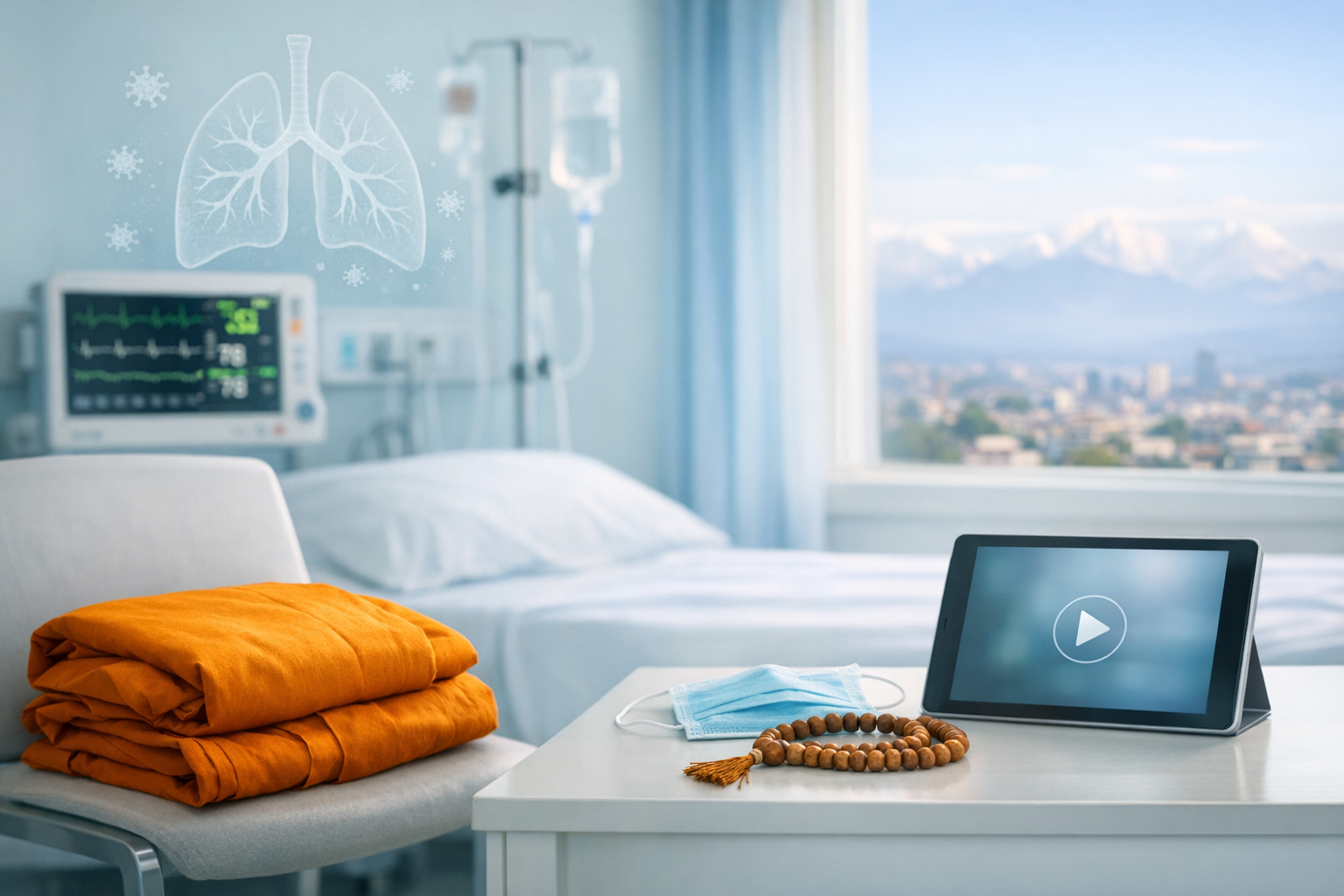

Kathmandu, Feb 16, 2026 Hospital clinicians have confirmed that HH Mahavishnu Swami has tested positive for influenza while already under treatment for pneumonia and sepsis. A brief video message recorded by Maharaj was shared to reassure well-wishers that care is ongoing. The confirmation of influenza introduces an additional, clinically significant variable that can exacerbate lower respiratory tract inflammation and systemic stress if strict precautions are not maintained.
From a healthcare perspective, concurrent influenza, pneumonia, and sepsis require coordinated, evidence-based management. Influenza can damage the respiratory epithelium, impair mucociliary clearance, and facilitate bacterial proliferation, thereby compounding pneumonia severity. In the context of sepsisdefined by life-threatening organ dysfunction from a dysregulated host responseviral-bacterial interactions may amplify inflammatory cascades, increase oxygen demand, and challenge hemodynamic stability. The clinical objective is to reduce viral replication, control bacterial infection, and support organ function while preventing nosocomial transmission.
Diagnosis of influenza in hospitalized patients is typically established by nucleic acid amplification testing (e.g., RT-PCR). A positive result confirms viral detection but does not, by itself, quantify disease severity. Prognosis is more accurately guided by integrated clinical assessments: vital signs, oxygenation indices, imaging, laboratory biomarkers, and validated severity scores for pneumonia and sepsis. This comprehensive appraisal informs timely antiviral initiation, antimicrobial optimization, and supportive measures.
Antiviral therapy (commonly neuraminidase inhibitors such as oseltamivir) is recommended for hospitalized or severe influenza cases, with evidence suggesting benefit even when started beyond 48 hours from symptom onset. Dosing is adjusted for renal function, and drug–drug interactions are reviewed carefully in complex regimens. In parallel, pneumonia management relies on empiric antibiotics aligned with local antibiograms, with de-escalation guided by culture results and clinical response to uphold antimicrobial stewardship.
Respiratory care emphasizes optimizing gas exchange and mitigating ventilator-associated risks. Oxygen therapy may advance from supplemental oxygen to high-flow nasal cannula; if invasive ventilation becomes necessary, lung-protective strategies (low tidal volume, plateau pressure control, and prudent PEEP) are prioritized. Prone positioning is considered in moderate-to-severe hypoxemia or ARDS physiology. Chest imagingserial radiographs or CT when clinically justifiedhelps track consolidation, atelectasis, or evolving complications.
Sepsis bundles focus on early identification and hemodynamic stabilization. Initial crystalloid resuscitation is tailored to perfusion targets, with norepinephrine as the first-line vasopressor to maintain mean arterial pressure (≥65 mmHg) when needed. Lactate trends, urine output, mental status, and organ-specific labs (renal, hepatic, coagulation) guide ongoing care. Severity assessment tools (e.g., SOFA and qSOFA) and pneumonia scores (e.g., CURB-65 or PSI) assist in risk stratification and monitoring trajectories.
Infection prevention and control are critical in the Kathmandu setting to protect patients, staff, and visitors. Droplet and contact precautions, appropriate mask use, hand hygiene, and environmental cleaning are enforced alongside visitor screening and restricted access where indicated. Vaccination and post-exposure prophylaxis for high-risk contacts may be considered per hospital policy. These measures are essential to reduce transmission risk and sustain clinical capacity.
Biomarkers such as C-reactive protein and procalcitonin can aid differentiation between viral and bacterial drivers over the course of illness and help calibrate antibiotic duration. Additional markers (e.g., D-dimer, ferritin, troponin) are interpreted in clinical context to identify coagulopathy or myocardial strain. Nutritional support, glycemic control, electrolyte balance, VTE prophylaxis, and early mobilization are integral components of holistic health and recovery in prolonged hospitalization.
Attention to psychological well-being complements medical care. Quiet environments, opportunities for guided meditation, and supportive communication can reduce stress and promote resilience. Within dharmic traditions, practices like mindful breath awareness and chanting may offer solace to communities while respecting hospital protocols and privacy boundaries. Such practices are not clinical treatments but may help sustain collective equanimity.
The update also evokes a broader ethic shared by Hinduism, Buddhism, Jainism, and Sikhismkaruṇā (compassion), ahimsa (non-harm), and seva (selfless service). These values foster unity in spiritual diversity and encourage grounded, respectful support for all who are ill. In that spirit, communities in Nepal and worldwide can embody care through responsible information-sharing, adherence to public health guidance, and empathy toward healthcare professionals and patients alike.
For many in Kathmandu and across Nepal, seeing Maharaj’s video message has provided reassurance that clinical care is progressing and communications remain open. As further verified information becomes available from the treating team, subsequent updates will focus on clinical milestones, infection control status, and recovery indicators. Until then, reliance on official medical bulletins helps avoid speculation, protects patient dignity, and honors the collaborative efforts of clinicians at the front line of care.
Inspired by this post on Dandavats.
