
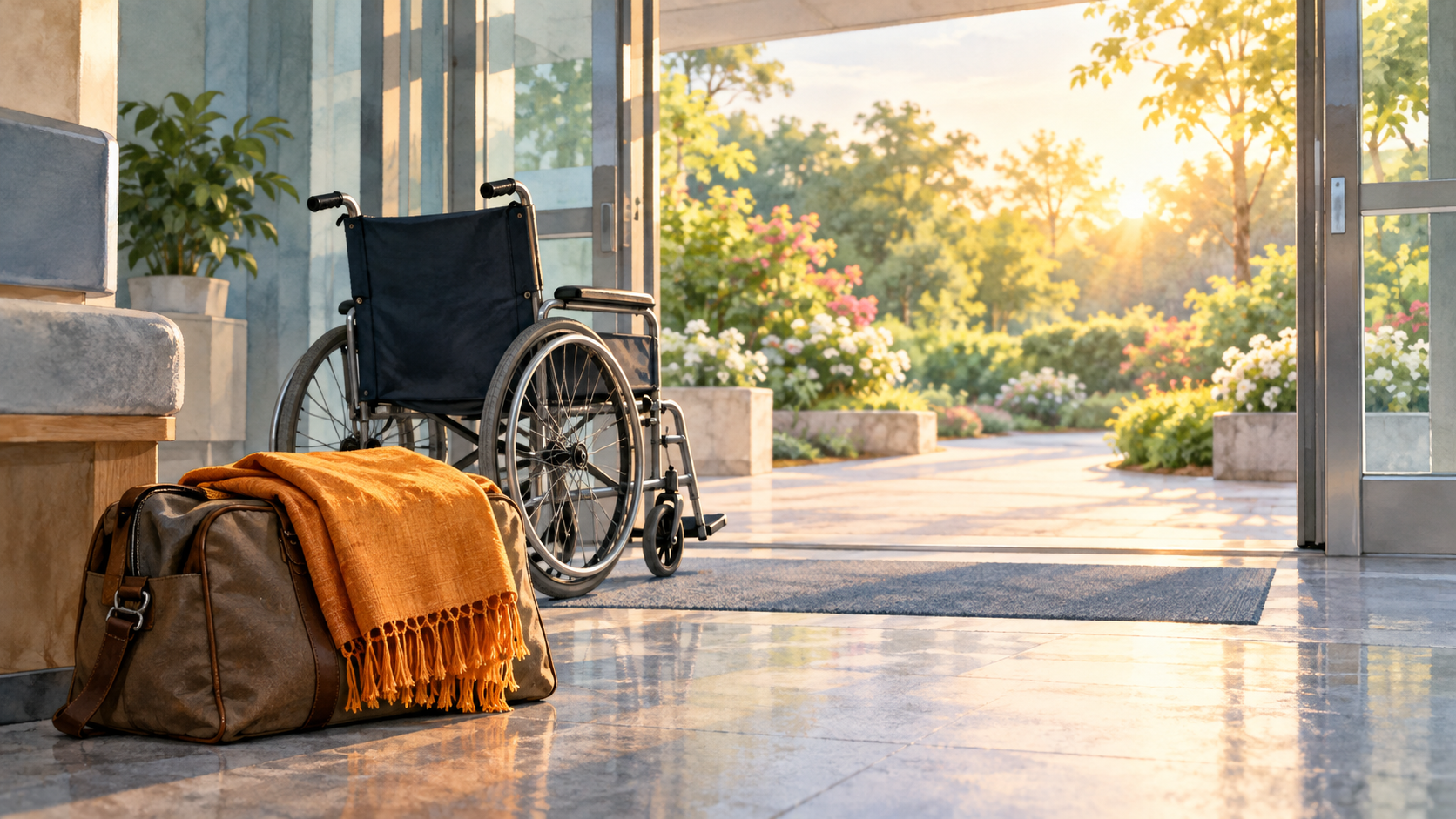
HH Bhakti Chaitanya Swami has been discharged from the hospital. If you came looking for a clear status update, that is the confirmed news.
The available information does not establish his diagnosis, treatment, discharge date, present condition, or plans for returning to public duties. You can receive the welcome news with gratitude without filling those gaps with assumptions.
What a hospital discharge confirms

A discharge means that a period of inpatient hospital care has ended. It does not, by itself, mean that recovery is complete. A person may still need rest, follow-up appointments, medication, rehabilitation, dietary restrictions, limited activity, or privacy. Which of these applies to Bhakti Chaitanya Swami has not been publicly established in the information available here.
This distinction matters because a short health announcement can easily acquire extra claims as it moves through community groups. “Discharged” can become “fully recovered,” and “fully recovered” can become “resuming his schedule.” Those statements are not interchangeable. Until an authorized update provides more information, repeat only the confirmed fact.
What you should not infer from the news
There is no responsible basis here for diagnosing the illness, judging its seriousness, predicting a recovery timeline, or recommending treatment. Hospital discharge decisions depend on the individual patient’s condition and care plan. General medical experience cannot tell you what happened in this particular case.
It would also be premature to assume that Bhakti Chaitanya Swami is ready for travel, darshan, meetings, correspondence, or a normal public programme. Leaving hospital and returning to a demanding schedule are separate milestones. If you help organize a temple or community event, do not advertise his participation until it has been confirmed through an authorized channel.
How devotees can respond without spreading speculation

Concern for a spiritual teacher often produces an urgent desire to know more. Bhakti asks us to turn that concern into disciplined care. In this situation, truthfulness, restraint, prayer, and practical seva belong together.
- Share the confirmed wording. Say that Bhakti Chaitanya Swami has been discharged from hospital. Do not add that he is fully recovered or returning to service unless a later authorized announcement says so.
- Keep the original link with the message. This lets recipients distinguish a published update from forwarded commentary or an undated screenshot.
- Check the date and origin of later messages. Health reports are often recirculated after circumstances have changed. A message from a familiar devotee is not automatically a current or authorized medical update.
- Protect medical privacy. Do not forward alleged diagnoses, prescriptions, bedside photographs, voice notes, or private conversations merely because they appear plausible.
- Offer practical help only through recognized organizers. If assistance is requested, follow the stated method rather than contacting the patient, hospital, attendants, or presumed caregivers independently.
- Let prayer remain prayer. Chanting, remembrance, and sincere well-wishing can accompany medical care; they should not be presented as evidence about his condition or as substitutes for professional treatment.
A useful test before forwarding anything is simple: could you point to the exact authorized statement supporting every claim in your message? If not, shorten the message to what can be verified.
Key takeaways
- HH Bhakti Chaitanya Swami has been discharged from the hospital.
- No diagnosis, treatment history, recovery timeline, or public schedule is confirmed by the information available here.
- Hospital discharge should not be rewritten as complete recovery.
- Devotees can help by praying, respecting privacy, and sharing only verified updates.
- Event organizers should wait for explicit confirmation before announcing his participation.
Receive the news with gratitude and patience
The right next step is modest: welcome the discharge, continue your prayers, and allow recovery to proceed without public pressure. If another authorized update appears, read its precise wording before changing plans or forwarding new claims. Until then, accuracy and restraint are themselves forms of care.
References

Leave a Reply
You must be logged in to post a comment.