
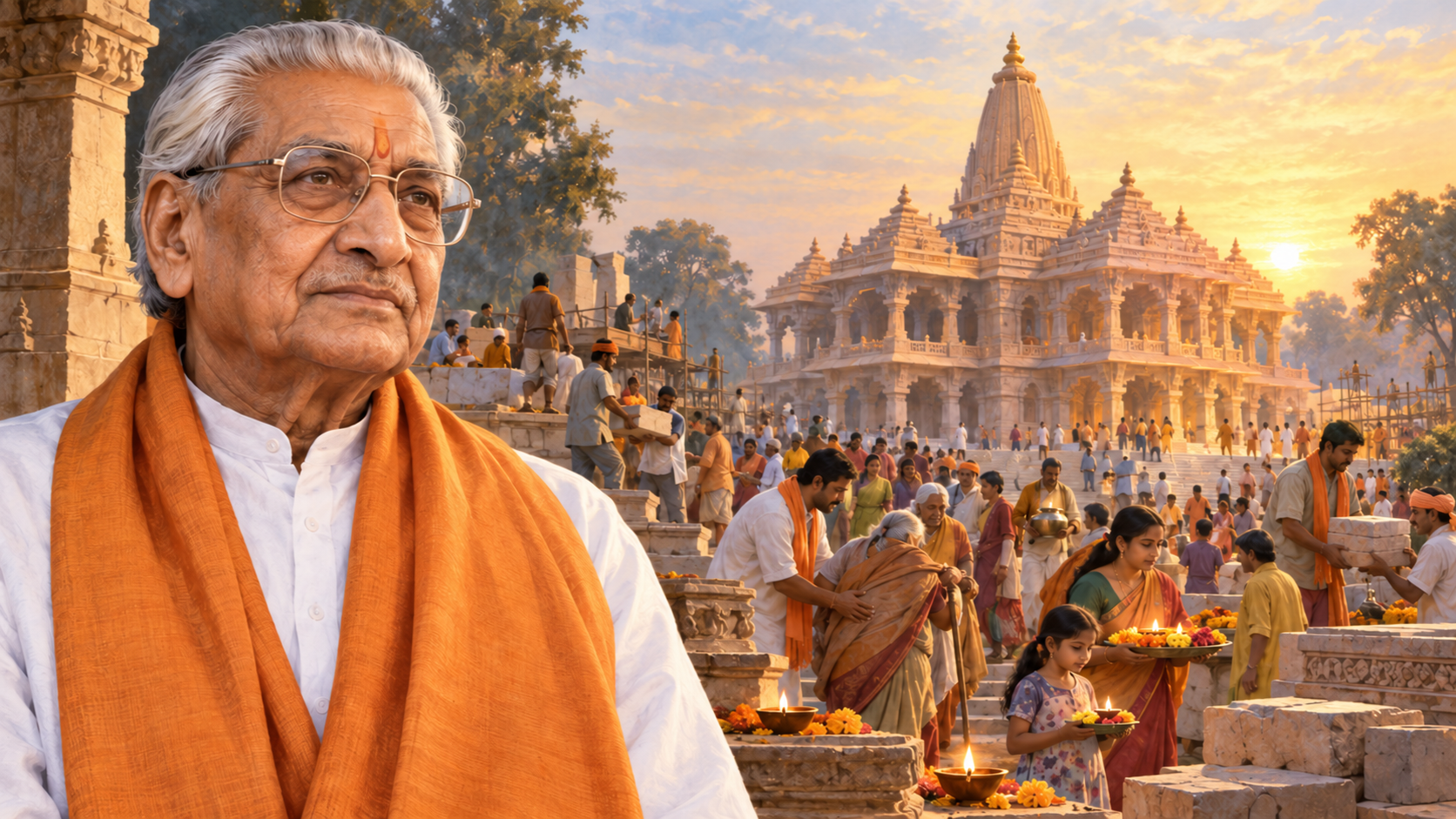
If you are trying to explain to a younger Hindu why Ashok Singhal’s name belongs in the Ram Temple story, saying only that he was part of the movement will not do. It identifies a connection but misses the legacy: helping a sacred claim remain a public duty that people could carry together.
In September 2026, Amit Shah’s public homage to Ashok Singhal again foregrounded his role in the Ram Janmabhoomi movement. The useful question is not whether Singhal deserves remembrance. It is what kind of remembrance does justice to his contribution and helps Hindus inherit the discipline behind it.
The legacy is the capacity behind the temple
A mandir is visible. The human capacity required to sustain a cause is easier to overlook. It consists of people who can explain the cause, organize around it, endure disagreement, preserve memory and continue when immediate results are absent.
That distinction gives us the clearest way to understand Singhal. His legacy is not merely that his name appears beside the Ram Temple. It is his stewardship within the movement that carried Ram Janmabhoomi as a civilizational concern. This is a more demanding measure than proximity to a celebrated outcome. It asks what a leader helped people remember, organize and sustain.
For you, this changes the way the history should be told. Do not begin and end with the physical temple. Explain the capacity behind it. Devotion had to be expressed publicly. Memory had to cross generations. Individuals had to recognize a shared obligation rather than leave the matter to somebody else. A movement exists when those elements become durable enough to outlast a single gathering, speech or political season.
Calling this movement stewardship also keeps the tribute precise. It does not assign every accomplishment to Singhal, nor does it reduce him to a ceremonial figure. It places his significance where the public remembrance places it: within the Ram Janmabhoomi movement itself.
Remember the leader without erasing the movement
Leadership and collective action are not competing explanations. No serious civilizational movement belongs to one individual. Saints, householders, volunteers, organizers, legal participants, political representatives, donors, writers and worshippers may carry different parts of the same cause. Recognizing that network does not diminish leadership. It explains why leadership mattered.
A sound account of Singhal’s legacy should therefore hold two truths together. The movement was larger than any person, and his role within it was consequential enough to receive national public homage. Lose the first truth and history becomes a personality cult. Lose the second and remembrance becomes so diffuse that nobody can learn what committed leadership looks like.
When you teach this history, use a layered account. Shri Ram and Janmabhoomi are the sacred center. The broad community is the bearer of the cause. Singhal is remembered as a prominent steward within that collective endeavor. This framing prevents the temple from being narrated as the gift of a politician, an organization or an activist. It also prevents vague appeals to the collective from making individual responsibility disappear.
This distinction matters beyond one biography. Dharmic work repeatedly fails when everyone reveres the goal but nobody accepts a defined duty. A movement leader’s practical value lies partly in making responsibility concrete: people can see that conviction must become organized effort if it is to survive.
Three distortions weaken the memory of his work
Outcome-only memory
The first distortion treats the temple as the complete story. The long work required to carry a sacred cause then disappears behind the visible result. The community learns how to celebrate an achievement but not how to build the moral and organizational capacity that made it possible.
Correct this whenever you discuss the Ram Temple. Add the process to the outcome. Say plainly that devotion had to become collective organization, public memory and sustained duty. That sentence gives the next generation something it can apply to other questions of cultural preservation.
Unverified hagiography
The second distortion appears when admiration outruns documentation. An easily checked error can allow critics to dismiss a much stronger historical case. Reverence does not require you to repeat every flattering anecdote, assign every success to one person or state uncertain details as settled fact.
Treat accuracy as seva. Before sharing a claim, identify whether it comes from a speech, an interview, an archival record or a personal recollection. Preserve a recollection as a recollection rather than silently converting it into documented history. If a date, quotation or episode cannot yet be verified, label that uncertainty. Honest limits strengthen memory; they do not dishonor it.
Permanent agitation
The third distortion turns movement memory into a permanent emergency posture. Mobilization may be necessary when a community is struggling to make a concern visible. Preservation requires a different discipline: maintaining institutions, recording history, teaching sacred significance, protecting the dignity of worship and directing public energy toward constructive service.
The capacity to mobilize should mature into the capacity to conserve. Otherwise, a community may retain the emotional vocabulary of struggle while losing the habits needed to transmit what the struggle recovered. Singhal’s legacy should call Hindus toward disciplined continuity, not toward an endless search for political excitement.
Key takeaways for carrying the legacy forward
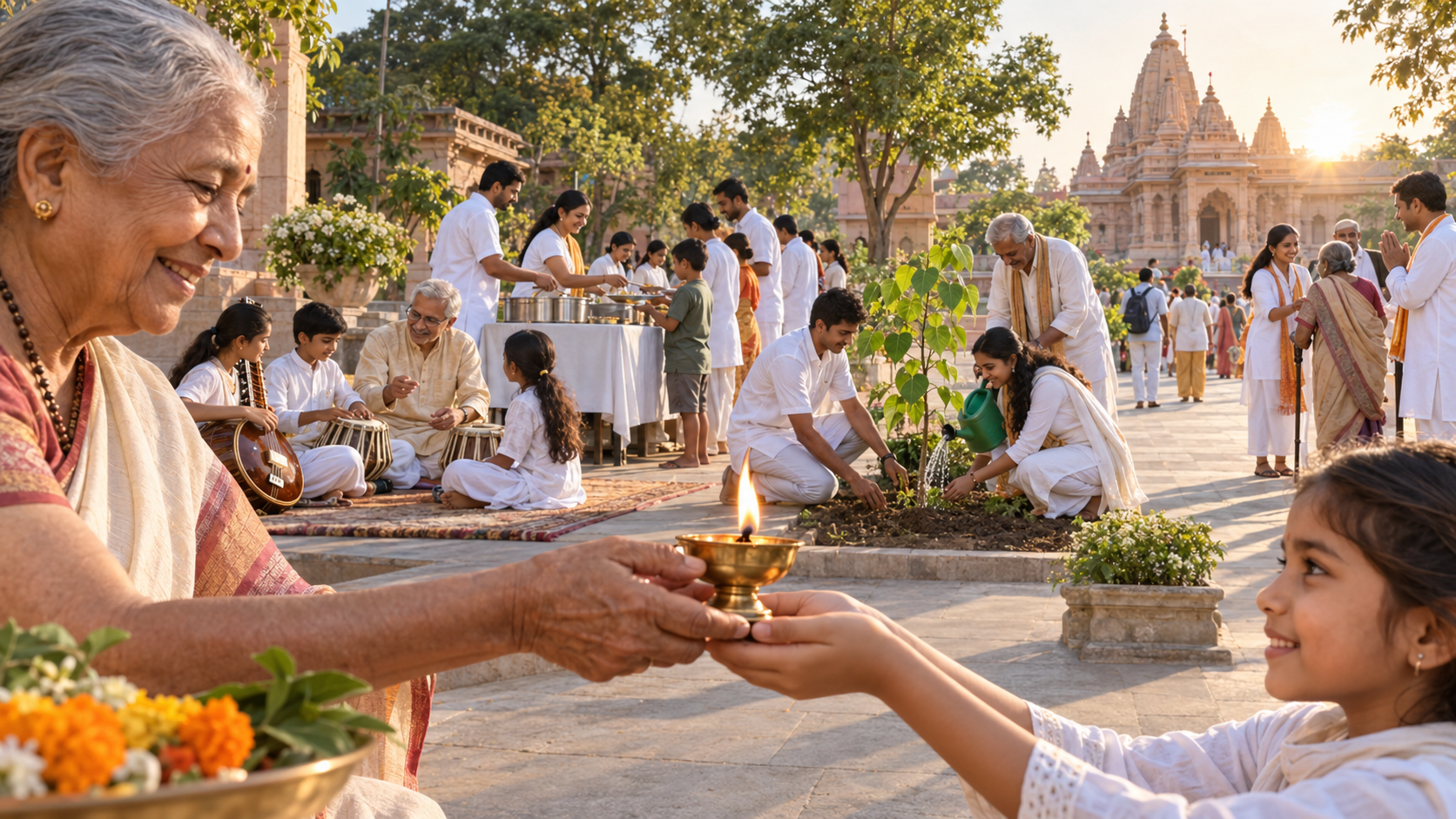
- Describe Singhal’s contribution at the correct scale: a significant role in the Ram Janmabhoomi movement, not merely a ceremonial association with the temple.
- Place him inside the collective movement. Neither minimize his leadership nor give any individual single-handed ownership of a civilizational achievement.
- Treat verifiable memory as seva. Preserve names, dates and context, and distinguish eyewitness testimony from later retelling.
- Explain the method as well as the result. Younger Hindus need to understand how devotion becomes public responsibility and durable organization.
- Connect remembrance to present duty through preservation, education, worship and transparent service rather than stopping at ceremonial praise.
Start where you actually have access. If your family or local temple community carries memories of the Ram Janmabhoomi movement, record them with consent. Ask each speaker to separate what was personally witnessed from what was heard later. Preserve the original recording, prepare a transcript and attach names, dates and places only after checking them. If you have no firsthand connection, organize a reading discussion based on documented material and mark uncertainty instead of filling gaps with attractive stories.
The next time you invoke Ashok Singhal’s name, complete the sentence. Explain what his movement role teaches about organized dharmic persistence, and then name the duty you are prepared to carry. A legacy becomes an inheritance only when memory produces responsible action.
References

Leave a Reply
You must be logged in to post a comment.