
When a viral clip appears to mock a Hindu ritual, distort a Hindu speaker, or treat Hindu devotion as uniquely suspect, you face a choice before you face an argument: react to what is circulating, or establish what actually happened. The second path takes longer, but it gives you a case that can survive scrutiny.
You do not have to choose between defending dharma and defending free expression. A credible response protects sacred traditions, demands one standard for every community, and matches each remedy to the available evidence. Use the following method before you repost, complain, call for removal, or accuse an institution of anti-Hindu bias.
First identify the wrong you are alleging
Public disputes become confused when several different objections are compressed into one label. A factual error is not automatically an insult. An insult is not automatically incitement. A misleading edit is not the same wrong as hostile commentary. Unequal scrutiny may reveal institutional bias even when no individual statement is unlawful.
- Cultural ignorance: A ritual is described inaccurately because its vows, symbols, history, or local meaning were never examined. Ask for a factual correction and enough context for readers to understand the practice.
- Critique: A speaker questions a belief, custom, or institution and supplies reasons. You may answer firmly, but disagreement alone does not establish contempt or illegality.
- Derision: Devotees or sacred practices are reduced to degrading stereotypes. Identify the exact words and explain what they misrepresent instead of relying only on a broad label such as offensive.
- Context manipulation: A headline, caption, or short clip changes the apparent meaning of a longer statement. The appropriate first demand is the complete recording, a faithful transcript, and a visible correction if meaning was altered.
- Selective scrutiny: The same conduct is treated as suspicious when it is Hindu but ordinary when associated with another faith. State the comparison, identify the common criterion, and show how the institution applied it differently.
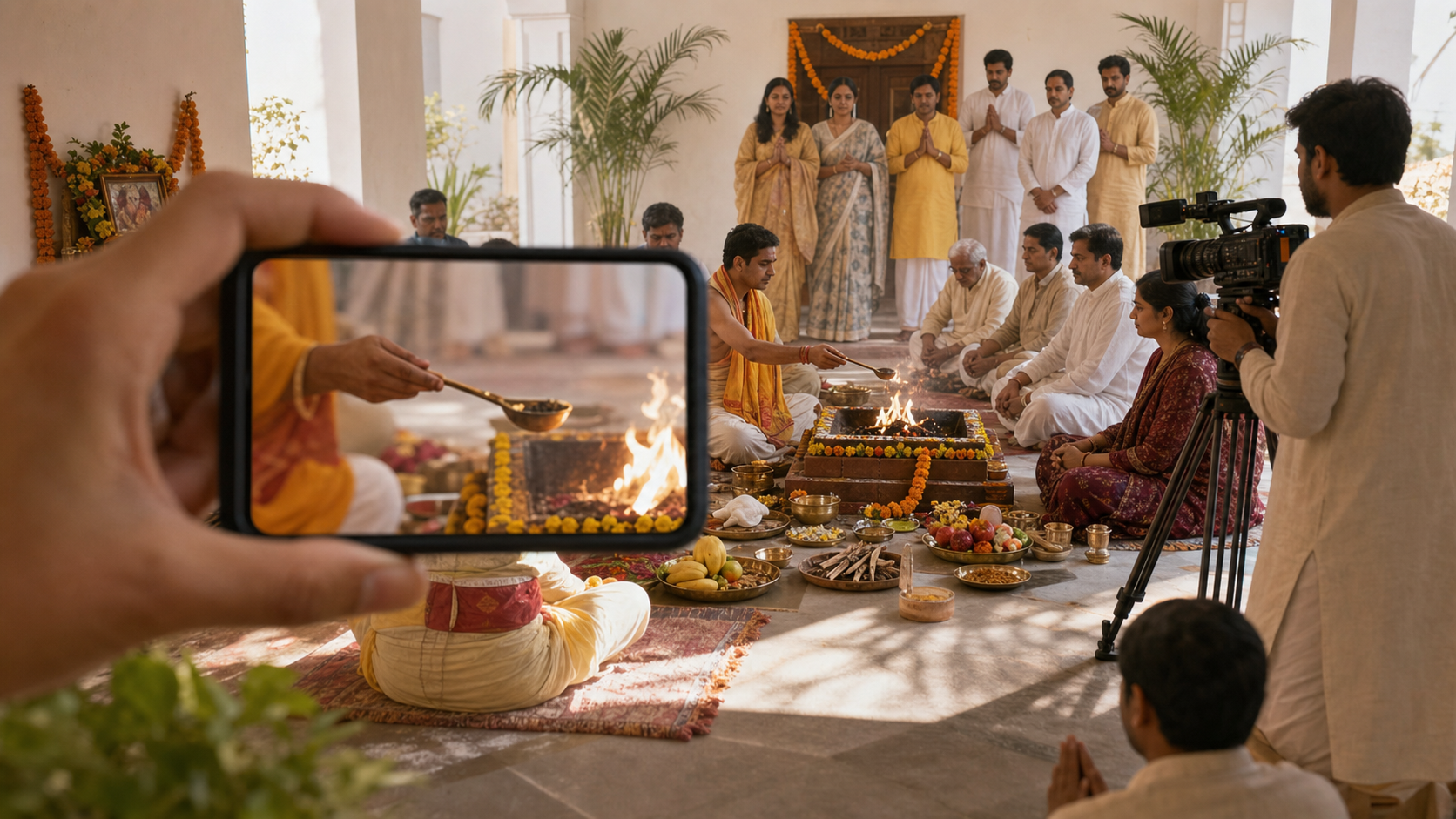
Cultural literacy matters because the outward image of a ritual may not reveal its inner discipline. At Shri Lairai Devi’s annual Jatra in Shirgao, for example, the night-long observance of dhond devotees and the homkunda culminates at dawn and is understood through tapasya, discipline, and seva. Presenting only the most visually dramatic moment can turn an act of austerity into spectacle. Before objecting, identify the omitted meaning: the vow, the devotional purpose, the role of the community, and the continuity carried across generations.
Context is equally important when the disputed object is speech. In one televised controversy concerning Varna, the central allegation was that a 27-second excerpt distorted a longer exchange. That allegation does not become true merely because it was forcefully made. Nor can the excerpt alone disprove it. Publishing the full debate or a verbatim, time-coded transcript gives everyone a record against which the claim can be tested.
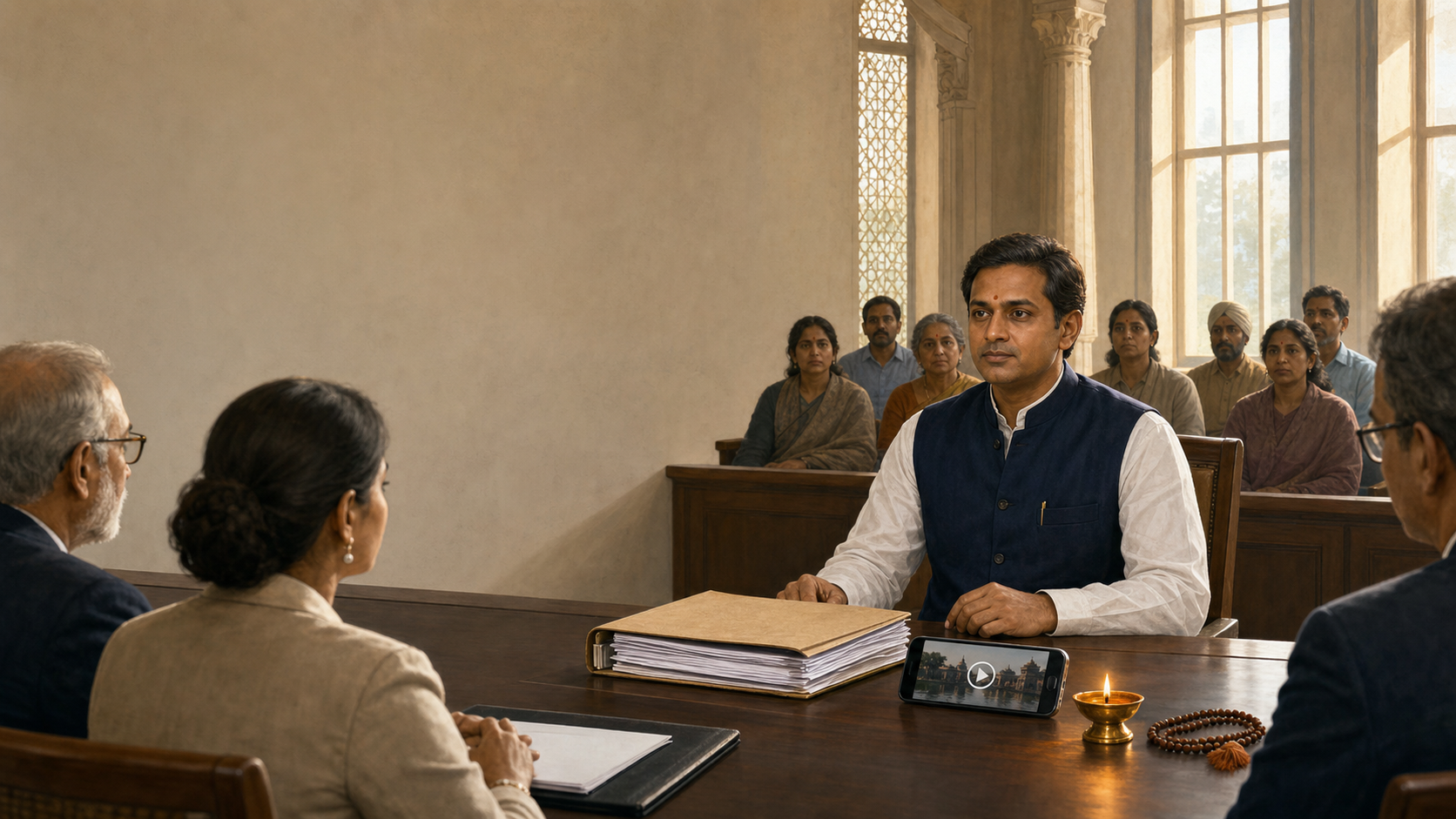
A third kind of dispute concerns inference rather than quotation. A former public official’s visit to a Hindu saint does not, by itself, prove institutional partiality. The relevant question is whether there is a demonstrable connection to public duties, benefits, pending interests, or predetermined decisions. Criticism that skips those links and treats a former Chief Justice of India’s spiritual visit as sufficient evidence of bias risks turning Hindu identity itself into the accusation.
Keep three judgments separate: Was the conduct culturally disrespectful? Was it journalistically or institutionally unfair? Was it legally actionable? The evidence needed for one does not automatically answer the others. A statement can be crude without being criminal, and an edit can be professionally indefensible without proving a conspiracy against Hindus.
Build a record that another person can audit

Your strongest protection against both distortion and overreaction is an evidence trail. Preserve it before asking for removal, because deletion may eliminate the very context needed to establish what occurred.
- Save the exact item. Record the URL, account or channel, visible publication time, complete caption, headline, and relevant on-screen text. Keep uncropped screenshots or a screen recording when lawful and practical.
- Locate the fullest available version. Look for the complete broadcast, speech, interview, thread, or exchange. A repost may have removed both the original caption and the material immediately before or after the disputed words.
- Mark the disputed passage. Transcribe the words exactly and note their location in the full recording. Do not silently clean up grammar, insert motives, or merge separate sentences.
- Separate the layers. Identify which words belong to the speaker and which came from a headline, thumbnail, subtitle, voice-over, caption, or commentator. An institution should answer for its editorial framing, but a guest should not be assigned words supplied by an editor.
- Compare excerpt and context. Ask whether the missing material reverses, qualifies, or merely expands the point. Not every cut is deceptive; the material change in meaning is what must be shown.
- Write the narrowest provable claim. The excerpt omits the speaker’s stated qualification is stronger than the channel always hates Hindus. A precise allegation invites a precise remedy and is harder to dismiss as rhetoric.
- Request a response. Ask the speaker, publisher, or institution whether the material is complete, what editorial standard was used, and whether it will publish the full record. Save the request and any answer.
Preservation does not require further amplification. Keep a private evidentiary copy and share only what a newsroom, platform, regulator, community representative, or lawyer needs to assess the complaint. Redact private contact information before public circulation. Do not dox, threaten, or direct harassment at the speaker, editor, complainant, or their family; those actions create a new wrong and weaken the original grievance.
Use careful status words throughout. Say that a complaint was filed, an edit was alleged to be misleading, or a clarification was requested when that is all the evidence establishes. A complaint is not a finding, a viral consensus is not adjudication, and a person’s failure to answer immediately is not proof of guilt.
Apply one standard while recognizing relevant differences

Institutional fairness is not a demand that Hindu beliefs be exempt from criticism. It is a demand that criticism operate under criteria that would remain defensible if the identities were changed. Before alleging a double standard, run four checks.
- Faith swap: Would a comparable visit to a Sikh granthi, Buddhist bhikkhu, Jain acharya, or leader of another faith be treated as evidence of bias?
- Speaker swap: Would you accept the same editing method if it were used against someone whose conclusions you supported?
- Institution swap: Would the requested correction, right of reply, or evidentiary threshold remain reasonable if another community requested it?
- Outcome swap: If a full recording vindicated the editor rather than the Hindu speaker, would you accept that record? A fair process cannot be conditional on a preferred result.
The same rule does not mean pretending that unlike circumstances are identical. A serving judge and a retired judge occupy different institutional positions. A private visit and an appearance made with official resources are different. A spiritual association and a financial or adjudicative conflict are different. Symmetry requires comparable criteria, comparable evidence, and an explanation when relevant facts justify different outcomes.
For allegations that a public figure’s religious interaction compromises trust, examine objective markers: Was there active litigation or an official matter connected to the religious leader or institution? Was a benefit exchanged? Was official capacity used? Did the person make a statement suggesting that a legal or policy question had been predetermined? These criteria focus scrutiny on institutional conduct rather than the mere fact of Hindu devotion.
Direct your request to the institution responsible for the disputed act:
- For a newsroom or broadcaster: Request the full recording, a time-coded transcript, clear labeling of excerpts, disclosure of material edits, a right of reply, and a correction displayed where the misleading version appeared.
- For a public institution: Ask for the ethical rule being applied, the facts considered, and a written explanation of how the same rule applies across religious traditions.
- For a platform: Use its grievance process, identify the exact content and harm, and distinguish a request to preserve evidence from a request to restrict distribution or remove material.
- For a Hindu organization or campaign: Publish the evidence, the limited claim, the remedy sought, and an explicit rejection of threats and personal abuse.
This form of advocacy is demanding because it binds us to the rule we ask others to follow. That is also why it carries weight. A standard designed only to protect our side is a tactic. A standard we would accept across Hindu, Buddhist, Jain, Sikh, and non-Dharmic cases is a principle.
Choose the smallest remedy capable of correcting the harm

Begin with the remedy that can actually solve the identified problem. Escalation is justified when a lower step fails, when the harm is continuing, or when there is a credible threat to safety or public order. It should not be the first move merely because the material is offensive.
- Clarification: Use this when meaning is ambiguous. Ask what was intended and request the complete context.
- Cultural correction: Use this when a ritual or belief was described inaccurately. Supply the missing name, purpose, sequence, and community understanding without demanding agreement with the theology.
- Context restoration: Use this when an excerpt may mislead. Request the full video or verbatim transcript and ask that the short clip link prominently to it.
- Visible correction or right of reply: Use this when a factual assertion or edit materially changed meaning. The correction should reach substantially the same audience rather than being hidden on an unrelated page.
- Formal grievance: Use the relevant platform, broadcaster, professional, or institutional process when an informal request is ignored or when published standards appear to have been breached. Attach the preserved material and state the exact remedy sought.
- Legal consultation: Reserve this for circumstances in which the evidence may satisfy an applicable legal threshold, reputation has been materially harmed, threats are credible, or public order is genuinely implicated. Intent, context, likely effect, and the distinction between critique and malicious insult matter; personal offense alone does not settle the legal question.
India’s constitutional structure protects both sides of this balance. Article 25 protects freedom of conscience and religious exercise, while Article 19(2) permits reasonable restrictions on speech on specified grounds. Neither principle supplies an automatic verdict in a particular dispute. If you are considering a police complaint, defamation action, or another step that could expose someone to criminal process or damages, consult a qualified Indian lawyer about the law currently in force and the evidence required. Do not copy statutory sections from a viral template or treat general commentary as advice for your case.
A useful first statement can be brief and disciplined: We object to the exact words or editorial act identified here. The available material does not yet provide the full context. We request the complete recording or transcript, a response from the responsible institution, and a visible correction if the excerpt changed the meaning. We reject threats and will pursue any further grievance through lawful channels.
That wording does five jobs. It identifies the conduct, preserves uncertainty, requests verifiable evidence, names a proportionate remedy, and prevents the campaign from being defined by its most abusive participant. You can become more forceful if the record warrants it; it is much harder to recover credibility after making an accusation broader than the evidence.
Dialogue also has a proper place. A creator who misunderstood a local ritual may respond to an explanation from devotees. A publisher may correct an edit after seeing the complete chronology. A voluntary clarification, apology, or withdrawal can resolve some disputes without pretending the original harm did not occur. Dialogue fails, however, when it is used to pressure the aggrieved party into silence or to avoid publishing evidence already requested.
Key takeaways for a fair Hindu response
- Preserve the complete record before reporting, challenging, or seeking removal of disputed material.
- Distinguish cultural ignorance, critique, derision, context manipulation, and selective institutional scrutiny.
- When editing is disputed, ask for the full recording or a verbatim, time-coded transcript.
- Test an allegation of double standards by changing the faith, speaker, institution, and preferred outcome.
- Ask for a remedy tied to the proven harm: clarification, correction, context, right of reply, formal grievance, or qualified legal advice.
- State allegations as allegations, preserve the presumption of innocence, and reject threats, doxxing, and personal abuse.
- Defend the right to question ideas while insisting that devotees, sacred traditions, and Hindu identity are not treated with institutional contempt.
The next time a provocative clip reaches you, do not let its speed dictate your response. Save the record, identify the exact wrong, apply a rule you would accept for every community, and ask for the narrowest remedy that will correct it. Hindu advocacy is most difficult to dismiss when it is culturally literate, evidentially exact, firm about equal treatment, and disciplined in method.
References
- Hindu Jagruti Samiti — Complaints Against Chelsea Rodrigues Over Revered Shri Lairai Devi Ritual Ignite Debate
- Hindu Jagruti Samiti — Selective Editing Sparks Uproar: HJS Warns Gomantak TV, Seeks Full Varna Debate Video
- Hindu Jagruti Samiti — Faith, Judiciary, and ‘Double Standards’: Sanatan Sanstha on a former CJI’s visit to a saint