
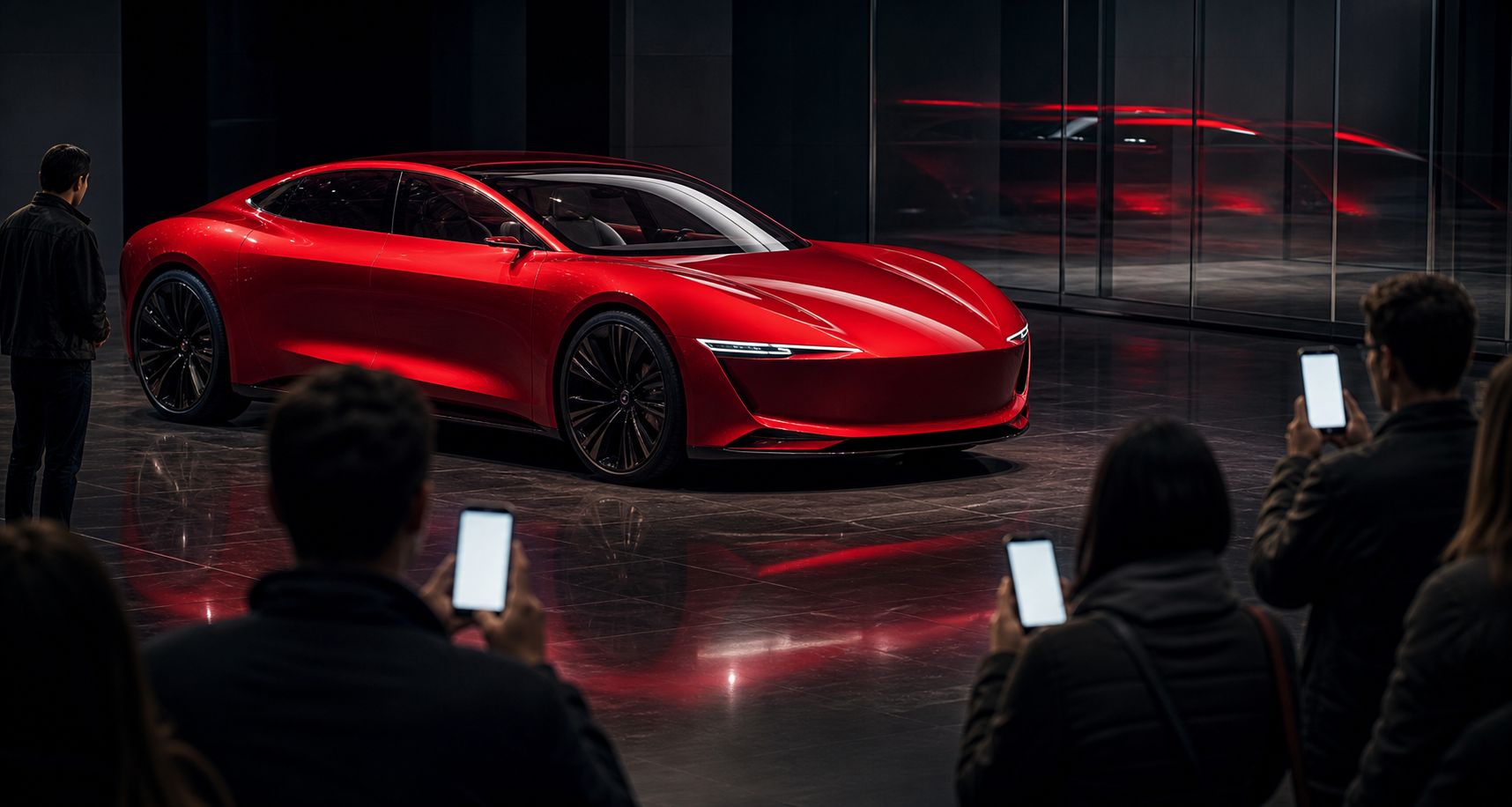
If you first encountered the Ferrari Luce through a joke, you may be trying to decide whether its design is genuinely anonymous or simply unfamiliar. That distinction matters. A meme can identify an awkward first impression within seconds, but it cannot tell you how the car looks in motion, whether its controls work under pressure, or whether its performance remains consistent after repeated hard use.
The useful response is neither to dismiss the ridicule nor to accept it as a final verdict. You can treat the reaction as an early diagnostic, separate the exterior argument from the cabin and engineering questions, and then watch for the evidence that will determine whether Ferrari has expanded its identity or diluted it.
What the meme storm measures, and what it cannot
The immediate and sharply divided response to the Luce tells us something real: the exterior did not communicate Ferrari’s identity clearly enough to every viewer at first glance. That is meaningful for a company whose products function as cultural symbols long before most people ever see them on a road.
Memes act as a compressed visual audit. They take a vague reaction such as the nose looks too quiet, the stance feels wrong, or the surfaces lack tension and turn it into a comparison that can be understood without specialist vocabulary. Repetition then makes one interpretation feel universal, even when thousands of people are merely sharing the same joke rather than reaching independent conclusions.
That is why share counts should be read as evidence of narrative reach, not evidence of buyer rejection. Social platforms reward instantly legible humour, surprise, and negative reactions. They do not naturally reward a patient examination of proportion, thermal management, steering feedback, or control placement.
You should nevertheless pay attention when different jokes repeatedly converge on the same part of the car. If unrelated viewers keep reacting to the front graphic, apparent visual weight, or absence of a recognizable Ferrari gesture, the design team has encountered a communication problem. The public may not use formal design language, but it can still detect when a shape and a badge appear to be telling different stories.
Key takeaways
- Use memes to locate the visual feature causing discomfort, not to decide whether the whole car has failed.
- Treat the exterior backlash separately from the early praise for physical cabin controls.
- Do not confuse viral reach with resistance among Ferrari’s actual allocation-based clientele.
- Reserve the engineering verdict for repeat-performance data, thermal behaviour, and independent driving impressions.
- Revisit the design after seeing the car in motion and from several angles; a single frontal image is a severe but incomplete test.
Why the exterior feels unfamiliar to Ferrari enthusiasts
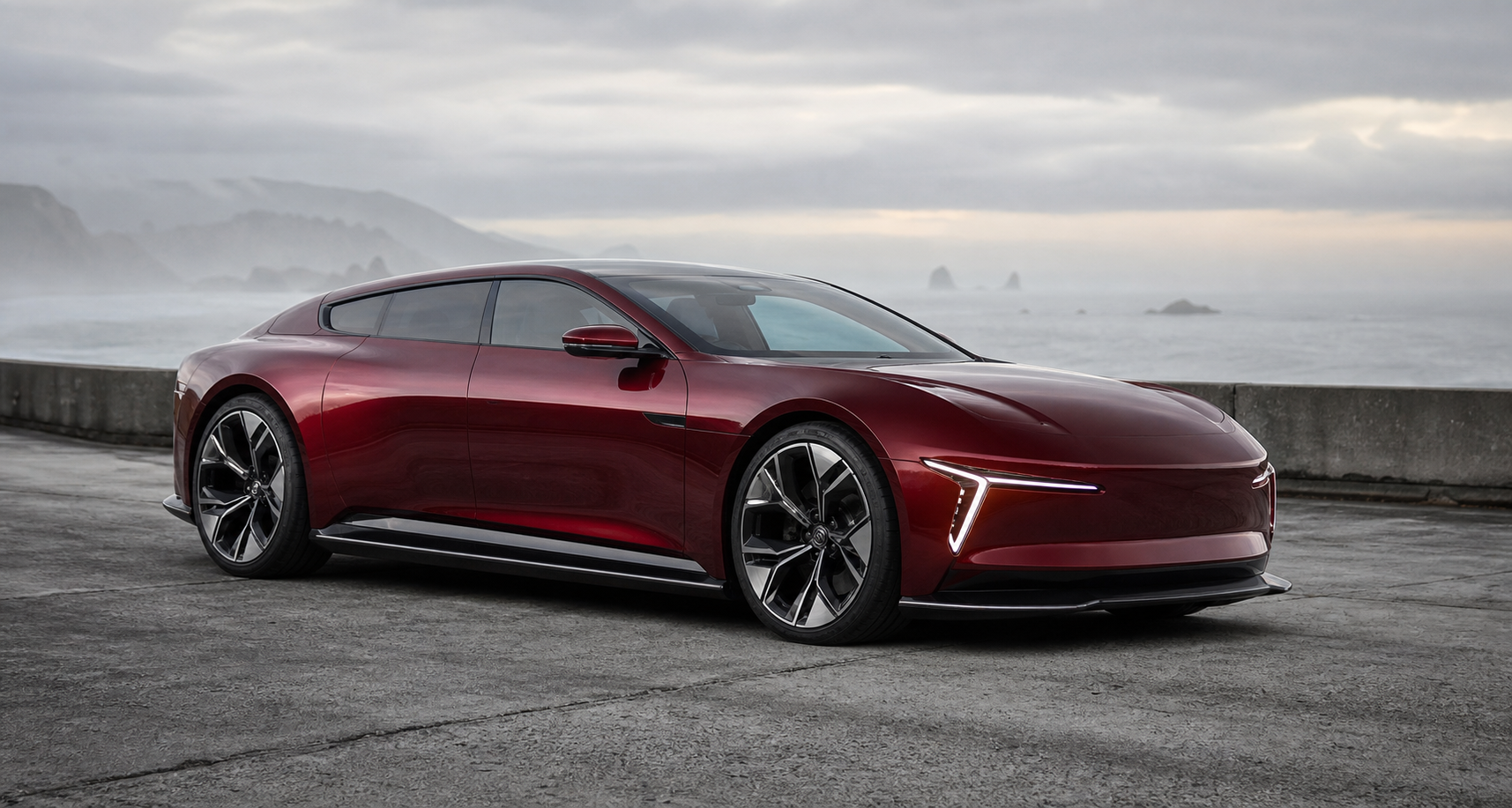
The exterior dispute is not really about whether one lamp or intake is attractive. It concerns proportion, stance, and inherited brand grammar. Performance cars have traditionally signalled power through long bonnets, visible cooling openings, tightly occupied wheel arches, and surfaces that appear stretched around mechanical components. Ferrari has refined these cues across generations of combustion-powered cars.
An electric platform changes the starting point. Battery placement affects mass distribution and floor height. Cooling remains essential, but the required air may be directed through discreet channels rather than a large engine-fed grille. Aerodynamic efficiency favours a controlled underbody, a smaller frontal opening, and carefully managed airflow around the wheels and rear wake. A quieter front can therefore be technically purposeful while still appearing emotionally underpowered.
This is the central Luce tension: functional modernity does not automatically produce recognizable identity. Removing an intake because an electric powertrain does not need it is coherent. Removing the visual tension that made the intake, bonnet, lamp, and fender feel related can leave the remaining form looking generic. Good reduction removes obsolete theatre while preserving the geometry that made the theatre believable.
The publicly associated design input from Jony Ive’s independent studio LoveFrom makes that question more prominent. LoveFrom is associated with reductive, user-centred minimalism, while Ferrari’s visual heritage depends heavily on expressive tension. Minimalism can clarify a strong identity, but it can also erase the very contrasts through which that identity was recognized.
When you assess the Luce exterior, divide your reaction into four tests:
- Silhouette: Cover the badges and ignore the paint. Ask whether the roofline, bonnet, cabin placement, and rear mass still communicate a purposeful performance car.
- Stance: Look at how the body sits over the wheels. A surface can be beautifully resolved in isolation while the complete car appears visually heavy or hesitant.
- Face: Identify what replaces the expressive work once performed by the grille and intakes. Lamps, fender peaks, air channels, and the relationship between open and closed areas must now carry more of the identity.
- Surface in changing light: Reserve part of your judgement until moving footage or a real-world viewing is available. Subtle curvature may disappear in a flat image, while an apparently clean surface may reveal unresolved bulk from another angle.
Do not ask only whether the car resembles an older Ferrari. Ask whether its new shapes perform the same communicative work. A successful electric Ferrari does not need false combustion openings, but it does need a new way to express speed, controlled aggression, and mechanical purpose.
The cabin may contain the Luce’s strongest design decision
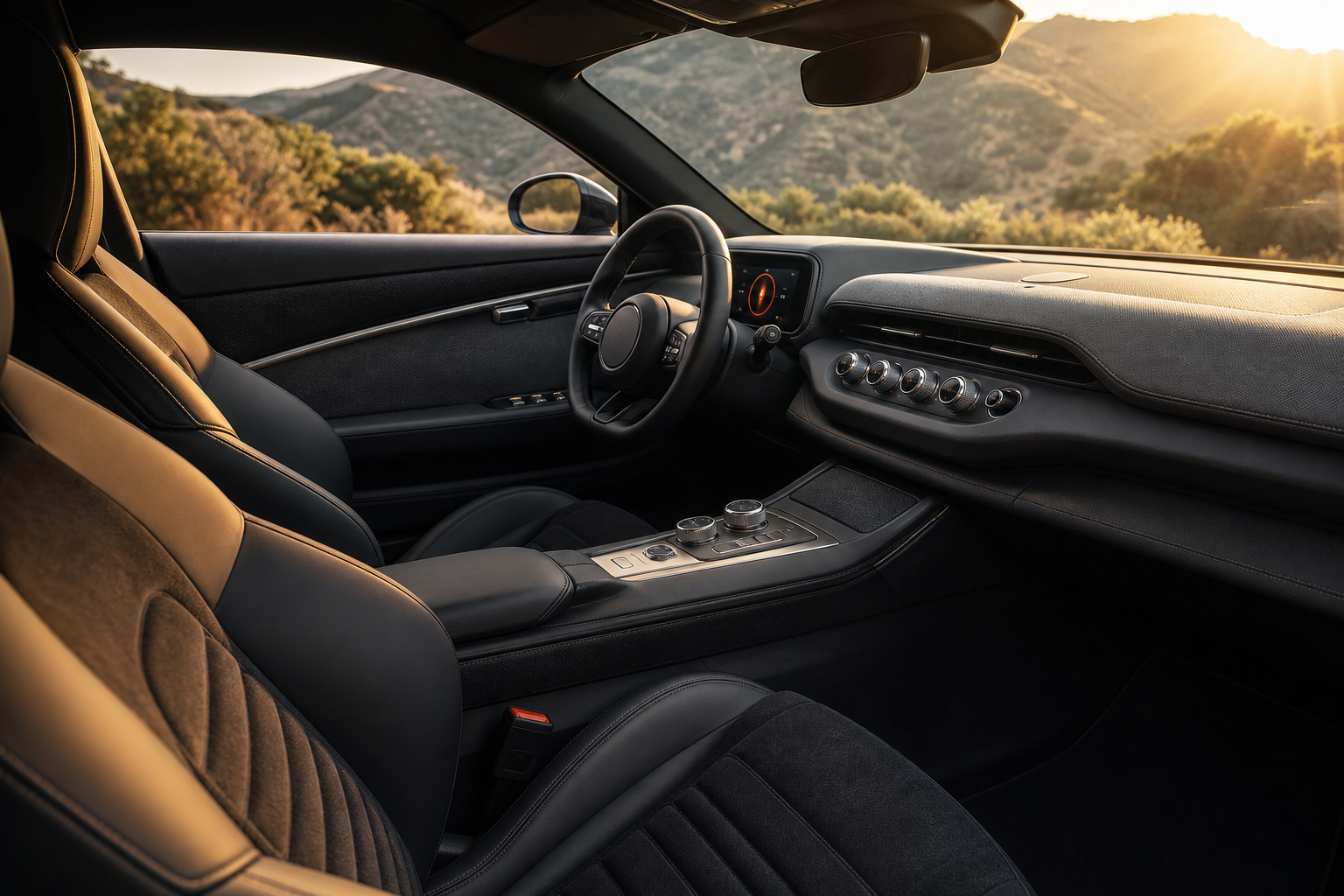
The exterior dominates social media because it can be judged from a thumbnail. The more consequential design choice may be inside, where the Luce has received early praise for retaining tactile, workable controls instead of forcing every function into a large touchscreen.
That is not nostalgia for its own sake. A physical control can be located by touch, operated through muscle memory, and confirmed through movement or resistance. Those qualities matter when the vehicle is vibrating, cornering, or demanding the driver’s visual attention. Frequently used functions hidden behind screen layers impose a different cost: the driver must find the correct screen, identify a target, touch it accurately, and verify that the command registered.
Physical controls are not automatically good, however. A cabin filled with identical buttons can be as confusing as a poorly organised screen. The correct test is whether the interface matches the urgency and frequency of each task.
- Frequent or time-sensitive tasks should be reachable without searching through a menu. Their controls need clear shapes, predictable locations, and feedback the driver can feel.
- Driving-state controls should make the current setting obvious. A driver should not have to wonder whether a mode change, regenerative setting, or dynamic adjustment was accepted.
- Infrequent configuration tasks can live on a screen if the menu structure is clear and they are not likely to be needed while the car is moving quickly.
- Steering-wheel inputs need resistance and differentiation. A control positioned under the driver’s fingers is useful only if accidental activation is unlikely.
When detailed cabin demonstrations appear, watch the complete task rather than counting buttons. Can the driver change a common setting in one deliberate action? Can the control be identified by touch? Is confirmation tactile, audible, or visible without requiring a long glance? Does the interface remain intelligible when the car is being driven rather than displayed under studio lighting?
If Ferrari has solved those questions well, the Luce could influence a wider correction in automotive interface design. The meaningful innovation would not be the return of buttons as decoration. It would be a disciplined division of labour between tactile controls and screens.
Engineering must replace the drama that electrification removes
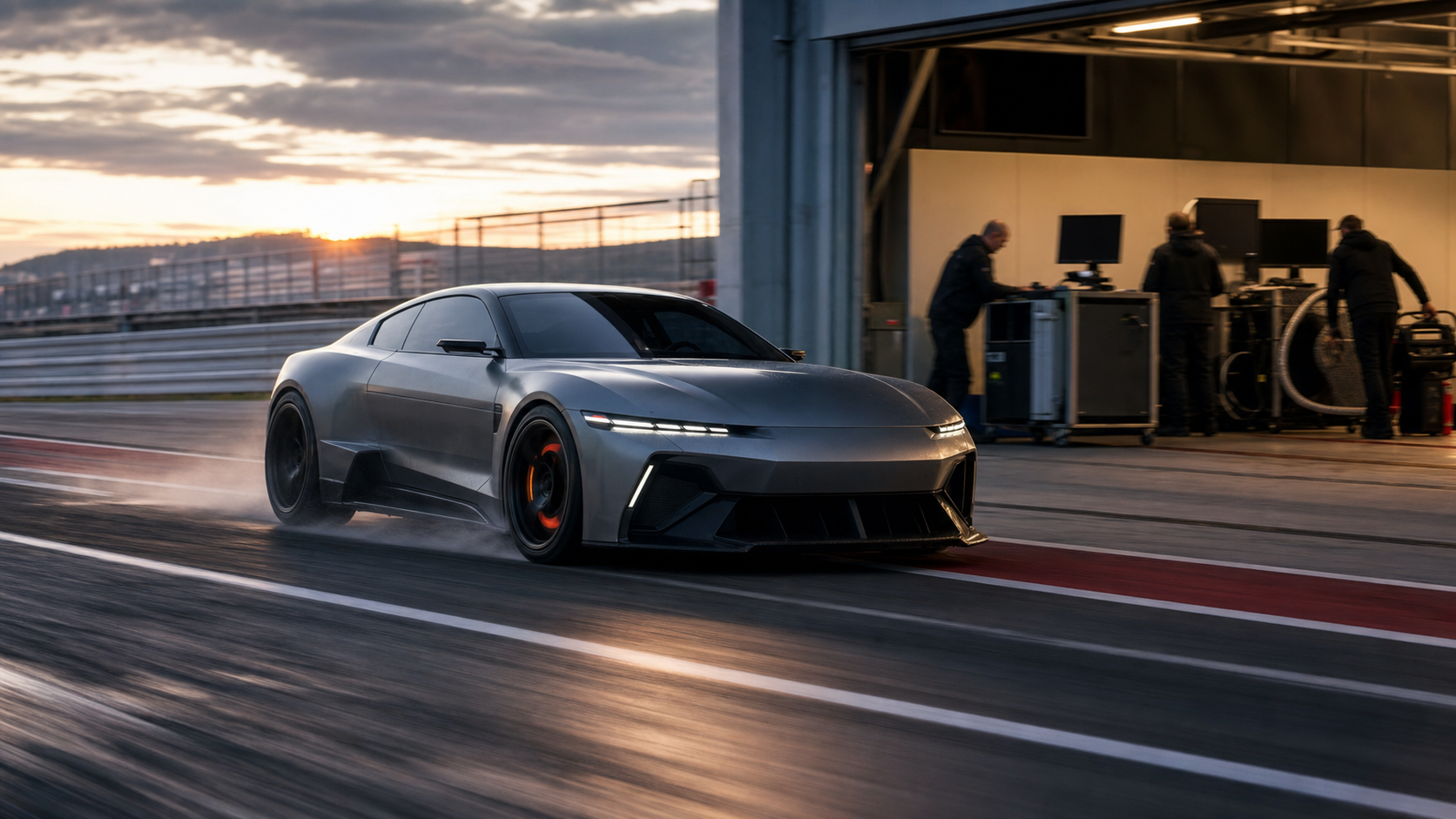
A Ferrari has never been only a shape. Combustion models create identity through engine sound, gear changes, vibration, throttle response, steering load, and the gradual build of revs. An electric car removes or transforms several of those signals. The Luce therefore has to create connection through torque delivery, pedal tuning, steering feedback, chassis behaviour, sound design, and haptic cues without becoming theatrical in an artificial way.
Headline acceleration will not answer whether Ferrari has succeeded. The more demanding question is whether the car can deliver its performance repeatedly. High-output electric vehicles generate heat in the battery, motors, inverters, cooling system, tyres, and brakes. A spectacular first run means less if rising temperatures force the system to reduce power during subsequent hard use.
As technical information becomes available, organise it into three layers:
Architecture
Top-tier performance EVs commonly use high-voltage systems around 800 volts, silicon-carbide inverters, sophisticated torque vectoring, and separate strategies for managing heat in the battery and power electronics. These technologies can support efficiency, rapid power delivery, and sustained performance, but their presence alone is not proof of good integration. Treat the specification sheet as a list of capabilities to investigate.
Repeatability
Look for independent tests that show what happens over multiple hard laps or repeated acceleration runs. The relevant evidence includes when power begins to fall, how consistently the brakes perform, and how quickly the system recovers. A thermal derate curve is more informative for serious use than an isolated peak-power figure.
Driver communication
Torque vectoring can make a car exceptionally capable while leaving the driver unaware of how the grip is being managed. Good tuning should help the driver understand available traction through steering, pedal response, body movement, and predictable power delivery. Curated sound and haptic feedback should reinforce real vehicle behaviour rather than distract from it.
Weight and seating position will also shape the verdict. A low centre of gravity can help an electric car change direction, but total mass still affects braking, tyre load, and the sense of agility. Battery packaging can raise the floor and seating point, altering the intimate relationship between the driver, road, and bodywork. Watch for disclosed mass and packaging details, then wait to hear whether drivers feel seated within the car or perched upon its battery.
This is where design and engineering meet. Hidden cooling apertures, a low seating position, a coherent control layout, and repeatable performance are not separate achievements. Together they determine whether the Luce’s minimalism feels disciplined or merely cosmetic.
How to decide whether the backlash becomes lasting brand damage
With reports placing the Luce near USD 600,000, this is not a mass-market referendum. Ferrari is addressing a scarce, allocation-driven market in which provenance, access, collection strategy, and the driving experience can matter more than widespread online approval. Rimac Nevera, Pininfarina Battista, and Lotus Evija already provide ultra-expensive electric performance reference points, so the Luce does not need to win a conventional value comparison.
That does not make the memes irrelevant. Sales and brand meaning are different measures. A limited run may find buyers while the wider public concludes that Ferrari no longer knows how to translate its identity into the electric era. Conversely, a divisive launch can become historically important if the design later appears coherent and influential.
Track the reception through three separate questions:
- Does the joke persist? An intense reaction that disappears after the launch cycle is less important than one comparison that remains attached to the car whenever it reappears.
- Does real-world exposure change the judgement? If moving footage, road sightings, and professional reviews repeatedly make the proportions look more coherent, the first images may have created part of the problem. If the same criticism survives every angle, the weakness is more durable.
- Does the driving experience reframe the exterior? Exceptional dynamics can make an initially difficult form feel purposeful. A generic driving experience will make disputed styling harder to defend because there is no deeper achievement to explain the unfamiliar shape.
There is a useful Dharmic habit in allowing these perspectives to coexist without flattening them into one verdict. The meme-maker may be accurately recording the first visual response. The engineer may be accurately explaining why an electric platform needs different openings and proportions. The driver may eventually find that the complete experience resolves what the photograph could not. These are different levels of truth, not necessarily mutually exclusive claims.
If you want to form a judgement that will survive the launch cycle, use a simple sequence. Save your first reaction. Name the exact feature that caused it. Inspect the cabin by task rather than by button count. Separate announced technology from demonstrated performance. Watch the car in motion and in changing light. Then revisit your verdict after independent road and track impressions address thermal consistency, steering, braking, seating position, and sensory feedback.
The next meaningful Luce moment will not be another viral image. It will be the point at which exterior form, tactile interaction, repeatable performance, and Ferrari’s sensorial identity can be judged together. Until then, let the memes identify the question, but do not let them answer it for you.
References
