
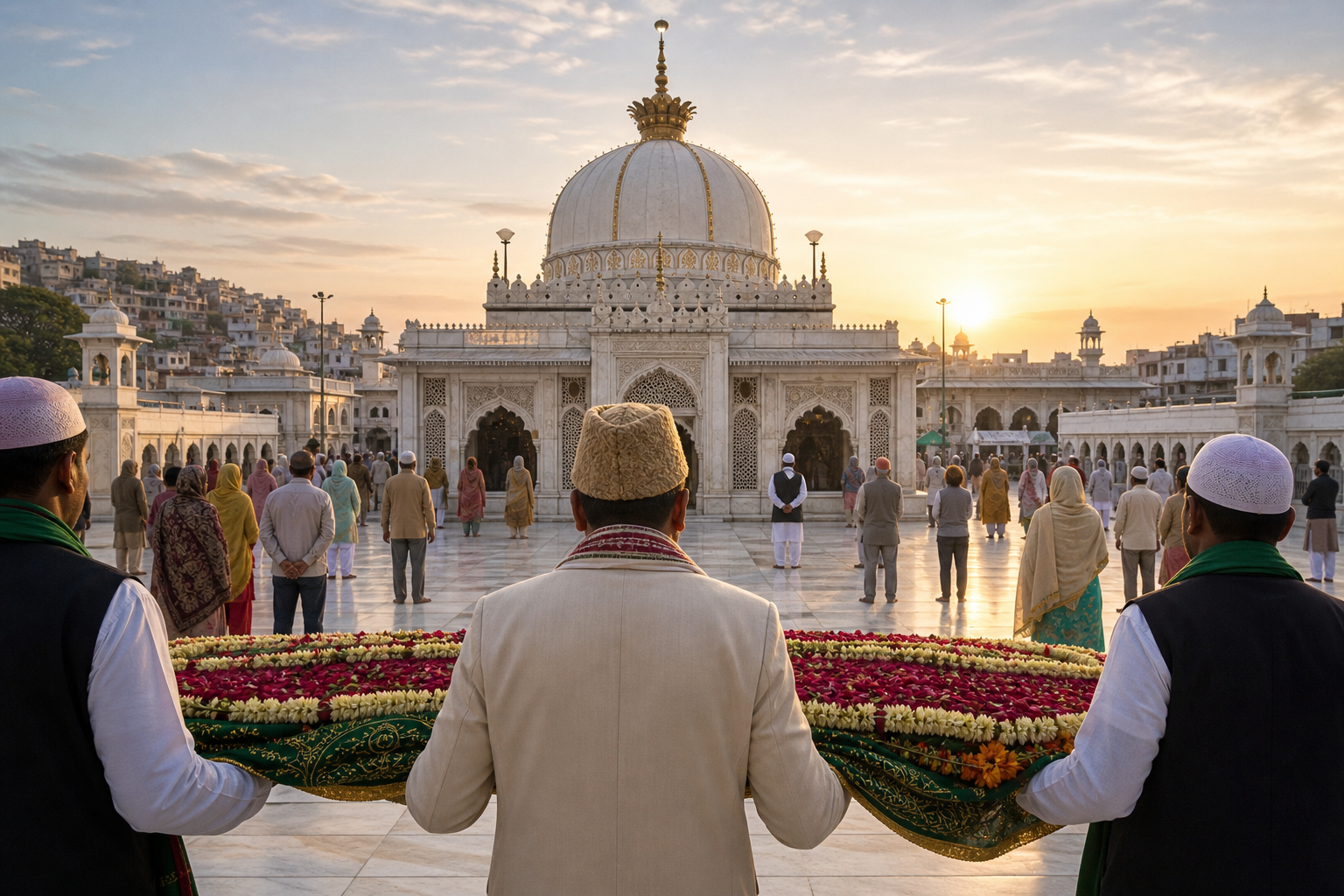
If you have come with one blunt question – can a secular Prime Minister make an official gesture at Ajmer Sharif? – a simple yes or no will mislead you. The real issue is not whether the chadar looks religious. It is whether an officeholder’s action can be justified as civic representation, applied without arbitrary preference, and kept separate from an unresolved dispute about the site.
That distinction matters. It allows you to defend the lawful examination of Hindu historical claims without treating every visitor to a dargah as hostile to Hindu interests. It also allows you to support interfaith courtesy without surrendering scrutiny of public money, executive conduct, or contested history.
The first question is what the state is actually doing
A Prime Minister can appear at a religious place as an individual believer, a political leader, or a representative of the state. Once the Government of India presents a chadar through that office, the third capacity becomes relevant. The gesture must then be assessed by a public standard, not only by the officeholder’s personal intention.
A ceremonial visit is not automatically a declaration that the state accepts the theology of the place visited. Ajmer Sharif has drawn Hindus, Muslims, Sikhs, and Jains over centuries, and public representatives have commonly treated a chadar offering as respect for a shared social and spiritual inheritance. That history gives the gesture a plausible civic meaning.
But a plausible meaning is not the end of the inquiry. If you want to judge the official act fairly, ask five concrete questions:
- Was the gesture personal, party-political, or explicitly made on behalf of the Government of India?
- What public purpose did the government give for it: worship, cultural recognition, community outreach, or national representation?
- Could the same principle justify respectful official engagement with Hindu, Buddhist, Jain, Sikh, and other institutions?
- Did the words accompanying the gesture express civic goodwill, or did they appear to endorse a particular theological claim?
- Can the government explain the practice openly without relying on selective custom or political convenience?
As a civic standard, equal treatment need not mean performing the same ritual at every shrine. Temples, gurudwaras, monasteries, deras, dargahs, and Jain places of worship have different customs. What equality requires is an intelligible principle: the reason offered for one community must remain defensible when another community asks to be treated with comparable dignity.
A temple claim and a ceremonial visit are separate questions
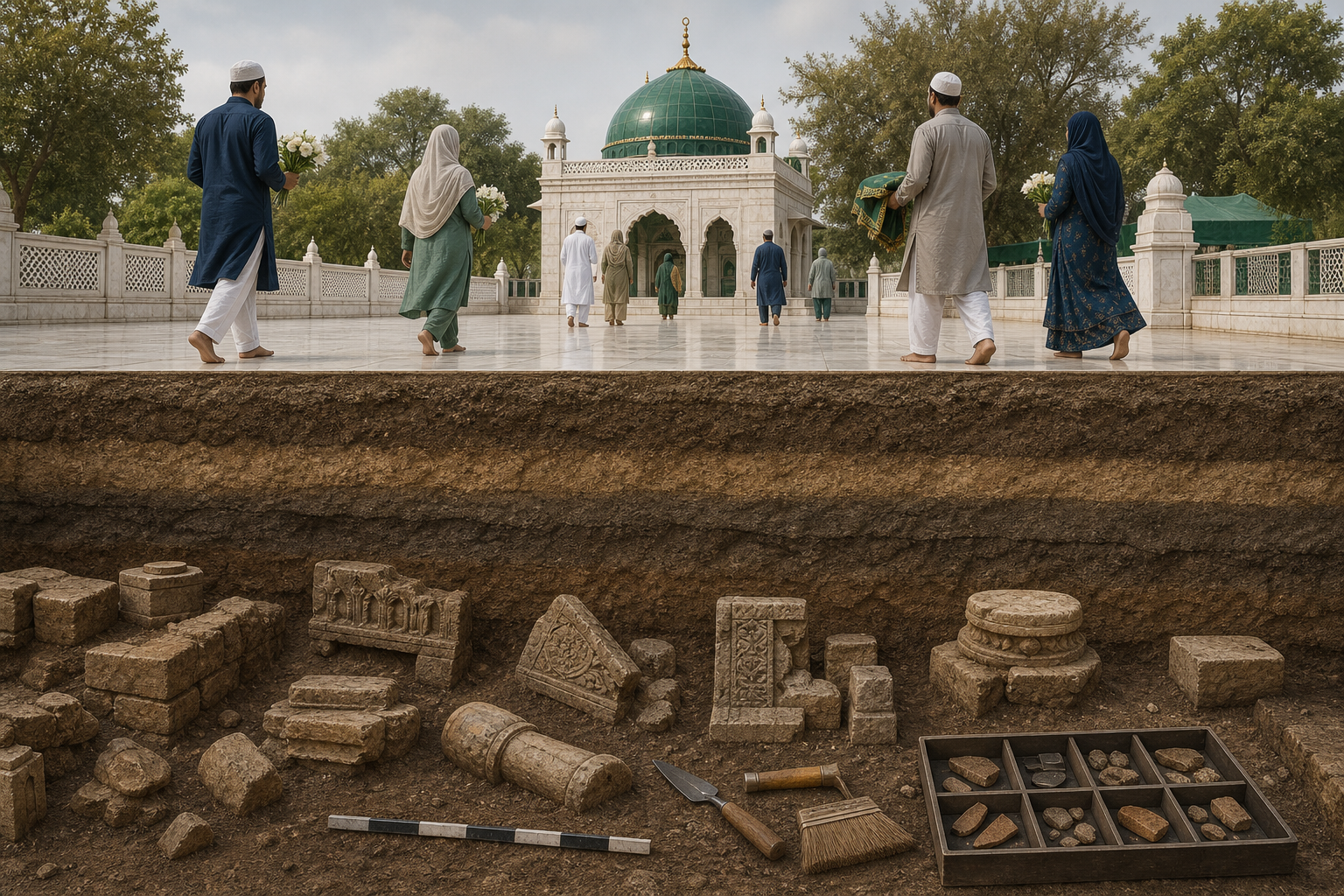
The reported litigation brings a second issue into the debate. Certain groups have advanced an allegation that the Ajmer site has an underlying claim as a Shiva temple. Their plea reportedly sought to restrain Prime Minister Narendra Modi’s visit and the customary official chadar, raising secular governance, public expenditure, and law-and-order concerns.
You should resist two opposite mistakes here. A government visit does not disprove a Hindu claim about the site’s past. An allegation about that past does not, by itself, amount to a judicial finding that the present dargah is unlawful or that every act of respect toward it must stop.
A petition is a request for judicial action, not the action itself. A historical assertion is not yet established merely because it appears in litigation. The evidence, the applicable law, the standing of the petitioners, and the remedy sought all require examination through proper procedure. Courtesy cannot decide the site’s history, and filing a case cannot decide it either.
When you read or share a claim about this dispute, label it before reacting:
- Allegation: a party has asserted something that remains to be tested.
- Evidence: material offered to support or challenge that assertion.
- Interim direction: a temporary judicial step that may not settle the underlying dispute.
- Final adjudication: a reasoned determination after the relevant issues have been heard.
- Political opinion: an argument about what the government or Court ought to do, not a statement of what the law has already decided.
This discipline does not weaken a Hindu civilizational case. It protects that case from exaggeration. A serious historical grievance loses public credibility when supporters announce a verdict before the competent process has reached one.
Public expenditure deserves a precise audit, not a slogan

The strongest secular objection may concern public resources, but the phrase public money is too broad to decide anything by itself. An official event can involve travel, protocol, security, staff time, publicity, and the ceremonial object. Those are different categories. A useful challenge identifies which expenditure is contested, who authorised it, and what governmental purpose it was meant to serve.
For example, costs that accompany any official movement should not automatically be described as a subsidy to one faith. Conversely, a distinct ceremonial expense should not escape scrutiny merely because it is customary. The practical question is whether the government can disclose and defend the particular use of public resources under a principle it would apply consistently.
If expenditure is your concern, ask for answers in this order:
- Identify the exact official action rather than objecting to Ajmer Sharif in general.
- Separate routine costs of public office from costs created specifically by the religious ceremony.
- Ask whether the chadar is an established governmental practice and how that practice is authorised.
- Compare the governing principle with official gestures made toward other religious traditions.
- Consider whether the same civic objective could be achieved through a less religiously entangling form of respect.
Law-and-order concerns require the same precision. Authorities may have to plan for credible risks, but the mere possibility of protest should not become a substitute for deciding the legal or historical issue. Otherwise, the threat of disorder acquires the power to determine which citizens and institutions receive public recognition.
A Dharmic response need not choose between erasure and hostility
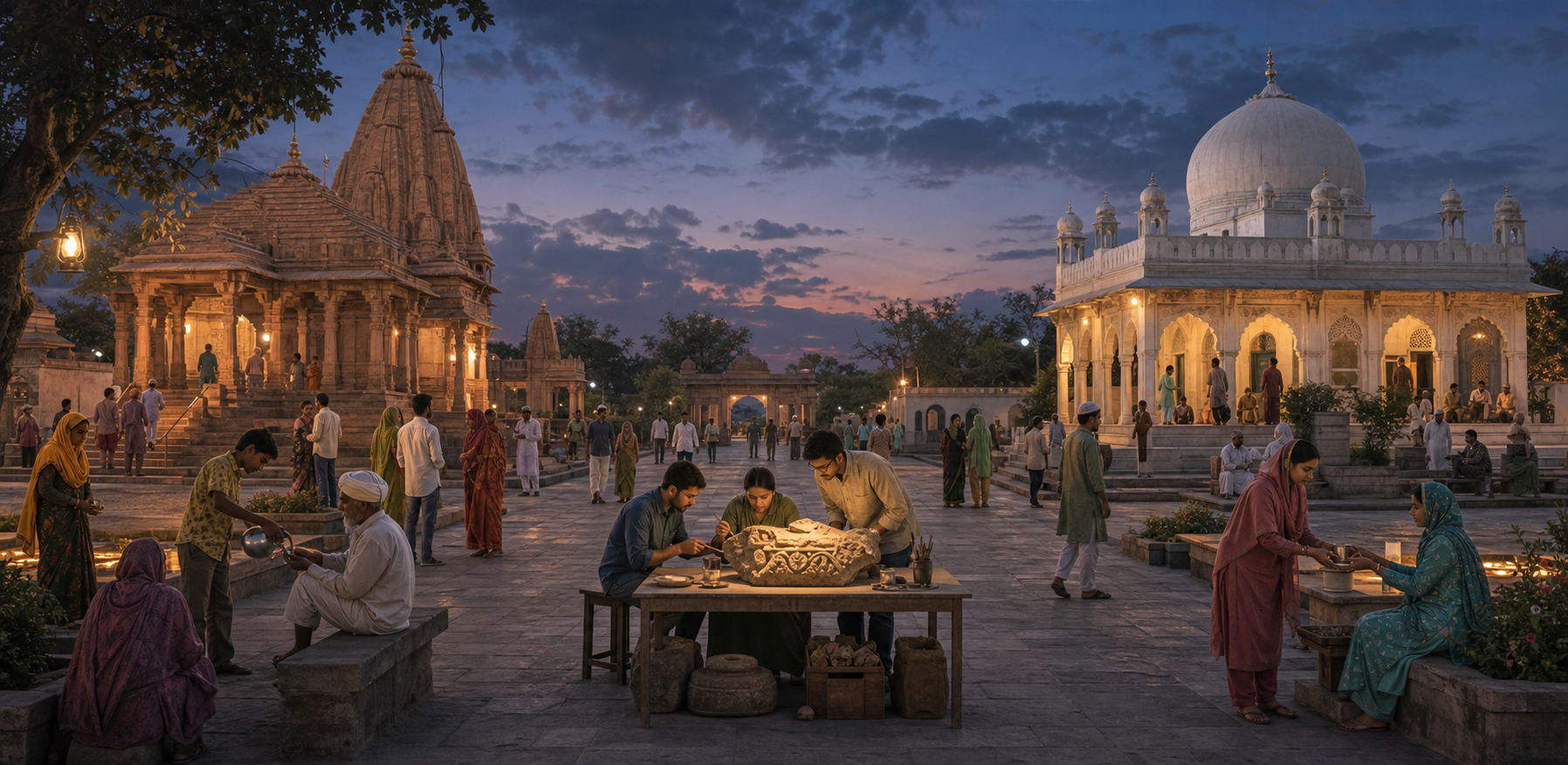
Many Dharmic readers feel pushed toward a false choice: either dismiss every Hindu concern in the name of harmony or oppose every interfaith gesture in the name of historical justice. Neither position is necessary.
Sahishnuta is not historical amnesia. Tolerance asks us to preserve another person’s dignity while disagreement continues; it does not require us to declare every historical or theological claim equally true. You can therefore hold all of the following positions without contradiction:
- A Hindu claim concerning the site’s past deserves lawful, evidence-based consideration.
- People who revere Ajmer Sharif today should not be treated as personally responsible for every contested account of history.
- An officeholder may show civic respect to a community without proclaiming doctrinal agreement with it.
- Interfaith peace does not require silence about disputed history.
- Firm advocacy for Hindu interests does not require contempt for Muslim citizens or Sufi devotees.
Ajmer’s shared devotional reach is important precisely because the communities involved remain distinct. Pluralism is not the claim that Hinduism, Islam, Sikhism, Jainism, and Buddhism teach the same thing. It is the civic capacity to live with real differences, pursue historical and legal questions through peaceful institutions, and cooperate where compassion, seva, and social trust are at stake.
A pro-Hindu position becomes stronger when its standard can be universalised. If official courtesy at Ajmer is defended as respect for Indian citizens and a shared cultural inheritance, comparable respect should be available to Dharmic institutions. If an official gesture is opposed because it improperly commits the state to a creed, the same objection should apply when the creed changes. Selective secularism is not principled secularism.
Key takeaways: use this five-part test
- Capacity test: Determine whether Narendra Modi would be acting personally, politically, or on behalf of the Government of India.
- Purpose test: Ask whether the stated purpose is theological endorsement or civic recognition of a community and a shared place of pilgrimage.
- Claim-status test: Distinguish an allegation about a Shiva temple from evidence, an interim order, and a final judicial finding.
- Equality-and-cost test: Demand a consistent explanation for official religious gestures and identify the exact public expenditure being challenged.
- Peace test: Support lawful inquiry and peaceful disagreement without using either harmony or threatened disorder to predetermine the outcome.
When the next headline appears, look first for the operative court order and the exact government action. If neither is clear, withhold the verdict and make only the narrow claim the known facts can support. That habit will do more for Hindu interests, constitutional credibility, and national cohesion than another round of slogans.
References
