
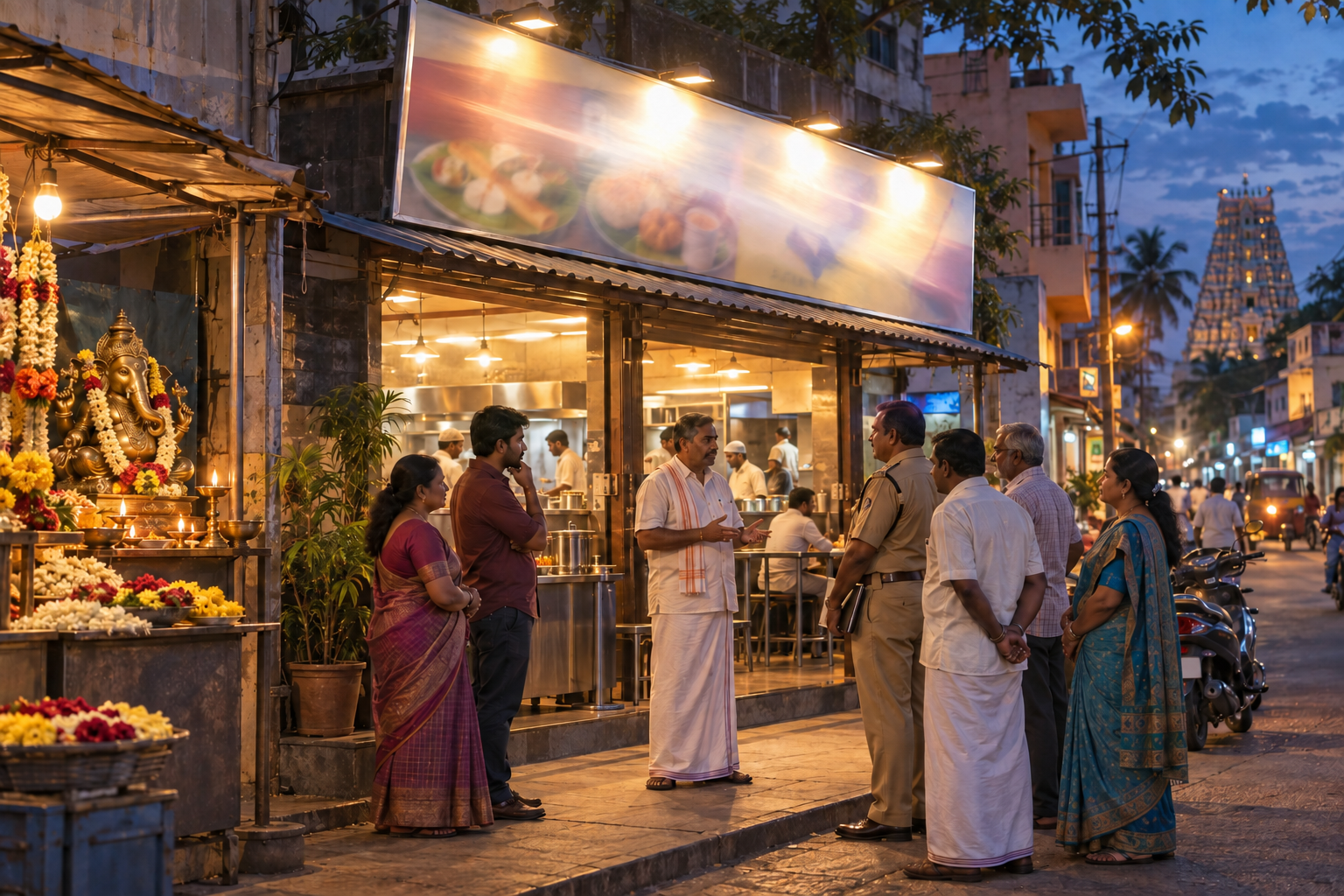
If you encountered the Tirunelveli banner through a forwarded image or an angry social-media caption, your first question is probably simple: what actually happened, and what would a responsible Hindu response look like?
The answer requires two things at once. We should defend the dignity of sacred imagery without hesitation, but we should also refuse exaggeration, harassment, and assumptions that the known facts cannot support.
What is established about the Tirunelveli dispute
An eatery in Tirunelveli displayed a banner depicting Shri Ganesh preparing chicken biryani to advertise non-vegetarian food. Hindu Munnani and local residents protested, and police arrested the eatery’s 30-year-old owner, Jayanth. Those are the core reported facts of the controversy.
The available facts do not identify the criminal charge, reproduce an official police explanation, give Jayanth’s account, establish his intention, or state what happened after the arrest. They also do not tell us whether the banner was removed or whether any court later considered the matter.
That boundary matters. You can accurately say that residents and Hindu Munnani objected to the banner and that the owner was arrested. You cannot responsibly turn the arrest into proof of guilt, describe an unreported motive as fact, or announce a legal outcome that has not been established. An arrest is not a conviction.
Why devotees saw more than an ordinary food advertisement
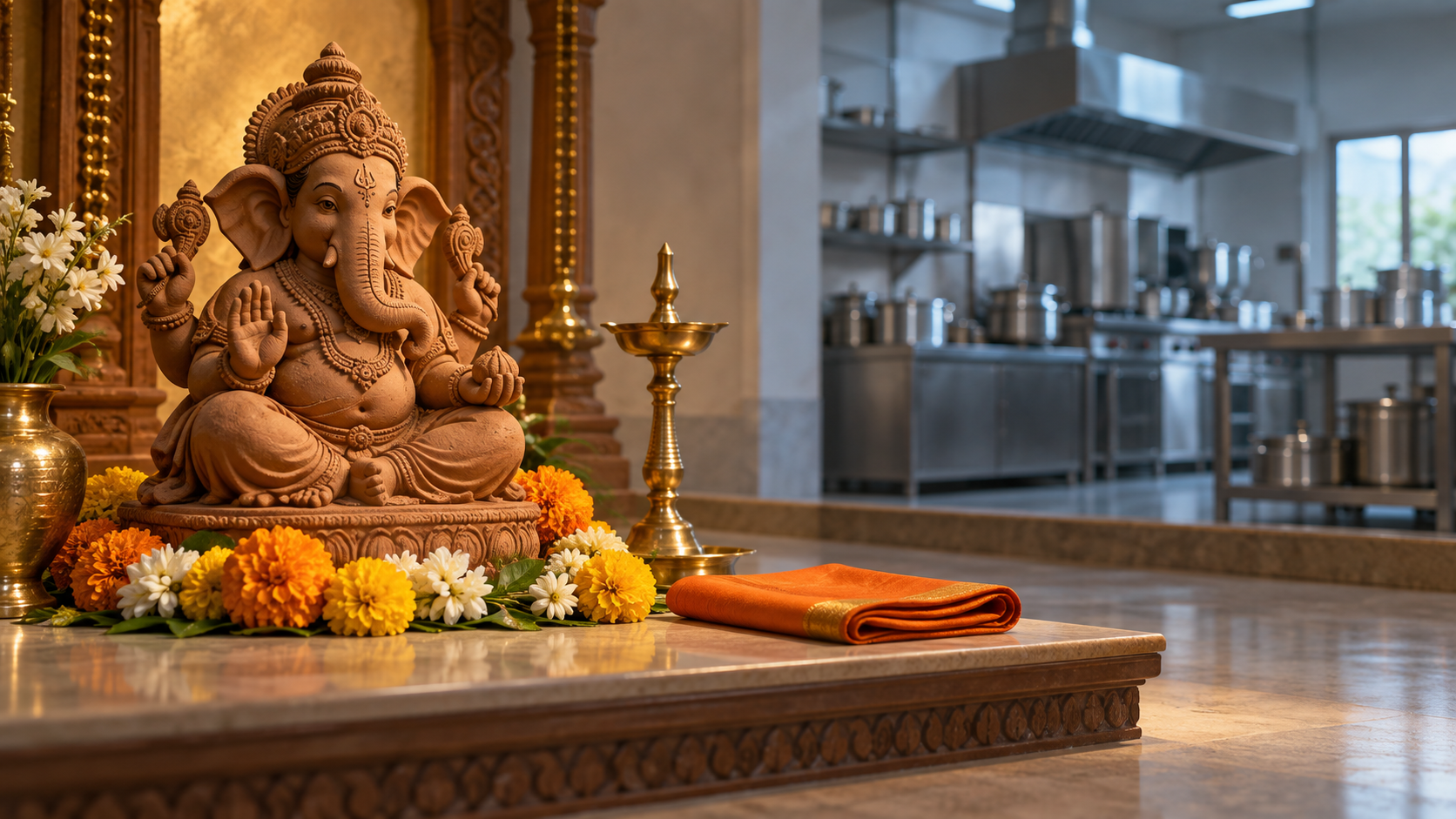
The objection was not merely that a shop used colourful religious art. It was the specific commercial association: a revered Hindu deity was shown cooking chicken biryani in an advertisement for non-vegetarian food.
A deity’s image is not interchangeable with a cartoon mascot. For a devotee, Shri Ganesh is an object of worship, not a convenient character who can be placed into any sales concept. When an advertiser ignores that distinction, the resulting offence cannot be dismissed simply by calling the design humorous or creative.
Nor does the dispute need to become a sweeping argument about the diets of all Hindus. Hindu communities and traditions are not identical in their food practices. The narrower question is sufficient: should a business use a sacred figure to promote a product in a setting that devotees regard as disrespectful? A clear request not to instrumentalise a deity does not depend on proving that every Hindu follows one dietary rule.
Three judgments must therefore remain separate. The banner can be criticised as disrespectful. The designer’s intention may still be unknown. Criminal liability is a further question that cannot be settled from an image or an arrest report. Keeping those distinctions intact makes the cultural objection more credible, not less forceful.
How to object firmly without weakening the case

If you are responding to this incident, or to a similar use of sacred imagery, use a sequence that protects both Dharma and factual integrity.
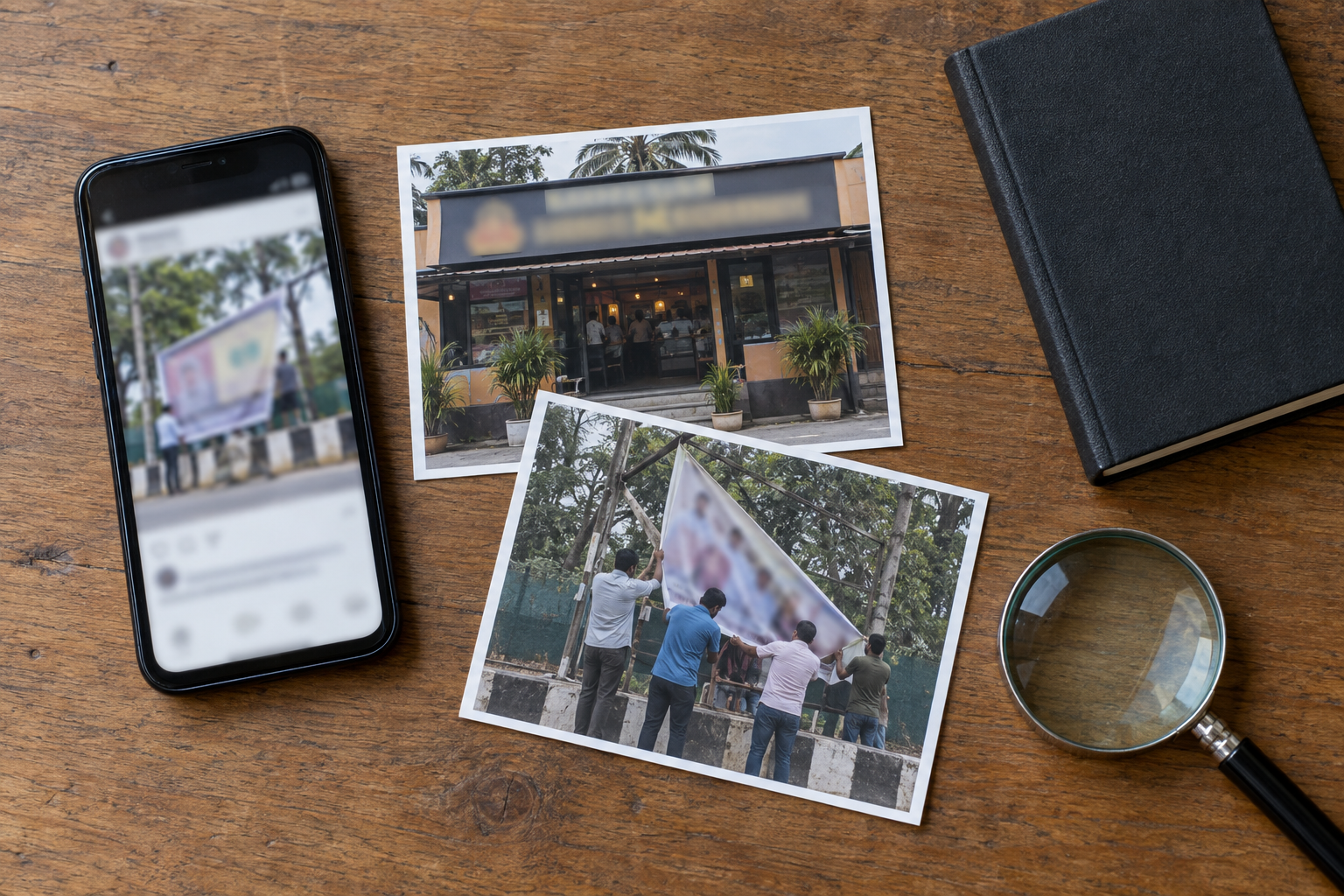
- Confirm the original context. Look for the complete banner, the business name, the location, and an unedited view. A cropped image may hide wording or context. Preserve the material privately as evidence instead of repeatedly circulating an offensive depiction for engagement.
- Name the exact objection. State that the problem is the commercial depiction of Shri Ganesh preparing chicken biryani to promote non-vegetarian food. Avoid vague accusations against an entire community or unsupported claims about a conspiracy.
- Ask for a concrete remedy. Request removal of the banner, a clear acknowledgement of the concern, and a commitment not to use Hindu deities this way again. A remedy-focused demand gives the business a direct path to correct the mistake.
- Use written, lawful channels. Send the concern to the proprietor or manager and retain a copy. If residents believe a formal complaint is warranted, describe what was displayed and provide the evidence to the appropriate local authority. Do not guess at criminal provisions or demand that an allegation be treated as a proven offence.
- Keep uninvolved people out of it. Do not publish private addresses or personal phone numbers, threaten workers, target delivery personnel, damage property, or encourage collective punishment. Such conduct creates new victims and shifts attention away from the original grievance.
- Correct the record when facts change. If the banner is removed, an apology is issued, or official information becomes available, update what you share. Cultural advocacy loses credibility when an outdated or false claim is preserved because it produces more outrage.
A concise complaint can say: “Your advertisement depicts Shri Ganesh cooking chicken biryani. This commercial use has caused serious offence to devotees. Please remove the banner, acknowledge the concern, and avoid using Hindu deities to promote non-vegetarian products. We seek a peaceful written response.”
This language identifies the image, explains the objection, and asks for repair. It does not speculate about motive, threaten punishment, or treat an allegation as a judicial finding.
Key takeaways
- The established dispute concerns an eatery banner showing Shri Ganesh cooking chicken biryani, protests by Hindu Munnani and residents, and the arrest of owner Jayanth.
- The banner can be opposed as a disrespectful commercial use of sacred imagery without inventing facts about the advertiser’s intention.
- The arrest does not establish guilt, and the known facts do not identify the charge or a later legal outcome.
- The strongest response is evidence-based and remedy-focused: document the display, request removal, use lawful channels, and reject threats or harassment.
What businesses should learn before approving religious imagery

This controversy also offers a practical test for advertisers. Before printing a deity’s image, ask whether the figure is being treated reverentially or being turned into a salesperson, comic device, or product prop. Then ask whether the food, setting, wording, or action shown could create an obvious clash with the devotional meaning of the image.
If the advertisement works just as well without the deity, use another concept. If religious imagery is genuinely necessary, have someone familiar with the relevant tradition review the complete design before it is printed or displayed. That review must include the product and the depicted action, not merely whether the artwork looks attractive.
When a credible objection arrives, pausing or removing the display is the sensible first step while the concern is examined. The business can preserve its own copy, speak to affected representatives, and respond in writing. Dismissing devotees as humourless usually deepens a preventable dispute; listening and correcting the design can contain it.
If you discuss the Tirunelveli case, lead with the narrow verified facts, explain the sacred-commercial boundary, and ask for a peaceful remedy. That is how you defend Shri Ganesh’s dignity without surrendering truth, proportion, or Dharmic restraint.
References

Leave a Reply
You must be logged in to post a comment.