
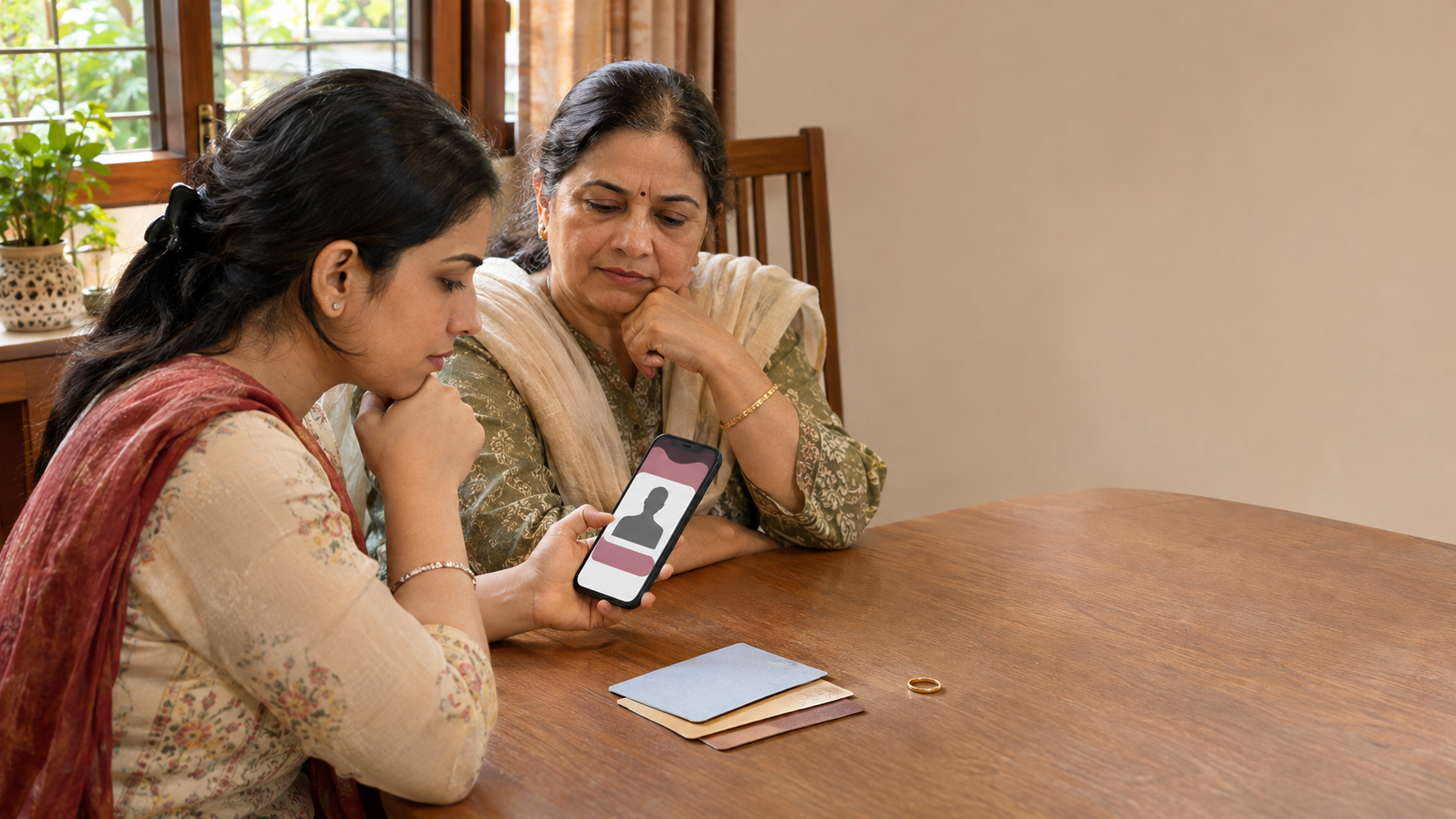
If someone in your family is speaking to an online matrimonial match, the difficult question is not whether to trust the person. It is when that trust should begin, what should be verified first, and how much access should be granted before the answers are clear.
The Pilibhit case offers a practical warning. A profile can begin a conversation, but it cannot establish a person’s legal name, marital status, religious identity or intentions. You need a verification process that is early, reciprocal and respectful, before emotional commitment makes basic questions feel impolite.
What Pilibhit police are investigating

A 28-year-old Hindu man from Kalibagan Colony in Pilibhit, Uttar Pradesh, alleges that a woman contacted him through the Jaiswal Dot Com matrimonial website using the name “Neha Shukla.” She allegedly described herself as unmarried and developed a relationship with him on the promise of marriage. He says he later discovered that she was Shabbi Wasim and was already married.
The complainant further alleges that she took property and jewellery, accused him of molestation when he objected, and subsequently arrived at his home with associates. He says the group assaulted him and deleted information from his mobile phone. Police booked seven people, including named and unidentified associates, while the FIR included allegations of attempted murder, house-trespass and assault. Inspector Harinagar Pal was assigned the investigation.
Those details remain allegations from a complainant, not judicial findings. Registration of an FIR and the naming of accused people do not establish guilt. The investigation and legal process must test the evidence, and the accused must have an opportunity to answer the claims. Responsible concern requires keeping that boundary clear.
You do not need to prejudge the accused to recognise the underlying vulnerability. Information entered on a matrimonial profile is self-declared until it is independently checked. Treat the profile as an introduction, not as evidence.
Why concealed identity changes the meaning of consent
For a Hindu family, vivaha is generally understood as a sanskara: a sacred commitment joining duties, families and ways of life. Religious practice may shape the wedding rites, food in the home, festivals, the upbringing of children and obligations toward both families. A prospective spouse’s identity is therefore not a decorative detail on a profile.
The central issue is deception, not the mere existence of religious difference. An honestly disclosed interfaith proposal allows two adults and their families to make an informed decision. A fabricated Hindu identity, if proved, would remove that choice by creating trust under false premises. The same principle applies to a concealed existing marriage: a family cannot meaningfully consent to a proposal when a fact fundamental to the proposed union has been withheld.
This distinction matters because suspicion based on a name or community is not verification. A surname cannot prove religion, marital status or character. Nicknames, spelling variations, transliteration differences and lawful name changes can all have innocent explanations. The relevant questions are whether the person has disclosed the truth, whether the explanation remains consistent, and whether appropriate records support it.
The complainant in Pilibhit is a Hindu man, which corrects an important blind spot. Families often build protective rules around daughters while assuming that sons will recognise manipulation on their own. Men can also be emotionally invested, deceived or drawn into unsafe situations. Verification should protect every prospective spouse, regardless of sex.
A Dharmic response should combine vigilance with satya. Protect your family, but do not turn an unresolved complaint into collective blame, online harassment or hostility toward an entire community. Truth is not served by replacing one unverified identity claim with another unverified accusation.
Seven checks to complete before deeper trust
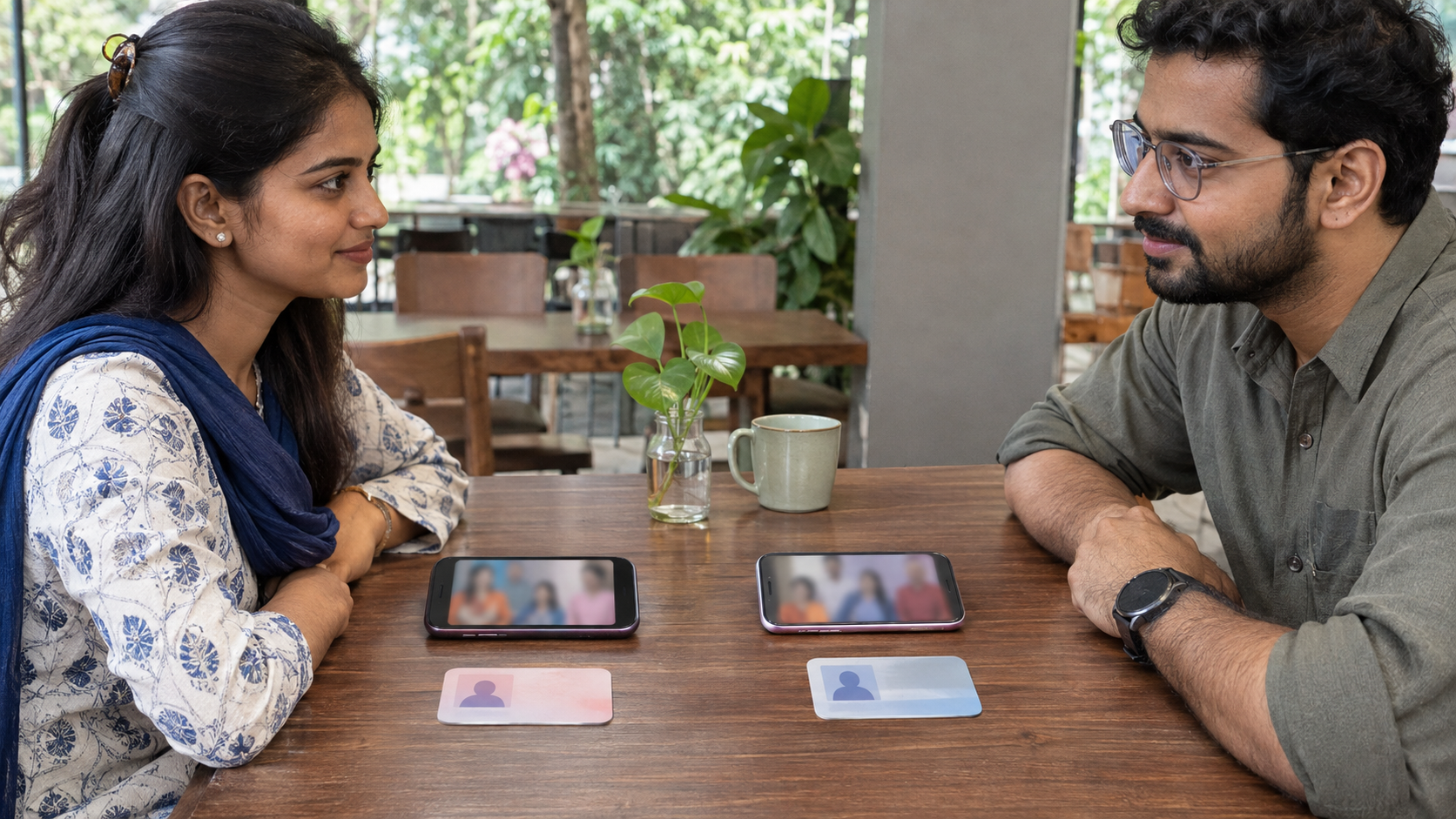
Use the same procedure for every serious match. Reciprocity makes the process fair: your family should be willing to provide the same category of information it requests. Complete these checks before an engagement announcement, transfer of money, unsupervised access to the home or exchange of valuables.
- Ask for the complete identity, not only the profile name. Obtain the person’s full legal name, any commonly used or previous names, age, present city and basic family details. Compare the legal name and photograph with a valid government-issued photo identity document in a private setting. Do not circulate the document in family groups, and mask sensitive identification numbers on any copy that must be retained. An identity document helps confirm name and photograph; it does not prove marital status, religion or good character.
- Ask about marital history in direct language. Do not rely on an “unmarried” profile field. Ask whether the person has ever undergone a civil, religious or customary marriage; whether any marriage remains legally in force; and whether there are children or continuing obligations that affect the proposal. If a previous marriage is disclosed, obtain qualified local legal advice about the documents and present legal status rather than proceeding on a verbal assurance.
- Bring both families into a live conversation. Arrange a joint video call and, when the proposal becomes serious, an in-person meeting. Ask ordinary questions about upbringing, relatives, work, religious practice and plans after marriage. Family participation is not conclusive proof, but persistent refusal to allow any natural contact deserves an explanation before the relationship advances.
- Cross-check the public profile. Compare the name, photograph, phone number, city, education and occupation across information the person has voluntarily supplied and material that is publicly visible. A reverse-image search can reveal whether a photograph appears under another identity. Use only lawful, public information; do not guess passwords, impersonate someone else or enter a private account.
- Move from video to safe, in-person meetings. A live call is better than text, but it is not the end of verification. Hold early meetings in public places, tell relatives where you are going and avoid being pressured into private travel or a hurried ceremony. Urgency should never be allowed to cancel a check that both families would ordinarily consider necessary.
- Stage access to money, property and devices. Until identity and background are reasonably established, do not give a match house keys, unsupervised access to jewellery, property papers, banking information, passwords or one-time security codes. Do not send intimate photographs that could later be used for coercion. Affection is not a reason to bypass boundaries that would apply to any recent acquaintance.
- Create a clear family decision gate. Keep a simple checklist recording what was verified, by whom and when. Do not fix a wedding date, announce an engagement or make a substantial financial commitment while a material mismatch remains unresolved. This prevents momentum, embarrassment or money already spent from becoming the reason everyone ignores a warning.
Ask difficult questions early. Once families have celebrated publicly and the couple is emotionally attached, ordinary verification can feel like an accusation. At the beginning, it is simply good process. A genuine match may reasonably want privacy, but a reciprocal and carefully handled request is different from public exposure.
One discrepancy is a question, not proof of fraud. Give the person an opportunity to explain a nickname, old photograph, changed address or name variation. The stronger warning is a pattern: the explanation changes, records do not match, family contact is repeatedly postponed, secrecy is demanded, or pressure increases whenever verification is mentioned. When that pattern appears, pause rather than arguing yourself into acceptance.
What to do when a serious discrepancy appears

If you discover a possible false identity or concealed marriage, do not arrange an angry confrontation to force an admission. The immediate goals are safety, preservation of information and access to appropriate professional help. Follow a controlled sequence.
- Pause further access and commitments. Stop new payments, loans, visits to the home, wedding bookings and exchange of valuables. Do not threaten the person or attempt to recover property physically.
- Preserve what you already possess lawfully. Save the matrimonial profile, messages, photographs, call logs, payment records and relevant emails. Keep complete copies where possible rather than cropped fragments, and make a chronological note of what was claimed and when. Back up important material so the loss of a phone does not erase the record. Do not edit the originals.
- Tell trusted people and avoid meeting alone. Inform at least two dependable family members of the discrepancy and any expected contact. If there has been a threat or violence, move to a safe location and contact the appropriate emergency service. Personal safety takes priority over obtaining another explanation.
- Notify the matrimonial platform. Report the suspected false identity through its official process. Provide precise mismatches rather than speculation, and ask what account information can be preserved for lawful investigation. A platform report is useful, but it is not a substitute for police assistance when an alleged offence or immediate danger is involved.
- Seek police and legal help for alleged offences. Theft, assault, threats, unauthorised entry, impersonation and deliberate deletion of data can have serious legal consequences. Take an organised timeline and copies of the available records to the local police and a qualified lawyer. A lawyer can advise on evidence, privacy and the remedies available in the relevant jurisdiction; a general checklist cannot determine an individual’s legal position.
- Keep the dispute out of a public trial. Do not publish private documents, addresses or inflammatory accusations on social media. Public naming before facts are established can endanger people, expose personal data and complicate a legal case. Give the evidence to the platform, police and lawyer instead.
Do not access the other person’s phone or accounts, secretly seize a device, or lure anyone into a confrontation. Such actions can create additional safety and legal problems while weakening the value of otherwise useful evidence. Preserve your own records and let authorised investigators obtain material outside your control.
Key takeaways
- A matrimonial profile begins a conversation; it does not verify legal name, marital status, religion or family background.
- Confirm different claims separately. A photo identity document can support a name and photograph, but it does not by itself prove marital status or intentions.
- Apply the same verification process to prospective brides and grooms, and make disclosure reciprocal between both families.
- Distinguish an honestly disclosed interfaith proposal from alleged identity concealment. The decisive issue is informed consent based on truth.
- If a serious mismatch appears, pause access, preserve records, protect personal safety and seek appropriate help. Do not substitute online accusation for investigation.
Before the next serious matrimonial conversation in your family, agree on one shared checklist and use it on both sides. A respectful match can answer clear questions and allow reasonable checks. If material questions repeatedly produce evasion, changing stories or pressure to hurry, stop the proposal until the facts are independently established.
References

Leave a Reply
You must be logged in to post a comment.