
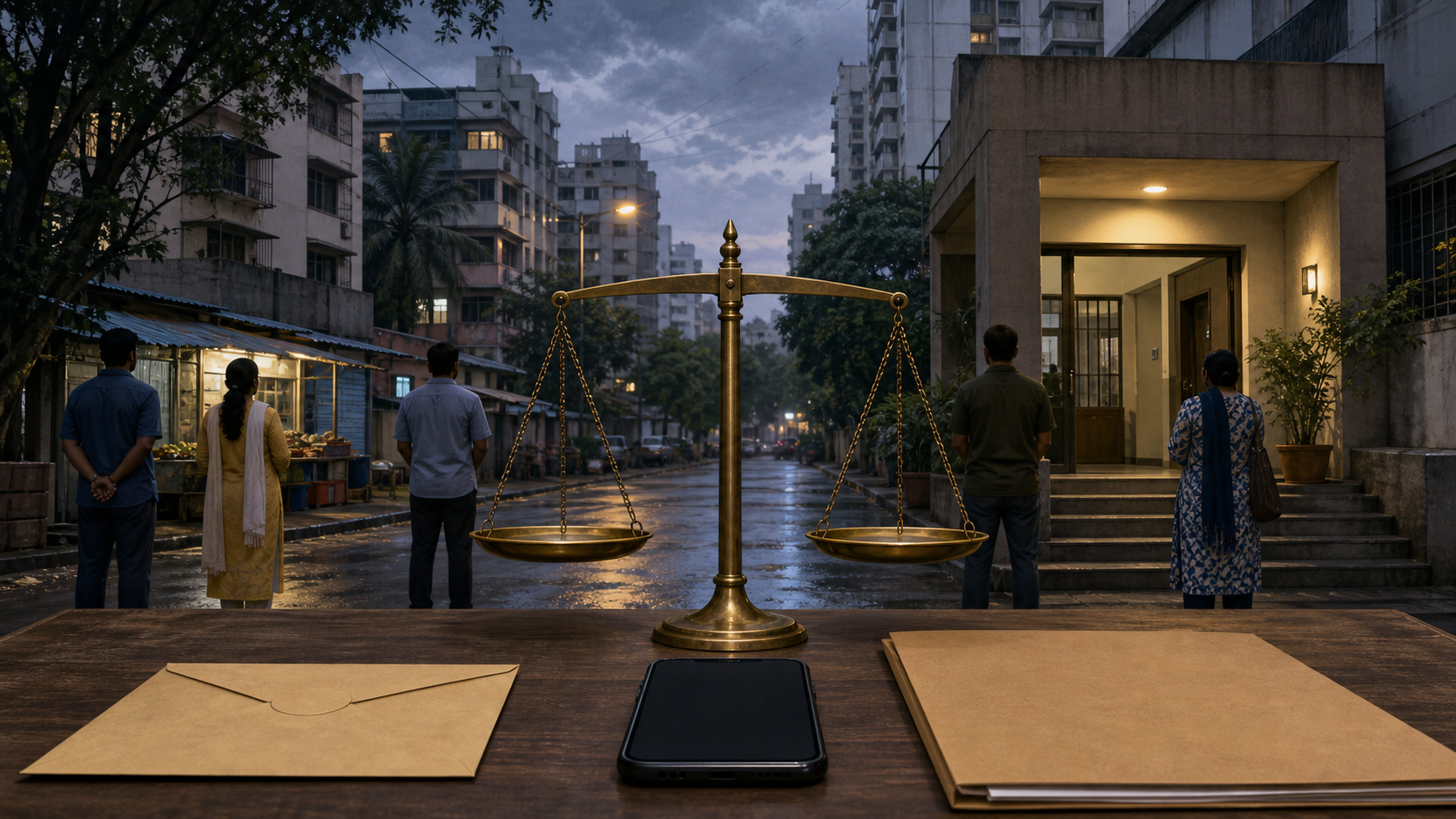
If you are trying to decide what to believe about the Kandivali episode, keep two thoughts together: offering Rs 5-6 lakh for a religious conversion would be a grave allegation, and an allegation is not a finding of guilt. The same discipline applies to the police. Ten days without a reported FIR warrants scrutiny, but it does not by itself prove political interference.
You do not have to choose between silence and street justice. The useful response is to preserve evidence, demand a written procedural trail, separate what witnesses heard from what campaigners infer, and insist that the same law protect freedom of worship and freedom from coercion.
What is alleged in Kandivali, and what remains unproven
The confrontation is said to have occurred on August 21 in a residential building in Sanjay Nagar, Kandivali West. Local activists allege that three people were holding a Christian prayer meeting: a South Korean national described as being in Bharat on a student visa, and two Bharatiya nationals, a man and a woman, said to have converted from Buddhism to Christianity.
Jitendra Chaudhary and his associates allege that the group approached Hindu residents, especially women, and invited them to a prayer programme. When some women referred to Shravan and their devotion to Bhagvan Shiva, the visitors allegedly disparaged the Shivling. They are also accused of promising that illnesses would be cured and offering Rs 5-6 lakh for accepting Christianity.
The activists say they recorded the exchange, called Bajrang Dal and Vishwa Hindu Parishad members, and handed the three individuals to Kandivali police. Those details make the complaint specific enough to investigate. They do not establish that every allegation is accurate, that the recordings are complete, or that a particular offence has been proved.
Four distinctions will help you assess future claims about the case:
- An allegation is a claim made by a witness, complainant, activist or organisation. It must be recorded accurately and tested.
- A recording may be important evidence, but investigators still need the original file, its context, the identity of the speakers and an account of what happened before and after the recorded segment.
- An FIR records information that begins a criminal investigation. It is not a declaration of guilt.
- A legal finding comes only after evidence and competing accounts have been examined through the proper process.
No judicial finding, authenticated transcript, police explanation or response from the three accused individuals is available in the facts presently before us. Responsible Hindu advocacy should say that plainly. Accuracy does not weaken the demand for action; it makes that demand harder to dismiss.
Why ten days without an FIR matters, but does not prove a cover-up
By August 31, the VHP’s Mumbai unit alleged that Kandivali police had still not registered an FIR, despite the handover and submission of video material. It accused Police Inspector Karan Sonkawade of delaying action under political pressure and sought a departmental inquiry. The reported ten-day gap deserves a clear official explanation. The claim of political pressure remains an allegation unless evidence establishes who exerted pressure, on whom, and how it affected the decision.
Delay has practical consequences. Original digital files can be overwritten or repeatedly compressed through messaging apps. Witnesses may discuss the event with one another until direct memory becomes mixed with a shared narrative. People may leave the area, and public rhetoric may harden before investigators have obtained individual statements. This is why prompt evidence preservation matters even before anyone knows which legal provisions, if any, apply.
Residents and community representatives should ask precise procedural questions instead of relying only on slogans:
- Was a signed complaint received, and was the complainant given a dated acknowledgment or official reference number?
- Did police obtain the original recordings, or only forwarded copies?
- Were separate statements taken from the women who allegedly heard the remarks and offer?
- Were the identities and immigration status of the foreign national verified by the competent authorities?
- If no FIR was registered, what reason was communicated to the complainant?
- Was the matter referred to a supervisory officer or another authority for a decision?
The legal questions must also be kept separate. The VHP has demanded examination under relevant provisions of the Bharatiya Nyaya Sanhita concerning religious insult or enmity, under a Maharashtra conversion law if one is applicable, and under the Foreigners Act and visa conditions. Mocking a deity, making a financial offer, promising a cure and undertaking religious activity while holding a particular visa status are different alleged acts. Each requires its own evidence and legal threshold. The phrase conversion case cannot substitute for that analysis, and the conditional reference to a Maharashtra conversion law should not be treated as proof that a particular state provision is in force and applicable.
A lawful, evidence-first response residents can take

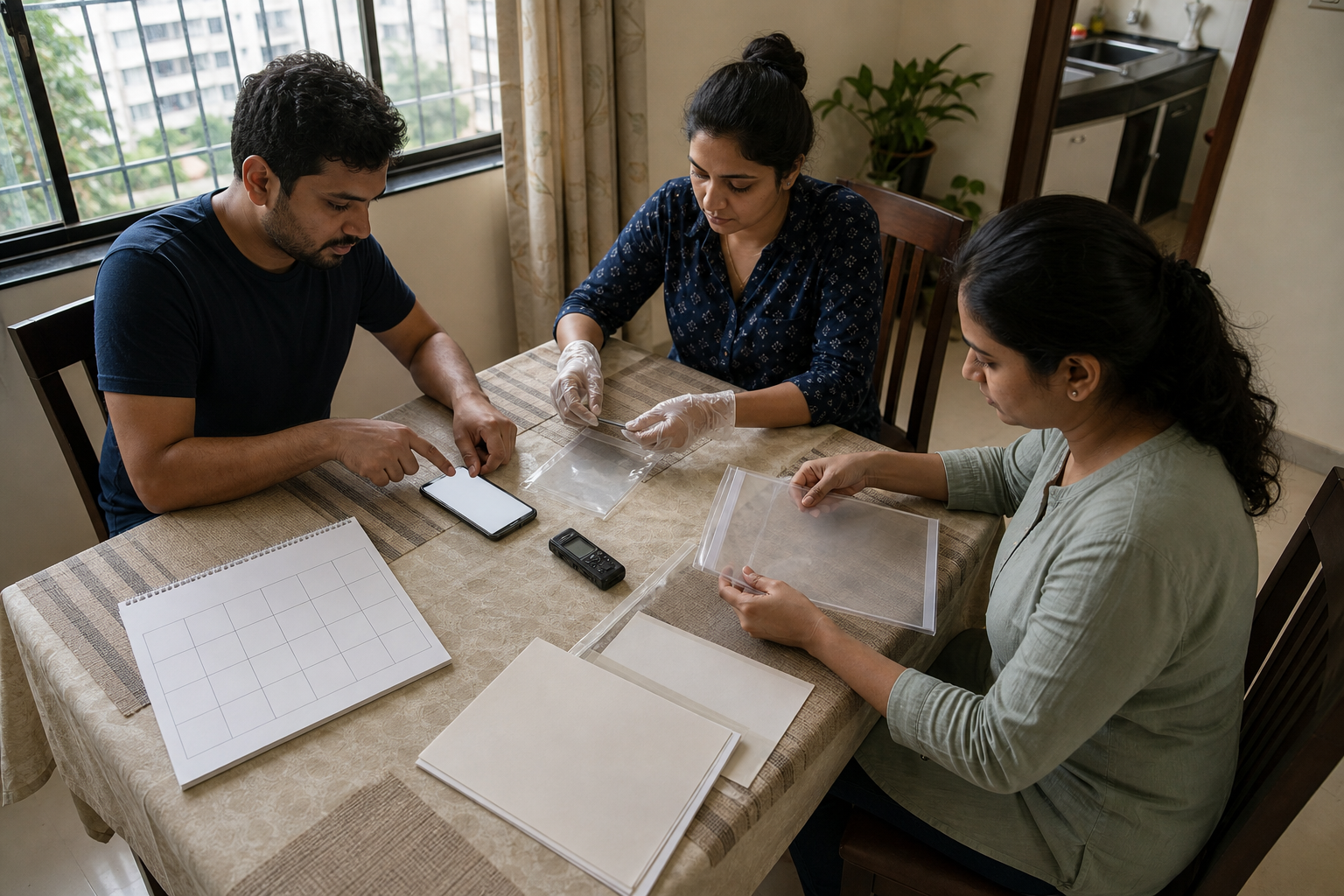
If you witnessed the incident or are assisting someone who did, build a record that can survive scrutiny. A disciplined complaint is more useful than a louder accusation.
- Identify the direct witnesses. Each person should record only what they personally saw or heard. Someone who arrived after the confrontation should not present another person’s account as first-hand knowledge.
- Preserve the original media. Keep the recording on the device that created it. Do not crop it, add captions, change its speed or replace the original with a copy downloaded from a messaging platform. Make a backup without deleting the original, and note who recorded it.
- Write a chronology before group discussion changes the memory. Record the date, approximate time, exact location, people present, language used, sequence of remarks, amount allegedly offered and the response of those present. Mark any uncertain detail as uncertain.
- Separate words from interpretation. Write the closest remembered wording first. Then identify why the witness understood it as an insult, an inducement or a promise of healing. This prevents a conclusion from replacing the underlying fact.
- Create a formal paper trail. Submit a signed written complaint and retain a copy. Ask for whatever acknowledgment, receipt or reference number the police issue. Keep later communications dated and in writing where possible.
- Escalate through lawful channels. If the complainant receives no clear procedural answer, approach the appropriate supervisory police authority and consult a qualified Indian criminal lawyer about available remedies. Exact legal sections and court procedures should come from a professional who can examine the complaint and local law.
- Treat the visa question as a request for verification. State the alleged conduct and known visa description without declaring a violation. The competent immigration and police authorities must verify the visa, its conditions and the activity that actually occurred.
- Keep public claims no broader than the evidence. Say alleged when the matter is unproven. Correct errors quickly. Do not identify uninvolved relatives, neighbours or members of an entire religious or national community.
Do not surround, confine, search, threaten or demand a confession from an accused person. Do not seize a passport or phone, and do not publish a residential address or identity document. Such acts can create immediate safety risks, expose residents to legal consequences and damage the credibility of a legitimate complaint. If there is an immediate threat, call the police. Otherwise, document from a lawful position and let the authorities secure people or property under legal powers.
A Dharmic case for firmness without collective hostility

For a Hindu, the central issue is not whether beliefs may be discussed. Bharat’s Dharmic traditions have long made room for samvada: reasoned dialogue in which convictions can be stated, questioned and defended. The line is crossed when dialogue is replaced by contempt, fear or material leverage.
Shraddha is an inward orientation. It cannot be manufactured by lobha, the lure of money, or bhaya, the pressure of fear. If the alleged offer of Rs 5-6 lakh and promises of curing illness are verified, they would raise a serious question about whether religious assent was being sought through vulnerability rather than conviction. If the alleged ridicule of the Shivling is verified, it would show contempt for the very people being approached, not respectful propagation.
Article 25 places freedom of conscience at the heart of religious liberty. That principle protects a Christian’s worship, a Hindu’s devotion to Shiva and every person’s ability to hear an argument and reject it. It does not require Hindus to treat alleged cash inducements or denigration of their ishta-devata as harmless. At the same time, whether the alleged conduct satisfies a criminal offence must be decided under the law actually in force, not through a crowd’s verdict.
A pro-Hindu response therefore has two duties. It must refuse to minimise anti-Hindu contempt or official indifference. It must also reject collective punishment. The alleged conduct of three individuals cannot justify hostility toward Christians, Buddhists, South Koreans or foreign students as groups. Individual responsibility is both a legal safeguard and a Dharmic discipline.
Atithi Devo Bhava does not place a guest above the law, but neither does a foreign passport prove misconduct. If officials verify that the South Korean national undertook proselytising activity inconsistent with visa conditions, proportionate action should follow. If they do not verify it, nationality must not be used as a substitute for evidence. Satya and ahimsa require both clarity and restraint.
Key takeaways
- The alleged religious insult, healing promise and Rs 5-6 lakh offer are serious and specific, but they remain unproven claims.
- The reported absence of an FIR after ten days warrants a written explanation and supervisory scrutiny; it does not independently prove political pressure.
- Religious remarks, financial inducement and possible visa non-compliance are separate questions that require separate evidence.
- Original recordings, first-person statements and a dated complaint trail will do more for the case than edited clips or expansive social-media claims.
- Residents should not restrain, search, threaten or expose personal information about accused people. Use police channels and qualified legal advice.
- Firm Hindu advocacy can defend shraddha and the Shivling while preserving ahimsa, individual responsibility and equal application of law.
If you are directly involved, prepare one file for your next contact with the authorities: the written chronology, original recording details, witness contacts, complaint copy, acknowledgment and a one-page list of unanswered procedural questions. Ask for a recorded decision or clear next step, and let a qualified lawyer guide the exact legal route. Keep the record calmer, narrower and more reliable than the rhetoric around it.
References
