
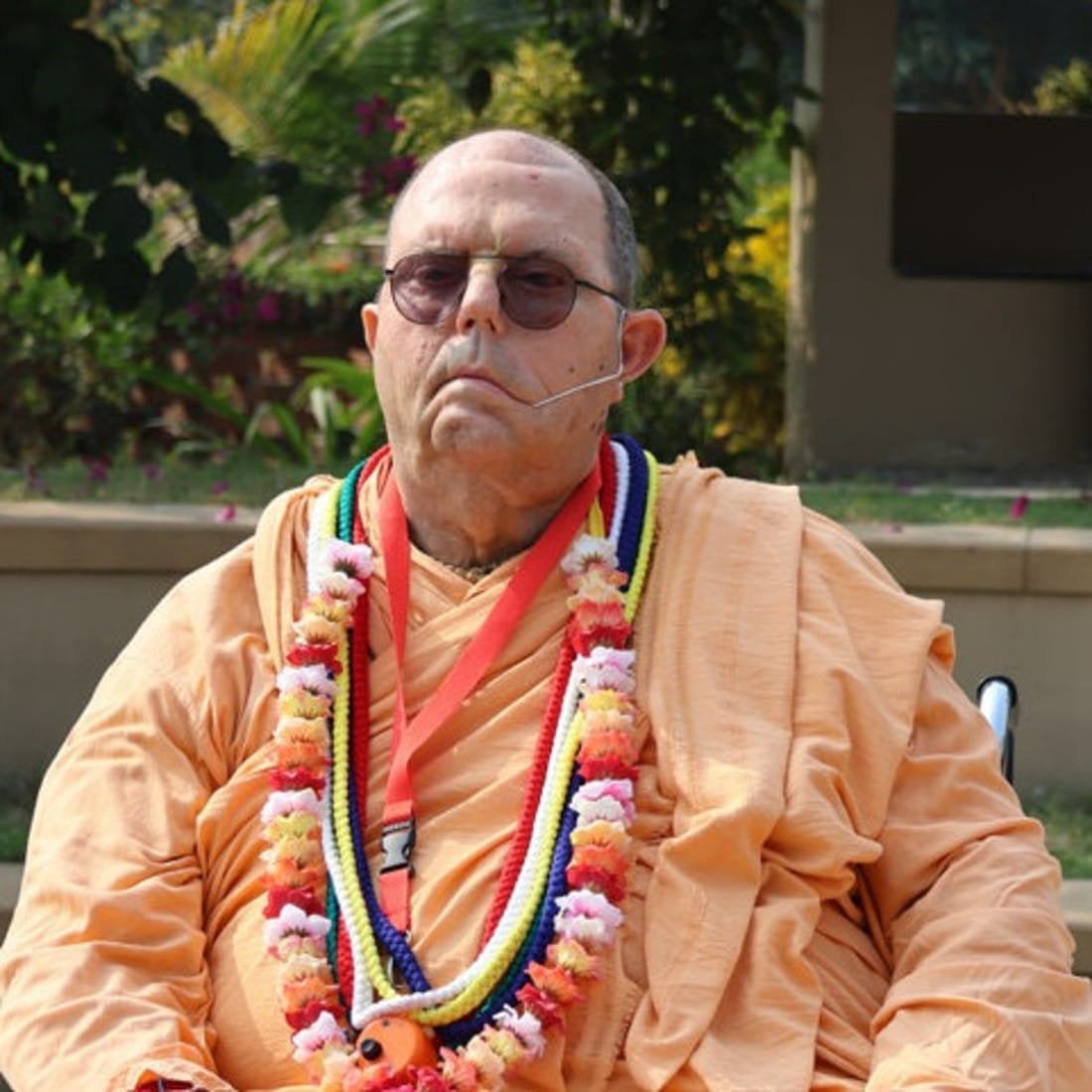
On 24 June 2026, from Dallas, USA, a significant health update regarding H.H. Jayapataka Swami Mahārāja brought cautious relief to devotees, disciples, and well-wishers across the global ISKCON and wider Hindu spiritual community. The update reported that Guru Mahārāja had been discharged from the ICU and moved to a regular hospital room, a medically meaningful transition that indicated improvement while also underscoring the need for continued clinical care, rest, and careful monitoring.
The language of the report carried both gratitude and restraint. It did not present the development as a complete recovery, nor did it minimize the seriousness of his condition. Instead, it framed the transfer from intensive care to a regular hospital room as an encouraging milestone within an ongoing recovery process. Such balance is important in any health communication, particularly when the person concerned is a revered spiritual leader whose condition affects a large devotional community emotionally, spiritually, and organizationally.
According to the update, H.H. Jayapataka Swami Mahārāja continued to receive treatment from the same dedicated team of physicians and medical staff. This continuity of care is medically important because patients stepping down from ICU-level monitoring often still require close observation, medication management, respiratory support, infection control, and careful assessment of energy levels. In this case, the report specifically noted that he remained hospitalized and continued to require antibiotics, respiratory support, and ongoing medical attention.
The movement from an ICU setting to a regular hospital room usually suggests that the most acute phase of instability has eased, but it does not mean that all clinical risks have passed. A regular hospital room can still involve intensive nursing care, physician review, medication schedules, respiratory assistance, and monitoring for relapse or complications. The update therefore conveyed a realistic picture: Guru Mahārāja had improved enough to leave the ICU, yet his strength had not fully returned and recovery remained a gradual process.
A notable part of the report was the observation that Guru Mahārāja displayed increased energy and became more expressive and communicative. In a hospital setting, these signs can be deeply meaningful to caregivers and loved ones. Increased alertness, improved communication, and greater engagement with surroundings often suggest that a patient is gaining functional strength, even when the body still requires medical assistance. For devotees, such signs also carry emotional significance because they reveal the enduring presence of a teacher whose life has long been centered on service, instruction, and encouragement.
The attending physician and several specialists reportedly visited him during the day and eventually determined that his condition had improved sufficiently for the step down from ICU care, which occurred late at night. That detail is important because it reflects a decision based on clinical judgment rather than public emotion. In the care of a high-risk patient, such decisions are generally made only after evaluating stability, treatment response, oxygen or respiratory requirements, infection status, and the patient’s ability to tolerate a lower level of monitoring.
At the same time, the update emphasized that fatigue remained a concern. Speaking still required effort and could tire him. This point deserves attention because spiritual communities often naturally desire darśana, association, and personal reassurance when a revered guru is unwell. Yet the compassionate response in such a moment is disciplined restraint. A no-visitation policy protects the patient’s energy, lowers infection risk, and reduces the possibility of setback during a vulnerable stage of recovery.
The report’s most moving dimension was not merely medical; it was spiritual. Even while hospitalized and physically weakened, Guru Mahārāja continued to use opportunities to share Kṛṣṇa consciousness with those around him. He engaged in spiritual conversations with nurses, doctors, and hospital staff, shared the holy names of Kṛṣṇa, encouraged others to chant the Mahā-mantra aloud at least once, and distributed Bhagavad-gītās to a nurse. This detail reveals a pattern consistent with his lifelong public identity: service did not stop at the threshold of illness.
For observers within the bhakti tradition, this is not a small anecdote. It illustrates how devotional life is not confined to temples, festivals, lecture halls, or pilgrimage sites. In the Gaudiya Vaiṣṇava understanding, remembrance of Kṛṣṇa, chanting, scriptural sharing, and compassionate outreach can occur in every circumstance, including moments of personal vulnerability. A hospital room, in this account, became a place where medical care and spiritual care existed side by side.
The update also noted that Guru Mahārāja explained to a hospital staff member that chanting sacred names can bring true peace and happiness. Such a statement reflects the central devotional emphasis on nāma-saṅkīrtana, the congregational chanting of divine names, which has been foundational to the Hare Krishna movement and to the broader Caitanya tradition. The Mahā-mantra is not treated simply as a sound formula but as a living spiritual practice meant to purify consciousness, focus the mind, and connect the practitioner with divine grace.
The report paraphrased a message from one of his senior Godbrothers, describing Guru Mahārāja as an example of how there are no impossibilities in Kṛṣṇa consciousness. This sentiment should be read carefully and responsibly. It does not deny medical reality, nor does it replace professional treatment with sentiment. Rather, it expresses a theological confidence that adversity can become a field for devotion, compassion, and service. In this view, illness is not romanticized, but neither is it allowed to erase spiritual agency.
That distinction matters. In dharmic traditions, including Hinduism, Buddhism, Jainism, and Sikhism, the body is treated with seriousness, but human life is not reduced to the body alone. Medical care, disciplined practice, prayer, ethical conduct, and community support can work together without contradiction. The update regarding H.H. Jayapataka Swami Mahārāja reflects this integrated approach: physicians continued their clinical work, while devotees continued their spiritual practices, kīrtanas, prayers, and seva with humility.
The mention of devotees around the world offering prayers, devotional activities, kīrtanas, and preaching efforts points to the global nature of his influence. Jayapataka Swami Mahārāja has long been associated with ISKCON’s international outreach, especially within the Gauḍīya Vaiṣṇava lineage descending through Śrīla Prabhupāda. When such a figure enters a critical phase of health, the response is not limited to one geography. Temples, households, online communities, and disciples across countries often become connected through shared concern and shared practice.
From a community perspective, such moments reveal the structure of guru-seva in contemporary devotional life. Disciples may not always be physically present, and in this case physical presence was restricted for medical reasons. Yet service can still take the form of disciplined prayer, responsible communication, emotional steadiness, and respect for medical boundaries. The most mature form of devotion in a hospital context may be the willingness to protect the patient’s rest rather than seek personal access.
The update included a devotional practice connected with Tulasī Devī, especially circumambulation and the offering of the results of spiritual activity to Their Lordships through saṅkalpa. In Vaiṣṇava tradition, Tulasī is revered as sacred and intimately connected with devotion to Lord Kṛṣṇa. Circumambulating Tulasī, chanting, and offering prayer are practices that join personal emotion with formal devotional discipline. They allow concern for a beloved spiritual teacher to become structured worship rather than anxious speculation.
The saṅkalpa given in the update was presented as follows:
adya mayā kṛtair etair bhagavat-kaiṅkaryaiḥ (meditate on all the spiritual activities that you performed) śrī-pañca-tattva-śrī-prahlāda-narasiṁha-aṣṭa-sakhī-parivṛta-śrī-śrī-rādhā-mādhavāḥ prīyantām.
kāyena vācā manasendriyair vā buddhyātmanā vānusṛta-svabhāvāt
karomi yad yat sakalaṁ parasmai nārāyaṇāyeti samarpayāmi
sarvaṁ śrī-kṛṣṇārpaṇam astu.
This prayerful formulation expresses a central principle of bhakti: action becomes spiritually meaningful when offered beyond egoistic ownership. The practitioner remembers devotional activities, offers them to the Lord, and concludes with the understanding that everything is ultimately meant for Śrī Kṛṣṇa. In a time of illness, this practice can help channel fear, grief, and helplessness into surrender, steadiness, and compassionate intention.
The emotional power of the update lies in its combination of vulnerability and resolve. A senior spiritual leader remained weak, hospitalized, and dependent on continued medical care. Yet he also remained communicative, grateful, and spiritually active. This combination is often what devotees find most instructive. It is one thing to speak of surrender during ease; it is another to continue sharing the holy names, offering encouragement, and expressing gratitude while the body itself is under strain.
For many readers, the report may also prompt reflection on the role of spiritual teachers in times of crisis. A guru in the dharmic sense is not merely an institutional authority or public speaker. The guru’s life becomes a text that disciples read through conduct, priorities, endurance, humility, and compassion. In this update, the hospital room becomes a setting in which teachings about devotion, service, and dependence on divine grace are not merely explained but embodied.
The account also reflects the responsibility of spiritual communities to communicate health updates with accuracy. Public reverence can easily lead to exaggeration, rumor, or emotional overstatement. Here, the update provided concrete facts: transfer from ICU to a regular hospital room, continued hospitalization, ongoing antibiotics, respiratory support, fatigue, improved communication, medical oversight, and restricted visitation. Such clarity protects both the patient and the community by replacing speculation with measured information.
In broader terms, this update offers a case study in how faith communities can respond to illness in a mature way. Medical treatment is honored. Caregivers are acknowledged. Rest is protected. Devotional practices are encouraged as spiritual support rather than as substitutes for clinical care. Community emotion is given a constructive form through prayer, kīrtana, remembrance, and seva. This balance is especially relevant in an era when public health information can spread quickly but not always carefully.
H.H. Jayapataka Swami Mahārāja’s continued engagement with doctors, nurses, and hospital staff also highlights the relational dimension of spirituality. The sacred is not reserved only for those who already belong to a religious community. Offering a Bhagavad-gītā, inviting someone to chant, or speaking about peace and happiness through the holy names can be understood as acts of goodwill when done with sincerity and respect. Such gestures align with the blog’s larger commitment to unity among dharmic traditions and to the respectful sharing of spiritual wisdom.
The narrative further demonstrates how spiritual resilience differs from denial. Resilience acknowledges pain, limitation, and dependency, yet continues to orient the mind toward meaning and service. Guru Mahārāja’s condition still required treatment, and his energy had not fully returned. Yet within those limits, he continued to encourage others. This is the distinctive strength of lived bhakti: even reduced physical capacity can become a vehicle for remembrance, compassion, and instruction.
The mention of gratitude is also significant. The update stated that he remained grateful for prayers offered by devotees worldwide and was encouraged by reports of devotional activities performed for his recovery. Gratitude can be spiritually and psychologically stabilizing in prolonged illness. For a community, it also deepens the reciprocal bond between teacher and disciples: the teacher gives guidance over a lifetime, and disciples respond in moments of need through prayerful attention and disciplined care.
In the language of Hindu spirituality, such a moment can be understood through seva, śraddhā, and surrender. Seva appears in the medical service of the physicians and staff, the organizational service of the JPS Health Team and JPS Seva Committee, and the devotional service of those performing kīrtana and prayer. Śraddhā appears in the trust that sincere spiritual practice has meaning. Surrender appears in the recognition that recovery unfolds through divine mercy, medical care, time, and patient endurance.
The update was issued on behalf of the JPS Health Team and JPS Seva Committee by Mahā Varāhā Dāsa. Its central message can be summarized with careful optimism: H.H. Jayapataka Swami Mahārāja had improved enough to leave the ICU, remained under hospital care, continued to require treatment and rest, and nevertheless continued his spiritual outreach even in a weakened state. For devotees, the report offered relief without complacency, reverence without exaggeration, and hope grounded in both medical reality and devotional faith.
Ultimately, this health update is more than a clinical bulletin. It is a reminder of how dharmic life responds to uncertainty. It teaches that concern can become prayer, prayer can become discipline, discipline can become seva, and seva can become a shared source of strength. In the life of a spiritual leader such as H.H. Jayapataka Swami Mahārāja, even a hospital room can become a place where the principles of Kṛṣṇa consciousness, compassion, and sacred remembrance continue to shine with quiet force.
Inspired by this post on Dandavats.
