
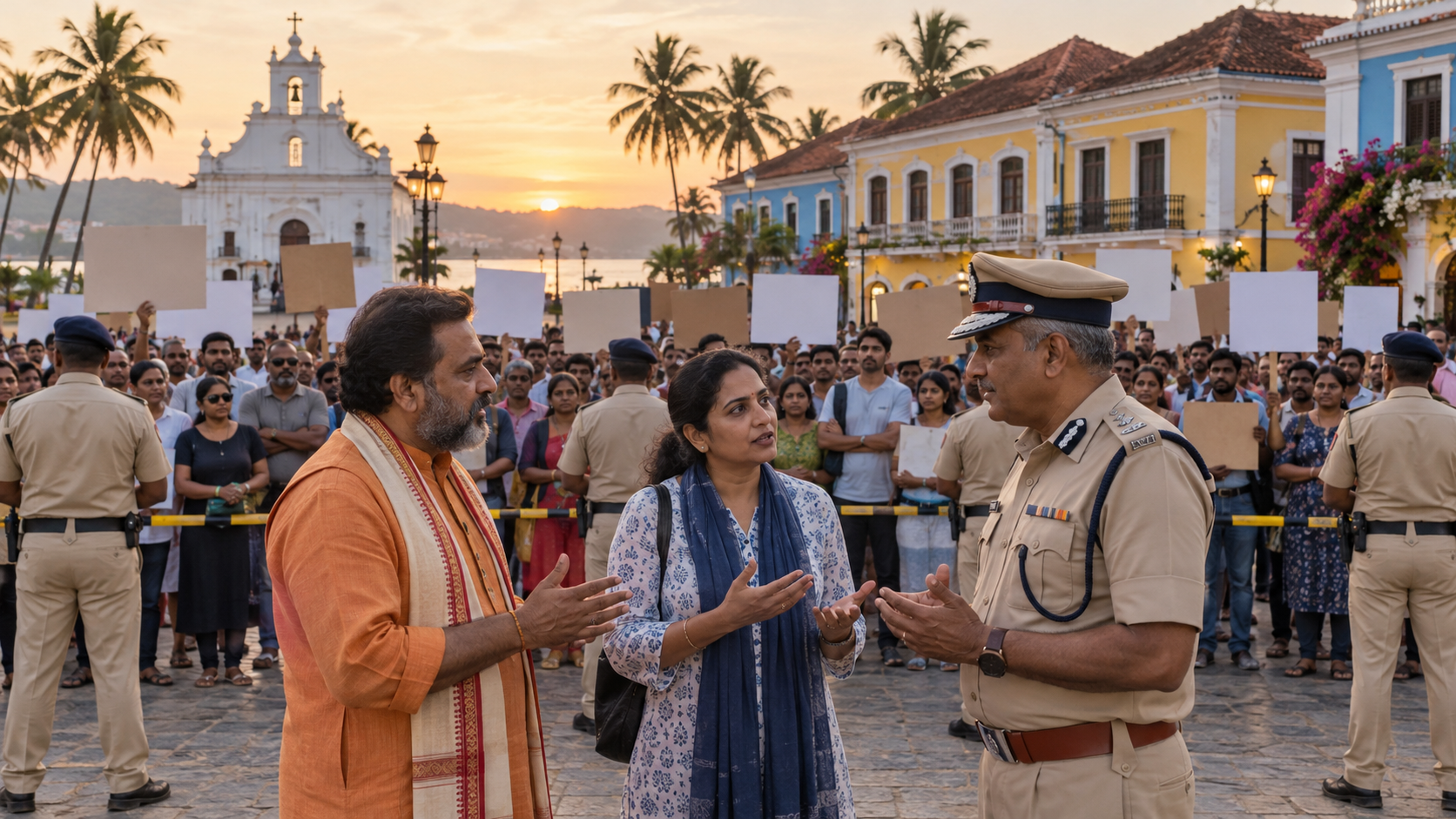
If you are worried that a protest in Goa could become a platform for anti-Hindu abuse or inflammatory slogans, the useful question is not how loudly to condemn it in advance. It is how to make a precise, credible request that helps authorities prevent misconduct without treating an allegation as proof.
That balance matters. Hindu dignity, public order, and freedom of peaceful expression can all be protected when you focus on identifiable conduct, preserve evidence, and ask for proportionate safeguards.
The standard must be conduct, not political identity
Hindu Rashtra Samanvay Samiti has asked North Goa authorities to take preventive measures ahead of a planned agitation at Azad Maidan in Panaji. Its stated concerns are possible hate speech and anti-national sloganeering. Those concerns warrant attentive administration, but they remain apprehensions about what might happen. They do not establish that unlawful speech will occur.
This distinction should guide everyone involved. A peaceful protest cannot fairly be presumed unlawful because its organisers hold unpopular or hostile views. At the same time, describing an event as a protest does not place threats, targeted intimidation, or incitement beyond scrutiny. Authorities must assess actual words and conduct under the law that applies in Goa.
The terms anti-Hindu, anti-national, offensive, and hate speech should not be treated as synonyms. A harsh political criticism may be objectionable without meeting a legal threshold. A targeted call for harm may present a much more serious problem. The speaker, target, wording, context, audience response, and surrounding conduct can all change the assessment.
The complainants use the polemical label “Cockroach Janata Party,” shortened to CJP. Because language comparing people to vermin is itself dehumanising, responsible Hindu advocacy should not repeat that label as casual shorthand. Quote it only when identifying the controversy requires it, attribute it to those using it, and otherwise refer neutrally to the protest organisers or participants. You weaken a principled objection to degrading speech when you reproduce degrading language yourself.
What a credible preventive representation should contain

A vague demand to “stop hate speech” gives an administrator little to assess and creates room for a dispute about censorship. A useful representation separates verified facts from predictions and asks for measures connected to an identifiable risk.
- State the confirmed event details. Identify the announced venue, organising name used publicly, and any verified scheduling information. Do not fill missing details with assumptions.
- Describe the apprehension precisely. Explain what kind of conduct you fear. If the concern rests on a published announcement, recording, poster, or past statement, attach the complete material and identify when and where it appeared.
- Separate fact from inference. Write “the recording contains these words” when that is verifiable. Write “we are concerned this may lead to…” when describing a prediction. Never present the second as the first.
- Request proportionate safeguards. Reasonable requests can include official liaison with organisers, clear communication of event conditions, adequate monitoring, a visible channel for reporting incidents, and prompt intervention if prohibited conduct actually occurs.
- Affirm peaceful intent. State that your objective is the safety and lawful expression of every community, not disruption of the event or confrontation with participants.
- Keep proof of submission. Retain the final representation, its attachments, and any acknowledgement. A clean record is more useful than several inconsistent messages circulated through informal channels.
Do not demand detention, prosecution, or cancellation merely because you oppose the organisers’ politics. Such demands presume the outcome that authorities are being asked to assess. Ask officials to prevent and respond to specific misconduct while allowing peaceful expression to proceed.
If your representation accuses a named person of an offence, publishes private information, or seeks coercive legal action, have a lawyer familiar with Goa law review it. An unsupported public accusation can harm an innocent person, damage your credibility, and create legal exposure. Only local counsel can advise how a particular statement is likely to be treated under the applicable law.
If you attend, organise for restraint before anything happens

The most dangerous point is often not the original speech but the reaction around it. Shouting back, surrounding a speaker, attempting to seize a microphone, or pursuing participants can turn a disputed statement into a public-order confrontation. Decide your response protocol before you reach the venue.
- Name one liaison. One calm person should communicate concerns to the police or designated event officials. Multiple people issuing competing demands can create confusion.
- Brief volunteers on boundaries. They should observe, document, and report. They should not threaten, touch, obstruct, or try to punish anyone.
- Use a designated spokesperson. This reduces contradictory claims and prevents an unverified clip from becoming your public position.
- Prioritise immediate safety. If you see an imminent threat or violence, alert the authorities present and move away from the danger. Do not remain in harm’s way to obtain a better recording.
- Do not organise online retaliation. Publishing addresses, phone numbers, workplaces, or family details is not accountability. It exposes people to harassment and can escalate the dispute far beyond the event.
If you are helping organise the protest itself, the same discipline applies. Give speakers a clear code of conduct, identify marshals, establish a way to stop a speech that crosses agreed boundaries, and preserve the full programme rather than relying on edited highlights. A movement confident in its message should not need ambiguity about what was said from its stage.
Document exact words without manufacturing a viral narrative
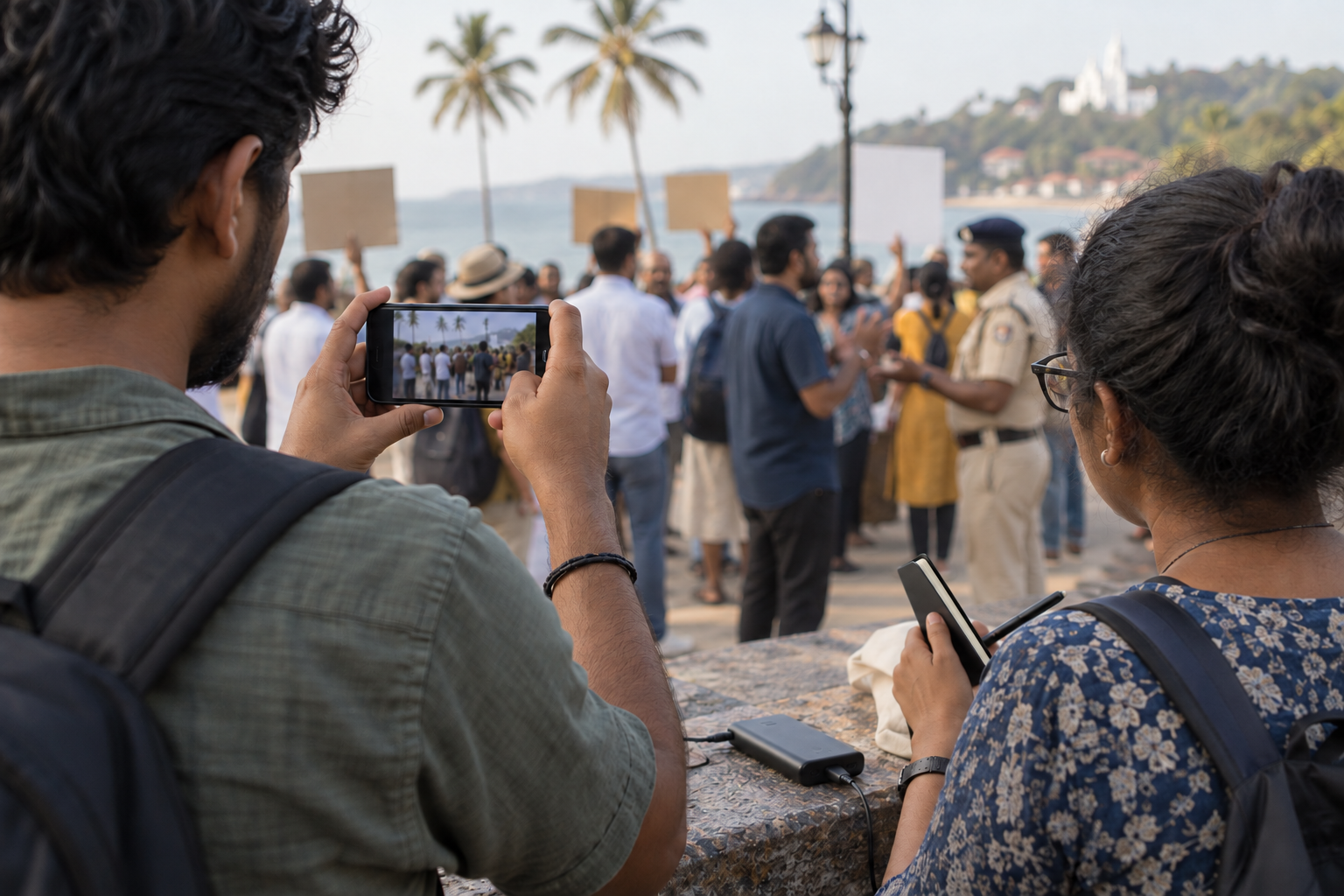
A short clip can omit the sentence before a disputed phrase, the response after it, or even the identity of the event. That does not make video evidence useless. It means the original file and surrounding context matter more than a caption written in anger.
- Preserve the original file. Keep the unedited recording rather than only the version prepared for social media.
- Record the context. Note the venue, approximate point in the programme, speaker if reliably identified, and what happened immediately before and after the words at issue.
- Transcribe carefully. Reproduce the exact words you can hear. Mark uncertain passages as uncertain instead of guessing.
- Keep witness accounts independent. Ask each observer to write what they personally saw or heard before discussing a shared version of events.
- Distinguish the speaker from the crowd. A slogan from one attendee is not automatically the position of every participant or organiser. Record whether organisers encouraged it, rejected it, or did not appear to respond.
- Submit the complete material. Give authorities the original recording and your factual note. A selectively edited montage may attract attention but invites an avoidable argument about manipulation.
Before sharing any recording publicly, verify that it is from the Goa event in question. Check the original uploader, visible location markers, continuity of the footage, and whether subtitles match the audible words. Do not identify a person from resemblance alone. If identity is uncertain, say so or leave the person unnamed.
When the material is verified, describe only what it establishes. “This speaker used these words” is a bounded claim. “The entire protest was a conspiracy” requires much more evidence. Precision makes it harder for genuine misconduct to be dismissed as partisan exaggeration.
A Dharmic response must protect truth as well as dignity

For a pro-Hindu public voice, restraint is not passivity. Satya requires accuracy even when a rumour confirms our suspicions. Ahimsa requires attention to the foreseeable harm caused by reckless amplification, dehumanising labels, or confrontation. Neither principle asks you to ignore hostility toward Hindus. They ask you to answer it without becoming careless about truth or human dignity.
This produces a demanding but workable standard: defend the right of Hindus to raise a documented concern; defend the right of others to assemble peacefully; insist that authorities apply the same conduct-based rules to every side; and refuse collective blame. If misconduct occurs, document it and pursue an accountable response. If it does not occur, do not retrofit ordinary dissent into the allegation you expected to prove.
Neutral procedure is not indifference to anti-Hindu hostility. It is what makes protection durable. A rule applied only to opponents becomes a political weapon. A rule tied to evidence, behaviour, and proportionate enforcement can protect Hindu events and institutions when they face threats as well.
Key takeaways
- The Goa complaint concerns feared conduct at a planned protest; it is not proof that such conduct will occur.
- Describe exact words, actions, targets, and context instead of using hate speech as a catch-all label.
- Ask authorities for monitoring, liaison, clear conditions, and a response process rather than punishment based on political identity.
- Preserve complete recordings and independent witness notes before publishing allegations.
- Do not answer dehumanising or anti-Hindu rhetoric with dehumanising language, threats, doxxing, or physical obstruction.
- Seek local legal advice before publicly accusing named individuals of offences or requesting coercive action.
If you plan to act, begin with one page: list what is confirmed, what is feared, what evidence supports the fear, and what proportionate safeguard you want. Send that record through the proper channel, keep its acknowledgement, and make disciplined conduct your public answer.
References

Leave a Reply
You must be logged in to post a comment.